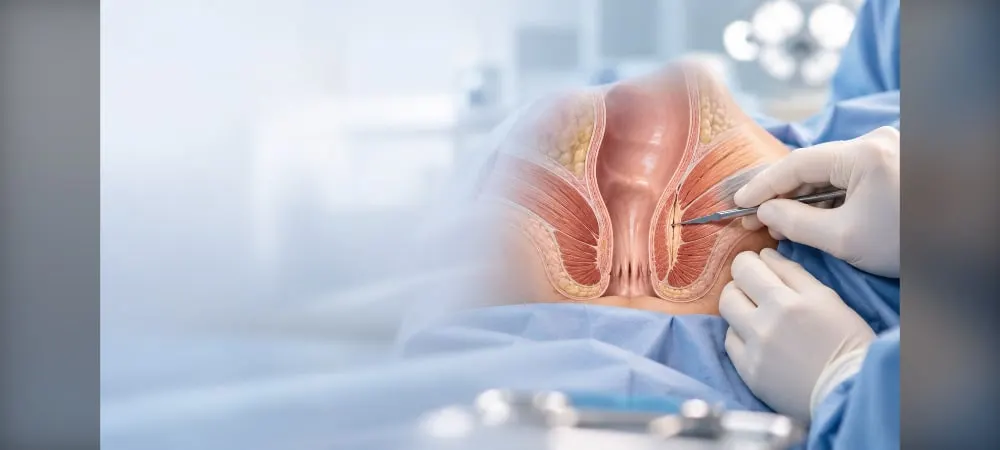
Sphincterotomy is the surgical cutting of the internal anal sphincter muscle surrounding the anus. This simple but effective surgical procedure is a preferred method, particularly in the treatment of chronic anal fissure (a tear in the anus).
In fact, this procedure is performed in cases that do not respond to medication. Its main purpose is to reduce muscle spasm in the anal region, thereby increasing blood flow and allowing the wound to heal naturally.
In this article, you will learn clearly and understandably what sphincterotomy surgery is, in which situations it is preferred, and how the surgical process works. You will also understand how minimally invasive approaches such as lateral internal sphincterotomy (LIS) are performed.
What is sphincterotomy?
Our anal sphincter muscles, which work continuously in our daily lives without our noticing, can sometimes cause problems. In such problems, your doctor may recommend a sphincterotomy. This surgical method is highly effective, particularly in the treatment of chronic anal fissure.
What is the function of the internal anal sphincter muscle?
The internal anal sphincter is a ring of smooth muscle, 5 mm thick, that surrounds approximately 2.5-4.0 cm of the anal canal. This muscle structure is formed by the thickening of the smooth circular muscle fibers of the rectum. Working together with the external anal sphincter, it closes the anal opening and plays an important role in stool control.
This remarkable mechanism of our body works entirely involuntarily. Normally, it remains continuously contracted to prevent the leakage of stool or gas. While the sympathetic nervous system causes contraction, the parasympathetic nervous system controls relaxation. The internal anal sphincter provides 55% of the resting pressure and plays a critical role, particularly in retaining liquids and gases.
When the rectum is distended, for example during defecation, the internal anal sphincter relaxes reflexively and allows the contents to pass. This is called the "rectoanal inhibitory reflex."
What is sphincterotomy surgery?
Sphincterotomy is the surgical cutting of the internal anal sphincter muscle. It is performed particularly in chronic anal fissures that do not respond to medication. Its main purpose is to reduce the spasm in the overly contracted anal muscles, thereby increasing blood flow in the area and accelerating the natural healing process of the wound.
This surgery is usually performed under local or spinal anesthesia, and the patient feels no pain. Sphincterotomy can be performed using an open or closed technique. In the open technique, an incision of approximately 0.5-1 cm is made between the internal and external anal muscles. In the closed technique, the procedure is performed by the surgeon by palpation through a smaller incision.
Lateral internal sphincterotomy is currently the most commonly preferred surgical method in the treatment of chronic anal fissure. After this procedure, healing is observed within two months in approximately 90-92% of patients.
In which situations is sphincterotomy preferred?
Disorders of the anal region can seriously affect daily life. In some cases, when medication is not sufficient, sphincterotomy surgery becomes an important solution. So, in exactly which situations is this surgical intervention recommended?
Chronic anal fissure cases
Anal fissures can be acute or chronic. A chronic anal fissure is defined as a tear that lasts longer than 6 weeks, has deepened and has a skin tag (sentinel pile) formed around it. These cases are more resistant to treatment than acute fissures.
A chronic anal fissure is in fact a type of ischemic ulcer. Because of spasm in the internal anal sphincter muscle, anal tone increases and resting anal canal pressure rises. This compresses the vessels supplying the distal anal mucosa, leading to the formation of a chronic anal fissure and delayed healing.
In chronic anal fissures, lateral internal sphincterotomy (LIS), with an effectiveness of up to 90%, is currently the most widely accepted surgical option. This method relaxes part of the internal muscles around the anus, eliminating the muscle spasm that prevents the fissure from healing.
Cases that do not respond to medication
Sphincterotomy surgery is generally preferred when other treatments are insufficient. Surgical intervention comes into question under the following conditions:
- Chronic cases that do not respond to conservative treatment
- Chronic anal fissures resistant to topical medication
- Fissures that do not heal with dietary adjustments and local ointments
- Recurrent fissure episodes
In studies, the treatment failure rate was found to be much lower in patients undergoing LIS compared with botulinum toxin (Botox) treatment. While treatment failed in 25.8% of patients treated with Botox, this rate was found to be only 3.4% in the LIS group.
Patients experiencing severe pain and spasm
The most prominent feature of anal fissures is severe pain that begins during defecation and can last for hours. This pain is described as sharp and unbearable. Sphincterotomy should be considered, particularly for patients experiencing the following symptoms:
- Severe pain during and after defecation
- Typical pain lasting 20-25 minutes after defecation
- Unbearable pain associated with spasm around the anus
- A feeling of the anus tearing with every bowel movement
- Rectal bleeding and constipation
These symptoms seriously reduce quality of life. Patients may lose their normal bowel habits, their social lives may become restricted, and they may experience psychological problems due to constant pain.
Excessive muscle spasm around the anus creates a vicious cycle. The spasm reduces blood flow in the area, which prevents healing and causes the pain to increase. Lateral internal sphincterotomy breaks this vicious cycle, rapidly reducing the pain and initiating the healing process.
In conclusion, when medical treatment is insufficient, sphincterotomy offers an effective and lasting solution, particularly for patients with chronic anal fissure who experience severe pain and spasm.
Diagnostic process before sphincterotomy
An accurate diagnostic process is vital for successful sphincterotomy surgery. As with every surgical procedure, a comprehensive evaluation must be performed before sphincterotomy. This process both increases the success of the treatment and reduces possible risks.
How is a proctologic examination performed?
A proctologic examination is a special examination commonly known as an "anal examination." This examination can usually be performed in three different positions:
- Left lateral position (Sims position)
- Lying on the back with the legs raised (lithotomy position)
- Prostration (knee-chest) or prone position
First, the doctor visually inspects the anal region from the outside. Then, an examination is performed with a finger using lubricating gel. During this, the presence of masses or lesions causing tenderness is investigated. Both the hand and special instruments may be used during the examination.
It should be specifically noted that an examination performed in the prone position is not recommended in the following situations:
- In those with high intraocular pressure
- In those with a retinal tear
- In those with a heart rhythm disorder
- In women in the late stages of pregnancy
Use of anoscopy and rectoscopy
Endoscopic examinations such as anoscopy and rectoscopy are most often performed before sphincterotomy. With these procedures, the anal canal and rectum are visualized in detail.
An anoscope is an instrument specially made for examining the anal canal. An examination performed with an anoscope is called "anoscopy." With this device, which is approximately 5 cm long, the anal canal can be examined in detail. Anoscopes may be made of metal or may be disposable plastic.
Rectoscopy, on the other hand, is performed with a longer device (approximately 12 cm) that makes it possible to view the last 15-30 cm of the rectum. This instrument, which has a light source and a camera at its tip, is particularly useful in the following situations:
- Rectal bleeding
- Defecation problems
- Persistent pain
Both procedures are painless when performed by a specialist physician and take only a few minutes.
Evaluation of accompanying diseases
Before sphincterotomy surgery, the patient's general health status and any accompanying diseases are also comprehensively evaluated. This is because many diseases affecting the anal region (such as hemorrhoidal disease, anal abscess, anal cancer and inflammatory bowel diseases) can present with similar symptoms.
In addition, in chronic fissures, the presence of accompanying conditions such as hemorrhoids or fistulas is also investigated during this process. As a result of these evaluations, further tests such as flexible sigmoidoscopy or colonoscopy may sometimes be requested.
Furthermore, so that the surgical procedure can be performed safely, blood tests are carried out, and additional laboratory tests are performed if general anesthesia is planned. These detailed evaluations are critically important for the success of the sphincterotomy and the safety of the patient.
The sphincterotomy surgery process
Every surgical process begins with proper information so that the patient feels safe. Sphincterotomy surgery similarly includes the stages of preparation, procedure and recovery. Knowing what will happen during this procedure helps reduce the concerns of most patients.
Preparations before surgery
Before sphincterotomy surgery, your doctor performs a detailed health evaluation. In this process, the duration and depth of the anal fissure and the degree of spasm in the surrounding tissues are checked. First, bowel cleansing is performed, and the patient is given special instructions the night before surgery. It is generally recommended that adequate bowel emptying be achieved before surgery.
In addition, the patient's medications are reviewed, blood tests are done and, if necessary, additional laboratory tests are completed. These preparations ensure that the procedure is safe and successful.
How is lateral sphincterotomy performed?
Lateral internal sphincterotomy (LIS) can be performed with two different techniques: the open technique and the closed technique.
In the open technique, during lateral internal sphincterotomy surgery, an incision of approximately 0.5-1 cm is made in the skin between the internal and external anal muscles. The internal anal muscle is separated from the bowel and cut. In this method, the surgeon performs the procedure by directly seeing the muscle.
In the closed technique, a smaller incision is made and the surgeon performs the procedure by palpation. The intersphincteric space is entered with a blade and the internal anal muscle is cut. The closed technique may cause less pain after surgery and leaves less scarring.
In both techniques, the aim is to relax the spastic internal anal muscle in a controlled manner. In this way, blood flow is increased and healing is accelerated.
Duration of surgery and hospital stay
The sphincterotomy procedure usually takes 15-30 minutes. Despite this short duration, it is an extremely effective treatment method. After surgery, patients are usually discharged on the same day after a short observation period.
After lateral internal sphincterotomy, patients can return to active life in an average of 7 days. This rapid recovery process is one of the most important advantages of the procedure.
After surgery, the pain begins to subside immediately, and signs of incontinence (leakage of stool) have been observed to be low. Fissures have generally been reported to heal completely within 3-4 weeks.
Recovery process, risks and patient experiences
The period after sphincterotomy is among the topics patients wonder about most. No matter how successful the surgery is, care and attention during the recovery period also directly affect the outcome.
How long does recovery take?
Although the recovery process varies from person to person, it is generally completed within 2-6 weeks. Patients are usually discharged within 1-2 days, and full recovery may take between 1 and 6 months. Most patients can return to their daily activities a few days after surgery, but they are advised to avoid heavy exercise and prolonged sitting.
Noticeable relief is felt within the first few days, and pain gradually decreases over the first weeks. Pain during defecation eases and disappears, and a marked improvement is achieved within 1-2 weeks. Full recovery and the return of the tissue to normal may take about 6 weeks.
What do people who have had sphincterotomy surgery experience?
There is usually mild pain immediately after surgery, and this pain can be controlled with the medications provided. Mild soreness and spotting-type bleeding during the first bowel movement are normal. The majority of patients report that the severe pain felt during defecation decreases markedly in the postoperative period.
It is natural to feel swelling at the surgical site in the early postoperative period. There may also be discharge, or sometimes bloody discharge during defecation. Patients can usually speed up healing by taking a warm water sitz bath 3-4 times a day. For successful recovery, the postoperative care instructions must be followed carefully.
Possible complications and risks
As with every surgical procedure, some risks and side effects may be seen with sphincterotomy:
- Infection: Infection may rarely develop at the surgical site (1-2%)
- Bleeding: May be seen especially in the first days
- Gas incontinence: May be temporary in 5.4% of patients and permanent in 8.9%
- Temporary difficulty urinating: May be seen after surgery
- Fistula development: May be seen in fewer than 1% of patients
If bleeding after surgery lasts longer than 1 hour, increases in amount, or blood comes in the form of clots, it is recommended that you consult your doctor without fail.
Is there a risk of anal incontinence?
Anal incontinence (leakage of gas and stool) is the most important complication that may be seen after lateral internal sphincterotomy. Studies have shown that temporary or permanent gas incontinence may occur in some patients. This risk has been significantly reduced by the use of modern surgical techniques and the approach of cutting only as much of the muscle as necessary.
Advanced age, male sex, and sphincterotomy performed together with hemorrhoidectomy have been identified as risk factors for the development of incontinence. Sphincterotomy performed together with hemorrhoidectomy can increase the risk of incontinence approximately 15-fold.
However, the control problems experienced are generally mild and mostly resolve within the first few months. The risk of permanent incontinence that seriously affects quality of life is quite low.
Sphincterotomy in summary
Sphincterotomy appears as an effective surgical method in the treatment of chronic anal fissure. This procedure can be life-changing, particularly in cases that do not respond to medication. In fact, sphincterotomy relaxes the muscles around the anus, increases blood flow and accelerates the natural healing process.
After the procedure, the vast majority of patients feel marked relief. Undoubtedly, although mild pain and bleeding may be seen in the first days after surgery, these complaints subside quickly. The full recovery process is usually completed within 2-6 weeks.
However, as with every surgical procedure, sphincterotomy has some risks. For example, infection, bleeding or temporary gas incontinence problems may occur. Nonetheless, these risks have been greatly reduced with modern surgical techniques.
Before deciding on sphincterotomy, it is very important to have a detailed discussion with your doctor. Otherwise, you can also learn about alternative treatment options. The right diagnosis and appropriate treatment approach will relieve you of the pain caused by the anal fissure.
In conclusion, sphincterotomy offers an effective solution in the treatment of chronic anal fissure, with a success rate above 90%. By paying attention to the postoperative recovery process and following your doctor's recommendations, you can return to your daily life in a short time. Remember that with early diagnosis and the right treatment, your complaints caused by the anal fissure can disappear completely.
Frequently Asked Questions
How long does recovery take after sphincterotomy surgery? Recovery is generally completed within 2-6 weeks. The full recovery process may vary between 1 and 6 months. You will feel a marked reduction in your pain within the first few days.
When can I return to work after surgery? You can usually return to desk jobs within 5-10 days. If you work in physically demanding jobs, this period may extend up to 2 weeks.
In which situations should I see a doctor? You should definitely call your doctor in the following situations:
- Severe pain that does not go away
- Heavy bleeding (active bleeding 3-4 times in a row)
- Being unable to have a bowel movement for more than 3 days
- Watery stools more than 5 times a day
- Difficulty urinating
- Fever above 38 degrees
Is there a risk of recurrence? Yes, the fissure may recur if poor nutrition and constipation continue. Therefore, it is important to adopt a balanced diet and not to stay on the toilet for long periods.
How should I eat after surgery? You should consume fibrous foods, yogurt, plenty of water and olive oil. You should avoid spicy, hot and acidic foods, as well as alcohol and caffeine.