What Is a Cesarean Delivery? When Is It Performed?
Pregnancy is a miraculous condition that can be considered sacred for all women in the world. The sole aim of pregnancy is to achieve a healthy delivery for both mother and baby. To make this happen, the preferred method first and foremost is natural vaginal delivery. However, how the delivery takes place is not a matter of preference. The doctor makes the decision in the direction required by the health condition of the mother and baby. For this purpose, the health of the mother and baby is carefully monitored throughout the pregnancy. If there is a possibility that a risk may arise if a natural delivery is attempted, a cesarean delivery may be preferred. A cesarean delivery may be planned in advance, but it may also be performed in emergencies.
What Is a Cesarean Delivery?
The surgical procedure called cesarean delivery is an operation that ensures the birth of the baby by making incisions in the mother's abdomen and uterus. It is performed in cases where vaginal delivery, known as normal delivery, is not possible or poses a risk to the mother or child. The incision is made across the abdomen, just below the bikini line. It is a risky and difficult operation to perform. For this reason, it is performed only when it is the safest method for the mother and baby. Planned cesarean deliveries are usually performed from the 39th week of pregnancy onward. The most important factor in determining this timing is that the baby's development is complete and the baby is ready for birth. In emergencies, however, the timing of the cesarean delivery is uncertain.
When Is a Cesarean Delivery Performed?
There are certain conditions relating to the mother and baby that may make a cesarean delivery the preferred option. These conditions are evaluated by the doctor who follows the pregnancy. Cesarean delivery can be considered for reasons originating from the mother and reasons originating from the baby.
What Are the Causes Originating from the Mother?
For a pregnancy to progress healthily, the mother's health is very important. Genetic factors are, of course, also quite influential. A cesarean delivery may be performed after evaluating the mother's physiological and genetic condition.
When causes originating from the mother are evaluated, the first to be considered are previous surgeries on the uterus or previous cesarean deliveries. The widespread belief among the public that a cesarean delivery is required after all uterine surgeries is a mistaken approach. However, if a previous operation could cause the uterus to rupture during normal delivery, there is a risk. Operations in which fibroids above a certain size are removed through an incision in the uterus may fall into the risk group. In addition, operations in which the uterus is opened and then sutured again pose a risk.
The presence of conditions in the mother's medical history that could prevent normal delivery may also necessitate a cesarean delivery. In particular, advanced lumbar disc herniation is among the main such obstacles. In addition, orthopedic and neurological diseases that may restrict movement of the mother's pelvic bones may also present an obstacle to normal delivery.
Another condition in which a cesarean delivery may be preferred is HPV virus infection. Due to HPV virus, warts may develop on the mother's genital organs. This is a risky condition for normal delivery.
What Are the Causes Originating from the Baby?
A cesarean delivery may be planned in order to prevent all risks that could arise during normal delivery due to the baby.
The most important cause related to the baby is breech presentation. In normal delivery, the baby's head must come out of the uterus first. The opposite of this situation creates risks during delivery. A cesarean delivery is performed in order to prevent the risks that may arise.
If the baby weighs more than 4.5 kilograms, or if the mother has diabetes and the baby weighs more than 4 kilograms, this may necessitate delivery by cesarean section, because there is a possibility that the baby's shoulders may become lodged in the birth canal during normal delivery.
If, during normal delivery, the doctor performing the delivery believes that the baby may be deprived of oxygen for certain reasons, the delivery may be switched to a cesarean section. This is because if the baby cannot receive enough oxygen during delivery, it may lead to permanent conditions and even stillbirth.
In twin deliveries, the doctor may also plan a cesarean delivery in order to guard against possible risks.
A cesarean delivery may be performed because the placenta is blocking the birth canal, or due to any other abnormalities related to the baby.
Under What Conditions Is a Cesarean Delivery Performed?
A cesarean delivery is a very risky and important operation. Before the procedure begins, the necessary consent forms must be signed. Since it is an important operation, it can be performed under anesthesia in operating rooms equipped with adequate equipment. The type of anesthesia the mother will receive is determined jointly by the doctor and the anesthesiologist. In some mothers, the cesarean delivery can be performed under general anesthesia, while in others it is performed under epidural-spinal anesthesia. The mother's abdomen is cleaned with antiseptic agents, and an oxygen mask may be placed in order to increase the oxygen reaching the baby.
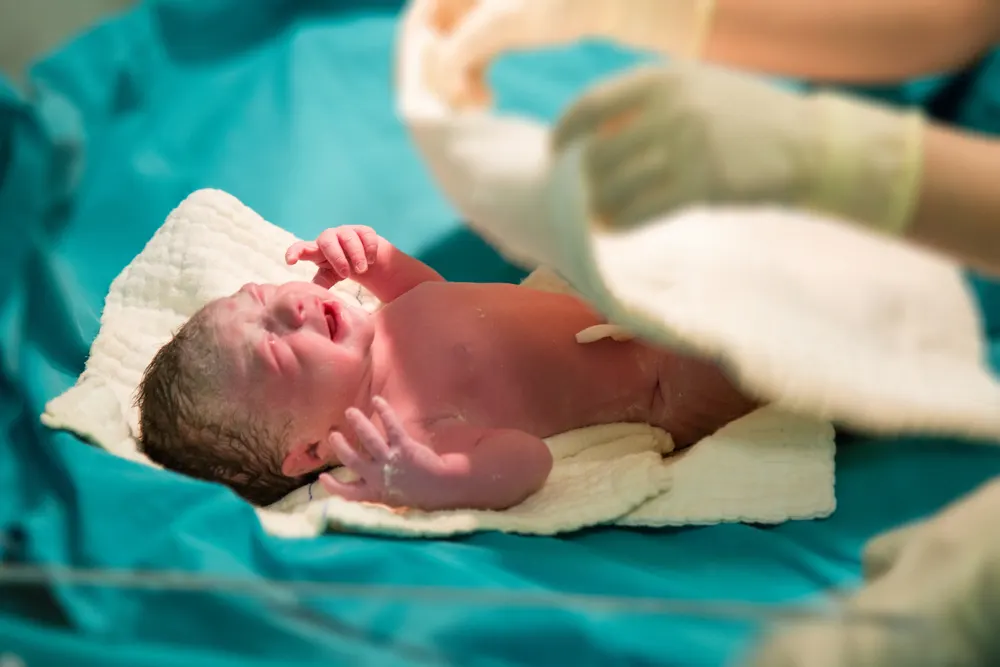
A vertical or horizontal incision is made in the mother's abdomen; the horizontal incision is also called a bikini incision. Then an incision of 7 to 10 cm is made in the uterine wall. This incision may also be horizontal or vertical. The baby is removed through the incisions, and the umbilical cord is cut. The placenta is then removed, and the incisions are sutured and closed. If the cesarean delivery is planned, this procedure takes approximately 15 minutes. From the start to the end of the procedure, it lasts approximately 45 minutes. Emergency operations may be performed more quickly. After all checks of the mother and baby have been completed and they are found to be healthy, they are transferred to the ward. Once the effects of anesthesia wear off, there is no objection to the mother holding her baby. However, since the mother has serious incisions in her abdomen, she needs to be careful with her movements.
What Are the Differences from Normal Delivery?
Vaginal, i.e., natural, deliveries are the type of delivery that is encouraged under usual circumstances and is the healthiest. However, in unusual situations, cesarean delivery is the only safe option. All of these situations will be evaluated by the doctor following the pregnancy. Normal delivery takes place between weeks 37 and 42 of pregnancy. Before delivery, the mother experiences labor pains and is taken to the hospital. Subsequently, delivery takes place as a process that includes the baby being removed through the vagina. A cesarean delivery, on the other hand, is a birth performed by surgery. It is preferred so that the health of the mother and baby is not put at risk.
Whether labor pains have started or not is not important for a delivery to take place. The only essential matter here is that the baby is safely delivered from the mother's womb while the mother remains in a healthy condition. During the operation, incisions need to be made in the abdomen and uterus. For this reason, the mother has a recovery period after the operation. Avoiding the risks that may occur during natural delivery is the greatest advantage of cesarean delivery. Additionally, in non-emergency situations, the timing of the delivery can be determined together with the doctor and the baby's family. How long a normal delivery will take cannot be fully predicted. However, a cesarean delivery can be performed in a very short time. In some normal deliveries, a condition called birth trauma may affect babies. Again, this can be prevented with a cesarean delivery.
What Is the Process After a Cesarean Delivery?
Compared with normal delivery, a cesarean delivery involves a longer recovery period. After a cesarean delivery, the mother's hospital stay is approximately 2 days. However, in some cases, this period may extend up to 4 days. During the first few days, the mother may feel pain due to the incisions. In addition, feeling cramps similar to menstrual cramps is also quite normal. These cramps may continue and increase while breastfeeding. The cause of this pain felt in the lower abdomen is the contraction of the uterus as it returns to its normal state. These quite normal pains decrease over time and then go away. If the pain is severe, the doctor usually prescribes a painkiller.
Once the mother is discharged, she can care for her baby and herself. In addition, there is no obstacle to carefully carrying out daily tasks. Approximately 2 days after a cesarean delivery, the mother may take a shower, provided she is able to stand. After showering, keeping the stitches dry is very important in case of a possible complication or adverse condition. The stitches heal within 1 week to 10 days and are absorbed on their own. However, if permanent sutures are used during the operation, the stitches need to be removed. In such cases, the stitches are removed by the doctor approximately 10 days later. During this process, it is very important for mothers to pay attention to personal hygiene and avoid sudden movements. Returning fully to normal life after a cesarean delivery takes approximately 6 weeks. During this healing process, it is normal to have red vaginal discharge first, followed by brown discharge.
Along with developing medical advances, the rate of achieving a normal delivery after a cesarean delivery has also increased. Not every mother may be able to have a normal delivery after a cesarean delivery. However, if the pregnancy progresses healthily and is followed with regular prenatal checkups, a normal delivery may be possible. The most important factor preventing normal delivery after a cesarean section is the incision in the uterus. Tissue injured by incisions does not have the self-healing ability found in other parts of the body. This may cause the uterus to rupture due to contractions during delivery. Uterine rupture puts the health of the mother and baby at risk. To eliminate this risk, a cesarean delivery is safer. If the mother has undergone a cesarean delivery after a normal delivery and becomes pregnant again, the third delivery may also be normal.
All mothers should schedule appointments and undergo their routine checkups without interruption throughout their pregnancy. In this way, the natural delivery process can proceed healthily, or a vaginal delivery can be planned in possible cases.