Septoplasty is an effective surgical solution that can help if you are experiencing difficulty breathing due to a deviated septum inside the nose. Aiming to facilitate breathing by opening the nasal passages, this procedure typically takes 30-90 minutes and patients are discharged on the same day. The recovery process after septoplasty surgery may take a few weeks, and nasal congestion complaints are expected to decrease significantly.
In this article, you will find answers to questions such as what septoplasty is, how septoplasty surgery is performed, and what you should pay attention to in the postoperative period. We will also cover the risks and frequently asked questions.
What is Septoplasty Surgery and Why is it Performed?
Definition of Septal Deviation
The thin wall structure dividing the nasal cavity into two is called the septum. This structure consists of cartilage tissue anteriorly and bone tissue posteriorly. Septal deviation is the condition where this wall shifts to the right or left of the midline. It is also known as nasal cartilage deviation or nasal bone deviation.
In fact, septal deviation is a very common condition. Approximately 70-80% of people have varying degrees of septal deviation. However, not every deviation requires treatment. Mild deviations in most people do not cause any complaints.
When septal deviation creates narrowing in the nasal passages, various symptoms occur. Nasal congestion, breathing difficulty, and headache are among the most common problems. Dryness may develop in the nasal mucosa due to deviation. In this case, crusting and nosebleeds may also be observed.
Purpose of Septoplasty Surgery
The answer to the question of what septoplasty surgery is simple: it is a functional surgery performed to correct a deviated septum. The primary goal of the surgery is to restore normal airflow by realigning the nasal passages.
Septoplasty only resolves functional problems within the nose. The external appearance of the nose is not touched. For example, it is an effective treatment option in recurrent sinus infections. Septal deviation can disrupt the natural drainage of the sinus passages. Continuously blocked sinuses become susceptible to infection.
Surgical operation is the only option in the treatment of septal deviation. It is treated if the deviation reduces the quality of life, leads to health problems, or worsens existing problems. Septoplasty also provides a critical solution in cases of sleep apnea and severe snoring.
Causes of Septal Deviation
Septal deviation can occur due to different reasons. Understanding these reasons is important in terms of making the treatment plan correctly.
Congenital deviations are one of the most common causes. Septal deviations can occur during the developmental process in the womb. This condition is also seen due to birth injuries or difficult delivery. Some people have a genetic predisposition to a deviated nose.
Changes related to the developmental process are also a frequently encountered cause. Bone and cartilage tissues grow rapidly during childhood and adolescence. If the nose and facial bones develop disproportionately during the growth phase, the septum may shift from the midline. During the nasal development process, the septum may grow and shift to one side.
Traumas are among the significant causes of septal deviation. Sports injuries, traffic accidents, falls, or blows to the nose can dislodge the septum. Especially in childhood, the nose still has a flexible structure. Even mild blows not noticed at this age can lay the groundwork for deviation in later years.
Advanced age is another factor. The nasal bone and cartilage structure may deteriorate with the aging process. Deviation may develop in the septum. Infections can also cause the nasal cavity to swell and become damaged, further narrowing the nasal passage.
Therefore, patients experience significant respiratory comfort after septoplasty surgery.
How is Septoplasty Surgery Performed?
Preoperative Preparation Process
Before deciding on surgery, a detailed evaluation process begins. Your doctor examines the inside of your nose endoscopically. Computed tomography is taken if necessary to determine the degree of deviation. Acoustic rhinometry and rhinomanometry tests objectively measure airflow and support the decision for surgery.
Complete blood count and bleeding-coagulation tests are performed before surgery. Your doctor evaluates your existing diseases, medications you use, and allergies. You need to discontinue blood-thinning medications 7-10 days before surgery. It is recommended to stay away from medications containing aspirin, ibuprofen, or vitamin E. Some herbal supplements can also increase the risk of bleeding.
If you smoke, you need to quit at least a few weeks before the surgery. Smoking negatively affects wound healing. A fasting period of at least 6-8 hours is mandatory on the day of surgery. You should have a companion with you and you should not drive yourself after the surgery.
Surgical Procedure Stages
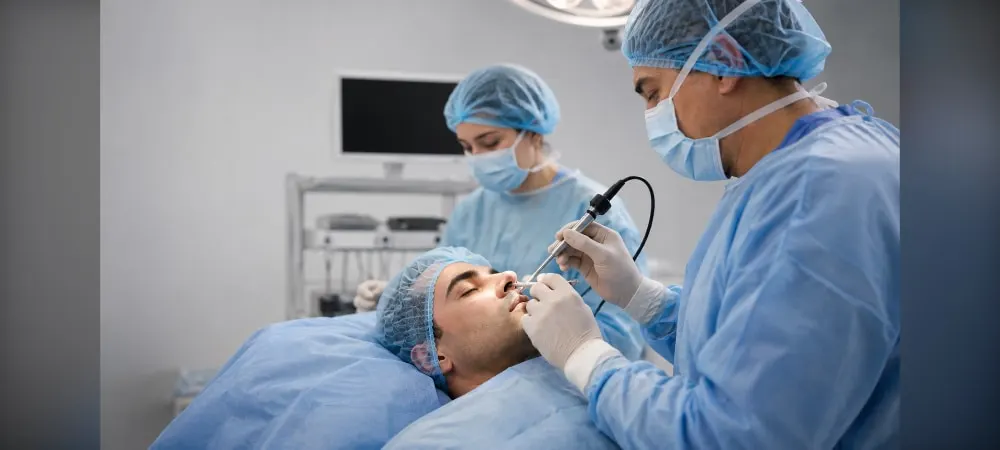
Septoplasty is performed from the inside of the nostrils. The surgeon first makes a small incision inside the nose. This incision is not visible from the outside and leaves no scar. Then, the mucosal layer covering the cartilage and bone structure is delicately lifted.
The deviated cartilage parts are repositioned so as not to disrupt nasal support. If there are bony spurs in the posterior part of the septum, they are filed or removed with special instruments. Tissues forming excess can be removed, but the basic structure of the nose is preserved. The aim is to bring both nasal passages to equal width.
After the correction process is completed, the mucosal layer is placed back in its original place. It is fixed with dissolvable sutures. The surgeon places soft silicone splints inside the nose to support the nasal passages. Today, instead of classical cloth tampons, grooved silicone splints are used that allow the patient to breathe as soon as the surgery ends.
Techniques Used in Surgery
Septoplasty can be performed with open or closed techniques. The closed technique is the most common method. It is entered through the inside of the nose and takes about 30 minutes. The external shape of the nose is never touched.
The open technique is preferred in cases where the septum is excessively deviated. The nasal skin is cut and opened from the outside. Support with cartilage from the ear or rib may be required. This surgery takes 1-1.5 hours.
Endoscopic methods provide less tissue damage with optical image support. Thanks to modern techniques, intra-nasal tissues can be seen more clearly during the operation. This increases the precision of the surgery and can shorten the recovery period.
At the same time, turbinate hypertrophies are also reduced using methods such as radiofrequency or laser. This is a critical step that doubles the breathing quality after septoplasty surgery.
Anesthesia Options
Septoplasty can be performed under local or general anesthesia. While it can be performed with local anesthesia, it is also performed with general anesthesia. In recent years, general anesthesia has been preferred due to developments in anesthesia. The comfort of the patient and the surgeon influences this preference.
The surgery takes about an hour on average. Depending on the scope of the procedure, it varies between 30 minutes and a few hours. After surgery performed under local anesthesia, patients spend the first few hours in the hospital. They can return home after doctor control.
Recovery Process After Septoplasty Surgery
What to Pay Attention to in the First Days
The first 24-48 hours after surgery are spent under observation. You may need to stay in the hospital until the effects of anesthesia wear off. Mild bleeding and leakage-type discharges from the nose are normal. These discharges usually last 1-2 days after surgery.
You can easily control your pain with painkillers. Postoperative pain is usually mild and decreases within a few days. Sleeping with your head elevated reduces the risk of swelling and bleeding. It is recommended to use two pillows.
You need to consume plenty of fluids. It helps eliminate edema in the body. Fluids such as fruit juice and soup can also be consumed. Make sure your foods are warm. Foods such as excessively hot tea, coffee, and soup can trigger bleeding. You should avoid fatty and spicy foods.
Crusting forms inside the nose. You can clean it by softening it with saline solution. You should definitely not blow your nose hard. Reduce the pressure by keeping your mouth open when sneezing.
Tampon and Splint Removal
At the end of the surgery, flexible tampons made of soft silicone are placed inside the nose. Thanks to these tampons with a tube in the middle, you can breathe. If only septoplasty was performed, the tampons are removed after 2-3 days, and if turbinate surgery was also performed, after 5-7 days.
The removal process takes 10-15 seconds and is painless. Thanks to modern silicone splints, this process is quite comfortable. It causes much less discomfort compared to hard tampons used in the past. After the tampons are removed, a significant increase in breathing quality is felt.
Surgery without tampons can also be performed in some patients. The nasal mucosa is sewn together and fixed with dissolvable sutures. However, silicone splints are generally preferred as they reduce both bleeding and the risk of adhesion.
Full Recovery Time
The first week is the period when mucosal edema is most intense. Generally, at the end of the first week, the edema decreases largely. The feeling of fullness and slight congestion inside the nose may continue during this period.
It takes 2-4 weeks for the intra-nasal tissues to recover to a large extent. Crustings decrease and patients return to their normal social lives. Complete healing of the tissues and opening of the airway to full capacity take place between 3-6 weeks.
The full recovery process is completed within 3-6 months. During this process, all tissues stabilize and the final result is obtained. Dissolvable sutures used during surgery melt completely within three months. Complication rates after septoplasty are below 5%.
Return to Physical Activities
Rest is recommended for 7-10 days after surgery. You can return to desk jobs 1 week after surgery. If you are doing a job that does not require exertion, you can work after the 5th day.
Starting physical activities too early increases the risk of complications. Patients should generally stay away from exercise for at least 1-2 weeks after surgery. Heavy lifting and intense sports activities should be postponed for 3-4 weeks. To minimize the risk of nosebleeds after septoplasty, it is important to avoid strenuous exercise for up to 5 weeks.
Light walks are permitted in the first weeks. You can start with low-intensity exercise and gradually increase the intensity over time. It is important to avoid contact sports and activities that increase the risk of trauma to the nose.
Risks and Complications of Septoplasty
Septoplasty is a safe surgery with a high success rate. However, like any surgical procedure, it carries some risks. When performed by an experienced surgeon, the probability of these risks is quite low. Complication rates are below 5% and can mostly be managed easily.
Risks That May Occur During Surgery
The most common problem encountered during surgery is bleeding. Mild bleeding is normal, but excessive bleeding is rarely seen. The risk of bleeding is between 1-2%. When doctor intervention is required, the situation is quickly brought under control.
Septal hematoma may occur during or immediately after surgery. It appears as blood accumulation between the two sides of the septum. If left untreated, the nutrition of the cartilage tissue can be impaired. It is easily detected during checks and resolved by drainage.
Interventions made on the support structure of the septum can rarely create a collapse in the nasal bridge. This condition, known as saddle nose, results from taking too much cartilage support. When sufficient cartilage support is preserved, this risk is very low.
Side Effects That May Occur After Surgery
Infection is a common complication that can occur after surgery. The risk rate is below 1%. Although intra-nasal infections are rare, when they occur, antibiotic treatment is required. Regular dressings and nasal care significantly reduce this risk.
Septal perforation is the formation of a permanent hole in the septum. The incidence is between 1-3%. It can cause dry air passage, crusting, or slight bleeding. A whistling sound may occur while breathing. Corrective surgery can be performed in the future if necessary.
The healing of tissues inside the nose in the wrong position and sticking together is called adhesion. If it causes nasal congestion, it can be opened with a minor intervention. Temporary or permanent changes in the sense of smell can be observed. In most patients, this condition returns to normal over time.
Temporary numbness may be felt in the upper front teeth or palate. Sensory changes at the tip of the nose occur as a result of nerve damage during surgery. This usually resolves within a few months.
Rare Complications
Deviation recurrence is seen at a rate of 5-10%. In some patients, full recovery may not be felt after surgery. The reason for this may be accompanying problems such as turbinate hypertrophy, polyps, or allergic rhinitis. If necessary, this condition can be corrected with additional treatments.
Cerebrospinal fluid leak is an extremely rare complication. It can occur with unintentional damage to the skull base and requires urgent treatment. Visual impairment is very rarely seen. Eye complications such as prolonged diplopia have been reported.
Toxic shock syndrome can occur, albeit rarely. If you experience high fever, confusion, or severe headaches, you should consult your doctor immediately.
Frequently Asked Questions About Septoplasty
Is septoplasty surgery painful?
You will not feel any pain during the surgery. Thanks to modern anesthesia methods, you will be comfortable throughout the operation. You can expect mild to moderate discomfort after surgery. Pain is usually easily controlled with simple painkillers.
Most patients complete the recovery process without the need for painkillers. Some pain and pressure may occur around the eyes, on the forehead, cheeks, and upper teeth. These side effects are normal and usually disappear within a few days. The majority of patients state that the feeling of nasal congestion afterwards can be more challenging than the operation itself.
Are tampons used after surgery?
Silicone splints are generally preferred in modern septoplasty surgeries. Traditional tampons are not used. These splints support the internal structure of the nose and do not create serious discomfort when removed. The most commonly used tampons are breathable and supportive silicone ones.
They stay in the nose for 3-5 days, sometimes longer. In some cases, the surgeon may deem it necessary to use tampons, but this is a rare situation. Silicone splints cause slight discomfort while being removed, but they are not painful. The tampon removal process takes very short and breathing comfortably relieves the patient.
Does septoplasty change the shape of the nose?
Septoplasty is not a surgical procedure aimed at changing the shape of the nose. It is a functional procedure that ensures the correction of cartilage or small bone structures causing obstructions inside the nose. There is no change in the external part of the nose.
Septoplasty only aims to correct the internal structure of the nose, and there is no significant change in the shape of the nose. However, if the patient wants to change the nose shape along with nose aesthetics, it can be combined with rhinoplasty. When performed on its own, nose shape is not the primary goal of septoplasty. It does not target significant changes in the external appearance of the nose.
How long does the surgery take?
Septoplasty surgery usually takes about 1 to 1.5 hours. The surgery can be performed under local anesthesia or general anesthesia. The duration may vary depending on the degree of deviation and the complexity of the nasal anatomy.
It is an operation that takes 30-60 minutes on average. While correcting a mild deviation takes less time, the procedure can take longer in cases where the septum is severely deviated. Patients are usually discharged on the same day after surgery.
What is the difference between septoplasty and rhinoplasty?
Septoplasty is a nose surgery performed to correct bone and cartilage tissues. There is no change in the external part of the nose. In rhinoplasty, on the other hand, it is aesthetically performed surgery where deformities in the nose are corrected.
While septoplasty provides functional improvement, rhinoplasty provides improvement in aesthetic appearance. While septoplasty aims to facilitate breathing by opening the nasal passage, rhinoplasty focuses on changing the external appearance of the nose. Both operations are performed under general anesthesia. Both procedures can be performed together in the same session, and in this case, it is called septorhinoplasty.
When can I return to work?
The recovery period may show personal differences. The average recovery period is between 1 and 2 weeks. However, patients often return to normal life after the second day of surgery.
Patients doing desk jobs can return to work after 5-7 days. If a job that does not require exertion is to be done and no negativity has been experienced after surgery, you can work after the 5th day. 2-3 weeks are waited for jobs requiring physical activity. Acting according to your doctor's instructions accelerates your recovery process and reduces the risk of complications.
Septoplasty Surgery in Summary
Septoplasty is a safe and effective surgical procedure. If you are experiencing nasal congestion and your daily life is negatively affected by this situation, this surgery can help you. The procedure takes about an hour and the risk of complications is quite low. Likewise, the recovery process is usually completed within a few weeks.
You will feel a significant relief in your breathing after surgery. As long as you follow your doctor's instructions, you can have a smooth recovery process. If your nasal congestion complaints continue, it is recommended that you consult an ear, nose, and throat specialist for an evaluation.