Robotic Reflux Surgery is a modern and effective treatment method that prevents stomach acid from leaking into the esophagus. If you have persistent symptoms such as heartburn, regurgitation of bitter fluid, or difficulty swallowing, this surgical method may be suitable for you.
Gastroesophageal Reflux Disease (GERD) is a common health problem that can seriously affect your quality of life. Robotic reflux surgery is an advanced technology method used in the treatment of this problem. This treatment option offers a permanent solution, especially for cases that do not respond to medication. The advantages of robotic reflux surgery include more precise intervention and a short recovery period.
In this article, you will find everything you need to know about robotic reflux treatment in a clear and understandable way. We will cover important topics such as how robotic reflux surgery is performed, who it is suitable for, and the advantages it offers. We have compiled information to answer all your questions about this modern surgical method, which usually takes 1-2 hours and allows you to be discharged within 1-2 days.
What Is Reflux Disease and Why Should It Be Treated?
Gastroesophageal reflux disease (GERD) is a common digestive system disorder caused by stomach acid leaking back into the esophagus. Seen in approximately 20% of the population in our country, this disease can lead to serious health problems if left untreated. Generally, changes in a person's diet and lifestyle can help improve reflux, but in severe cases, surgical methods such as robotic reflux treatment may be necessary.
What are the symptoms of reflux?
Reflux disease manifests itself with various symptoms. These symptoms can vary from person to person and may be of different severity:
Burning sensation in the chest: Increases especially after meals and when lying down at night
Heartburn and bitter fluid coming to the mouth: Return of stomach contents to the mouth
Difficulty swallowing: The feeling that food is stuck in the throat
Sore throat and hoarseness: Can occur due to acid exposure
Chronic cough and hiccups: Can develop as a result of inhaling stomach acid.
Bad breath: Can occur due to constant acid reflux
Indigestion and bloating: As a result of the digestive system being affected
These symptoms may increase especially after consuming spicy, fatty foods, chocolate, alcohol, or freshly squeezed fruit juices. In some patients, reflux complaints can be so severe that they wake them from sleep or cause pain in the arms, back, and chest similar to heart attack symptoms.
What problems does it lead to if left untreated?
When reflux disease is not treated, the constant irritation of the esophagus by stomach acid can lead to serious complications:
Damage and ulcers in the esophagus: Long-term acid exposure can erode the esophageal tissue and cause painful ulcers. These ulcers can sometimes lead to serious bleeding.
Esophageal narrowing (stricture): Seen in approximately 10% of untreated reflux patients. This condition makes swallowing food difficult and painful.
Barrett's esophagus: The structure of the tissue lining the esophagus changes to become resistant to stomach acid. This is a change that carries a risk of cancer.
Risk of esophageal cancer: The risk of esophageal cancer increases in patients who develop Barrett's esophagus. Reflux is one of the most important causes of cancers of the lower end of the esophagus.
Respiratory problems: Inhalation of stomach acid can lead to problems such as chronic laryngitis, asthma-like symptoms, and aspiration pneumonia.
For this reason, in patients with persistent and severe reflux complaints where medication is insufficient, permanent solutions such as robotic reflux surgery should be evaluated. The advantages of robotic reflux surgery include the radical treatment of the disease and the prevention of long-term complications.
What Is Robotic Reflux Surgery?
Today, with developing technology, a new era has begun in surgical interventions. Robotic Reflux Surgery is an advanced treatment option offered to reflux patients and is a minimally invasive surgical method. Its main purpose is to prevent the recurrence of reflux by wrapping the upper part of the stomach, called the fundus, around the lower part of the esophagus.
How does the robotic surgery system work?
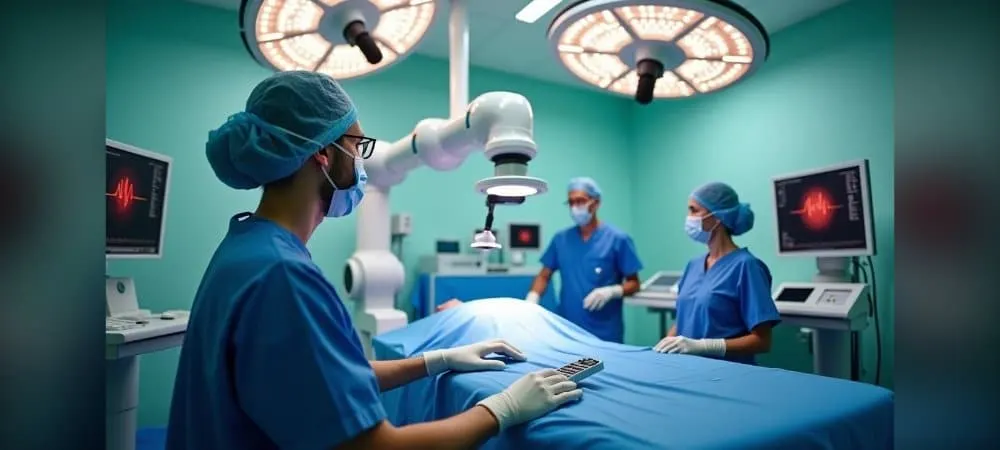
The robotic surgery system consists of four main components:
Surgeon Console: The surgeon manages the surgery by sitting at this console and controls the robotic arms with hand and foot movements.
Robotic Arms: These arms, which are connected to the patient's body, execute the surgeon's commands exactly.
3D Imaging System: Shows the surgical field in high-definition, three-dimensional form.
Computer Interface: Filters the surgeon's movements from tremors and transfers them to the robotic arms.
In robotic reflux surgery, robotic arms are inserted through small holes (0.5-1 cm) opened in the abdominal region. While one of these arms carries the high-definition camera, the other arms control the surgical instruments. There are robotic reflux surgeries performed using a single entry point, especially from the navel.
During the surgery, thanks to EndoWrist technology, robotic instruments can move at more angles and directions than the human wrist. In this way, precise surgical procedures can be performed even in narrow spaces. In addition, the image is magnified 10 times to ensure a detailed view of the surgical area.
What is the difference from laparoscopic surgery?
Robotic surgery is a more advanced form of laparoscopic surgery. The main differences between the two are as follows:
Robotic surgery provides the surgeon with a 3D high-definition image, while laparoscopic surgery has a 2D image. In addition, the robotic system filters the surgeon's natural hand tremors and allows for more precise movements.
Robotic arms have more range of motion than the human wrist, and this feature makes it possible to work more comfortably in small and narrow spaces. In addition, the robotic system can magnify 10 times during surgical procedures, which allows the surgeon to obtain a much more detailed view.
In which cases is robotic reflux surgery preferred?
Robotic reflux surgery is preferred especially in the following cases:
In patients with large hiatal hernias, safer results are obtained due to the technical superiority of the robotic system. It offers a permanent solution for chronic reflux patients who do not respond to medication.
Robotic surgery is preferred in cases where it is important to protect anatomically difficult and critical nerve/vessel structures. It reduces errors caused by fatigue as it increases the surgeon's comfort in long surgeries.
However, it should not be forgotten that the robotic system does not perform the surgery by itself; all control is with the surgeon. The surgeon performs the reflux surgery by managing the robotic arms. As a result, robotic reflux treatment is an effective surgical option offered by modern medicine.
Who Is Robotic Reflux Surgery Applied To?
Surgical intervention is not the first option for every patient in the treatment of reflux disease. However, for certain patient groups, robotic reflux surgery is an effective treatment method that increases the quality of life. So, who can benefit from this high-tech surgery?
Patients who do not respond to medication
Robotic reflux surgery is an important alternative for patients whose complaints do not go away despite long-term medication use. Research shows that approximately 30% of reflux patients do not respond sufficiently to drugs known as proton pump inhibitors (PPIs). Patients in this condition are defined as "treatment-resistant reflux" and their symptoms continue despite regular, twice-daily PPI use for at least 12 weeks.
Medication can only suppress acid secretion for as long as it is used, and complaints recur when it is stopped. However, successful surgical treatment provides a permanent solution to reflux.
Those with large hiatal hernias
30-50% of patients with severe reflux have a hiatal hernia. This condition occurs when part of the stomach is pushed through the diaphragm muscle into the chest cavity. Patients with large hiatal hernias are particularly suitable candidates for robotic surgery. In patients with hiatal hernia, the robotic system provides technical superiority in repairing the hernia and safer results are obtained.
However, some endoscopic reflux treatment methods such as GERDX are not suitable for patients with large hiatal hernias. Therefore, robotic surgery is a more effective option in this patient group.
Those who have developed damage to the esophagus
Patients who have developed damage to the esophagus due to reflux can also benefit from robotic surgery. These types of damage are:
Patients who have developed Barrett's esophagus
Patients who have developed esophageal narrowing (stricture)
Patients who have developed severe esophagitis due to reflux
These complications occur as a result of reflux remaining untreated for a long time and are serious conditions that require surgical intervention. Robotic reflux surgery is an effective method in relieving symptoms related to these damages and preventing further damage.
Young patients who want a permanent solution
Surgical treatment should be considered for reflux disease that starts at a young age and progresses. Young patients are generally not happy with the idea of taking medication for life. Robotic reflux surgery offers these patients a long-term and permanent solution.
In addition, robotic reflux surgery can be considered in the following cases:
Patients who develop side effects from medication
Patients who do not want to take medication for life
Patients with treatment-resistant asthma along with reflux
Those with reflux that affects the respiratory tract and throat
Robotic reflux surgery is performed using the laparoscopic method, and patients can usually return to their normal daily lives within 1-2 days. This rapid recovery process is an important advantage, especially for young patients who lead an active life.
Advantages of Robotic Reflux Surgery
Robotic technology provides many important benefits to patients and surgeons in reflux surgeries. Modern robotic systems offer a more precise, safe, and comfortable treatment experience compared to traditional surgical methods. Let's examine these advantages more closely.
3D high-definition imaging
The 3D high-definition camera system used during robotic reflux surgery allows the surgical field to be seen with depth perception. The surgeon can see the surgical area magnified 10-15 times. This allows even details that would not be noticeable to the naked eye to be seen clearly. Thus, all anatomical structures and vessels, both small and large, can be seen much better, making the surgery safer.
More precise surgical intervention
In the robotic surgery system, the surgeon's hand movements are cleared of tremors by the computer. Robotic arms move much more precisely than the human hand and have the ability to rotate 540 degrees. In this way, millimeter-level precision is achieved and even narrow spaces can be reached easily. This precision is very important, especially for the protection of critical structures such as nerves and vessels.
Less tissue damage
In robotic reflux surgery, the procedure is performed through small holes (0.5-1 cm). Accordingly, surrounding tissues are less damaged. In addition, while working with the robotic system, the surgeon's fatigue is reduced, and the probability of making mistakes decreases. Since the surgical scars are smaller, it also provides an advantage in terms of aesthetics.
Short recovery time
The post-operative recovery process is faster. The length of hospital stay is shortened, and patients can be discharged within 1-2 days compared to traditional methods. In addition, the process of returning to normal daily life is accelerated. This is of great importance, especially for people who lead an active life.
Less pain and risk of complications
Patients feel less pain after robotic reflux surgery. Thanks to small incisions:
Risk of infection decreases
Amount of bleeding is minimized
Need for pain medication decreases
Wound healing is faster
Reducing the risk of surgical complications is one of the most important benefits of robotic surgery. Thanks to high precision and controlled movements, surgical errors are minimized. As a result, robotic reflux treatment is an effective solution for reflux disease with both its technically superior features and its advantages that increase patient comfort.
Post-Operative Process and Recovery
The recovery process after robotic reflux surgery is one of the topics that patients are most curious about. It is important to know what you need to pay attention to for a fast and smooth recovery period after a successful surgery.
Length of hospital stay
The length of hospital stay after robotic reflux surgery is quite short. Usually, patients stay in the hospital for only 1-2 days and are then discharged. In some centers, same-day discharge may even be possible. One of the most important advantages of robotic surgery is that the length of hospital stay is shorter compared to open surgery.
Pain management in the post-operative period is of great importance. There is no significant pain problem after robotic reflux surgery. Some patients may experience back pain, especially on the first night, but sufficient comfort can be provided with a few doses of painkillers. It is recommended that you start walking on the same day after the surgery; this way, your blood circulation accelerates and the risk of clot formation decreases.
Diet and recommendations
Post-operative nutrition progresses gradually. It starts with liquid foods immediately after the surgery. The stages of nutrition are as follows:
Stage (first days): Transition from clear liquids to full liquids
Stage (2-3 weeks): Pureed/soft foods, small bites, and good chewing
Stage (3-6 weeks): Gradual transition from soft foods to solid foods
Points to consider during this process include avoiding carbonated drinks, chewing food well, and taking small bites. It is especially important that the first 3 bites after surgery are of a soft consistency - this is also called the "welcome bite". It is recommended to start with soft foods such as those with olive oil and yogurt.
Time to return to daily life
The time to return to daily life varies depending on the person's profession and physical activity level. While office workers can usually return to work within 1-2 weeks, it is recommended that those doing heavy work wait 4-6 weeks. It is important to spend the first week resting and doing light physical activities.
Although it is beneficial to start light walks on the first day after surgery, you should stay away from sit-ups and similar movements that strain the abdominal muscles for at least three months. The full recovery process after robotic reflux treatment varies from person to person, but usually, after 4-6 weeks, the tissues in the body heal to a large extent and you can start more brisk sports.
As a result, the recovery process after robotic reflux surgery is much faster and more comfortable than open surgery. Following your doctor's recommendations and paying attention to your diet plays a key role in a fast and smooth recovery.
In Summary, Robotic Reflux Surgery
As a result, robotic reflux surgery is an effective solution offered by modern medicine in the treatment of reflux disease. It gives a chance for permanent recovery, especially to patients who do not benefit from medication. Moreover, it becomes an even more valuable option for people who have large hiatal hernias or who have developed damage to the esophagus.
Thanks to the 3D imaging and precise intervention capabilities provided by the robotic system, surgeons can perform safer operations. In addition, since small incisions are made, patients suffer less pain and the recovery process is accelerated.
You can usually be discharged within 1-2 days after the surgery. Although you need to follow some rules regarding nutrition, you can return to your normal life within a few weeks. Office workers can return to their jobs after 1-2 weeks, and those working in jobs requiring physical strength after 4-6 weeks.
Although robotic reflux treatment is a modern method, it may not be suitable for every patient. Therefore, you should definitely consult a specialist physician before making a treatment decision. With the right patient selection and an experienced surgical team, robotic reflux surgery can significantly increase your quality of life and help you get rid of reflux symptoms.
Following your doctor's recommendations and paying attention to your post-operative diet are undoubtedly the most important factors for a successful result. Do not let reflux disease restrict your life anymore - it is possible to achieve a healthy life today thanks to effective treatment options such as robotic surgery.
Frequently Asked Questions
How long does robotic reflux surgery take? The surgery usually takes 1-2 hours. Including robotic system setup and anesthesia preparation, the total time can reach 2-3 hours.
Will there be a scar after the surgery? Since only small 0.5-1 cm incisions are made in robotic reflux surgery, there are no visible scars after the surgery. Small incisions become almost invisible over time.
Which foods should I avoid after the surgery? You should avoid very hot, very cold, and carbonated drinks in the first weeks after the surgery. Also, spicy, acidic, and excessively fatty foods should not be consumed.
Should I stop my medications before the surgery? Some medications, such as blood thinners, may need to be stopped before the surgery. Your doctor's guidance on this matter is very important.
Can I get pregnant after robotic reflux surgery? Yes, the surgery is not an obstacle to pregnancy. However, it is recommended to wait at least 6 months after the surgery for full recovery.
Does reflux go away completely after the surgery? With the right patient selection and a successful surgery, reflux complaints disappear completely in approximately 90% of patients.
Robotic reflux surgery is a modern treatment method that prevents stomach acid from leaking into the esophagus. It offers a permanent solution for patients who do not respond to medication and provides a short recovery time.