Robotic Obesity Surgery is a significant solution offered by modern technology for the treatment of obesity. This method allows obesity surgeries to be performed in a minimally invasive manner with high precision and control using robotic surgical systems.
This technique is a modern method applied using high-tech robotic systems that offers you a more precise surgical experience. Thanks to its minimally invasive nature, fewer incisions are made, thereby accelerating your recovery process. Furthermore, this technique reduces the risk of complications by enabling surgeons to make more precise incisions.
In this article, you will learn clearly and understandably how robotic obesity surgery is performed, who it is suitable for, and the advantages it offers.
What is Robotic Obesity Surgery?
Definition of robotic surgery
Robotic surgery, one of the most impressive applications of technology in the field of medicine, is an advanced form of minimally invasive surgical techniques. In this method, the surgeon performs the operation using robotic arms and a high-resolution 3D camera.
Robotic obesity surgery is the performance of obesity surgeries with high precision and control with the help of robotic systems. The term "robotic" here does not mean that the robot performs the surgery on its own, but rather that the surgeon can apply their movements more precisely and in a controlled manner through robotic arms.
In this procedure, the surgeon sits at a special console and manages hand-arm movements with special controls. They can view the surgical field in high resolution and three dimensions. At the same time, the robotic arms positioned over the patient mimic the surgeon's movements at the console exactly.
Difference from laparoscopic surgery
The most important differences between robotic surgery and traditional laparoscopic methods are as follows:
3D vision capability: While laparoscopic surgery uses a 2D image, robotic surgery provides surgeons with 3D imaging, offering depth perception.
Tremor filtration feature: The robotic system filters the surgeon's hand tremors, thus enabling more precise interventions.
Advanced range of motion: The robot arm has the ability to rotate 540 degrees on different axes, which makes it possible to work at angles that the human hand cannot reach.
Ergonomic advantage for the surgeon: Since the surgeon works while sitting at the console throughout the operation, fatigue and the associated error rate are reduced.
However, it is also noted that due to the large size of the surgical area in obesity surgery, the robotic method does not have a significant superiority over the laparoscopic method. Nevertheless, the advantages of robotic surgery can come to the fore in complex cases and revision surgeries.
What is the Da Vinci system?
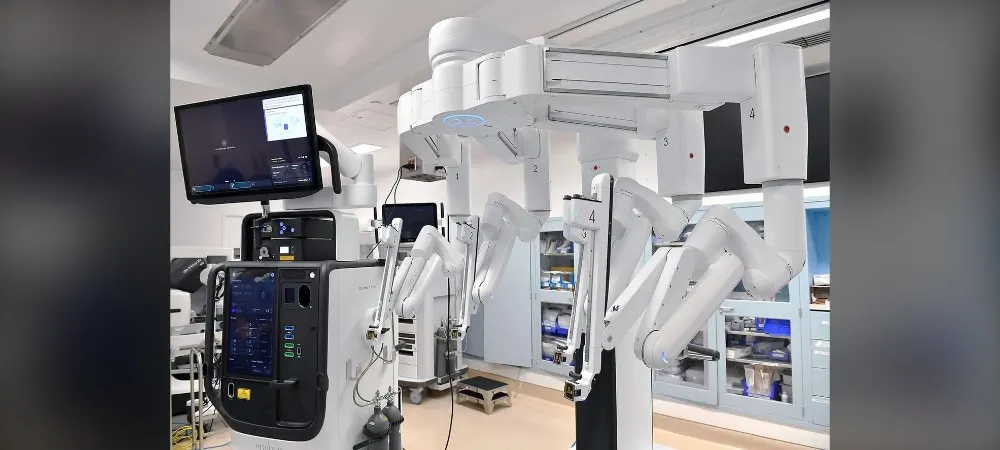
The most widely used technology in robotic obesity surgery is the Da Vinci Robotic Surgical System. This system is a high-tech robotic platform that works under the control of the surgeon and is one of the most advanced examples of minimally invasive surgical methods.
The Da Vinci system consists of four main components:
The console where the surgeon manages the operation
Robotic arms over the patient
3D high-resolution imaging system
Computer interface
The system transfers the surgeon's hand movements to the surgical instruments inside the patient's body with high precision. Thanks to the camera system, which offers 10-12 times magnification, and the three-dimensional imaging feature, surgeons can see the surgical area much more clearly.
Da Vinci robotic surgery has been successfully used in over 17.6 million operations worldwide. This system is widely used in obesity surgery for procedures such as sleeve gastrectomy, gastric bypass, and especially bipartition, which is preferred in metabolic surgery.
In Which Surgeries Is Robotic Surgery Used?
Robotic surgery technology is applied in various types of surgeries in the treatment of obesity. This advanced system provides surgeons with the opportunity for a more precise and controlled operation. Here are the main obesity surgeries where robotic systems are used:
Robotic sleeve gastrectomy
Sleeve gastrectomy, one of the most preferred methods in obesity surgery, offers higher precision when performed with robotic methods. In this procedure, approximately 75-80% of the stomach is removed to create a small, tube-shaped stomach. This ensures that the patient consumes less food and reaches a feeling of satiety quickly.
Thanks to the superior imaging and control provided by robotic systems, precise separation and stapling of tissues become possible. This minimizes the risk of leakage or bleeding. In addition, the flexibility of the robotic arms allows the surgeon to work more comfortably in narrow spaces.
Robotic gastric bypass
Gastric bypass is a more complex procedure that both reduces the volume of the stomach and bypasses a portion of the small intestine from digestion. A small section of the stomach is separated and connected directly to the small intestine, thus both limiting the amount of food that can be taken and reducing nutrient absorption.
The most challenging part of this surgery is the stage of connecting the newly created stomach pouch to the small intestine. The Da Vinci robotic system, accompanied by 3D high-resolution imaging, allows the surgeon to perform this difficult stage more safely by enabling more precise suturing. Especially in America, gastric bypass is accepted as the gold standard in obesity surgery.
Robotic SASI and transit bipartition
Transit bipartition is a surgical technique that aims to control type 2 diabetes and metabolic diseases, particularly by preserving the stomach and rearranging the small intestine. In this method, while a portion of the food proceeds through the normal digestive tract, a portion is directed directly to a section of the intestine.
SASI bipartition is a method that ensures food comes into contact with the small intestine through two separate paths along with the stomach reduction procedure. Robotic surgery provides high control in these procedures for the precise creation of intestinal connections and in stages requiring multiple sutures.
Robotic approach in revision surgeries
Revision surgery is performed after obesity surgeries that have been previously performed and have not achieved success. It is used especially in patients who cannot lose the targeted amount of weight or who start to regain weight.
Such surgeries are much more complex and difficult compared to primary obesity surgeries. The flexibility and precision provided by robotic technology allow revision obesity surgeries to be performed much more safely and successfully. It also reduces the risk of complications during or after the surgery and accelerates the patient's recovery process.
Ultimately, robotic surgery contributes to patients achieving better results by offering surgeons more control and precision in complex obesity surgeries.
How Is Robotic Surgery Performed?
Contrary to popular belief, robotic obesity surgery is not a procedure performed by robots on their own. The surgery is entirely under the surgeon's control, and the robot is used only as a tool. This high-tech method offers a more precise and controlled approach than standard laparoscopic surgery.
Surgeon's control from the console
In the robotic surgery system, the surgeon manages the entire operation by sitting at a special console located a few meters away from the patient. The pedals and control units on the console transfer all of the surgeon's movements to the robotic arms. The surgeon places their hands on the control sections and directs the robotic arms precisely with hand, finger, and wrist movements. During this process, the surgeon rests their head on the upper part of the console, watches the image from the camera, and performs the surgery.
By working in a sitting position, the surgeon gets less tired and can focus more on the surgery, thus minimizing errors due to fatigue. In addition, since the height of the console is adjustable, it can be easily used by surgeons with different physical characteristics.
Function of robotic arms
The arms in the robotic surgery system have a range of motion far beyond the capabilities of the human hand. With the ability to rotate 540-720 degrees (much more than the human wrist), these arms can reach even narrow and hard-to-access areas.
Another important feature of the robotic arms is that they filter the natural tremor in the surgeon's hand and prevent it from being reflected in the tips of the instruments. In addition to this, the robotic arms, which have an extremely thin tip, can easily perform all kinds of precise interventions and eliminate the risk of damaging surrounding tissues.
3D imaging and precision
The camera used in the robotic surgery system transmits a three-dimensional, high-resolution image of the surgical area with depth perception to the surgeon. This image can be magnified 10-15 times more than what the normal human eye can see.
Thanks to this advanced imaging system, the surgeon can clearly see the tissues even in the deepest and narrowest areas. Since the camera is controlled by the robot, it does not shake and can be zoomed in without loss of image. As a result, the surgeon can better identify sensitive anatomical structures and reduce the risk of complications.
Steps of the surgical process
Robotic obesity surgery is performed with the following basic steps:
Preparation and evaluation: The patient is evaluated with a general examination and tests before the surgery.
Anesthesia and positioning: The patient is put to sleep under general anesthesia and positioned appropriately.
Incisions and port placement: Several small incisions (usually 0.5-1.5 cm) are made in the patient's abdomen, and the entry ports for the robotic arms and camera are placed.
Intra-abdominal preparation: The patient's abdomen is inflated using carbon dioxide gas.
Docking the robot: Robotic instruments are placed into the abdomen, and the surgeon moves to the console to begin managing the robotic arms.
Performing the surgery: With the surgeon's guidance, the stomach and/or intestines are reshaped.
Removing the robot and closing the incisions: When the procedure is completed, the robotic arms are removed, and the small incisions are closed.
Throughout this entire process, the surgeon's experience and expertise in laparoscopic surgery are very important for a successful robotic surgery.
Who Is Suitable for Robotic Obesity Surgery?
Not everyone can benefit from the advantages offered by robotic technology in obesity surgery. For this treatment method to be applied, patients must meet certain criteria. Physicians decide whether the patient is suitable for robotic obesity surgery as a result of a comprehensive evaluation.
Patients with a BMI of 40 and above
Individuals with a body mass index (BMI) of 40 and above are considered within the scope of morbid obesity. In this patient group, additional health problems such as diabetes, joint problems, respiratory difficulties, and cardiovascular risks are seen more frequently due to excess weight.
In patients with this value, it is usually not possible to lose weight permanently and healthily with only diet and physical activity. Therefore, robotic obesity surgery can be applied to patients with a BMI over 40 without the requirement of an additional disease.
Important point: Patients are expected to have tried medical treatments such as diet and exercise for at least 6 months before the surgery. If sufficient results are not obtained during this process, the surgical option is evaluated.
Those with a BMI between 35-40 and an additional disease
For individuals with a BMI value between 35 and 40, not only the weight value but also health problems caused by obesity are taken into account. If patients in this range have at least one of the following additional diseases, robotic obesity surgery may be considered appropriate:
Type 2 diabetes
Hypertension (high blood pressure)
Sleep apnea
Cardiovascular diseases
Joint diseases
Fatty liver
In addition, in newly published guidelines, surgery can be recommended for patients with a BMI value above 35 regardless of the presence of an additional disease. With this method, the goal is not only weight loss but also the control or complete cure of existing health problems.
Those who have had unsuccessful surgery before
Patients who have had obesity surgery in the past but could not achieve the expected weight loss or have started to regain weight over time are evaluated for revision surgery. This group also includes patients who have experienced technical problems or complications related to the previous surgery.
Revision surgeries are considered technically more complex due to anatomical changes and adhesions. Especially robotic surgery helps the procedure to be performed more safely by offering the surgeon more precision and control in such challenging operations.
Apart from these, other sought-after characteristics for patients who want to benefit from robotic obesity surgery include being in the 18-65 age range, not being a chronic alcohol or drug addict, having the mental capacity to understand the surgical procedure, and having an acceptable level of surgical risk.
As a result, robotic obesity surgery is an effective treatment option offered to patients who meet certain criteria and cannot benefit from standard treatment methods. This method, which is not suitable for every patient, can be recommended as a result of an evaluation to be made by an expert physician.
Advantages and Risks of Robotic Surgery
The integration of robotic technology into obesity surgery offers significant benefits for both patients and surgeons. However, as with any surgical procedure, it also carries some risks.
Fewer incisions and less pain
The incisions made in robotic obesity surgery are on average 8 mm in size. These incisions are much smaller compared to traditional open surgeries. The use of smaller incisions reduces the risk of infection and significantly alleviates patients' pain complaints. Thus, the surgical scars remaining on the body are also at a minimum level.
On the other hand, since the incisions made during robotic surgery are minimal in size, the possibility of tissue damage that may occur after the surgery is also minimized. Thanks to this, patients feel much less pain and their recovery processes are accelerated.
Faster recovery process
The minimally invasive approach and less tissue damage significantly shorten the patients' recovery process. After robotic obesity surgery, patients are discharged sooner compared to traditional methods and return to their normal lives faster.
In addition, hospital stay durations are shortened, and the need for postoperative physical therapy is reduced. Patients generally feel less need to use painkillers and can return to their daily activities more quickly.
Ergonomic advantages for the surgeon
During robotic surgery, the surgeon manages the operation by sitting at the console. This eliminates the risk of errors due to fatigue. Even in challenging operations that can last up to three hours, the risk of errors due to fatigue is minimized.
Besides this, the robotic arms have a range of motion far beyond the human wrist. The robotic arms, which can be rotated 540 degrees, make it possible to perform much more precise surgical interventions by preventing hand tremors.
Possible complications and risks
As with any surgical procedure, there are some risks in robotic obesity surgery. Since general anesthesia is used, allergic reactions or respiratory problems related to anesthesia may be seen.
Bleeding may be seen during or after the operation, but the risk of bleeding is at a minimum level with robotic surgery. Although the probability of infection developing at the incision sites is very low, it is not completely zero.
In long-lasting surgeries or in cases of immobility, the risk of blood clots (deep vein thrombosis) may arise. In addition, leakage may develop at the suture lines. However, these risks can be minimized with the precautions to be taken.
In Summary: Robotic Obesity Surgery
Robotic obesity surgery is one of the important innovations that technology has brought to the field of health. Especially thanks to the Da Vinci system, surgeons can perform surgeries more precisely and in a controlled manner. This method requires fewer incisions than traditional methods and therefore accelerates your recovery process.
In addition, robotic surgery can be used in many different types of surgeries in the treatment of obesity. It is successfully applied in sleeve gastrectomy, gastric bypass, or revision surgeries. Thanks to its three-dimensional imaging and tremor filtration features, the work of surgeons is facilitated, and your safety is increased.
However, not every treatment option is suitable for everyone. Those with a body mass index over 40 or those between 35-40 who have additional health problems are suitable candidates for this surgery. At the same time, it can also be a good option for those who have not achieved results from previous surgeries.
As a result, robotic obesity surgery offers important advantages such as less pain, faster recovery, and leaving fewer scars. However, it should not be forgotten that, as with any surgical procedure, it carries some risks. Therefore, if you are experiencing obesity problems, you should first consult an expert physician and determine the most appropriate treatment method for you together.
Frequently Asked Questions
Does the robot perform the surgery? No. An expert and experienced surgeon manages the surgery from start to finish. In robotic systems, the surgeon controls the robotic arms by sitting at the console. The system only serves to apply the surgeon's movements more precisely.
Is robotic obesity surgery safe? Yes. It is accepted as a reliable method when applied with experienced surgical teams and appropriate patient selection.
How long does it take? The surgery is usually completed between 1-2 hours. Depending on the type of procedure and the patient's condition, this time can extend up to 1.5-3 hours.
Is there pain after the surgery? Postoperative pain is usually mild or moderate. Since it is a minimally invasive method, pain is less compared to open surgery.
How much weight is lost after robotic surgery? Patients can lose 50-70% of their total body weight within one year after the surgery.
Should sports be done after the surgery? Regular exercise is especially recommended. After the surgery, low-impact activities such as brisk walking and swimming are recommended first. You can do the sports you want one month after the surgery.
What are the advantages of robotic surgery over laparoscopic surgery? Robotic surgery offers the advantages of 3D imaging, higher range of motion, and surgical precision. It provides the surgeon with more control, especially in technically difficult cases.
Robotic obesity surgery provides high precision and control with minimally invasive methods. Discover how the surgery is performed and the advantages it offers in this article.