A splenectomy is the surgical removal of the spleen, located in the upper left part of the abdominal cavity. Although the spleen is the largest lymphoid organ in the body, it is an organ that can be lived without thanks to the vaccination and antibiotic treatments offered by modern medicine.
Today, this surgery can be performed more precisely and comfortably using robotic surgery technology. The spleen cleanses worn-out red blood cells from the blood and stores significant amounts of platelets and white blood cells. A ruptured spleen is one of the most critical emergencies in general surgery and requires rapid intervention. In this article, we will explain in plain language what robotic splenectomy surgery is, who it is performed for, and the differences between total splenectomy and partial splenectomy.
What is Robotic Spleen Surgery (Splenectomy)?
Robotic spleen surgery is a splenectomy procedure performed using more advanced technology compared to traditional methods. This method ensures the removal of the spleen with minimal incisions and high precision.
Features of the robotic surgery system
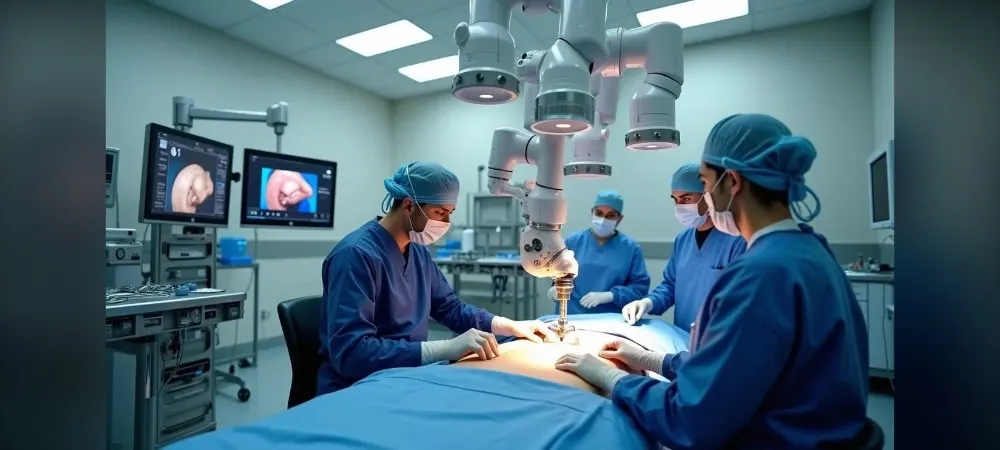
Robotic surgery is generally performed with high-technology products such as the da Vinci Surgical System. Among the most important features of this system are robotic arms that precisely mimic the surgeon's hand movements. The surgeon manages the surgery by sitting at a special console without direct contact with the patient. Thus, the natural tremor of the human hand during surgery is eliminated, creating a more stable and controlled surgical environment.
Another prominent feature of robotic surgery is its three-dimensional and high-definition imaging technology. The surgeon can make more accurate interventions by viewing the target area in a magnified and clear manner. In addition, thanks to the superior maneuverability of the robotic arms, it is stated to be a step ahead of traditional laparoscopy.
What is a total splenectomy and when is it performed?
Total splenectomy is the procedure of removing the entire spleen. It is particularly preferred for benign or malignant blood disorders. This method is used in hemoglobinopathies and hemolytic disorders, improves thrombocytopenia in refractory immune thrombocytopenic purpura, and can reverse sequelae resulting from massive splenomegaly due to myelofibrosis. Besides these, it can also be performed for diagnostic purposes in lymphoproliferative syndromes or in cases of splenomegaly.
What are partial splenectomy and its advantages?
Partial splenectomy is the procedure of removing only a part of the spleen. Particularly preferred in the treatment of benign spleen tumors, this method aims to preserve the immune system. The robotic approach optimizes spleen preservation by increasing surgical precision, minimizing blood loss, and improving postoperative outcomes.
Important surgical steps include meticulous splenic hilum dissection, selective vessel ligation, intraoperative ultrasonography, and controlled parenchymal transection. Considering the continuation of the spleen's function, a partial splenectomy may be preferred.
Differences from traditional methods
Robotic spleen surgery offers several advantages compared to open and laparoscopic surgery:
Less bleeding and pain thanks to smaller incisions
Faster recovery process and short hospital stay
Reduced risk of damage to surrounding tissues thanks to high precision
Three-dimensional image and more precise mobility
In particular, the excellent ergonomics, three-dimensional image, and superior mobility of the arms performing the procedure make robotic surgery a step ahead of traditional laparoscopy. However, robotic surgery also has disadvantages such as taking a long time to set up, high cost, and being available in limited centers.
Robotic spleen surgery can be performed in experienced hands and is a safe procedure. The patient's anatomical structure plays an important role in deciding the ideal surgical technique.
Who Is Robotic Splenectomy For?
If you are considering robotic surgery for your spleen disorders, this modern treatment method offers significant advantages for certain patient groups. Robotic splenectomy provides a less invasive approach compared to standard open surgery and is preferred in the treatment of suitable patients.
Hematological diseases (ITP, spherocytosis, thalassemia)
Blood disorders constitute the most common indications for robotic splenectomy. Particularly for patients with Immune Thrombocytopenic Purpura (ITP), an autoimmune disease where the body destroys its own platelets, robotic splenectomy can be considered when drug treatment fails. Since the spleen is the main center where platelets are destroyed, its surgical removal reduces the risk of bleeding.
Hereditary Spherocytosis is also a suitable candidate for robotic splenectomy. In this disease, red blood cells are abnormally spherical in shape and easily broken down in the spleen. Robotic spleen surgery treats anemia by stopping the destruction of these blood cells.
In conditions such as Thalassemia (Mediterranean Anemia), splenectomy may be performed in severe cases to reduce the need for continuous blood transfusions. In addition, patients diagnosed with autoimmune hemolytic anemia can also be evaluated for robotic splenectomy.
Non-traumatic spleen injuries
Spleen injuries caused by non-traumatic reasons are also suitable for robotic surgery. In the case of spontaneous rupture of the spleen due to an underlying disease, the spleen can be removed using a robotic approach. In some patients, robotic splenectomy may also be preferred for life-threatening splenic abscesses that do not respond to medical treatment.
Spleen cysts and tumors
Cysts and tumors developing in the spleen are important indications for robotic splenectomy. A robotic approach may be preferred, especially for large splenic cysts causing pain or compression. Benign or malignant spleen tumors can also be treated with robotic surgery. In some cases, instead of completely removing the spleen, robot-assisted partial splenectomy can be performed to remove benign tumors and preserve the immune function of the spleen.
Cases of splenomegaly (enlarged spleen)
Abnormal enlargement of the spleen (splenomegaly) is another important indication for robotic splenectomy. In splenomegaly, excessive amounts of blood begin to accumulate in the spleen, and over time, the spleen is prevented from performing its normal functions. This condition can cause pain in the abdomen, compression, and a decrease in other blood cells. Excessive splenomegaly seen in certain types of cancer and other diseases can be treated with a robotic approach.
Patient selection criteria and suitability evaluation
Hemodynamic stability is the most crucial criterion in selecting suitable patients for robotic splenectomy. Emergency open surgery should be chosen for unstable patients or those with signs of peritonitis (inflammation of the abdominal lining). Ideal candidates for robotic surgery:
Hemodynamically stable patients
Those requiring fewer than 4 units of blood transfusion
Those without other intra-abdominal injuries requiring surgical intervention
Individuals with normal bowel movements
These evaluations ensure that patients derive the maximum benefit from robotic splenectomy.
How is Robotic Spleen Surgery Performed?
Once robotic spleen surgery is decided upon, a detailed preparation and application process begins. This surgical technique, which is a modern medical approach, is performed using special robotic systems and provides many advantages to the patient.
Preoperative preparation process
A comprehensive preparation process is required prior to robotic splenectomy. First, the surgeon uses physical examination, blood tests, and imaging methods to evaluate your general health status. Ultrasound or computed tomography is performed to clearly view the condition of your spleen.
It is important to be vaccinated against bacteria such as pneumococcus, Haemophilus influenzae type B, and meningococcus approximately two weeks before surgery. These vaccines protect you against the risk of infection that may occur after the spleen is removed. In addition, getting annual flu and COVID-19 vaccines is also recommended.
If you are using blood-thinning medications such as aspirin, you may need to stop them a few days before surgery. If you have conditions such as diabetes or hypertension, you will receive specific instructions regarding your medication use.
The role of the robotic system in surgery
The da Vinci robotic surgical system is generally used in robotic spleen surgery. This system allows the surgeon to manage the surgery by sitting at a special console instead of standing next to the patient. The controls on the console transmit the surgeon's hand movements to the robotic arms.
The three-dimensional imaging technology offered by the robotic system enables the surgeon to clearly view the spleen and surrounding structures. The 540-degree rotational capability of the robotic arms allows movements that the human hand cannot make. This feature provides a great advantage, especially in difficult cases where the spleen is intertwined with the tail of the pancreas.
Surgical steps and procedure
Robotic spleen surgery is performed under general anesthesia. The following steps are followed during the surgery:
The patient is usually placed in the right lateral decubitus position, and the left arm is moved away from the surgical field.
Small incisions are made in the upper left region of the abdomen to place the robotic arms and access ports for the camera.
The interior of the abdomen is inflated with carbon dioxide gas, thereby expanding the surgical field.
First, the ligaments holding the spleen are dissected (splenocolic, splenophrenic ligaments).
The upper pole of the spleen is mobilized, and the short gastric vessels are divided.
The splenic hilum (the region where vessels enter) is isolated, and its vessels are securely ligated and divided.
The freed spleen is placed inside a special bag, fragmented into small pieces, and extracted.
In the case of a partial splenectomy, only the diseased part of the spleen is removed, and the remaining healthy tissue is preserved.
Advantages of Robotic Splenectomy
Robotic splenectomy is a modern surgical approach that offers many advantages over traditional methods. Thanks to robotic technology, spleen surgeries have become safer and more patient-friendly.
Benefits of the minimally invasive approach
The most important feature of robotic spleen surgery is that it is a minimally invasive method. In this technique, instead of large incisions in the abdomen, small holes of a few centimeters are made. Thus, less tissue trauma occurs, and your body suffers less damage. Thanks to the robotic arms, the surgeon can see the complex vascular structure of the spleen more clearly with three-dimensional images and perform interventions with a precision that the human hand cannot achieve.
The closed surgical approach provides less blood loss. The average blood loss in robotic splenectomy is only about 40 ml (20-150 ml). Thus, the need for blood transfusions is greatly reduced.
Recovery time and hospital stay
The hospital stay after robotic splenectomy averages 2.4 days (2-3 days). In traditional open surgery, this period ranges between 5-7 days. When comparing return-to-work times, patients can return to work in 1 week after robotic surgery, whereas they have to wait 4-6 weeks after open surgery.
Full recovery typically takes 2-4 weeks after laparoscopic and robotic splenectomy, while recovery after open splenectomy surgery can take 4-6 weeks.
Pain management and aesthetic results
Pain after robotic surgery is much less. You will generally feel mild discomfort that can be controlled with simple painkillers. In contrast, stronger painkillers may be needed in open surgery.
From an aesthetic perspective, robotic surgery leaves 3-4 small scars, whereas open surgery leaves a permanent incision scar 15-25 cm in length. This situation provides a major advantage, especially for patients who care about their appearance.
Comparison with traditional and laparoscopic methods
The main difference between robotic surgery and laparoscopic surgery is the level of control the surgeon has during the operation. In the robotic system, the surgeon sits at a special console rather than next to the patient and manages the robotic arms. This technology provides a three-dimensional image and more precise mobility.
The cost of robotic surgery is higher compared to laparoscopic and open surgery and is not available in every hospital. However, the advantages it offers are the reason for its preference in suitable patients.
Postoperative Recovery and Immune Management
The period following the removal of your spleen is of critical importance in terms of protecting your immune system. Although the recovery process after robotic splenectomy is faster and more comfortable compared to traditional methods, you need to pay attention to a few important points.
Recovery schedule in the first weeks
Your hospital stay after robotic surgery is usually only about 24-48 hours. In open surgery, this period can extend up to 5-7 days. We will encourage you to walk within the first 4-6 hours after surgery. This early mobilization ensures that your lungs work at full capacity and reduces the risk of blood clots forming in the veins.
You can start light daily activities within the first week. However, you should avoid heavy and strenuous physical activities for the first few weeks. While you generally recover completely within 2-4 weeks after robotic splenectomy, this period can take 4-6 weeks after open surgery.
Vaccination protocol and its importance
The spleen is an important organ for your immune system. When your spleen is removed, the body's defense against encapsulated bacteria weakens. In particular, bacteria such as Streptococcus pneumoniae, Neisseria meningitidis, and Haemophilus influenzae can lead to serious infections.
Before planned robotic splenectomy, ideally you should get your vaccinations at least 2 weeks before the surgery. In emergency situations, vaccination is performed 2 weeks after surgery. The standard vaccination protocol includes:
Pneumococcal vaccines (PCV13 and PPSV23)
Meningococcal vaccine (ACWY)
Haemophilus influenzae type B vaccine
Regular annual flu vaccine
Lifestyle changes and nutrition
Living without a spleen is possible, and the liver and lymph nodes take over many of the spleen's functions. You can return to your normal diet after surgery. To keep your immunity strong, you should pay attention to a balanced diet and regular sleep.
Consult a healthcare facility without wasting time when your fever rises above 38°C and be sure to share the information "I have had a splenectomy". The most feared condition is the "Overwhelming Post-Splenectomy Infection" (OPSI) picture, which can progress rapidly in individuals without a spleen and has a mortality rate rising to 50-70%.
Long-term follow-up and check-ups
Regular complete blood count monitoring is important during the first few weeks after discharge. Since the spleen clears worn-out platelets, the platelet count may suddenly rise when it is removed. If your platelet value climbs to high levels such as 1,000,000/mm³, you may need to use blood-thinning medications (aspirin, etc.).
Repeating your vaccines every 5 years is important to protect the immune system. Do not neglect to go to regular check-ups determined by your doctor and always share that you are a "patient without a spleen" with medical personnel.
Frequently Asked Questions
How long does robotic spleen surgery take?
Robotic spleen surgery takes an average of 92 minutes (between 65 and 160 minutes). The time required for the preparation and positioning of the robotic system averages 6 minutes (4-10 minutes). The entire surgical process, along with anesthesia preparation, can amount to about 210 minutes. The experience of the surgeon and the complexity of the problem in the spleen are factors affecting the duration.
When do you return to normal after surgery?
The hospital stay after robotic splenectomy averages 2.4 days (2-3 days). In open surgery, this period can extend up to 5-7 days. The full recovery process usually takes 4-6 weeks. Patients can usually be discharged on the second day after surgery. It is recommended to administer the Pneumococcal vaccine two weeks later.
Is robotic surgery more expensive?
Yes, robotic surgery is more expensive than classical methods. However, due to fewer complications, a short recovery time, and a high success rate, the total cost can be advantageous in the long run. SGK (Social Security Institution) does not fully cover robotic surgery; partial payments can be made in some cases. Many private hospitals offer installment payment options.
What is life like without a spleen?
Although the spleen is the body's "blood filter" and "germ warrior", living without a spleen is possible. The liver and bone marrow largely take over the functions of the spleen. However, the body becomes more vulnerable to encapsulated bacteria (Pneumococcus, Meningococcus, etc.). Therefore, a regular vaccination program is of vital importance. The greatest risk for asplenic individuals is infections caused by encapsulated bacteria.
In which hospitals is robotic splenectomy performed?
Among the hospitals where robotic spleen surgery is performed in Turkey are Özel Florence Nightingale Hospital and Ege University Faculty of Medicine Hospital. The da Vinci robotic surgical system is generally available in major university hospitals and private healthcare organizations. The number of robotic surgery centers is steadily increasing.
Is there an age limit for surgery?
There is no absolute age limit for robotic spleen surgery. The average age of patients reported in the literature is 29.6. However, it has been reported that 10-year-old children have also successfully undergone robotic splenectomy. General health status and hemodynamic stability are more important than age in patient selection.
In Summary Robotic Spleen Surgery
In conclusion, robotic spleen surgery is a modern surgical approach that offers significant advantages compared to traditional methods. Thanks to small incisions, three-dimensional imaging technology, and precise robotic arms, it provides less pain, less bleeding, and faster recovery.
The shortening of your hospital stay after surgery, your quick return to daily life, and the fact that surgical scars are almost invisible are among the other benefits robotic surgery offers you. In addition, the robotic system allows the surgeon to see the complex spleen anatomy more clearly and perform more precise interventions.
However, due to the role of the spleen in the immune system, you need to pay attention to certain important points after surgery. In particular, adhering to your regular vaccination schedule and applying to a healthcare facility immediately when signs of infection appear are of great importance.
Living without a spleen is entirely possible, and the liver and lymph nodes assume most of the spleen's functions. As long as you follow your doctor's recommendations and do not neglect the specified follow-ups, you can lead a healthy and active life after robotic splenectomy.
Finally, when deciding on robotic spleen surgery, it will be beneficial to consider factors such as the presence of an experienced surgical team, the technological infrastructure of the hospital, and your own health status. Robotic splenectomy performed under the right conditions offers a safe and effective option in the treatment of spleen diseases.
Robotic spleen surgery is a modern surgical method that ensures the removal of the spleen with minimal incisions and high precision. Learn who it is performed for and its advantages.