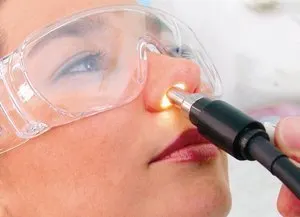
Spring has arrived. The sun has slowly begun to show its face. But allergies that appear with seasonal transitions can disrupt your comfort. If you also suffer from such a complaint, it may be possible to rid yourself of this nightmare with Rhinolight treatment…
We asked Prof. Dr. Tayfun Apuhan, Ear, Nose and Throat (ENT) Specialist at Hisar Hospital Intercontinental, about everything you need to know regarding Rhinolight treatment, which is among today's modern treatment options.
What is Rhinolight treatment?
Rhinolight treatment is the application into the nose of high-intensity light with a special content, used in the treatment of seasonal allergic rhinitis (hay fever – allergic rhinitis). In patients with allergic rhinitis, complaints such as itching, nasal congestion and sneezing caused by allergy in the nose are successfully reduced with Rhinolight.
How is Rhinolight treatment applied?
The effects of Rhinolight light therapy are rapid and long-lasting. Periods of relief vary from person to person, but patients' complaints improve to a high degree. Depending on the level of complaints, it may be necessary to repeat treatment courses several times within the year. Rhinolight is applied in a total of 6 sessions for patients with seasonal allergies, and 8 sessions for patients with year-round allergies. In seasonal allergies, three treatments are given over 2 consecutive weeks, three per week; in patients with allergic rhinitis lasting all year, three treatments in the first week are followed by one application per week for 5 weeks. The effect duration of light therapy is 1 year; at the end of this period, it may need to be repeated.
Who can undergo Rhinolight treatment?
Patients whose allergic rhinitis complaints cannot be controlled despite medications used alone or in combination,
Allergic rhinitis patients for whom the use of medication is inadvisable, such as during pregnancy, breastfeeding, active sports, or liver or kidney insufficiency,
Patients whose medications for another illness may interact with antiallergic drugs.
Patients who prefer not to use medication over the long term,
Patients who want support for the allergy treatment they are already undergoing are candidates for Rhinolight treatment.
Who is Rhinolight not recommended for?
Patients who cannot benefit from standard treatments due to severe deviation (curvature) of the nose,
Patients with other acute viral or bacterial nasal inflammation in addition to allergic rhinitis.
Patients with tumors inside the nose or in the nasopharynx,
Patients with severe nasal dryness and crusting inside the nose,
Patients who have previously experienced serious problems during skin-directed light therapy.
Since there is insufficient clinical experience regarding the use of light therapy in patients under 14 years of age, Rhinolight application is not recommended in this age group.