Robotic rectal cancer treatment is one of the most significant innovations in modern medical technology. This advanced laparoscopic surgical technique provides your surgeon with three-dimensional, high-definition images, enabling the execution of even the most delicate interventions without error.
Robotic surgery, which provides great benefits especially in surgical operations performed in narrow regions, minimizes the risk of errors or complications in the treatment of rectal cancer. Furthermore, thanks to robotic arms with precise range of motion in every direction, your surgeon can perform critical interventions with confidence. Recognized worldwide as a safe and successful medical technology, this method has initiated a new era in the treatment of rectal cancer.
What is robotic resection of rectal cancer?
Robotic resection of rectal cancer is the process of removing malignant tumors formed in the rectum using advanced technology. This method stands out as a minimally invasive technique offered as an alternative to traditional open surgery and laparoscopic (closed) surgery.
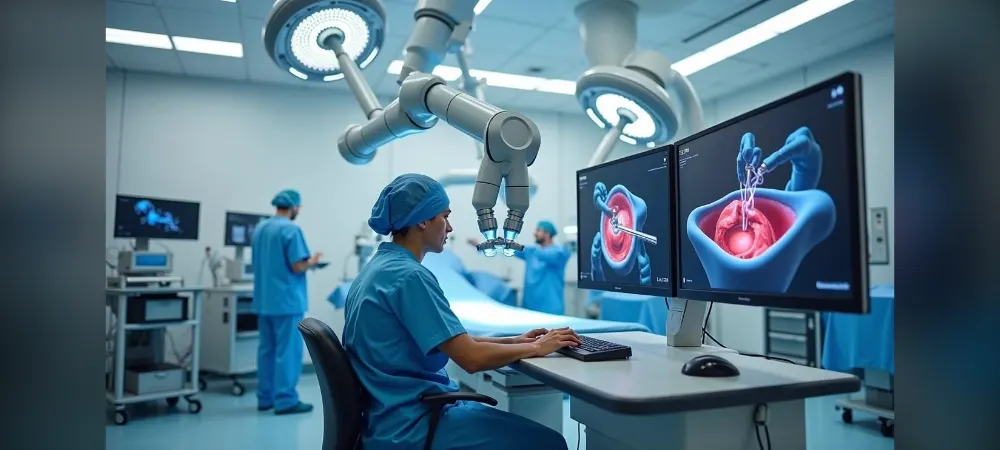
In robotic rectal cancer surgery, the surgeon sits at a special console and controls the robotic system. The robotic arms, inserted through small incisions made in the patient's body, mimic the surgeon's hand movements with millimetric precision. Additionally, thanks to a three-dimensional and high-definition camera, the surgical field is magnified and clearly visualized.
The robotic system is designed to transmit the surgeon's movements more precisely. It provides great convenience, especially in surgeries performed in narrow and hard-to-reach areas such as the rectum. This system does not reflect tremors in the human hand, so even the finest movements can be performed with high precision.
During robotic rectal surgery, the procedure progresses as follows:
Small incisions are made in the abdominal region
Robotic arms and a three-dimensional camera are inserted through these incisions
The surgeon manages the robotic arms via the console to remove the tumor and surrounding tissues
After the tumor is removed, the healthy ends of the intestine are joined (anastomosis)
In this surgery, the goal is to remove the tumor completely and cause minimal damage to the surrounding tissues. In some cases, especially with tumors in the lower part of the rectum, it may not be possible to join the ends of the intestine. In this case, it may be necessary to attach a bowel bag (colostomy) temporarily or permanently.
One of the most important features of the robotic surgical system is that it allows the surgeon to work comfortably in the pelvic region, which has narrow and complex anatomical structures. In this way, nerve preservation can be better achieved, and postoperative functional outcomes can be improved.
The main benefits provided by robotic rectal cancer surgery are as follows:
Provides a clearer view with three-dimensional images that can be magnified up to ten times
Critical interventions can be performed without error thanks to the precise range of motion of the robotic arms in every direction
The risk of bleeding and infection is reduced thanks to small incisions
The patient's recovery process is accelerated and the length of hospital stay is shortened
Urinary continence and sexual functions can be preserved thanks to the protection of pelvic nerves
In conclusion, robotic rectal cancer resection offers significant conveniences and advantages for the surgeon, especially in surgeries to be performed in an anatomically narrow region such as the rectum. For this reason, it is progressing towards becoming the first choice in the surgical treatment of rectal cancer all over the world as a safe, comfortable, and successful method.
Why is robotic surgery preferred for rectal cancer?
In today's medical world, robotic surgery is of increasing importance, especially in the treatment of rectal cancer. So why is this innovative approach preferred over traditional surgical methods? Here are the reasons why robotic surgery is preferred in the treatment of rectal cancer.
Provides an advantage in narrow anatomical regions
The rectum is located in an anatomically narrow region, and the surgeon's range of motion is quite limited in classical surgical methods. The robotic surgery system offers the surgeon superior control and flexibility, especially in these narrow and hard-to-reach areas. Robotic arms have the ability to move at angles and with precision that the human hand cannot reach. This feature ensures more successful results in protecting the delicate tissues surrounding the tumors and preventing the spread of the disease.
Robotic arms can rotate 360 degrees and easily reach hard-to-reach areas of the human body. This feature provides a great advantage in rectal surgeries that require reaching the deep pelvic region. Thanks to the three-dimensional, high-definition camera system, the surgeon can see the surgical field at a "micro level." These capabilities create a very valuable superiority in robotic rectal surgeries performed in narrow anatomical regions.
Shortens recovery time with its minimally invasive structure
Robotic rectal cancer surgery significantly shortens the recovery process of patients because it is a minimally invasive method. In this method, which is applied with much smaller incisions compared to classical open surgery, there is less blood loss, less pain, and a lower risk of infection during the surgery.
Thanks to these advantages, patients are usually discharged within 1-2 days. This rapid recovery provided by robotic surgery offers the opportunity to start these treatments earlier, especially in patients who require chemotherapy or radiotherapy. Furthermore, thanks to small incisions, patients can return to their daily lives and work life in a short time.
Thanks to its minimally invasive structure, patients need fewer painkillers, become able to move faster, and the risks of infection and bleeding are reduced. These advantages increase the comfort level of patients while also accelerating the recovery process.
Offers high precision to the surgeon
Robotic surgery systems offer extraordinary precision to surgeons. The instruments at the tips of the robotic arms can rotate 180 degrees in any direction, similar to the human wrist, and can even bend up to 540 degrees. In this way, important procedures such as cutting, grasping, and suturing can be performed with high precision at many points of the body.
The fixed arms used in robotic systems eliminate hand tremors, minimizing the risk of damage to surrounding tissues. Thanks to the real image obtained by magnifying three-dimensional and 16 times, it becomes easier to clear the entire tumor, especially in cancer patients.
The Da Vinci robotic system increases the safety and success of the surgery by providing the surgeon with three-dimensional vision and millimetric precision in the narrow pelvic region. Robotic surgery may provide superior results in terms of preserving pelvic nerves, especially in rectal cancer surgeries. This minimizes the risk of postoperative urinary incontinence and loss of sexual function.
How is robotic rectal cancer surgery performed?
Robotic technology has moved the surgical approach in rectal cancer treatment to a completely different dimension. Unlike classical surgical techniques, this innovative method allows for smaller incisions and more precise interventions in the patient's body.
The surgeon managing the surgery via the console
In robotic rectal cancer surgery, the surgeon does not perform the surgery next to the patient, but by sitting at a special console in the same room. Through this console, the surgeon directs the robotic system and controls all surgical procedures from there. The surgeon directs the robotic arms with finger and wrist movements while sitting at the console.
Thanks to the monitor on the console, the surgeon follows the three-dimensional and high-definition images taken from inside the patient's body. These images guide the surgeon during the surgery and allow them to see even the finest details.
The robotic system does not perform the surgery on its own, as is often thought. It is only an assistant that carries out the surgeon's commands. Therefore, the surgeon's skills and commands are still the most important factor in the success of the surgery.
3D imaging technology
One of the most important advantages of the robotic surgery system is the three-dimensional imaging technology it offers. The robot's dual-head camera technology provides surgeons with a three-dimensional stereoscopic view and allows them to adapt more easily to differences in depth perception.
This advanced imaging system magnifies the surgeon's field of view, especially in narrow and hard-to-reach areas such as the rectum. The surgeon's video-hand-eye coordination develops better and helps in removing the tumor more accurately. Additionally, delicate structures such as nerves and blood vessels are seen more clearly, making them easier to protect.
Thanks to three-dimensional high-definition imaging, the surgeon is provided with a magnified and more detailed view of the surgical field. This is of great importance, especially in surgeries performed in sensitive areas such as rectal cancer.
Range of motion of robotic arms
In robotic surgery, the surgeon uses robotic arms to insert surgical instruments and a three-dimensional camera through small incisions. Robot arms can move at angles and with precision that the human hand cannot reach. This feature ensures the protection of nerves and healthy tissues, especially in sensitive areas such as the rectum.
One of the biggest advantages offered by robotic arms is that they have a tremor filter. The robotic system allows the surgeon to perform movements with millimetric precision. This provides a great advantage in organs that are narrow and difficult to move, such as the rectum.
In open surgery, robotic arms work like an artificial hand even in situations where the surgeon's hand and instruments cannot enter or might damage the surroundings. Furthermore, it does not reflect tremors in the surgeon's hand, which provides millimetric precision.
Surgeon's expertise and experience
Robotic rectal cancer surgery is a method that requires special training, and it yields much healthier results when performed by an experienced surgeon. The surgeon's expertise and experience in robotic surgeries are of great importance because the robotic system only carries out the surgeon's commands.
During robotic surgery, the surgeon pursues two important goals in the treatment of rectal cancer: First, they remove the rectum along with the surrounding lymph nodes where the cancer is likely to spread, aiming to leave no tumor behind. The second goal is to ensure that the patient's bowel continues to function through normal channels by connecting the bowel to the anus after removing the rectum close to the anus, without taking the bowel out.
When performed by experienced surgeons, robotic rectal cancer surgery provides excellent results in terms of both complete removal of the cancer and preservation of quality of life. For a successful robotic surgery, the surgeon must have received special training on the robotic system and have sufficient experience.
What are the advantages of robotic rectal cancer surgery?
Robotic surgery offers many important advantages in the treatment of rectal cancer. Compared to traditional open surgical methods, it creates significant differences in terms of patient comfort and treatment success. Let's examine the benefits provided by this modern technique more closely.
Less risk of bleeding and infection
Since the incisions made in robotic rectal cancer surgery are minimal in size, the risk of bleeding and infection is extremely low. The robotic system, which allows the surgeon to perform movements with millimetric precision, reduces the risk of bleeding thanks to small and controlled movements. Additionally, small incisions reduce the risk of infection, minimizing postoperative complications.
Shorter hospital stay
Patients who undergo robotic rectal cancer surgery can usually be discharged within 1-2 days. This duration is much shorter than open surgery and significantly increases patient comfort. Especially thanks to its minimally invasive structure, a significant reduction in the length of hospital stay is achieved. Being able to discharge the patient in a shorter time both accelerates psychological recovery and reduces costs.
Less pain and rapid recovery
Patients need fewer painkillers after robotic rectal cancer surgery. Thanks to small incisions and minimally invasive techniques, the sensation of pain is significantly reduced. Besides this, patients can return to their daily lives faster. Since the recovery process is faster, the opportunity arises to start these treatments earlier in patients who require chemotherapy or radiotherapy.
Smaller incisions for aesthetic purposes
In robotic rectal cancer surgery, the procedure is performed with smaller skin incisions compared to open surgery. The scars left on the body after the surgery are much smaller than in open surgery, which makes patients feel much better aesthetically. Especially compared to traditional open surgical methods, more aesthetic results are obtained.
Increased surgical success rate
Thanks to the precise surgery offered by the robotic system, tissues can be separated much more clearly, which increases the surgical success rate. Three-dimensional imaging technology enables the surgeon to see the boundaries of cancerous tissue clearly, making it possible to remove the cancer completely and reduce the risk of recurrence.
The robotic system, which enables more effective application of nerve-sparing surgical principles, especially in rectal cancer surgeries, is important in terms of preserving urinary and bowel functions. It also allows for a more comprehensive removal of lymph nodes.
In Summary: Robotic Rectal Cancer Surgery
In conclusion, robotic rectal cancer surgery offers many important advantages compared to traditional methods. First of all, thanks to three-dimensional imaging technology and precise robotic arms, surgeons can work more comfortably in the narrow pelvic region. Furthermore, its minimally invasive structure means less pain, faster recovery, and a shorter hospital stay for patients.
Robotic surgery also reduces the risk of bleeding and infection while enabling more effective application of nerve-sparing surgical principles. Thus, better results can be obtained in terms of preserving urinary and sexual functions. Since smaller incisions are used, it also provides an advantage in terms of aesthetics.
However, the surgeon's experience and expertise are of great importance in the success of robotic surgery. The robot is only an assistant that carries out the surgeon's commands. Therefore, the procedure must be performed by an experienced surgeon who has received special training on the robotic system.
Although it may not be suitable for every patient, robotic rectal cancer surgery provides excellent results in suitable patients in terms of both complete removal of the cancer and preservation of quality of life. With the continuous development of technology, this method will be used even more widely in the treatment of rectal cancer in the future.
Frequently Asked Questions
We have answered the questions that patients are most curious about regarding robotic rectal cancer surgery below:
How many hours does robotic rectal cancer surgery take? The surgery can usually take between 3-5 hours. This duration may vary depending on the patient's condition.
When is the patient discharged after robotic surgery? Patients can usually be discharged within 1-2 days. In some cases, this period may extend to 3-5 days.
What is the risk of complications in robotic rectal surgery? The risk of complications is low, but conditions such as bowel leakage, infection, or bleeding may rarely occur.
What are the differences between robotic surgery and laparoscopic surgery? Robotic surgery provides three-dimensional imaging and more precise movements. Laparoscopic surgery is generally more cost-effective.
Is robotic surgery performed in every hospital? No, it can only be performed in centers with a robotic surgery system and by surgeons experienced in this field.
Are urinary or sexual functions affected after surgery? One of the most important advantages of the robotic system is that it allows for nerve-sparing surgery. In this way, urinary continence and sexual functions can be largely preserved.
Is a colostomy permanent? Routine colostomy is not required for every patient. In some cases, a temporarily opened stoma can be closed later. In rare cases, a permanent colostomy may be required.
When can one return to sports and daily activities after robotic surgery? Light activities can usually be performed within 1-2 weeks, but 4-6 weeks may be required for full recovery.
Robotic rectal cancer treatment offers surgeons high precision and three-dimensional imaging. This method provides fewer complications and rapid recovery thanks to its minimally invasive structure.