More than 150,000 tonsillectomy surgeries are performed in Turkey every year. So, what is plasma surgery and why has it become so preferred in recent years? Unlike classical techniques, this method operates at low temperatures, such as 40-70 degrees, and does not damage tissues. At the same time, it reduces pain by 30-50% compared to traditional methods. In this article, we will detail topics such as the advantages of plasma surgery, how it is applied, and in which cases it is preferred.
What is Plasma Surgery?
Definition and Working Principle of Plasma Surgery
Plasma surgery, also known as "coblation" in medical literature, is a technique that works by combining radiofrequency energy with a saline environment. Thanks to this combination, tissue can be dissected at a very low temperature, such as 40-70 degrees.
So how does this system work? RF energy stimulates sodium molecules within the saline solution. As a result of this stimulation, a high-concentration, ionized field is formed. This field appears as a bright orange light. The ionized particles have sufficient energy to break organic molecular bonds. Thus, tissue can be cut and coagulated.
The Coblator system operates via electrode elements located at the tip of sterile, single-use probes. The current passing between these electrodes provides a regional energy field. In contrast, monopolar systems have only one active electrode. The current passes through the patient's body to a return pad. This causes a significant amount of energy to pass through the surrounding tissue.
In plasma surgery, the situation is different. The conductive fluid forms a thin layer between the active and return electrode elements. When sufficient energy is applied, this conductive fluid turns into a vapor layer containing energized particles. When high-energy particles come into contact with the tissue, molecular dissociation occurs.
In Which Areas Is It Used?
Plasma surgery is frequently preferred, especially in the treatment of ear, nose, and throat diseases. It can be applied both partially and totally in tonsil and adenoid surgeries.
In the partial method, the tonsil capsule is preserved, leaving protective tissue behind. This approach significantly reduces postoperative pain and the risk of bleeding. In the total method, the entire tissue is removed, as in classical surgeries. However, thanks to the low temperature, thermal damage to the surrounding tissue remains minimal.
Plasma technology can also be applied to children experiencing adenoid enlargement. At the same time, it offers an effective solution for recurrent throat infections and chronic tonsillitis cases.
Difference from Traditional Methods
The most fundamental difference emerges in temperature values. While the temperature in classical electrocautery rises to 400-600 degrees, the plasma method operates at much lower temperatures. This difference directly affects the damage caused to the surrounding tissue.
Compared to conventional electrosurgery methods, plasma surgery causes relatively lower temperatures in the treated area. As a result, collateral thermal damage to the untreated surrounding tissues remains limited.
In traditional methods, tissue burning and excessive coagulation can be seen due to high temperatures. In plasma surgery, both cutting and coagulation are performed simultaneously. However, thanks to low-temperature operation, heat damage to the surrounding tissue is at a minimum level.
There is also a significant difference regarding pain. Postoperative pain is 30-50% less compared to traditional methods. The risk of bleeding also decreases. The time to return to normal nutrition and activities is shortened. Most patients can be discharged on the same day.
How Is Plasma Surgery Applied?
Plasma surgery application consists of three basic stages. Each stage is important for the success of the surgery and for the patient to have a comfortable recovery process.
Preoperative Preparation Process
First, a detailed health history is taken from the patient. Physical examination and necessary laboratory tests are completed. These tests include blood values, kidney and liver functions, and bleeding and clotting times. The risk of infection is also evaluated.
As the day of surgery approaches, you need to make some preparations. You are asked to fast for 6-8 hours before the surgery. You should not consume anything, including water. If you are taking blood-thinning medications, they should be discontinued at least 7-10 days prior. Medications such as aspirin and ibuprofen fall into this category.
The anesthesiologist performs a risk assessment before the surgery. In pediatric patients, parents are given detailed information about the surgical process and postoperative nutrition. It is beneficial to ask your questions at this stage.
Surgical Stages
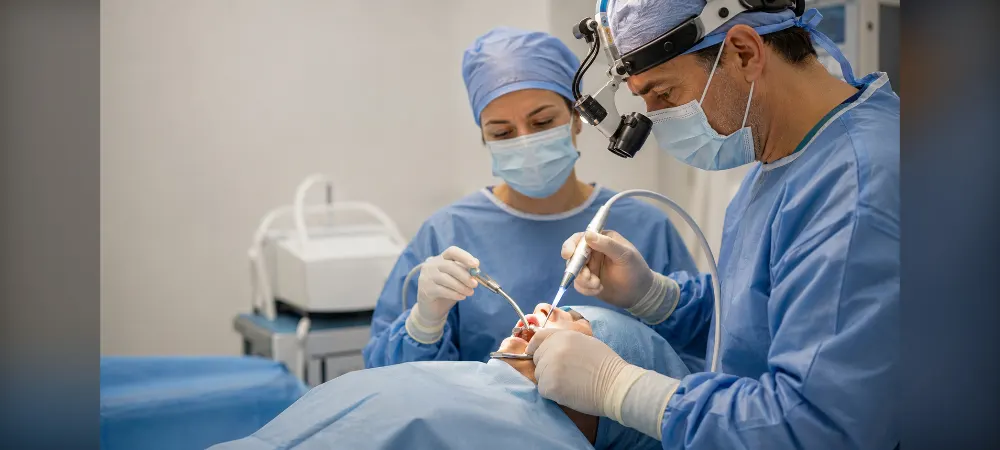
The surgery is performed under general anesthesia. The average duration varies between 20-40 minutes. After anesthesia, a mouth gag is placed. Then, the plasma surgery probe is activated.
Tonsil tissue is removed in the capsule plane or partially. In the partial method, protective tissue is left behind. This significantly reduces the risk of postoperative pain and bleeding. The adenoid is removed from behind the soft palate under endoscopic guidance.
During the procedure, a specially designed plasma energy device is used. It treats the targeted area without damaging the tissue by operating at a low temperature. At the same time, vessel coagulation is performed to keep bleeding to a minimum. No stitches are required. Much less trauma occurs compared to classical surgery.
The entire surgical duration is usually completed in under half an hour. The patient is taken to the recovery room at the end of the surgery.
Postoperative Recovery Process
After waking up, the patient is kept under observation for 4-6 hours. During this time, vital signs are checked. Most patients can be discharged on the same day. In some cases, an overnight stay may be required.
Cold liquids and soft foods are given in the first 24 hours. Ice cream and cold yogurt reduce throat edema and pain. These foods are also options that patients enjoy consuming. You should stay away from hot drinks.
Attention should be paid to oral hygiene. Antibiotic and painkiller treatment should be used regularly. It is important not to skip the medication doses recommended by your doctor. Active play and heavy exercise are postponed for at least 10-14 days. Take care to rest during this period.
Full recovery is completed in 2-3 weeks. This period is significantly shorter than traditional methods. It is normal to have mild pain during the recovery process. However, inform your physician in case of severe pain.
What Are the Advantages of Plasma Surgery?
Low Temperature and Minimal Tissue Damage
Heat damage to the surrounding tissue is at a minimal level. This is one of the most important advantages of plasma surgery. In classical methods, thermal necrosis can occur up to 5-10 mm deep on the tissue surface. In plasma technology, this damage drops below 0.5 mm.
Because it is protected at the molecular level, the surgical area heals much faster. Only the problematic area is affected by the procedure. Blood vessels, hair follicles, sweat glands, nerves, and muscles in the surrounding tissues are not affected. Therefore, the risk of side effects is quite low.
Sensory nerve endings in the pharynx region are extremely sensitive to heat. The low-heat profile of plasma surgery prevents permanent damage to nerve endings. This feature directly affects your postoperative comfort.
Reduction in Pain and Bleeding Risk
Postoperative pain is 30-50% less compared to traditional methods. Pain begins with the release of inflammatory substances as a result of tissue damage caused during surgery. These substances create electrical impulses in peripheral nociceptors.
The low level of damage caused by the plasma method significantly reduces pain in the postoperative period. Additionally, the force applied for dissection in the tonsil region is reduced. Less tissue damage occurs. This difference is felt very clearly, especially in the early postoperative period.
The risk of bleeding also decreases. There is no bleeding during the application. Since cutting and coagulation are performed simultaneously, vessels are closed instantly. This increases the clarity of vision during surgery. It also provides a safer working environment for the surgeon.
Rapid Recovery and Early Discharge
The time to return to normal nutrition and activities is shortened. The surgical area is covered with a thinner fibrin layer. Patients can switch to solid food much earlier. This is a great advantage, especially for pediatric patients.
The shortening of the hospital stay is another notable feature. Most patients can be discharged on the same day. In some cases, only a few hours of observation are sufficient. You can quickly return to your daily life.
Discomfort after the procedure is reported at very low levels. Superficial scabs begin on the 3rd-4th days of treatment. With the cream treatment given by your doctor, these scabs fall off within 1 week. Remember that you should never pick at the scabs.
Preservation of Voice Quality
The operation is completed without damaging sensitive tissues. Delicate structures in the throat area are preserved. Your vocal cords and surrounding tissues are not affected by the surgery. As a result, there is no change in your voice quality.
This advantage is especially important for people who require professional voice use. It is an ideal method for teachers, lawyers, call center employees, and singers. You can safely return to your profession after the surgery.
The advantages of plasma surgery are not limited to the surgery itself. You will feel more comfortable throughout the entire recovery process.
In Which Cases Is Plasma Surgery Preferred?
Plasma surgery is a preferred method in the treatment of certain ear, nose, and throat disorders. A detailed evaluation is made to understand in which cases this technique should be applied.
Tonsil and Adenoid Enlargement
When tonsils are larger than normal, they can affect breathing, swallowing, and speaking. Large tonsils that cause airway obstruction lead to snoring and sleep apnea. Adenoid enlargement creates nasal congestion by closing the holes where the nose opens to the nasopharynx at the back.
In children, the adenoid begins to grow especially from the age of 2. It continues to grow until the age of 7-8. Excessively enlarged adenoids cause mouth breathing, snoring, and breathing pauses during sleep. Children who cannot breathe sufficiently cannot enter deep sleep. As a result, slowing in weight and height gain, hyperactivity, and concentration problems emerge.
Tonsils that are large enough to obstruct breathing also lead to nutritional problems. These children are usually picky eaters and eat slowly. In children with chronic nasal congestion, "adenoid face" characterized by narrowing of the upper jaw, mouth remaining open, and a dull gaze can develop.
Recurrent Throat Infections
Plasma surgery is preferred for frequently recurring tonsil infections. Standards known as Paradise criteria in medical literature are the most reliable guide for the decision of surgery. These criteria are as follows: having 7 or more febrile tonsillitis episodes in one year, 5 or more each year for two consecutive years, or 3 or more each year for three years.
Recurrent infections cause school absenteeism, decreased school success, and frequent antibiotic use in children. Some bacteria can remain in the tonsils even after treatment. Especially bacteria that settle in the lower parts of convoluted areas reappear as soon as the body's resistance drops, leading to infection.
When tonsillitis is not treated in the early period, it can cause problems such as middle ear infection, loss of appetite, and subsequent weight loss. Furthermore, since the adenoid harbors antibiotic-resistant bacteria, it leads to frequently recurring sinusitis and middle ear infections.
Sleep Apnea and Snoring Problems
Obstructive sleep apnea syndrome develops most frequently due to adenotonsillar hypertrophy, especially in children. Due to the excessive size of the tonsils, breathing pauses during sleep, snoring, and growth-development retardation are experienced. Apnea, defined as the cessation of breathing during sleep, can lead to serious health problems.
The most prominent symptoms of sleep apnea include snoring, breathing pauses detected at night, increased daytime sleepiness, and morning headaches. When breathing stops, oxygen to the brain decreases. This causes morning fatigue, attention deficit, and deficient secretion of growth hormone in the child.
A child who cannot breathe well at night cannot enter deep sleep. Poor quality sleep can affect the secretion of growth hormone, leading to a slowing in the child's height and weight development. Since children will sleep and rest healthily after the surgery, the growth hormone level also increases.
Chronic Tonsillitis
Chronic tonsillitis is a persistent inflammation that develops due to recurrent infections. Enlargement, degeneration, and blockage in the crypts occur in the tonsils. Surgery is recommended if white deposits that form on the tonsils and cause bad breath cannot be treated with medication.
Findings include recurrent sore throats, enlargement and increased vascularization in the tonsils, and foul-smelling substances accumulating in the crypts. Febrile attacks, joint pain, fatigue, and swelling of lymph nodes in the neck are also seen. Tonsils consist of many pockets called crypts. In some patients, these crypts contain foul-smelling white-colored waste.
If there is a history of peritonsillar abscess, i.e., abscess formation around the tonsils, it is a definitive indication for surgery. Therefore, plasma surgery offers an effective and safe treatment option in all these situations.
Frequently Asked Questions About Plasma Surgery
There are many questions that patients are curious about regarding plasma surgery. These questions usually stem from preoperative anxieties and uncertainties regarding the recovery process. We have compiled the most frequently asked questions and their answers for you.
Is plasma surgery painful?
Since local anesthesia, sedation, or general anesthesia is used during the procedure, pain is not felt. After topical anesthesia application, the procedure can be easily tolerated. The patient does not feel any pain during the procedure.
There may be mild tension and sensitivity after the surgery. This is temporary and can be easily controlled with doctor's advice. Discomfort after the procedure is reported at very low levels.
The pain level is significantly less compared to traditional methods. Thanks to the low-temperature technique, damage to surrounding tissues is minimal. Therefore, the discomfort experienced during the recovery process remains quite limited.
How long does it take to return to normal after surgery?
Most patients can return to their daily lives within 3-5 days. Patients can usually return to their normal activities a few days after the procedure. It is possible to return to normal life in a short time after the procedure.
The first 24-48 hours are the period when swelling and pain are most intense. Superficial scabs the size of a pinhead begin on the 3rd-4th days of treatment. With the cream treatment given by your doctor, these scabs fall off within 1 week.
Punctate scabbing lasting 7-10 days occurs after the application. Swelling and redness in the treated area usually decrease within the first week. Healing in the skin becomes evident two to three weeks after the procedure.
Full results show themselves more clearly within 3-6 months, during which collagen production continues. However, your return to daily activities happens much earlier. The patient can return to their daily life on the same day.
Can plasma surgery be applied at any age?
Plasma surgery is generally suitable for individuals over 25 years of age who have a decrease in skin elasticity. It also provides tightening when applied at a younger age. Ideal candidates are those middle-aged and older who do not want surgery or are not suitable for surgery.
According to most experts, the minimum age limit for the procedure is 15. There is no maximum age limit. However, age is not the only determining factor.
People with serious health problems or those using certain medications may not be suitable for this procedure. You should give your doctor full information about your current health status and the medications you use. You especially need to provide information regarding blood-thinning medications.
What are the complication risks?
Mild swelling, bruising, sensitivity, and a feeling of tension after the procedure are normal. These effects usually decrease within a few days to a week. There are no permanent side effects other than mild redness and edema that may last for a few days.
Temporary redness, swelling, and scabbing may occur after the procedure. These effects usually heal within a short time. Compared to surgery, surgical risks such as infection and bleeding are much lower.
In some patients, temporary lightening or darkening of the skin color may occur after the procedure. This usually resolves as the skin renews itself. Darkening of the treated area may be seen in tanned skin during summer months, in dark-skinned individuals, and in people who cannot protect the treated area from the sun after the procedure.
With correct patient selection, no permanent side effects have been seen after the procedure. No burns have developed in any patient. Furthermore, in plasma technology, only the problematic area is affected by the procedure. Blood vessels, nerves, and muscles in the surrounding tissues are not affected.
In Summary, Plasma Surgery
Plasma surgery is one of the most effective solutions offered by modern medicine. Thanks to its operation at low temperatures, it does not damage tissue. It significantly reduces pain compared to traditional methods. The risk of bleeding is low. Patients return to their daily lives in a much shorter time.
If you are considering plasma surgery for your tonsil and adenoid problems, you should consult an experienced ear, nose, and throat specialist. Your doctor will recommend the most appropriate treatment method for your condition. It is important to ask all your questions before the surgery. Thus, you can spend the process more comfortably.