The piezo surgery method is a modern technique that reshapes nasal bones using ultrasonic waves. Since ultrasonic sound waves are used instead of traditional cutting instruments, less bleeding, swelling, and bruising occur. The surgery takes about 2 hours under general anesthesia, and patients are usually discharged on the same day. Frequently preferred by surgeons particularly in Europe and Turkey, this method received FDA approval in 2017. In this article, you will find answers to the questions of what piezo surgery is, how it is performed, and what its advantages are.
What is the Piezo Surgery Method?
Definition of Piezo Technology
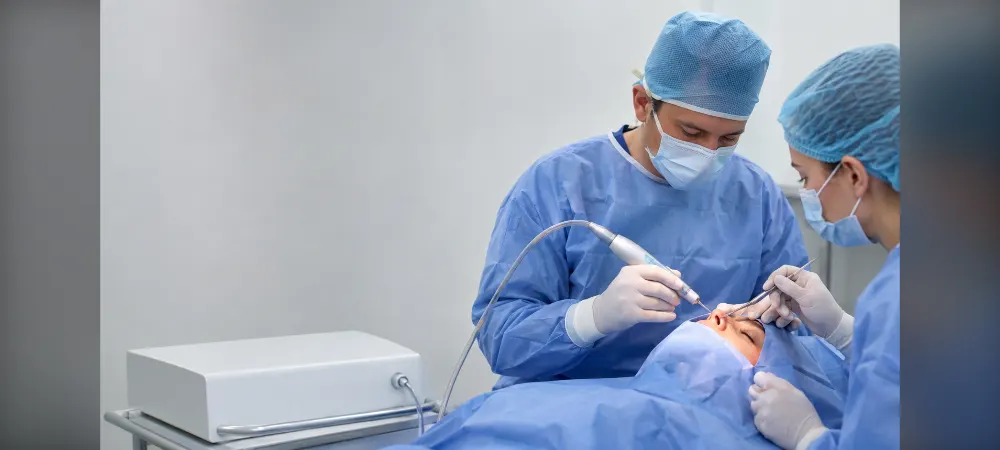
Ultrasonic vibrations form the basis of piezo surgery. The device cuts and reshapes nasal bones by generating high-frequency sound waves. This technology is not new to the medical world. It has been safely used for many years in fields requiring high precision, such as dental surgery and neurosurgery.
The most important feature of the piezo device is that it only affects bone, which is hard tissue. When the tip of the device contacts the bone, it makes millimetric cuts. When it reaches soft tissues such as capillaries, nerves, or cartilage right next to it, it stops working. Thanks to this selective effect, bleeding during the operation is minimized.
The piezo method was first applied in rhinoplasty operations in 2004 by Massimo Robiony. This technology, which was previously frequently used in dental operations, was adapted to rhinoplasty to correct structural flaws in the nose.
Differences from Traditional Methods
In traditional rhinoplasty, surgical chisels and mallets called osteotomes are used to reshape the nasal bones. In this method, a controlled "fracturing" procedure is applied to the bone. However, it is inevitable that the energy spills beyond the bone, causing shock and damage to the surrounding tissues. This situation leads to the rupture of capillaries, heavy bleeding, and postoperative bruising and swelling.
In the piezo method, the situation is completely different. There is no "fracturing" action here; instead, there is "cutting" and "shaping" with ultrasonic vibrations. The piezo device cuts the bone almost as if drawing with a pen. Conversely, in classical rhinoplasty surgeries, the nasal bone and its side walls, shaped with the support of a mallet, undergo trauma.
For the surgeon, this technology provides complete control over the bone. It prevents the formation of unwanted fracture lines and allows for much smoother, more predictable results. Therefore, the patient can return to social and business life on the second day.
Areas of Use in Piezo Surgery
Piezo rhinoplasty yields effective results in solving both aesthetic and functional problems. It provides the best results, especially in cases requiring intervention on the nasal bone.
Applications for aesthetic purposes include correction of a hump nose, narrowing a wide nose, correction of a crooked nose, and shaping the nasal tip. It is also preferred in cases of genetically deformed nasal structures, deformities resulting from trauma, and revision of previous unsuccessful operations. Furthermore, it is an ideal alternative for patients who are apprehensive about the nasal bone being broken.
From a functional perspective, it is used in the treatment of problems such as septum deviation and turbinate hypertrophy, which cause difficulty in breathing. Anatomical disorders causing snoring and nasal congestion can be corrected with this method.
How is Piezo Surgery Performed?
Preoperative Preparation Process
Once the operation is decided upon, you need to have a detailed consultation with your doctor. During this consultation, your nasal structure is examined, your expectations are evaluated, and it is determined whether the piezo method is suitable for you. Your doctor performs an analysis appropriate to your facial proportions and can show potential outcomes using digital planning tools.
Tests such as blood tests, an ECG, and a chest X-ray are requested for the operation to be performed under general anesthesia. If no problems are observed in these tests, the surgery date is scheduled. If you smoke, it is recommended that you quit at least two weeks before the operation. If you take blood-thinning medications, you must also discontinue them for the duration determined by your doctor.
Stages of Surgery
Piezo surgery is performed using the open rhinoplasty method. After the anesthesia takes effect, a minimal incision is made on the nose. This incision is usually located inside the nostrils or under the nasal alae.
The surgeon uses the piezo device to emit high-speed ultrasonic sound waves at a frequency of 25-29 kHz. While these waves cut the bone tissue, they do not harm soft tissues, vessels, and nerves. Since there is no fracturing process, surrounding tissues are protected. The nasal bone is shaped precisely, and unwanted bone protrusions are smoothed out.
When the procedure is completed, the surgical incision is closed. Since absorbable sutures are usually used, there is no need for suture removal.
Duration of Surgery and Type of Anesthesia
Piezo surgical operations are performed under general anesthesia. Thus, you do not feel pain or discomfort during the procedure. In some special cases, a combination of local anesthesia and sedation may also be preferred.
The duration of the operation varies depending on your nasal structure and the scope of corrections to be made. It generally takes 2-3 hours. In cases requiring more detailed shaping, this duration may be prolonged. On average, the procedure is completed between 1.5 and 2 hours.
Postoperative Discharge
You remain under observation for a few hours after the surgery. If your general condition is suitable, you are discharged on the same day[92]. Since no fracturing procedure is performed, soft tissues are not damaged, and therefore bruising and swelling are minimal.
Postoperative pain is very rare and mild. With the reduction of swelling, you can generally return to your daily life within three days. Your doctor gives you detailed instructions regarding the recovery process and schedules your follow-up appointments.
What are the Advantages of Piezo Surgery?
Less Bleeding and Swelling
The best-known benefit of piezo surgery is that postoperative bruising and swelling are significantly less. Since capillaries around the bone are protected, bleeding is minimized. Consequently, almost no bruising forms under the eyes, and swelling on the face is noticeably reduced.
Ultrasonic vibrations seal small blood vessels and lower the risk of excessive bleeding. Because the surgical field is seen more clearly, operational safety increases. Patients even need very little ice compression after surgery.
Rapid Recovery Process
Since the body is exposed to less trauma, the recovery process is fast and painless. It is observed that patients can return to their social lives much earlier. The average recovery period is between 2 and 3 weeks.
Visible edema generally decreases within 5-7 days. Return to normal life takes place within 1-2 weeks. Thanks to the reduction in tissue damage, patients quickly return to their daily activities. This situation provides a significant advantage, particularly for individuals with active professional lives.
Precise and Controlled Intervention
Ultrasonic waves make millimetric cuts on the bone without creating unwanted fracture lines. This precision increases the predictability of the result. The surgeon achieves more symmetrical results by processing the bone tissue in a controllable manner.
Piezo technology can process bone tissue with millimetric precision. Because the surgeon's field of view becomes clear, the operation proceeds in a more controlled manner. It is possible to cut the nasal bones at the exact desired location and characteristics.
Minimum Damage to Soft Tissues
The most prominent feature of piezo surgery is its tissue-preserving structure. Ultrasonic vibrations only cut bone tissue and do not harm nerves, vessels, and muscles. This situation reduces the risk of complications to a minimum.
The protection of surrounding soft tissues and the mucosa lining the inside of the nose increases the safety of the operation. The risk of nerve damage and permanent numbness drops almost to zero. Because soft tissues are not damaged, postoperative pain is felt very mildly.
More Natural Results
The precision offered by piezo surgery translates into more refined and predictable results. The obtained results are compatible with the natural nasal structure and are aesthetically satisfying. Because the bones are shaped with more natural lines, the nose appears in perfect harmony with the other proportions of the face.
The surgeon achieves the desired aesthetic results by shaping the nasal bones precisely. You can expect natural-looking results that improve the overall appearance.
Who is Suitable for Piezo Surgery?
Piezo surgery is a method appealing to a broad patient profile. It offers suitable options both for those undergoing a nose surgery for the first time and for those unsatisfied with a previous operation. It is ideal for individuals whose general health status is good. However, special conditions such as pregnancy, diabetes, and bleeding disorders constitute obstacles to the surgery.
Those Wanting Rhinoplasty
Patients having rhinoplasty for the first time are among those who benefit the most from the piezo method. Thanks to the controlled shaping of the bone structure, natural results appropriate to facial proportions are obtained.
It is an excellent solution for those with a hump nose structure. Those who want the hump to be removed in a controlled manner achieve their desired result with this method. In procedures such as correcting wide or asymmetrical nasal bones and narrowing them, piezo precision increases aesthetic success. It can also be easily applied in narrow nose-widening procedures.
Patients who need crooked nose correction benefit from this technique. It is also a suitable choice for those unhappy with the shape of their nasal tip. Particularly in individuals with a thin skin structure, even the slightest asymmetry can be noticed from the outside. The piezo method is ideal for such delicate situations as it allows for millimetric work.
Those with a congenitally defective nasal structure and those experiencing deformity in the nose as a result of trauma can also be treated with this method. It is the most suitable alternative for patients who do not want the nasal bone to be broken.
Those with Functional Nasal Problems
Individuals experiencing breathing problems achieve both aesthetic and functional improvement with piezo surgery. Bone curvatures inside the nose, known as septum deviation, can be corrected with this method. Permanent solutions are achieved because the bone structure can be shaped without being damaged.
It yields effective results for patients suffering from snoring and nasal congestion. Bone curvatures inside the nose cause oxygen deficiency in all cells in the body. Thanks to piezo surgery, functional problems are resolved without damaging nerve, muscle, and vascular structures.
Patients Requiring Revision Surgery
Patients who have previously undergone rhinoplasty with the classical method but are not satisfied can have precise corrections made with piezo technology. Traumas caused by the previous procedure are minimized with this method. In revision operations, the correction process is carried out without harming the tissue.
A safe and controlled intervention is provided in revision patients who require correction in the bone structure. On average, the revision rate varies between five and ten percent. Because piezo surgery shapes the bone structure in an orderly and millimetric manner, it reduces the necessity for revision.
Recovery After Piezo Surgery and Points to Consider
Once the operation is over, your recovery journey begins. The first 48 hours are the period when swelling is most intense. However, in interventions performed with the piezo method, these swellings are much milder compared to traditional methods.
The plaster and splint are usually removed on the 7th day. At this stage, you feel relief in breathing with the removal of the intranasal supports. The average recovery period is between 2 and 3 weeks. Thanks to the low level of bruising and swelling, you can return to your business life within 7-10 days.
It takes 6-12 months for your nose to take its final shape. This process may be shorter in thin-skinned individuals and longer in thick-skinned individuals. However, the complete recovery process of the nose continues for 12-18 months.
Postoperative Care Recommendations
Keeping your head elevated during sleep helps reduce swelling. Sleeping in a semi-sitting position using double pillows for the first few days is beneficial. Applying cold compresses around the eyes in the first days supports the elimination of edema.
You need to restrict salt in your diet and consume plenty of water. Since salty foods increase the formation of edema, they pose a drawback. It is recommended to apply a protein-weighted and edema-eliminating diet program.
You must strictly avoid taking blows to the nose. The use of glasses, especially heavy frames resting on the bony bridge, should be postponed for the first 3 months. You should stay away from intense physical activities for at least a month. Avoiding direct exposure to sunlight and using high-factor sunscreen prevents staining.
Regularly using the medications prescribed by your doctor and performing nasal cleaning in the recommended manner reduces the risk of infection.
Follow-up Appointments
Not skipping your follow-up appointments is of vital importance for the healthy progress of the recovery process. In regular check-ups, the healing of intranasal tissues and the patency of the airway are monitored technically.
Your surgeon checks the shape of the nose during these visits and gives you special recommendations. When you notice any problem, you must consult your doctor immediately.
Potential Risks and Complications
Although piezo surgery is minimally invasive, there may be some risks in every surgical procedure. Infection, bleeding, and delay in wound healing are among complications that may be observed. There may be mild swelling and bruising, but these tend to decrease over time.
There is a risk that aesthetic expectations are not fully met. Therefore, it is important to establish correct communication with your surgeon. In rare cases, tissue damage, nasal dryness, or asymmetry may occur. Thanks to the precision of ultrasonic technology, these risks are minimized.
Frequently Asked Questions
Are the results of piezo surgery permanent?
Bone shaping performed with the piezo method yields permanent results. The new form given to the bone with ultrasonic waves does not revert. However, age, genetic factors, and your lifestyle can affect the results.
Changes in bone and cartilage structure generally remain fixed. Although the elasticity of soft tissues changes with the aging process, the bone structure is preserved. Therefore, structural corrections achieved with piezo surgery maintain their effect for a lifetime.
It is important to protect your nose from traumas for the first year after the operation. During this period, bone healing is completed, and the result settles smoothly. Following the recovery instructions recommended by the surgeon increases permanence.
How long does swelling last after piezo surgery?
Swelling is visibly seen in the first weeks after surgery. However, in surgeries performed with the piezo method, swelling and edema largely disappear within about 1 week[282]. According to some sources, this period varies between 7-10 days.
The first 72 hours are the period when swelling is most intense. During this process, cold application and keeping the head elevated help reduce edema. Most of the bruising and swelling disappear in the first 1-2 weeks.
Swelling at the tip of the nose may last longer compared to other regions. Especially in people with a thick skin structure, the subsidence of edema takes time. Recovery occurs faster in patients with a thin skin structure.
It takes 6-12 months for the nose to take its final shape. You need to wait for this period for the exact result. However, this period is shorter compared to traditional methods. Return to social life is possible within 10-14 days.
Is piezo surgery suitable for every nose type?
Piezo surgery is a system suitable for almost every type of nose structure requiring adjustment in the nasal bone. It is ideal for cases requiring intervention in the bone structure. Problems such as hump noses, wide nasal bridge, advanced asymmetry, or dorsal humps can be resolved with this method.
It can be used in primary and revision rhinoplasty cases. It can also be preferred for patients experiencing nasal congestion due to bone curvature. Deformities resulting from trauma or accidents can be repaired.
However, for a successful application, it must certainly be performed by a specialist experienced in piezo surgery. Your surgeon will decide which technique is most suitable for your nasal structure. Not every surgeon uses this technique because it requires special training and investment in equipment.
Piezo guarantees a better recovery experience. The beauty of the aesthetic result always depends on the skill, experience, and aesthetic understanding of the surgeon. Piezo is a superior tool that helps the surgeon realize their vision in a more precise and less traumatic way.
In Summary, Piezo Surgery
The piezo surgery method offers a modern and safe option in rhinoplasty. Compared to traditional methods, less bleeding, swelling, and bruising are observed. Likewise, the recovery period is shortened, and the return to daily life is accelerated. Most importantly, thanks to ultrasonic technology, the bone is processed precisely and soft tissues are protected.
This method is suitable for almost every nose type requiring bone correction. However, to get successful results, you must choose an experienced surgeon. Consult your doctor in detail before the surgery, clarify your expectations, and carefully follow the instructions regarding the recovery process. You can achieve natural and permanent results with proper planning.