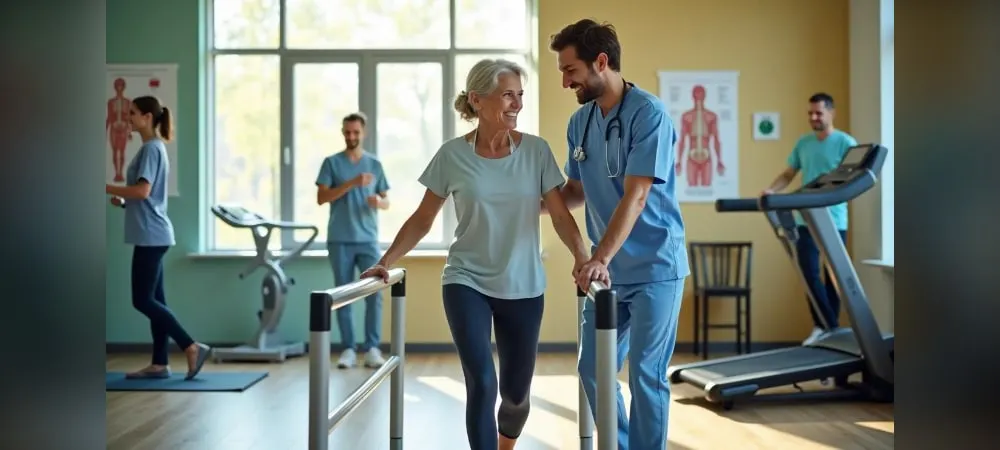
Rehabilitation programs are of great importance to compensate for functional loss after neurological disorders, ensure independence in daily living activities, and prevent complications.
Neurological rehabilitation programs are recommended for stroke, traumatic brain injury, multiple sclerosis, Parkinson's, spinal cord injuries, and other neurological disorders. Early intervention is critical, especially in post-stroke rehabilitation. Neuroplasticity is at its highest level in the first 3 months, and interventions performed during this period yield more permanent results. If you are wondering what physical rehabilitation is, this treatment process actually aims to enable you to meet your basic needs such as dressing, eating, and using the toilet on your own.
In this article, you will find answers to your questions such as what neurological rehabilitation treatment is, who it is applied to, and what benefits it provides.
What Is Neurological Rehabilitation and For What Purpose Is It Applied?
Neurological rehabilitation is a treatment approach applied to eliminate or reduce functional impairments that occur as a result of damage to the brain and nervous system. This treatment aims to improve the quality of life of patients, regain their functional capacities, or at least discover functions that will replace the lost ones.
Neurological rehabilitation targets the improvement of physical, emotional, and social functions of patients in functional impairments arising from brain and spinal cord injuries. This treatment program, which is prepared specifically for the patient by an expert team, is applied using various methods.
Compensating for functional loss
One of the primary goals of neurological rehabilitation is to compensate for functions lost due to nervous system damage. In this process, various methods such as physical therapy, therapy, exercise therapy, audiovisual stimuli, and cognitive therapy can be used. These methods are customized according to the patient's needs and condition.
The main goal is to prevent complications by compensating for functional loss. While doing this, it is aimed to improve motor skills, speech-swallowing functions, and cognitive capacities. Thus, patients can lead a safer, more productive, and higher-quality life.
Supporting independent living
Neurological rehabilitation treatment helps patients gain independence in their daily living activities. Gaining independence, increasing functional mobility, and being able to take an active role in daily living activities are the main goals.
For this, support from a specialized physiotherapist is of great importance. The physiotherapist identifies the functional impairments resulting from the disease or trauma affecting the patient's brain and nervous system and creates a rehabilitation program suitable for the patient. Thanks to this program, the patient becomes able to meet their basic needs such as dressing and eating on their own.
Increasing psychosocial adjustment
Neurological rehabilitation is not just a physical process. It also aims to improve the patient emotionally and socially. Because neurological diseases can affect a person's both physical and mental health.
For this reason, rehabilitation not only increases muscle strength but also enables the person to reintegrate into society and regain their self-confidence. Rehabilitation started in the early period and maintained regularly can make a big difference in the recovery process.
Psychosocial rehabilitation aims to help patients cope with the emotional difficulties they experience. Family members and caregivers are also included in the process to ensure that the patient is supported in the home environment as well.
Who Needs Neurological Rehabilitation?
Neurological rehabilitation treatment is of vital importance after diseases or traumas affecting the nervous system. Getting to know the patient groups that can benefit from this treatment process will help both patients and their relatives understand the importance of the rehabilitation process.
Patients who have had a stroke
Stroke (paralysis) is one of the most common conditions requiring rehabilitation to regain skills lost due to the damage it causes in the brain. This neurological condition, which develops as a result of the interruption or reduction of blood flow to the brain, affects basic functions such as movement, speech, and balance. The duration of post-stroke rehabilitation varies depending on the severity of the stroke and the complications that develop. While some patients recover quickly, for the majority, rehabilitation continues as a long process.
Early-stage rehabilitation makes a big difference in the recovery process because neuroplasticity (the brain's capacity to reorganize itself) is at its highest level in the first 3 months. Interventions performed during this period can yield more permanent results.
Those with traumatic brain injury
Traumatic brain injury is a condition where damage occurs in the brain tissue due to reasons such as traffic accidents or falls from a height. In these patients, rehabilitation should be planned with an individualized approach. Cognitive therapy should be applied in areas such as memory, attention, and problem-solving. In addition, special exercises are planned for balance, visual perception, and motor coordination.
Brain injury rehabilitation improves quality of life by helping the person regain lost physical, mental, and functional skills. While short-term loss of consciousness, headache, and lack of attention are seen in mild traumatic brain injury, more serious problems such as speech disorders and paralysis can occur in severe cases.
Multiple Sclerosis and similar progressive diseases
MS is an autoimmune disease that arises as a result of a disorder in the immune system, causing the person to attack their own brain and spinal cord. Muscle weakness, vision loss, fatigue, and cognitive changes are common in these patients, and these lead to balance and walking problems.
Neurological rehabilitation exercises are very important for MS patients. Exercises that are specific to them and that they can perform without strain should be determined and followed by physiotherapists. Rehabilitation maintains flexibility, increases muscle strength, and can reduce fatigue.
Parkinson's patients
Parkinson's is a neurological disorder that occurs due to the loss of dopamine-producing cells in the brain. In these patients, slowing of movements, tremors at rest, stiffness in muscles, and postural impairment are seen. Neurological rehabilitation is applied to improve the motor skills of Parkinson's patients, improve their daily functions, and maintain their independence.
Exercises that improve postural stance, ensure upright posture, and prevent falls are especially important. The rehabilitation program should include relaxation, joint range of motion, aerobic, strengthening, and balance exercises.
Those experiencing spinal cord injury
Spinal cord injuries are a serious health problem affecting more than 500,000 people worldwide every year. These injuries usually occur as a result of sudden trauma and can lead to temporary or permanent damage to the spinal cord. Depending on the severity of the spinal cord injury, two main clinical pictures develop: tetraplegia (loss of function in all four extremities) and paraplegia (loss of function in the lower extremities).
Physical therapy and rehabilitation are an indispensable part of the recovery process in these patients. Rehabilitation aims to improve muscle weakness, paralysis, and loss of motor function. It can also accelerate recovery by re-awakening and organizing the nervous system.
How Is the Physical Rehabilitation Process Planned?
The physical rehabilitation process is perhaps the most critical stage of your recovery journey after nervous system damage. A properly planned rehabilitation process helps you continue your life independently again.
Individualized treatment plan
Neurological rehabilitation treatment can never be planned with a "one-size-fits-all" approach. The treatment program determined according to your assessment results should be specially designed according to your age, psychosocial status, education, and habits. This individualization plays a key role in the success of the rehabilitation process.
Physiotherapists first evaluate your motor and sensory functions, balance, gait, muscle tone, joint range of motion, and performance in daily living activities in detail. At the same time, internationally valid tests such as the Functional Independence Measure (FIM) are also applied.
Important point: Your expectations from the treatment, the changes made, and the improvements achieved should be explained to you in a comprehensive manner.
Multidisciplinary team approach
An important answer to the question of what physical rehabilitation is is "teamwork". During the rehabilitation process, a team consisting of experts such as a doctor, physiotherapist, nurse, psychologist, speech therapist, and nutritionist works as a whole with you and your family.
Each expert makes an assessment in their own field, and a joint treatment plan is created. Thanks to this team approach, your neurological problems are addressed not only physically but also psychologically and socially. Thus, an increase in your functional capacity, improvement in psychological well-being, and improvement in prognosis can be achieved.
The importance of early intervention
When should neurological rehabilitation be started? The answer is simple: As early as possible. The rehabilitation program should be started immediately after the diagnosis is made or after the life-threatening condition has passed.
Especially the first 6 months after stroke, spinal cord injuries, or trauma are considered the "golden period". Intensive and goal-oriented rehabilitation performed during this period helps maximize your level of independence. Early intervention allows for faster recovery of functions thanks to brain plasticity and helps prevent complications.
In addition to classical neurological rehabilitation methods, robotic treatments are also used to increase your daily living activities and especially your mobilization. Rehabilitation robots can repeat movements as many times as desired in the same rhythm and conditions, thus accelerating recovery.
Methods Used in Neurological Rehabilitation
Various treatment methods are used in your recovery process after neurological problems. These methods facilitate your return to daily life by accelerating the restructuring of your nervous system.
Physical therapy exercises
Physical therapy exercises are the cornerstone of neurological rehabilitation. These exercises aim to increase your muscle strength, flexibility, and coordination. Strengthening, balance, stretching, and coordination exercises are applied under the supervision of a physiotherapist.
The type and intensity of the exercises are customized according to your condition. For example, while walking and balance exercises come to the fore for post-stroke patients, exercises that improve postural stance are more important for Parkinson's patients.
Robotic gait systems
Thanks to developments in technology, robotic rehabilitation systems have gained an important place in the treatment of neurological patients. These devices can repeat your movements as many times as desired in the same rhythm and conditions, thus accelerating recovery.
Robotic rehabilitation devices such as Smart-Gravity, which provides early mobilization by supporting body weight, and Prokin, which allows balance exercises in a multi-directional plane for both sitting and standing balance, provide a much more effective rehabilitation in the treatment of patients compared to conservative methods.
Functional electrical stimulation (FES)
FES is an important therapy that uses electrical currents to activate nerves and muscles affected by injury or neurological disorders. It sends small electrical pulses to specific muscles or nerves to cause them to contract.
The advantages of FES treatment include improved mobility, increased muscle strength, better circulation, pain management, and increased independence. It is quite effective, especially for stroke, spinal cord injury, and multiple sclerosis patients.
Speech and swallowing therapies
Neurological diseases can negatively affect speech and swallowing functions. Speech therapists offer personalized therapy plans to improve communication skills and manage swallowing problems.
In these therapies, various techniques are used for aphasia (language disorder), dysarthria (inability to control speech muscles), and swallowing difficulties. It is of great importance, especially for Parkinson's patients, post-stroke conditions, and multiple sclerosis patients.
Neuropsychological support
In addition, psychotherapy and counseling are offered to support your emotional and psychological health. It helps you develop skills to cope with depression, anxiety, and other psychological problems.
Family education
Rehabilitation is not limited to physical therapy sessions. Family members should be included in the treatment process and take an active role. Families are trained on how to perform exercises at home, making the home environment suitable for the patient, transfer techniques, and patient safety.
This training ensures that the patient supports the rehabilitation process at home and ensures the continuity of the treatment. Thus, the recovery process accelerates, and the patient regains their independence sooner.
The Effect of Rehabilitation on Daily Life
Neurological rehabilitation is not just a medical treatment process, but also a comprehensive approach that directly affects the quality of life of patients. The gains achieved during the physical therapy process manifest themselves in every area of daily life.
Independence in daily activities
Physical therapy programs not only increase your muscle strength but also help you regain your daily living skills. Physical rehabilitation, carried out with occupational therapy support, aims to make you self-sufficient. In this process, basic skills such as dressing, eating, sitting, and walking are regained. In addition, functional abilities such as holding and grasping objects and standing up while maintaining balance also develop.
Participation in social life
Neurological diseases can cause psychological stress, loss of self-confidence, and social isolation in addition to their physical effects. Your active participation in the physical therapy process and the sense of achievement you gain support mental recovery.
Group exercises and social activities strengthen your motivation. In addition, modern rehabilitation techniques such as virtual reality-based games make the treatment fun and increase your adherence to the treatment.
These gains increase your quality of life not only physically but also emotionally and socially. Thanks to rehabilitation, you participate in social environments more comfortably and re-adapt to your social life.
Return to work and hobby activities
Physical rehabilitation allows you to return to your work life and the hobbies you love. Rehabilitation programs make it possible for you to return to your professional activities by increasing your independence.
Exercise programs prepared for your individual goals help you restart your hobby activities such as handicrafts, painting, or playing a musical instrument by improving your fine motor skills.
The increase in your functional independence and the improvement in your quality of life facilitate your return to your work life and participation in activities you previously enjoyed.
Frequently Asked Questions
It is natural for many questions to arise in your mind during the recovery process after an illness. In this section, we answer the most frequently asked questions about neurological rehabilitation.
When should rehabilitation be started?
Neurological rehabilitation should be started at the earliest possible period. Starting treatment as soon as your medical condition is stable, preferably in the first days, yields the best results. Although starting within the first 24-48 hours after a stroke is ideal, it may vary depending on the patient's condition. Early-started rehabilitation makes the best use of neuroplasticity.
How long does the treatment last?
The duration of rehabilitation varies from person to person. It can generally last from a few weeks to a few months. It varies depending on the type of disease, its severity, and your speed of recovery. In severe cases, treatment may continue for several years, and in some progressive diseases, it may be maintained for a lifetime.
How important is family support?
Family support is of great importance in the rehabilitation process. The recovery process of patients who are highly motivated and supported is faster and more permanent. The participation of your family in all stages of the treatment, making arrangements to reduce the risk of falling at home, and providing psychological support increase the success of the treatment.
How is rehabilitation supported at home?
It is critically important that you regularly follow the exercise program recommended by your physiotherapist. In addition, adequate rest, a balanced diet, and regular monitoring of your health status are necessary. Your family helping with your exercises, encouraging you, and providing a safe home environment accelerates your recovery.
How does patient psychology affect the process?
Your psychological state and motivation play a vital role in the success of the rehabilitation process. Without psychological support, treatment success remains limited; depression and lack of motivation negatively affect the recovery process. Therefore, you should receive psychological support along with physical rehabilitation.
Frequently Asked Question: Are there any side effects of neurological rehabilitation?
Neurological rehabilitation has no direct side effects. However, in some treatments, pain or muscle spasms may increase during physical therapy. For this reason, you should follow your treatment plan and inform your doctor about side effects.
In Summary, Neurological Rehabilitation
As a result, neurological rehabilitation treatment is an indispensable process to improve your quality of life after nervous system damage. When evaluated in terms of the physical therapy department, rehabilitation programs that are started early and maintained regularly allow you to use neuroplasticity at the maximum level.
Thanks to the individualized treatment approach, you can regain your physical independence and perform your daily living activities more easily. Therefore, the rehabilitation process not only increases your muscle strength but also improves your quality of life.
However, neurological rehabilitation requires a multidisciplinary approach. Physiotherapists, doctors, psychologists, and other health professionals work together in your recovery process to help you get the best results.
Family support and your motivation are also of great importance in this process. Especially maintaining rehabilitation at home significantly increases the success of the treatment. Continuing regular exercises and activities recommended by the physiotherapist accelerates your recovery process.
Remember that the recovery process is different for every patient. However, a rehabilitation program that is properly planned and applied with determination will help you adapt to your new life after a neurological disease or injury in the best way possible.
Neurological rehabilitation supports independent living by compensating for functional loss in neurological disorders such as stroke, traumatic brain injury, MS, and Parkinson's.