Revision Surgery is a procedure that may be necessary in approximately 7% to 15% of patients who have undergone obesity surgery. If you have not experienced the expected weight loss after your initial obesity surgery, such as a sleeve gastrectomy, or if you have encountered different health problems, you may need a second surgical intervention. You may be a candidate for revision surgery, especially if you have lost less than 15% of your total body weight.
Sleeve gastrectomy revision surgery accounts for approximately 10% of all obesity surgeries performed worldwide. In fact, sleeve gastrectomy is the most commonly performed obesity surgery method worldwide. However, weight regain or various complications may sometimes occur after this procedure. In this case, the answer to the question of what stomach revision surgery is gains importance. This surgery is performed to improve the results of the previous surgical procedure or to address complications, and its primary goal is to increase your health and quality of life.
What is laparoscopic obesity revision surgery?
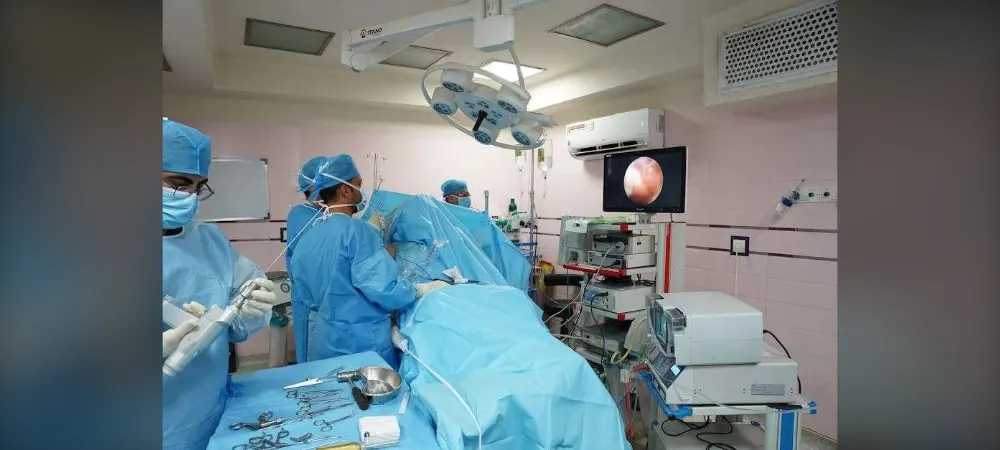
For some patients, a second surgery may be required after obesity surgery. Laparoscopic obesity revision surgery, which we encounter in this situation, is an important intervention performed to improve the results of the previous surgery.
Definition of revision surgery
Revision surgery is a second surgical procedure applied due to problems such as a previously performed obesity surgery not yielding sufficient results, causing undesirable side effects, or weight regain. On average, 12% of obesity surgeries performed worldwide are revisional surgeries.
This surgery can be evaluated in three main groups:
Corrective procedures (aimed at solving anatomical problems)
Conversion procedures (transition to a different bariatric surgery)
Reversal procedures (returning the anatomy to normal)
Revision surgery becomes necessary especially in the following situations:
Inability to lose enough weight after surgery
Regaining a significant portion of the lost weight
Stricture, torsion, or enlargement of the stomach in a sleeve gastrectomy
Advanced level reflux complaints
The difference of revision performed with the laparoscopic method
The laparoscopic (closed) method is also the preferred approach in revision surgery. However, these procedures are more complex and risky than the first surgery. The reason for this is the adhesions and changed anatomy formed inside the abdomen due to the previous surgery.
The point to be considered in revision surgeries is that due to patients having had previous surgery, adhesions have formed inside the abdomen and the anatomy has become different from normal. For this reason, revision surgeries must be performed by an experienced surgeon.
While the risk of bleeding or leakage in the first surgery is approximately 1.5%, this rate can rise to 3-4% in revision surgeries. Despite this, the laparoscopic approach offers advantages such as faster recovery and less pain.
What is revision stomach surgery?
Revision stomach surgery is a second stomach surgery repeated as a result of the operation performed on the patient failing, sometimes due to the patient, and sometimes due to the technique applied or the surgeon.
The most frequently revised surgery is sleeve gastrectomy. The following options can be applied after sleeve gastrectomy revision surgery:
Repeat sleeve gastrectomy (Re-sleeve)
Gastric bypass
Mini gastric bypass
SADI surgery or duodenal switch
In gastric bypass revision, if a mini gastric bypass was previously performed and there is bile reflux, a Brown anastomosis or diverted mini gastric bypass conversion can be performed. If a Roux-en-Y gastrojejunostomy was performed and weight regain has occurred, distalization or the reduction of the large upper pouch can be applied.
Before deciding on revision surgery, the patient must be evaluated by a multidisciplinary team (bariatric surgeon, dietitian, psychologist) and at least 18 months must have passed since the first surgery to evaluate weight-related problems.
In conclusion, laparoscopic obesity revision surgery is an important option to solve problems arising after the first surgery. However, the performance of this procedure by experienced surgeons increases the probability of success.
Who is a candidate for sleeve gastrectomy revision surgery?
Revision surgery may come to the agenda in cases where sleeve gastrectomy does not always yield the desired results. So who are the suitable candidates for this second surgery?
Patients who cannot lose enough weight
Losing more than 50% of patients' excess weight after sleeve gastrectomy is an important indicator of the success of the surgery. However, some patients cannot reach this goal. Patients who cannot lose enough weight after the first surgery or who can only lose 8-10 kg may be candidates for revision surgery.
This situation generally occurs due to the stomach volume not being reduced enough or technical problems. If the stomach was left large in the first surgery, sufficient weight loss may not be achieved. It is important that the condition of these patients is re-evaluated.
Those experiencing weight regain
Research shows that approximately 10% of patients cannot maintain weight loss and can regain weight after sleeve gastrectomy. It has been observed that patients can gain an average of 8.8 kg in the first five years. This weight regain is generally caused by the following reasons:
Enlargement of the stomach over time
Return to unhealthy eating habits
Consuming carbonated and sugary beverages
High-calorie snacks
Alcohol consumption
The return of the feeling of hunger, especially within 1.5-2 years after surgery, can cause weight regain. Therefore, patients who completely stop losing weight over time or who regain the weight they lost can be candidates for revision surgery.
Complications such as reflux, ulcer, stricture
Serious complications can develop in some patients after sleeve gastrectomy. These are:
Treatment-resistant reflux
Strictures that do not allow the passage of consumed foods
Structural problems related to the stomach
Hiatal hernia
For example, severe reflux attacks can cause stomach acid to leak into the esophagus even when patients are in a sitting position. When such complications seriously reduce the quality of life, revision surgery may be required.
Malnutrition and vitamin deficiency
Dietary restrictions after sleeve gastrectomy can lead to severe vitamin and mineral deficiencies. Especially:
Vitamin B12 deficiency can be seen at rates up to 20%
Vitamin D deficiency can reach up to 90%
Iron deficiency can be seen at a rate of 15-18%
Folic acid deficiency can be around 18%
If these deficiencies cannot be corrected, revision surgery can be considered.
Criteria for those undergoing sleeve gastrectomy revision surgery
Revision surgery may not be suitable for every patient. The following criteria are looked at for this surgery:
The body mass index rising again
Changes in eating behaviors
Whether diet and lifestyle support is received
The presence of technical problems related to the stomach or intestines
However, individuals with substance addiction, patients who do not take vitamin and other nutritional supplements, and patients with untreated eating disorders are not evaluated among suitable candidates for revision surgery.
Revision surgery can also fail in cases where the patient cannot maintain healthy eating and regular exercise after surgery. Therefore, the revision decision should be made based not only on complaints, but as a result of a comprehensive evaluation.
With which methods is revision surgery performed?
A second surgical intervention may be required in some cases after obesity surgery. Revision surgery can be performed with various methods, and your doctor will determine the most appropriate technique for you.
Transition from sleeve gastrectomy to gastric bypass
When sleeve gastrectomy fails, or when problems such as insufficient weight loss or reflux are experienced, gastric bypass revision can be considered. In this procedure, your previously reduced stomach is connected to a further section of your intestines. Thus, both stomach volume is restricted and the absorption of foods is reduced.
This transition is especially preferred in the following situations:
In patients who cannot lose enough weight after sleeve gastrectomy
In those with advanced reflux complaints
In those experiencing weight regain
This conversion performed with the laparoscopic method generally requires an operation lasting 1-2 hours. After the procedure, weight loss accelerates again thanks to both stomach restriction and decreased absorption.
Gastric bypass revision
It is a method applied to individuals who have previously undergone gastric bypass but have started to gain weight over time. One of the following options is generally applied in revision surgery:
Reduction of the stomach pouch: The stomach pouch, which has enlarged over time, is narrowed again with the laparoscopic method. This reduces the amount of food and increases the feeling of fullness.
Changing the intestinal connection: If the previously made anastomosis (connection) has widened, this connection can be narrowed again. Additionally, the connection point of the bile duct can be changed.
Revision surgeries after gastric bypass are more complex and risky compared to the first surgery. Therefore, they must be performed by experienced surgeons.
Removal of the gastric band and conversion
The gastric band is a method that is not heavily preferred today. However, revision is an important option for patients who have a previously placed gastric band and are experiencing problems.
Removal of the band and transition to a new obesity surgery can be performed in the same session. Depending on the patient's condition after the band is removed:
Sleeve gastrectomy surgery
Methods such as mini gastric bypass can be applied.
Complications of the gastric band can include erosion in the stomach wall, perforation, reflux, and ulcer development. When these problems are experienced, the removal of the band and conversion surgery come to the agenda.
Duodenal switch and transit bipartition
For individuals experiencing advanced obesity problems or those who cannot achieve success with other methods, duodenal switch and transit bipartition options can be considered.
Duodenal switch is a complex procedure involving the reduction of the stomach and bypassing the intestines. It is accepted as the most effective revision method in super-obese patients experiencing weight regain after gastric bypass.
Transit bipartition is a method particularly preferred in individuals with diabetes mellitus. In this procedure, a connection is made from the distal part of the small intestine to the part close to the stomach outlet. Thus, while some of the food goes through the normal digestive tract, some passes directly to the end of the intestine.
These advanced techniques must be applied by experienced surgeons and may not be suitable for every patient. The decision for revision surgery must definitely be given as a result of a detailed evaluation.
Benefits and risks of revision surgery
Revision surgery offers a second chance in obesity treatment, but it has both benefits and risks. It is observed that these surgeries constitute approximately 12% of all obesity surgery operations according to global statistics.
Restarting of weight loss
After revision surgery, patients start to lose weight again. It is an important advantage, especially for patients who could not lose weight after sleeve gastrectomy or who regained the weight they lost. However, the amount of weight to be lost varies depending on the type of revision surgery and the patient's compliance with treatment. Although there is a slower weight loss compared to the initial obesity surgery, it is generally effective in bringing metabolic diseases under control.
Increase in quality of life
Revision surgery not only provides weight loss, but also significantly increases the quality of life. When applied correctly, it helps the patient regain weight control. Additionally, obesity-related diseases such as diabetes, high blood pressure, and sleep apnea can be brought under control with revision surgery.
Resolution of complications
Revisional bariatric surgery is important not only for weight control, but also for the prevention of serious diseases. Recovering from complications developing due to the first surgery, such as reflux, stricture, leakage, and abscess, is of vital importance. Especially the reflux problem is not just a problem that lowers quality of life; it is a condition that can damage the stomach anatomy and even lead to esophageal cancer.
Risks compared to open surgery
Some revision surgeries can be performed as open surgery. In this case, compared to minimally invasive laparoscopic surgery, a higher risk of bleeding, incision site pain, and a longer recovery period may occur. The possibility of an operation started laparoscopically turning into an open surgery is also higher.
Challenges of the second surgery
Revision surgeries are procedures that are much riskier, more complex, and carry a higher risk of complications compared to the initial obesity surgery. While the risk of bleeding and leakage in the first surgical operation is around 1-2%, this risk can rise up to 3-4% in revision surgery. However, comprehensive examinations are required before revision surgery, and the patient's general health profile and metabolic status must be meticulously analyzed.
It is observed that the rate of patients needing revision can go up to 60% in some studies. Therefore, to reduce the complication rate requiring revision surgery:
Very good evaluation of the patient beforehand
Correct application of the appropriate technique
Regular follow-up after surgery
is very important. Because some patients may have to undergo surgery a second or even a third time.
Things to consider after revision surgery
The process following laparoscopic revision surgery is at least as important for the success of the surgery as the operation itself. For a successful outcome, you need to pay attention to some important points after the surgery.
Regulating eating habits
Your nutrition after revision surgery directly affects your recovery process and long-term success. You may need to feed on liquid and pureed foods for the first few weeks. Your nutrition program should be specially shaped by the doctor according to your needs.
You should pay attention to the following nutritional principles after surgery:
Eating frequently and in small amounts
Consuming protein-rich foods primarily
Using vitamin and mineral supplements regularly
Staying away from sugary and carbonated beverages
You need to consume from all food groups in a balanced way after revision. Thus, by protecting your vitamin and mineral balance, you can reduce the risk of malnutrition-related diseases.
Need for psychological support
Psychological support after obesity surgery is extremely important to ensure the long-term success of the surgery and protect your general well-being. Revision surgery brings not only physical, but also emotional and psychological challenges.
Benefits of receiving psychological support:
You learn to cope with emotional eating behaviors
It becomes easier for you to adapt to your new body image
You develop coping mechanisms for stress, anxiety, and depression
It helps keep your motivation high
Particularly participating in psychotherapy sessions regularly after revision surgery ensures the identification of your eating habits and determining the situations that trigger your desire to eat. This awareness increases the success of the surgery.
Importance of follow-up and checks
Going to regular doctor checks after revision surgery is necessary to ensure that your recovery process is progressing correctly. Additionally, your weight loss process is also monitored with these checks.
Since you have had surgery for the second time, your recovery process needs to be managed more carefully. However, if you follow proper care and expert recommendations, your recovery can be quite fast and smooth.
Regular checks are important in terms of:
Early detection of potential complications
Evaluation of your weight loss
Adjustment of your nutrition program when necessary
Detection and treatment of vitamin deficiencies
In conclusion, regulating your eating habits, receiving psychological support, and going to regular checks in the process following revision surgery are indispensable steps for the long-term success of the surgery.
Revision Surgery in Summary
In conclusion, laparoscopic obesity revision surgery is an important option for patients who cannot get the desired results from the first surgery. Individuals who cannot lose enough weight, regain weight, or encounter serious complications such as reflux can consider this surgery. However, before making this decision, you must definitely be evaluated by an expert team.
Revision surgeries can be performed with different methods such as transition from sleeve gastrectomy to gastric bypass, removal of the gastric band, or duodenal switch. Since these surgeries are more complex and risky compared to the first operation, they should be performed by experienced surgeons. Despite this, correctly applied revision surgery can increase your quality of life and restart your weight loss process.
For success after surgery, it is quite important to regulate your eating habits and receive psychological support. Additionally, thanks to regular checks, potential problems can be detected early. You should be patient in this process and follow your physician's recommendations.
It should not be forgotten that revision surgery is not a simple solution, but a long-term treatment process. Therefore, your ability to maintain lifestyle changes after surgery directly affects the success of the surgery. When you show the necessary care, laparoscopic revision surgery can be a new beginning for your health and quality of life.
Frequently Asked Questions
In order to shed light on subjects that patients wonder about, we answered some questions. Here are frequently asked questions about laparoscopic obesity revision surgery:
What is revision surgery? Revision surgery is corrective procedures applied to patients who cannot get the expected results after a previous obesity surgery or who experience new health problems.
How long does revision surgery take? These surgeries are generally completed between 2 and 4 hours. The duration may vary depending on the technique and the patient's condition.
How is the recovery process? Patients generally stay in the hospital for 1-3 days. The need to stay in intensive care after surgery is very rare. Pain is brought under control thanks to painkillers.
How risky is it? While the risk is 1-2% in the first surgery, this rate can rise up to 3-4% in revision surgery.
Can weight be regained? Yes, weight can be regained if healthy nutrition and exercise habits are not maintained. Revision surgery makes losing weight easier, but if old eating habits are returned to, it is not possible to lose weight.
How should I feed after surgery? You need to consume liquid and pureed foods in the first weeks. Transition to solid foods is made over time.
Which complications can be seen? Risks such as infection, digestive problems, and bleeding are present. Regular checks reduce these risks.
Laparoscopic obesity revision surgery is an important option for patients who cannot lose weight or experience complications after the first surgery. Discover the details in this article.