With advancing technology, the answer to the question of what colorectal surgery is has begun to change. Now, a significant portion of surgical operations can be performed using laparoscopy, also known as the closed technique. This method offers a much less invasive approach compared to classic open surgery.
Although the origins of this technique date back over a century, you should know that it has shown significant developments in the last 40 years. In the field of colorectal surgery, this method is performed through an average of 3-5 small incisions and is called advanced laparoscopic surgery. Today, it has become the gold standard in many surgical centers. The modern answer to the question of what proctology and colorectal surgery are includes this technology.
The greatest advantage of this method is that because it is performed through small incisions, your postoperative recovery process is faster and easier. Additionally, you will have less wound pain and the risk of surgical site infection is reduced. In this article, you will learn in detail what laparoscopic colorectal surgery is, how it is performed, and the benefits it provides.
What is laparoscopic surgery?
Laparoscopic surgery is a minimally invasive surgical technique used in the treatment of intra-abdominal organs. "Laparo" means abdomen, and "scopy" means viewing. In other words, it means surgery performed by viewing the abdomen with a camera. This method is performed without making large incisions, using special instruments and a camera through small holes.
What is laparoscopic and how did it develop?
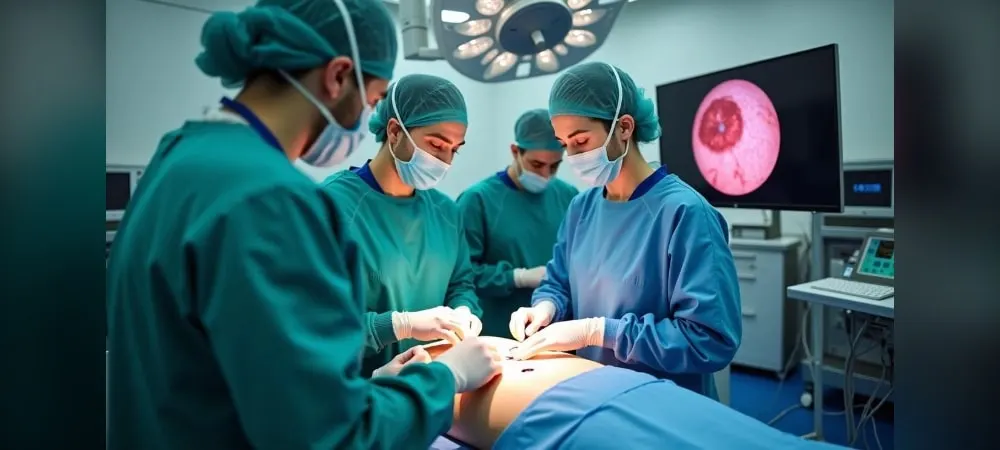
Laparoscopic surgery is also known among the public as "closed surgery." This technique is applied by making several small holes in the abdominal region, usually 0.5-1.5 cm in size. First, the abdomen is inflated with carbon dioxide gas, creating a space for the surgeon to work. Then, a thin tube called a laparoscope, which has a high-resolution camera at its tip, and other surgical instruments are inserted into the abdominal cavity through these holes.
The technologies that form the basis of laparoscopic surgery are as follows:
Laparoscope: A thin, telescopic instrument with a high-resolution camera and light source at its tip
Trocar: Special instruments used to make holes in the abdominal wall
Insufflator: A device that inflates the abdomen with carbon dioxide during surgery
Laparoscopic Hand Instruments: Long and thin versions of classic surgical instruments
History of laparoscopic surgery
The roots of laparoscopic surgery date back to the early 20th century. Although the first steps were taken during this period, modern laparoscopic surgical techniques began to be developed in the late 1980s.
Important milestones in the historical process:
In 1901, Georg Kelling performed the first laparoscopic procedure on a dog
In 1910, Hans Christian Jacobaeus performed the first laparoscopic operation on humans
In 1987, the first laparoscopic gallbladder surgery was performed by Philippe Mouret, starting a new era in the field of surgery
Initially used only for simple observations and procedures, laparoscopy began to be used in more complex surgeries over time thanks to technological developments in cameras and instruments.
Differences from open surgery
There are distinct differences between laparoscopic surgery and open surgery:
Criterion
Open Surgery
Laparoscopic Surgery
Surgical Incision
Single, large incision (15-30 cm)
Several small holes (0.5-1 cm)
Postoperative Pain
More
Much less
Blood Loss
Generally more
Generally less
Length of Hospital Stay
Longer (5-10 days)
Shorter (1-4 days)
Recovery Process
Slower (4-8 weeks)
Much faster (1-3 weeks)
Infection Risk
Higher
Lower
Aesthetic Result
Large, permanent scar
Less
In addition, the risk of intra-abdominal adhesions is much lower in laparoscopic surgery compared to open surgery. Also, the probability of hernia formation at the surgical site is less in closed surgeries.
Today, laparoscopic surgery is successfully applied in the treatment of many diseases such as appendicitis, gallbladder, hernia, reflux diseases, colon, stomach, and intestinal cancers. This technique is also becoming increasingly common in the field of colorectal surgery, offering patients a more comfortable treatment process.
What is colorectal surgery and in which cases is it applied?
Colorectal surgery, which covers the diagnosis and treatment of colon, rectum, and anus diseases, is a specialized surgical field dealing with the final part of the digestive system. Surgical treatment of diseases occurring in the large intestine (colon) and rectum region is at the center of this specialty.
What is a colorectal surgeon?
Colorectal surgeons are general surgery physicians who specialize in the diagnosis and treatment of diseases in the colon and rectum region. These specialists are surgeons who treat diseases specifically of the large intestine, rectum, and anal region. General surgery specialists who perform surgeries targeting this region in their daily practice and focus their scientific studies on this field are called "colorectal surgeons" or "proctologists."
What are proctology and colorectal surgery?
The word proctology is derived from the Greek words "proktos," meaning "anus," and "logos," meaning "science." While proctology is the branch of medicine that specifically deals with anal diseases, colorectal surgery more comprehensively includes diseases of the large intestine and rectum.
The term proctology has changed over time in the historical process. Today, the term colorectal surgeon has become a more current term used for the same specialty as a proctologist.
Colon and rectum diseases
The main diseases that colorectal surgery deals with:
Colorectal cancers: The 4th most common cancer type in men and the 3rd in women
Inflammatory bowel diseases: Ulcerative colitis and Crohn's disease
Diverticular disease: A condition that especially affects the left side of the colon
Anal region diseases: Hemorrhoids, anal fissures, anal fistulas, and abscesses
Intestinal obstructions: Intestinal obstructions that can occur for various reasons
Pelvic floor diseases: Conditions such as rectocele and prolapse
In addition, chronic constipation, gas and fecal incontinence, intestinal adhesions, and intestinal perforations are also treated within this scope.
Indications for colorectal surgery
Colorectal surgery may be necessary in many different situations. The main reasons for application:
Cancers: It is the primary approach in the treatment of colon, rectum, and anus cancers
Inflammatory conditions: In cases of bleeding bowel diseases and infections
Trauma: After intestinal perforations or injuries
Obstructions: In intestinal obstructions caused by adhesions related to previous surgeries or other reasons
Functional disorders: In defecation problems, constipation, and incontinence
These surgeries can be performed with open surgical methods, but today they can also be performed with laparoscopic and robotic methods. The use of technological methods provides significant advantages such as reduced infection risk, faster recovery process, and lower bleeding risk.
How is laparoscopic colorectal surgery performed?
A successful laparoscopic colorectal surgery requires a meticulously planned process and technical expertise. This type of surgery is an advanced minimally invasive intervention that must be performed by expert surgeons.
Preoperative preparation
Preparation for laparoscopic colorectal surgery plays a critical role in the success of the surgery. First, a detailed evaluation of the patient is performed. Tumor localization and all lesions developing more proximally than 25 cm from the anal verge are determined preoperatively. Additionally, methylene blue or a metal clip can be placed on the tumor during colonoscopy.
Before the surgery, blood tests, imaging methods, and anesthesia evaluation are performed. Bowel preparation is applied to most patients before the surgery. Bowel preparation has an effect that facilitates the surgery in patients who will undergo laparoscopic surgery.
Techniques and equipment used
Special equipment is used in laparoscopic colorectal surgery:
Trocars: Ports usually 5-10-12 mm in diameter, placed into the abdominal wall
Veress Needle: A special needle used to inject gas into the abdominal cavity
Insufflation Device: Used to inflate the abdominal cavity with carbon dioxide gas
Laparoscope: An optical device containing a camera and light system, providing high-resolution images
Laparoscopic Instruments: Special holders such as Maryland clamps, bowel clamps, and Babcock clamps
All members of the surgical team must know the instruments to be used and have the knowledge and experience to produce solutions when problems arise.
Step-by-step surgical process
The surgery begins under general anesthesia. The patient is usually placed in the Trendelenburg position (head tilted down). The surgery consists of the following stages:
Pneumoperitoneum is created by injecting carbon dioxide gas into the abdomen with a Veress needle
4-5 small holes are made in the abdomen and trocars are placed
The camera and surgical instruments are inserted into the abdomen through these holes
The tumor and the affected area are identified by monitoring on the screen
Necessary dissection and resection procedures are performed
The removed tissue is usually taken out through a small incision of 4-5 cm
Oncological surgery rules
In colorectal surgery performed due to cancer, surgeries must be performed according to oncological surgery rules. The type of surgery is determined according to the location of the cancer in the large intestine, and the artery area feeding the section where the cancer is located is completely cleaned along with the lymph nodes.
It is not enough to just perform a laparoscopic surgery; it is also important that this surgery is performed according to the rules of "Cancer Surgery – Oncological Surgery."
Reasons for conversion to open surgery
Not all colorectal diseases can always be performed laparoscopically. Conversion to open surgery may be required in approximately 1-5% of cases. The main reasons for conversion to open surgery:
Bleeding that is difficult to control
The mass to be removed is too large (larger than 8 cm)
Adhesions due to previous surgeries
Existing acute cholecystitis and the difficult dissection it creates (30.95%)
Anatomical variations and insufficient imaging
T4 tumors (spread to neighboring organs)
Conversion to open surgery is not a complication, but a necessary decision made for the patient's safety.
Infrastructure and expertise required for application
Laparoscopic colorectal surgery is a surgical method that requires advanced expertise and equipment. The success of such surgeries depends not only on technical knowledge but also on appropriate infrastructure and equipment support.
Why is the surgeon's experience important?
Laparoscopic colorectal surgery is called advanced laparoscopic surgery, and the surgeon who will perform these surgeries must definitely be experienced in this field. It requires not only manual dexterity but also special skills such as three-dimensional thinking, precise motor coordination, and mastery of device usage.
Unlike open surgery, internal organs are monitored with the help of a camera, not directly by eye, and every surgical intervention is performed based on this image. This requires high attention, advanced training, and intensive practice.
Surgeons who have not completed the learning curve for laparoscopic surgery must definitely enter the surgery with an experienced colorectal surgeon. It is even stated that surgeons are considered experienced after at least 200 cases even for a simple laparoscopic cholecystectomy. Laparoscopic resection of colorectal tumors is a much more complex procedure and requires special experience and skill.
It is reported in various publications that the breaking point required to gain experience in laparoscopic surgery is 20-25 cases. An experienced surgeon can anticipate possible complications in advance, shorten the operation time, and ensure patient safety at the highest level.
Operating room technical infrastructure
To perform laparoscopic surgery, the operating room infrastructure must also be suitable for this. First of all, there must be a fully mobile operating table. Because it is critical to be able to change the patient's position during surgery.
Insufflators are devices frequently used to create and maintain pneumoperitoneum using carbon dioxide. Today, in addition to devices with digital displays that continuously show intra-abdominal pressure, gas flow rate, and the amount of gas used, there are also models that automatically control and stabilize intra-abdominal pressure.
In addition, special equipment such as laparoscope heating systems should be available in the operating room technical infrastructure to solve the fogging problem that affects laparoscopic imaging.
Devices used and their features
There are special devices and instruments used in laparoscopic colorectal surgery:
Laparoscopes: Optical systems with 5-10-12 mm diameter, providing high-resolution images.
Trocars: Special instruments used to make holes in the abdominal wall and are available in various diameters (usually 5-10-12 mm).
Clamping and Holding Instruments: Models such as Maryland clamps, bowel clamps, and Babcock clamps with 5 mm diameter, 31 cm length, and 2 cm jaw width are the most preferred.
Tissue Fusion and Sealing Systems: Systems like LigaSure have vessel sealing and tissue separation features.
The surgeon must know these instruments in great detail, know their working principles, and be able to use them. Furthermore, it is very important that they have the experience to find a solution to the problem and continue the surgery in case of any malfunction.
The key point that brings success in laparoscopic colon surgery is the selection and use of appropriate surgical instruments for the surgical procedure to be performed. All surgeons on the team entering the surgery must know the instruments to be used and have enough knowledge and experience to create a solution as soon as a problem develops.
Advantages of laparoscopic colorectal surgery
The laparoscopic approach in colorectal surgery treatment offers many important benefits for patients. Unlike open surgery, this method provides a more comfortable treatment process and the opportunity to return to normal life faster.
Smaller incisions and less pain
The greatest advantage of laparoscopic colorectal surgery is that the surgery is performed through small incisions. Instead of the large 15-30 cm incisions in open surgery, only 4-5 small holes of 0.5-1 cm in size are used. Instruments called trocars inserted through these small holes pass between muscle fibers without cutting the muscles, leading into the abdomen. Thus, postoperative pain is significantly reduced. In addition, since the pressure applied by instruments called retractors to the incision edges is eliminated, there is less tissue damage. This allows patients to move more comfortably after surgery and return to their daily activities faster.
Fast recovery process
The laparoscopic approach in colorectal surgery significantly accelerates the recovery process. In this method, bowel movements return in a shorter time, and the patient can start normal nutrition earlier. Patients can mobilize in a shorter time after surgery and return to daily life quickly. Since less trauma is experienced after surgery, the rate of complications is reduced by 30-50% with ERAS (Enhanced Recovery After Surgery) protocols.
Less risk of infection
Laparoscopic surgery significantly reduces the risk of infection. It is known that the risk of Surgical Site Infection (SSI) is less than in open surgery. The reason for this is that body cavities and the operation area have minimal contact with the external environment. In addition, the risk of suture site inflammation and suture site hernia is also less compared to open surgery.
Shortening of hospital stay
While the hospital stay after open surgery usually extends up to 7-10 days, this period drops to only 3-5 days after laparoscopic surgery. In some studies, the average hospital stay of patients who underwent laparoscopic colorectal surgery was determined to be 5.8 days, while this period was determined to be 8.7 days for patients receiving traditional care. Shortening this period is important both for patient comfort and for reducing the cost of healthcare services.
In summary, Laparoscopic Colorectal Surgery
Laparoscopic colorectal surgery is one of the important developments in the medical world. Thanks to this method, great strides have been made in the treatment of large intestine diseases. This type of surgery, performed with small incisions, provides many benefits for the patient.
First of all, postoperative pain is much less than traditional open surgery. Along with this, your hospital stay is significantly shortened. While you need to stay in the hospital for 7-10 days in open surgery, this period drops to only 3-5 days with the laparoscopic method.
In addition, this method reduces the risk of infection and accelerates your return to daily life. Thanks to small incisions, your body is exposed to less trauma and the recovery process is significantly shortened.
However, for a successful laparoscopic surgery, an experienced surgeon and appropriate technical infrastructure are needed. Although not all colorectal diseases can be treated laparoscopically, this method is accepted as the gold standard in suitable cases.
As a result, laparoscopic colorectal surgery is a comfortable treatment form for the patient, with a fast recovery process, and is efficient for the health system. If you are experiencing a problem related to your bowel health, it would be beneficial to talk to your doctor about whether this modern surgical technique is suitable for you. Thanks to technological developments, you can now regain your health by suffering less pain and recovering faster.
Frequently Asked Questions
We have compiled the topics that arouse the most curiosity in patients for you. You can find the answers to your questions about colorectal surgery and laparoscopic methods here.
How long does a laparoscopic colorectal surgery take? The duration of the surgery varies depending on the complexity of the procedure to be performed and the surgeon's experience. It is usually completed between 2-4 hours.
How long will I stay in the hospital after surgery? While you need to stay in the hospital for 7-10 days in open surgery, this period drops to 3-5 days with the laparoscopic method.
When can I return to my normal life? Most patients can return to their daily activities within 2-3 weeks after laparoscopic surgery. In open surgery, this period can extend up to 4-8 weeks.
Can every patient have laparoscopic surgery? Unfortunately, no. Some situations such as previous abdominal surgeries, very large tumors, or advanced-stage cancers may require open surgery.
How much pain will I have after surgery? Laparoscopic surgery is much less painful compared to open surgery. Thanks to small incisions and less tissue trauma, your need for painkillers will also be less.
What should I pay attention to when choosing a colorectal surgeon? It is important that you choose a physician who has at least 20-25 cases of experience in this field and who is specifically specialized in laparoscopic colorectal surgery.
Laparoscopic colorectal surgery is a modern surgical technique performed with a minimally invasive method, accelerating the recovery process and reducing the risk of infection.