Hemicolectomy is the surgical removal of the right or left part of the large intestine (colon).
This operation can generally be performed with two different methods: open surgery or the laparoscopic method. In open surgery, a large incision is made in your abdomen, whereas laparoscopic hemicolectomy is performed using small incisions and special camera systems. After the procedure, the two ends of the remaining bowel are joined together, and in some cases a temporary ileostomy may be required.
In this article, you will find answers to all your questions about laparoscopic hemicolectomy and learn how it is performed and what advantages it offers. You will also learn what to pay attention to after surgery.
What Is Laparoscopic Hemicolectomy?
Laparoscopic hemicolectomy is a minimally invasive surgical technique used in the treatment of diseases of the large intestine. This method is performed using small incisions and special camera systems. First, let us examine in more detail what this procedure is and how it is performed.
Which part of the large intestine is removed?
In a hemicolectomy, the right or left half of the large intestine is surgically removed. During this procedure, not only the diseased segment but also the surrounding fatty tissue and lymph nodes are cleared. The portion to be removed is determined according to the location and extent of the disease.
In a standard operation, sections such as the cecum (the first pouch of the large intestine), the ascending colon (the part extending upward), the hepatic flexure (the bend in the upper right part of the bowel) or the descending colon may be removed. In some cases, the terminal ileum, the last part of the small intestine, may also be removed.
After surgery, the two ends of the remaining bowel are connected to each other. This is called an anastomosis, and it allows the bowel to continue functioning normally.
What is the difference with the laparoscopic method?
Hemicolectomy can be performed with open surgery or the laparoscopic method. There are important differences between the two techniques:
In the laparoscopic method, small incisions are made in the abdominal wall, and the procedure is carried out through these incisions with the help of a thin tube called a laparoscope and a camera. Because this is a minimally invasive technique, it is less traumatic and more comfortable.
In contrast, in open surgery a large incision is made in the abdominal wall. This method is generally preferred in more complex cases.
When laparoscopic hemicolectomy is performed with the minimally invasive technique, postoperative pain is lower and recovery time is shorter. Patients also return to daily life more quickly and achieve better cosmetic results.
What do right and left hemicolectomy mean?
Hemicolectomy is divided into two main types according to the part of the bowel removed:
Right hemicolectomy: This is the surgical removal of the right side of the large intestine. In this procedure, the cecum, the ascending colon and sometimes part of the transverse colon are removed. Right hemicolectomy is generally preferred in the treatment of right-sided colon cancers.
Left hemicolectomy: This is the surgical removal of the left side of the large intestine. In this procedure, the descending colon and its surroundings are removed. Left hemicolectomy is generally performed in the treatment of left-sided colon cancers and recurrent/complicated diverticulitis.
Which side is removed depends on the location and type of the disease. For example, in the treatment of conditions such as colon cancer, diverticulitis, Crohn's disease and bowel obstruction, a right or left hemicolectomy may be preferred depending on the region where the disease is located.
In Which Cases Is Laparoscopic Hemicolectomy Performed?
Laparoscopic hemicolectomy is an effective method used in the treatment of various diseases. Let us examine when this surgical procedure is needed and in which situations it is preferred.
Colon cancer
Cancer of the large intestine is the most common reason for laparoscopic hemicolectomy. This procedure is recommended especially when a tumor is detected on the right or left side of the colon. After a diagnosis of colon cancer, a right or left hemicolectomy may be performed depending on the location of the tumor.
For example, as in the case of Yücenur Keti, a laparoscopic right hemicolectomy was performed for a mass detected in the right colon, and because no cancer metastasis was found in the examination after surgery, chemotherapy was not needed. The patient quickly returned to normal life after surgery.
Diverticulitis
Diverticulitis is inflammation of small pouches (diverticula) that form in the wall of the large intestine. Simple cases of diverticulitis can usually be treated with medication, but surgical intervention may be required in recurrent or complicated diverticulitis.
Diverticulitis, which is more common in the left colon, can be treated with left hemicolectomy when it becomes severe or leads to complications. In this way, the inflamed part of the bowel is completely removed and the risk of recurrence of the disease is reduced.
Crohn's disease
Crohn's disease is a chronic disease that can cause inflammation anywhere in the digestive system. When this disease affects the large intestine and does not respond to medical treatment, surgical intervention may be required.
Laparoscopic hemicolectomy is preferred when Crohn's disease affects a specific part of the large intestine. By removing the diseased part of the bowel, the surgery significantly improves patients' quality of life.
Bowel obstruction
Obstruction of the large intestine is a serious condition requiring emergency intervention. Obstruction can occur for various reasons: tumors, accumulation of stool, thickening of the bowel wall, or twisting of the bowel around itself (volvulus).
In the case of bowel obstruction, if the blockage cannot be relieved with other methods such as a stent, emergency hemicolectomy surgery may be required. This is important to prevent a potentially life-threatening situation.
Polyps and other causes
Polyps of the large intestine can usually be removed during colonoscopy, but in some cases surgical intervention may be required:
- Large polyps: Polyps larger than 2 cm have a risk of malignancy (turning into cancer) of more than 40%. For this reason, hemicolectomy may be considered when large polyps are detected.
- Tubulovillous adenomas: These polyps, which make up 10-15% of colon polyps, have a malignancy risk of around 20-25%.
Other conditions requiring hemicolectomy besides these include the following:
- Ischemic colitis (reduced blood flow to the bowel)
- Cecal volvulus (twisting of the cecum around its own axis)
- Complicated appendicitis (advanced appendicitis)
- Bowel perforation (rupture)
- Traumatic injuries
- Right-sided diverticular disease
The type of surgery is selected according to the location and extent of the disease, the patient's general condition and the treatment goals. The aim is to completely clear the disease and, if possible, to preserve bowel continuity.
How Is Laparoscopic Hemicolectomy Performed?
Surgery of the large intestine consists of a series of steps carried out meticulously by the surgical team. Let us examine step by step how laparoscopic hemicolectomy is performed.
General anesthesia process
Laparoscopic hemicolectomy is always performed under general anesthesia. Thanks to anesthesia, the patient feels no pain or discomfort during the procedure. First, in the preoperative preparation phase, the colonoscopy report, imaging, blood count and biochemistry tests are evaluated. In addition, your nutritional status is reviewed and an assessment is made by the anesthesiologist. After anesthesia is administered, you are placed on the operating table in the appropriate position.
Small incisions and use of a camera
Unlike open surgery, laparoscopic surgery is performed through small incisions in your abdomen. Usually 4-5 small incisions, ranging between 0.5 and 1 cm, are made. One of these incisions is made at the navel or above the navel, and the abdominal cavity is accessed with the Hasson technique.
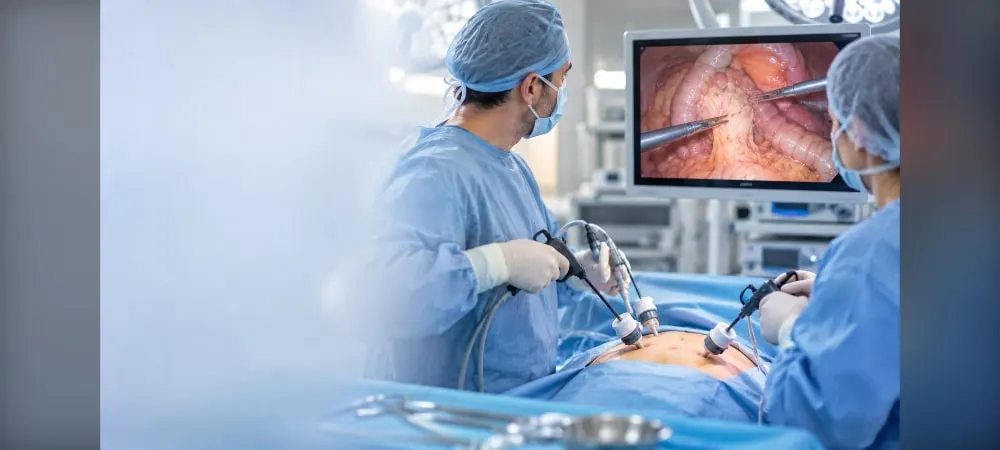
After the incisions are made, your abdomen is inflated with carbon dioxide gas. This enlarges the surgeon's working space and allows the internal organs to be seen more clearly. The camera placed inside the abdomen transmits all images to the screen, and the surgeon performs the operation by following it on the monitor. Surgical instruments can enter the abdomen through ports called trocars placed through these incisions.
Removal of the bowel and anastomosis
The surgeon first identifies the affected part of the large intestine. In the case of a right hemicolectomy, the ileocolic pedicle (the blood vessels of the bowel) is identified and divided. The tissues around the section to be removed are carefully separated. The aim is to remove the diseased bowel segment and, if necessary, the surrounding lymph nodes with clear surgical margins.
After the diseased section is removed, the healthy ends of the bowel are joined to create an anastomosis. This procedure is usually performed with the help of special instruments called staplers. The surgeon checks whether the connection is leak-proof and takes measures if necessary.
Situations requiring an ileostomy
In some cases, a temporary or permanent ileostomy (bringing the bowel out to the abdominal wall) may be required. An ileostomy may be created especially in cancers very close to the rectum, in emergency cases, or to protect the bowel connection. This buys time for the bowel to heal and reduces the risk of anastomotic leakage. A temporary ileostomy can be closed with a second operation after the bowel has healed completely.
Duration of surgery and hospital stay
Laparoscopic hemicolectomy may vary depending on the type and extent of the disease. The operation usually takes 2-3 hours, but in complex cases it can last up to 4 hours.
The length of hospital stay also varies according to the success of the surgery and the patient's condition. After the laparoscopic method, patients are generally expected to stay in hospital for 4-7 days.
In the first days after surgery, feeding begins with liquid foods, and as bowel movements become regular, you progress to solid foods. You are encouraged to get up and move around early, because this speeds up the recovery process.
What Are the Advantages of the Laparoscopic Method?
With the development of modern surgical techniques, laparoscopic hemicolectomy has become a preferred method today. Commonly known as "closed colon surgery," this technique offers many advantages for patients.
Smaller incisions and less pain
Laparoscopic hemicolectomy is performed through 4-5 small incisions of 0.5-1 cm in the abdominal area. Unlike open surgery, because the abdominal muscles are not cut, postoperative pain is minimal. Thanks to this minimally invasive approach, you need less pain medication after surgery.
Minimal surgical trauma helps your body experience less stress and significantly reduces pain. In addition, there is less blood loss during surgery, which positively affects your overall recovery.
Faster recovery
One of the most important benefits of the laparoscopic method is its rapid recovery. Patients are usually discharged within 3-5 days and can return to their social lives in about 2 weeks. Compared with open surgery, the hospital stay is shorter and time lost from work is reduced.
Bowel functions recover sooner and passing of gas begins earlier. This allows you to return to your normal diet more quickly. Especially in operations performed with the intracorporeal anastomosis technique, since the bowel is not brought outside at all, less bowel paralysis (ileus) is seen and the recovery process is faster.
Lower risk of infection
Small incisions significantly reduce the risk of infection after surgery. Compared with the large incisions of open surgery, the infection rate falls to a minimum with the laparoscopic method.
In addition, less exposure of the internal organs to the external environment plays an important role in lowering the risk of infection. Furthermore, in the long term, because fewer adhesions form, the risk of small bowel obstruction is also reduced.
Better aesthetic results
The cosmetic advantages provided by laparoscopic surgery cannot be ignored either. Instead of a wide scar, small incisions remain that become almost invisible over time. This is an important advantage, especially if you are concerned about your appearance after surgery.
Small incision sites also reduce the risk of hernia after surgery. Supraumbilical transverse incisions (horizontal incisions above the navel) are more advantageous both cosmetically and in preventing hernia formation.
An important point is that the laparoscopic method not only provides advantages in terms of cosmetics and recovery time, but also offers oncological outcomes completely equivalent to open surgery in cancer surgery. Therefore, if your doctor considers it appropriate, laparoscopic hemicolectomy can be a good choice for both your health and quality of life.
Points to Consider After Surgery
The care process after laparoscopic hemicolectomy directly affects the success of the surgery. Paying attention to some basic rules during the recovery period helps prevent possible complications and speeds up recovery.
Diet
Nutrition after surgery is an important part of recovery. In the first hours, you start with clear liquids (water, tea, compote juice), and then progress to soft foods as tolerated. Once bowel movements become regular, you can start solid foods.
In the first week, a liquid-soft-low-residue diet should be preferred. You can consume easily digestible foods such as soup, yogurt and well-cooked vegetable purée. You should avoid gas-producing legumes, high-fiber raw foods and carbonated drinks.
Drinking at least 8-10 glasses of water a day regulates bowel function and prevents bowel movement problems by softening the stool.
Wound care and hygiene
Keeping the wound sites clean and dry reduces the risk of infection. You can take a bath 48 hours after surgery, but it is important to protect the wound areas.
The sterile dressings on the incision sites can usually be removed after 48 hours. The stitches are mostly of the dissolving type and do not need to be removed.
If symptoms such as redness, swelling, foul-smelling discharge or fever develop at the wound sites, you should see your doctor without delay. Mild bruising at the incision sites is normal and usually resolves on its own.
Return to physical activity
In the first days, you should avoid heavy lifting, sudden movements and strenuous exercise. However, moving around as soon as possible after surgery speeds up recovery.
Taking short walks supports blood circulation and reduces the risk of bowel sluggishness. You need to wait at least 48 hours before driving, because the effect of general anesthesia may last for this period.
You can usually return to normal daily activities within 2-4 weeks, but strenuous activities such as heavy lifting should be restricted for 6-8 weeks.
Medication use and follow-up
It is important to use the medications recommended by your doctor at the specified dose and for the specified duration. It is appropriate to take pain relievers with food, at the determined dose.
In particular, if your doctor has not recommended any antibiotics, you generally do not need to use them. You should avoid taking medication on your own.
Follow-up appointments are important for evaluating the recovery process. If you have no complaints after laparoscopy, you should see your doctor for a check-up at the 2nd week after surgery.
In cases such as fever, chills, excessive abdominal swelling, inability to pass gas, nausea, vomiting or severe abdominal pain that does not go away, you should inform your doctor without waiting.
In Summary: Laparoscopic Hemicolectomy
In conclusion, laparoscopic hemicolectomy is a modern and effective method used in the treatment of diseases of the large intestine. Because smaller incisions are made compared with open surgery, you will have less pain and your recovery will be faster.
The advantages offered by this method are considerable. Thanks to the small incisions, your risk of infection decreases and the scars left on your body become almost unnoticeable. In addition, your hospital stay is shortened and you can return to your daily life sooner.
Laparoscopic hemicolectomy can be performed for conditions such as colon cancer, diverticulitis, Crohn's disease or bowel obstruction. Whatever your situation, the care process after surgery greatly affects your recovery.
It is important that you pay attention to your diet after surgery, take care of your wounds regularly and comply with the physical activity limits recommended by your doctor. At first, take care to eat soft foods and drink at least 8-10 glasses of water a day.
Remember that if you experience unusual situations after surgery such as severe abdominal pain, fever or discharge from the wound site, you should see your doctor immediately. In this way, possible complications can be noticed and addressed at an early stage.
Thanks to advancing technology, laparoscopic hemicolectomy is a method that can be used safely in the treatment of bowel diseases. With proper care and follow-up, you can regain your health in a short time after surgery and return to your normal life.
Frequently Asked Questions
Is laparoscopic colon resection dangerous? When small segments are removed, the risk is quite low. However, when larger segments are removed, some complications may occur. Symptoms such as redness at the incision sites, swelling, abdominal pain, fever or vomiting may be seen.
Is laparoscopic colon resection cancer? No, laparoscopic colon resection is not cancer. This procedure is an operation performed to remove cancerous cells in the colon from the body.
How does the bowel movement pattern change after hemicolectomy? The frequency of bowel movements may temporarily increase after surgery. After a right hemicolectomy, the stool may be more watery. Over time, bowel function returns to normal.
Is a temporary stoma created after hemicolectomy? A stoma is not required in most operations. However, in emergencies or in patients at high risk of anastomotic leakage, a temporary protective stoma may be created.
How long does hemicolectomy surgery take? The operation is usually completed in 2-4 hours. The duration may vary depending on the section to be removed and the patient's condition.
Which doctor should I see? It is recommended that you see a general surgery specialist, especially a doctor experienced in gastrointestinal or colorectal surgery.