The laparoscopic appendectomy technique offers important advantages such as less pain, faster recovery and smaller scars.
This operation can be completed in an average of thirty minutes and the recovery period is quite short. Usually, you can get up on your feet the day after surgery and be discharged within a few days. Compared with open surgery, closed appendicitis surgery carries a lower risk of complications and minimises your length of hospital stay.
In this article, you will find answers to all the questions you may have, from how appendicitis surgery is performed to the healing process. In particular, you will learn detailed information about closed appendicitis surgery.
What Is Laparoscopic (Closed) Appendectomy?
Closed appendicitis surgery is a modern method of removing an inflamed appendix. To understand how this operation is performed, it is first necessary to briefly know what appendicitis is.
What is appendicitis and what causes it?
Appendicitis is the inflammation of the appendix, a finger-shaped small pouch located at the beginning of the large intestine in the lower right part of the abdomen. Its length is generally 5-10 cm and its diameter is about 3-6 mm. Possible causes of the inflammation include:
Stool fragments or hardened intestinal waste blocking the appendix
Foreign bodies
Infections
Swelling of lymphoid tissue
This blockage leads to bacteria multiplying inside the appendix and to inflammation. The inflammation causes the appendix to swell and, if left untreated, it may rupture.
What does laparoscopic appendectomy mean?
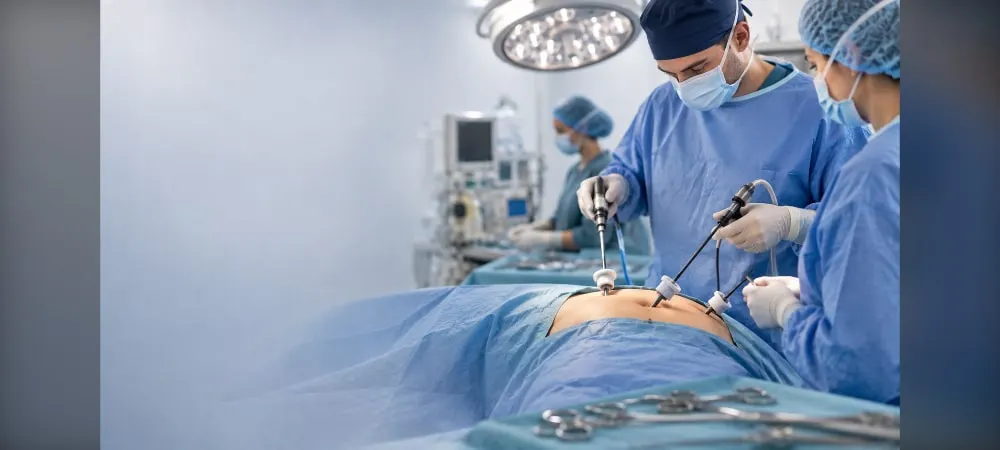
Laparoscopic appendectomy, or closed appendicitis surgery, is the removal of an inflamed appendix through small incisions made in the abdomen. In this method:
Three small incisions are generally made in the abdomen: at the navel, below the midline of the abdomen and in the left lower region
The inside of the abdomen is viewed with the help of a camera inserted through the navel
The appendix is removed using specialised instruments
Closed appendicitis surgery was first performed by Kurt Semm in 1982 and today it is among the most frequently performed laparoscopic operations. Under normal circumstances, appendicitis surgery can be completed in approximately 30 minutes.
Difference between open and closed surgery
Closed appendicitis surgery has distinct advantages over open surgery:
Length of hospital stay: With laparoscopic surgery, the average length of hospital stay is 1.6 days, whereas with open surgery this period is around 3.4 days.
Complication rate: In the laparoscopic appendectomy group the complication rate is 5%, while in open appendectomy this rate is 20%.
Post-operative comfort: Scientific studies have proven that patients experience less pain after closed surgery, recover faster and return to their normal lives more quickly.
Cosmetic results: In open surgery a single 5-10 cm incision is made, whereas in laparoscopic surgery several small incisions of 0.5-1 cm are sufficient, which means better cosmetic results.
Recovery process: After laparoscopic surgery, patients generally return to their normal lives within 1 week to 10 days, whereas after open surgery this period may be longer.
The method used for appendicitis surgery may vary depending on the patient's condition, whether the appendicitis has ruptured, and the surgeon's preference.
Appendicitis Symptoms and the Diagnostic Process
Suspicion of appendicitis is the first step on the path to closed appendicitis surgery. It is important for you to recognise the symptoms well so that your doctor can make an accurate diagnosis and plan the appropriate treatment.
Abdominal pain and other common symptoms
Appendicitis usually presents as pain that begins around the navel and within a few hours moves to the lower right part of the abdomen. This pain may be accompanied by the following symptoms:
Nausea and vomiting
Loss of appetite
Mild fever (between 37,5-38,5°C)
Bloating and tension in the abdomen
Constipation or diarrhoea
Difficulty passing gas
Pain that increases with movements such as coughing, sneezing or walking
The severity and sequence of symptoms may vary from person to person. Some patients may not experience all of these symptoms, while others may have different complaints.
How is appendicitis diagnosed?
Your doctor will first listen to your complaints and perform a physical examination. They will check whether there is tenderness in the lower right area of your abdomen. They may then use the following tests to confirm the diagnosis:
Blood tests: An increase in the white blood cell count indicates that there is an infection in your body. CRP levels also reveal the presence of inflammation.
Urine test: This is performed to rule out a urinary tract infection, which may cause similar symptoms.
Imaging methods: Ultrasound shows the organs in the abdomen and the condition of the appendix. When necessary, more detailed imaging techniques such as computed tomography (CT) or MRI may be used. MRI is preferred especially in pregnant women.
An accurate diagnosis is the first step towards a successful closed appendicitis surgery. For this reason, it is important that you visit the hospital without losing time if you have any suspicious symptoms.
How does appendicitis pain feel?
Appendicitis pain usually goes through different stages. At the beginning, a mild pain is felt around the navel. This pain may sometimes be interpreted as indigestion or gas pain.
Over time, however, usually within a few hours, the pain moves to the lower right area of the abdomen and becomes more severe. Some patients describe the pain as a "stabbing" sensation. Movements such as touching the abdomen, coughing or walking in particular increase the pain.
During the examination, doctors check for tenderness in an area called McBurney's point. This point lies one third of the way along the line between the navel and the right hip bone, and it is the classic pain point of appendicitis.
As the pain intensifies, patients generally try to find relief by drawing their legs up towards their abdomen or curling up on their right side. This position may provide temporary relief by reducing the tension in the abdominal muscles.
If the appendix ruptures, the pain may decrease for a short time. However, this is misleading, and within a short period the abdominal pain may spread to the whole abdomen and turn into a serious condition.
How Is Closed Appendicitis Surgery Performed?
Closed appendicitis surgery performed with laparoscopic technique allows you to benefit from the advantages brought by modern medicine. Thanks to this method, you can return to your normal life in a shorter time.
Preparations before surgery
First, your doctor will evaluate your general health to check whether there is any condition that prevents surgery. Ideally, you will be asked to fast for 6-8 hours before the operation, but in emergencies surgery may be performed without waiting for this period.
If you have important health problems such as heart disease, examination by the relevant specialist doctors may be repeated. In female patients, where appendicitis symptoms may be confused with gynaecological disorders, a gynaecology consultation may be requested.
Before surgery, you will be evaluated by the anaesthesiologist, who will decide on the type of anaesthesia. The procedure is generally performed under general anaesthesia.
Steps of laparoscopic surgery
Closed appendicitis surgery is performed through incisions made at the navel, below the midline of the abdomen and in the left lower region. Classic laparoscopic appendectomy is performed with a total of 3 incisions, two of 5 mm and one of 10 mm in length, though in some cases it can also be performed with 2 incisions.
Using a tube inserted through the navel, the abdomen is inflated with approximately 4 litres of gas. This process lifts the abdominal wall and creates room for the surgical instruments to move. Then a camera is passed through the tube inserted from the navel and images of the inside of the abdomen are transmitted to a monitor.
Guided by these images, the base of the appendix and its blood vessels are tied off with special instruments, and the appendix is removed from the body. At the end of the procedure, the gas in the abdomen is released and the incisions are closed with sutures.
How long does surgery take?
Appendicitis surgery takes an average of 30 minutes. However, this duration may vary depending on the person's age, weight, general health and how advanced the appendicitis is. The infection status of the appendix, whether it has adhered to surrounding tissues and whether it has ruptured also affect the duration of surgery.
Will closed appendicitis surgery leave a scar?
As with every operation, closed appendicitis surgery also leaves a scar, but these scars are usually very small. Since the incisions made in laparoscopic surgery are 0.5-1 cm in size, they are less noticeable than the 5-10 cm incision in open surgery.
The incisions are usually closed with adhesive strips or hidden sutures and may dissolve on their own. Although scars vary from patient to patient, they may become unnoticeable within 1-2 months. If the skin is closed with aesthetic suturing techniques in particular, the scars will be less noticeable.
Recovery Process After Surgery
Recovery of the body after closed appendicitis surgery is much faster than after open surgery. Let us look at what you need to know during this period and how you can go through a more comfortable recovery process.
How long does recovery take?
The total recovery time after closed appendicitis surgery varies depending on the condition of the appendicitis and personal factors. In general, recovery after surgery performed with the laparoscopic method is completed within 1 week to 10 days. One of the greatest advantages of laparoscopic surgery is that you can return to normal life in a much shorter time than after open surgery.
If the appendix has ruptured, the recovery period may be longer. In this case, it is important not to interrupt the antibiotic treatment recommended by your doctor. Care during the recovery period is, as much as the success of the surgery, one of the important factors that determine how quickly you regain your health.
Length of hospital stay
After laparoscopic appendicitis surgery, the length of hospital stay is generally very short. Most patients are discharged within 24-48 hours if no complications occur. According to some sources, this period may be only 1 day.
Patients who have undergone laparoscopic surgery in particular can get up and walk 6-12 hours after the operation. This early mobilisation helps speed up your recovery and supports your blood circulation.
Pain and movement restrictions
It is normal to feel pain and discomfort during the first few days after surgery. Using the pain relievers prescribed by your doctor regularly will help you get through this period more comfortably.
Shoulder pain caused by the gas given into the abdomen during laparoscopic surgery may last for about a week. This condition is temporary and resolves on its own over time.
For the first 1-2 weeks you should avoid heavy sports and lifting loads over 5 kg. For about a month, take care not to lift weights of more than 8-10 kilos. Instead, you may turn to light activities such as walking, with your doctor's approval.
Diet and return to daily life
Your diet after surgery directly affects your recovery process. For the first 24 hours, it is generally recommended to feed on clear liquids (water, clear soup). Afterwards, you can gradually move on to soft foods and then a normal diet.
In the post-operative period, to prevent constipation you should eat high-fibre foods and drink plenty of fluids. Constipation can increase pressure inside the abdomen, strain the stitches and cause pain.
During your return to daily life, it is important to pay attention to the following:
Care for the wound regularly and keep the area clean
Take the prescribed antibiotics regularly
Consult your doctor if there is pain, fever or discharge from the wound
Listen to your body and do not overexert yourself
Eat small portions, frequently
If you have any questions or concerns about your recovery process after appendicitis surgery, do not hesitate to contact your doctor. Every patient's recovery process is different, and your personal medical history may affect this process.
Advantages and Risks of Closed Appendicitis Surgery
Laparoscopic appendicitis surgery, one of the most important innovations offered by modern medicine, stands out with many advantages. However, as with every surgical procedure, this method also carries some risks.
Less pain and fast recovery
Laparoscopic appendicitis surgery offers a much less painful process than open surgery. The need for pain relievers after surgery is lower. While 70% of patients who underwent open surgery required parenteral analgesics for pain on the morning after surgery, this rate is only 20% with closed surgery.
The length of hospital stay is also markedly shorter. Patients who undergo laparoscopic surgery stay in hospital for an average of 1.6 days, while those who undergo open surgery stay an average of 3.4-3.75 days. In this way, you can return to work and your daily life more quickly.
In addition, after closed surgery bowel movements return to normal more quickly. The duration of paralytic ileus (temporary cessation of bowel movements) is shorter. Thus, you can start a normal diet sooner.
Smaller incision and aesthetic advantage
In closed surgery, much smaller incisions are made in the abdominal area. These small incisions mean less tissue damage and speed up the healing process. The scars left after surgery are also minimal.
It is known that young patients in particular prefer closed surgery for cosmetic reasons. While in open surgery a single 5-10 cm incision is made, in laparoscopic surgery several small incisions of 0.5-1 cm are sufficient.
Is appendicitis surgery risky?
Appendicitis surgery is generally not a procedure with high risk. The risks decrease even further, especially when it is performed with the laparoscopic method.
The risks of closed appendicitis surgery include certain risks, as with all other surgical operations, but these risks are much lower and minimal compared with open surgery.
With the laparoscopic method, the complication rate is only 5%, whereas with open surgery this rate can rise to 20%. When performed by an experienced surgeon, most risks are minimised.
Possible complications
As with every surgical procedure, some complications may also be seen with closed appendicitis surgery:
Infection: It may rarely develop at the surgical site. Wound infection is seen more frequently with open surgery.
Bleeding: Bleeding may occur during or after the operation. To reduce this risk, the use of blood-thinning medications should be stopped before surgery.
Organ injury: In rare cases, there is a possibility that laparoscopic instruments may damage organs in the abdomen (ureter, liver, intestine, gallbladder, spleen or bladder).
Intestinal obstruction: Intestinal obstruction may rarely develop after surgery.
Intra-abdominal abscesses: An accumulation of inflammatory fluid may form in the abdomen after surgery.
An important note: A person who has undergone appendicitis surgery will not have this disease again.
Laparoscopic Appendectomy in Summary
Today, laparoscopic appendicitis surgery is the most widely used surgical method in the treatment of uncomplicated acute appendicitis. There are many reasons why this method is preferred.
The laparoscopic appendectomy procedure takes an average of 30 minutes (between 20 and 60 minutes). This duration may vary depending on the condition of the appendicitis and the patient. After surgery, patients usually begin taking liquid food 3-4 hours later and are discharged the next morning after breakfast.
With this method, which can be safely applied even to pregnant women, the rate of conversion to open surgery is only around 5% on average. In other words, the great majority of procedures started with closed surgery are completed successfully.
However, as with any surgical procedure, closed appendicitis surgery also carries some risks. After laparoscopic appendectomy, organ injuries at the trocar insertion sites, bleeding, infection, abscess, fistula in the abdominal wall, adhesions, incisional hernia, pulmonary embolism and complications related to anaesthesia may be seen. The complication rate is reported in the literature to be on average 10-20%.
Do not worry: most of these complications are wound infections, which are prevented through the use of prophylactic antibiotics. It is normal for small scars to remain after surgery, because all incisions heal with scar tissue. However, if the skin is closed with aesthetic suturing techniques, the scar will be less noticeable.
The appendix tissue removed during surgery is sent to the laboratory for pathological examination. In this way, the diagnosis is confirmed and early-stage tumours can be detected.
Laparoscopic appendectomy stands out as a modern surgical technique that allows patients to return quickly to daily life, is superior in cosmetic terms and has a short recovery period. You can return to your normal life within one to ten days after surgery.
Frequently Asked Questions
We have compiled the questions that our patients are most curious about regarding closed appendicitis surgery. In this section, we will try to resolve the question marks in your mind.
Is appendicitis surgery risky?
Closed appendicitis surgery is generally an operation with low risk. As with every surgical procedure, it carries certain risks, but these risks are much lower compared with open surgery. With the laparoscopic method, the complication rate is only 5%, whereas with open surgery this rate can rise to 20%.
How many hours does appendicitis surgery take?
Closed appendicitis surgery is usually completed in 30 minutes to one hour. However, the duration may be extended depending on the infection status of the appendix, whether it has adhered to surrounding tissues and whether it has ruptured.
Does appendicitis recur?
No, since the appendix is completely removed, appendicitis does not recur. Once the appendix is taken out, the risk of inflammation no longer exists.
What changes in my life after the appendix is removed?
The appendix is an organ with no vital function in the body, so there is no major change in your life after it is removed. You can return to your daily life in a short time and carry on with your normal activities.
Does appendicitis surgery have long-term effects?
Although some studies suggest that the diversity of intestinal bacteria may change after the appendix is removed, a recent comprehensive study has shown that removal of the appendix does not lead to an increased risk of digestive system cancers.
Can appendicitis surgery be performed during pregnancy?
Yes, appendicitis can also occur during pregnancy, and laparoscopic appendicitis surgery can be performed when necessary. Making a diagnosis during pregnancy can sometimes be difficult, because changes in the abdominal area during pregnancy may shift the location of the pain.
When is a patient discharged after closed appendicitis surgery?
After laparoscopic surgery, patients are generally discharged within 24 hours. If there is no special condition, you can return to your normal life within approximately 1 week to 10 days.