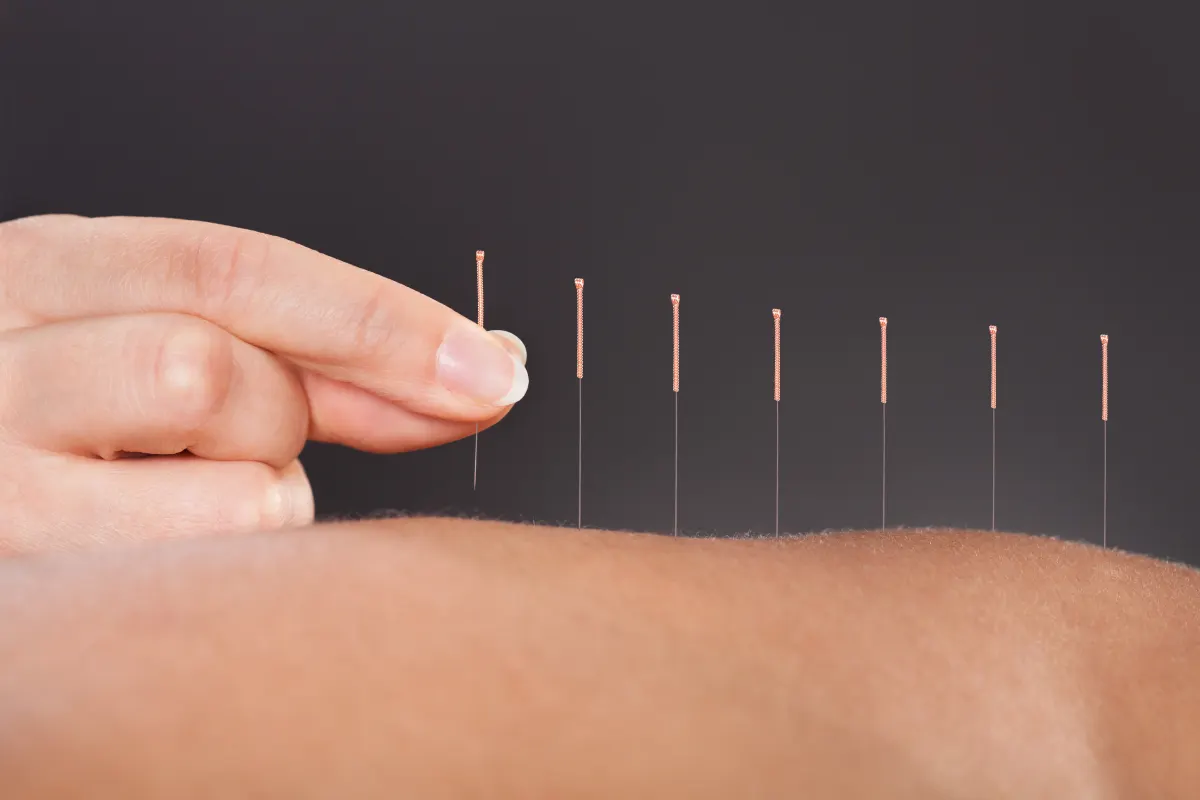
Dry needling, which has recently come into very common use for treating pain caused by fibromyalgia and muscle spasms, provides considerable relief by stimulating the muscles with thin needles of various lengths. Bestami Yalvaç, Specialist in the Physical Therapy and Rehabilitation Department at Hisar Hospital Intercontinental, provided information about dry needling, also known as a painless method.
It relaxes the muscles causing the pain
Dry needling, also known as intramuscular stimulation (IMS), is a non-surgical and drug-free pain treatment method that was first introduced in Canada and is used for treating pain associated with chronic musculoskeletal diseases. Dry needling, performed with thin needles of various lengths, relaxes muscle contractions that cause pain by stimulating them with the help of the needle. Because the needles used contain no drug or solution, the procedure is called dry needling and does not cause allergic reactions, drug interactions or drug-related side effects. Dry needling (IMS) can be performed alone or combined with other treatments, after the patient is examined and a diagnosis is made using laboratory and imaging methods.
It is performed with special needles of different lengths
Very fine special needles of different lengths, known as acupuncture needles, are used. The needle is inserted into the “trigger” points, also known as fibrositis or fibrous bands, in the muscles that cause pain. In this way, the aim is to release the spasm (muscle shortening) and tissue stiffness in the muscle causing the pain. The patient generally does not feel the needle. Unlike acupuncture, the needle does not stay in for a long time; it lasts sometimes a few seconds and sometimes a few minutes.
Its effect is observed immediately, unlike acupuncture
Although the needles used in dry needling (IMS) treatment are acupuncture needles, dry needling is not an acupuncture method. In acupuncture, needles are inserted into previously known specific points and left for a period of about 20 minutes, whereas in dry needling, the points causing pain are identified, needles are inserted into these points at different depths, and they are removed immediately. While the effect of acupuncture does not appear immediately, an effect is observed right away with dry needling.
The number of sessions varies according to the person and the condition
The number of sessions varies from patient to patient, depending on the condition and its duration. Sometimes a single session is sufficient, but on average 5–8 sessions are required.
In which conditions is dry needling (IMS) treatment used?
Neck and back pain
Fibromyalgia
Painful muscle spasms
Low back pain, cervical and lumbar disc herniation
Tennis elbow and golfer's elbow
Shoulder pain and restricted movement
Pain related to computer use
Pain related to postural disorders
Myofascial pain syndrome
Tendinitis of the hand, elbow, shoulder, heel and groin
Sciatic pain
Sports injuries and rehabilitation
Temporomandibular joint pain