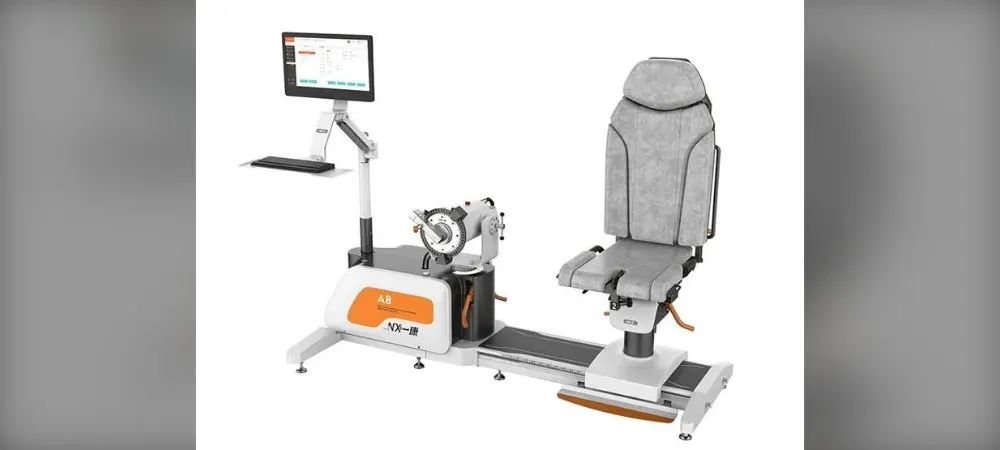
An isokinetic device is an important technology in the field of physical therapy that evaluates and improves muscle performance. Literally, isokinetic means "equal motion." Muscle contraction performed at a constant angular velocity is called isokinetic exercise, and systems that provide this specific type of movement are of great importance in rehabilitation processes.
These systems are used to test and increase the performance of the knee, shoulder, elbow, wrist, hip, ankle joints, and trunk muscles. Isokinetic testing allows you to objectively measure muscle performance and helps determine right-left side differences, as well as the strength and endurance of opposing muscle groups. While athletes frequently prefer these exercises to improve their performance, isokinetic devices also provide effective results in conditions such as knee osteoarthritis or anterior cruciate ligament injuries.
Since these systems provide resistance equal to the muscle's strength, the probability of excessive strain and injury is very low, and they offer a highly efficient form of exercise because the muscle is given appropriate loading at all angular degrees of movement. Furthermore, isokinetic exercise offers a personalized treatment opportunity by adapting to your performance.
What is an Isokinetic Device?
Isokinetic systems are special devices that have revolutionized the modern approach to physical therapy and rehabilitation. In addition to measuring muscle strength, these systems offer personalized exercise programs for athletes and patients.
What is isokinetic?
Meaning "equal motion," isokinetic is a specific type of contraction where the muscle moves at a constant speed. Isokinetic contraction is a form of muscle contraction that occurs at a constant speed throughout the range of motion, at a predetermined angle, with maximum tension, and with constant resistance that is equal at every angle. This form of contraction was introduced in the 1960s and is widely used in the field of physical therapy today.
Isokinetic strength is the highest torque (rotational force) value that can be developed during a contraction occurring at a specific speed. This value allows for the objective measurement of muscle performance.
How does an isokinetic device work?
Isokinetic devices are complex systems that measure dynamic, maximal-intensity loading at a predetermined constant angular velocity. The working principle of these devices is as follows:
The speed of the movement is kept constant, but the resistance is automatically adjusted according to the force you apply.
No matter how much force you apply, the speed of the moving segment does not exceed the predetermined speed.
The device does not apply resistance unless the person attempts to exceed the current dynamometer speed.
Additionally, the device may feature five different exercise modes:
Isometric mode: Used for static strength testing, generally in situations where dynamic movement is not desired.
Isokinetic mode: Strength testing is performed during eccentric and concentric contractions applied throughout the range of motion.
Isotonic mode: Used for exercises performed with constant resistance.
Passive mode: Used for passive movement for rehabilitation purposes.
Robotic mode: Found in advanced technology devices, programmed movements are applied.
What is an isokinetic testing device used for?
Isokinetic testing devices are versatile tools for evaluating and improving muscle performance. They are primarily used in the field of physical therapy for the following purposes:
Isokinetic systems are mainly used for five purposes:
Assessment: Objective measurement of muscle strength, followed by the determination of appropriate exercise programs to create a treatment protocol.
Rehabilitation: Achieving recovery through safe resistance settings while treating muscle and tendon injuries.
Research: Used in scientific studies because they display dynamic muscle functions in the form of measurable assessments.
Diagnosis: Used as an aid in the diagnosis of injuries.
Training: Used in athletic training programs to improve the performance of athletes.
With isokinetic devices, the shoulder, elbow, wrist, hip, knee, ankle joints, and trunk muscles can be evaluated and treated. Test results are displayed with graphs to identify weak and strong areas, thus creating personalized treatment protocols.
In Which Situations Is an Isokinetic Device Used?
In the field of modern physical therapy and rehabilitation, the isokinetic device is one of the primary technologies preferred in various situations. These devices provide objective data in the diagnosis, treatment, and follow-up of musculoskeletal system problems.
Athlete performance assessment
Isokinetic testing devices play a critical role in assessing the performance of athletes. They are used to evaluate muscle strength before and after the season, helping to create training programs specific to the athlete. Through these systems, the muscle balance of athletes can be evaluated, and potential injury risks can be detected in advance.
With single-session measurements taken with isokinetic devices, agonist-antagonist and bilateral strength imbalances in specific muscle groups can be identified. Thus, in light of the results obtained, coaches can plan the most accurate training for the optimum development of athletes and eliminate risk factors by resorting to injury-preventive exercises in case of any strength imbalance.
Rehabilitation processes
The isokinetic system is effectively used in the measurement, evaluation, and treatment of orthopedic disorders, sports injuries, rheumatological diseases, various neurological diseases, and problems involving the musculoskeletal system. It can also be preferred to prevent weakness that may develop in diseases related to partial nerve damage and to build the necessary strength.
Its use in the early stages of rehabilitation processes is very important. There is a decrease in muscle fibers during the immobilization period following an injury. Especially during this period, isokinetic devices can be used in the continuous passive motion feature, which provides joint movement without active muscle contraction. At the same time, it is also preferred for biofeedback purposes, both visually and quantitatively, during the recovery process.
Orthopedic disorders
Isokinetic devices are widely used, especially in knee disorders, which are at the forefront of orthopedic problems, as well as in hip and ankle disorders. They are applied for rehabilitation purposes in conditions such as anterior cruciate ligament (ACL) injury or knee osteoarthritis.
Furthermore, it plays an effective role in measuring the muscle strength and endurance of shoulder, elbow, and wrist muscles. As a result of these measurements, a precise assessment of muscle strength is made during concentric and eccentric muscle activity and static isometric contractions.
Post-operative recovery
Isokinetic devices have an important place in post-operative recovery processes. They are effective in preventing joint stiffness that may develop after surgery. They also provide an objective assessment opportunity in deciding on the return-to-sports process.
For example, it is used to evaluate the muscle performance and functional capacities of patients after anterior cruciate ligament repair. In measurements taken 1 year after the operation, knee quadriceps and hamstring muscle strength can be objectively determined, and rehabilitation programs can be arranged accordingly.
After the muscle strength of patients is objectively measured with isokinetic devices, personalized treatment protocols are created by determining appropriate exercise programs. With assessments made before and after treatment, the patient's response to treatment can be easily monitored, and necessary adjustments can be made.
As a result, measurements are recorded, and a treatment plan specific to the patient and their needs is created based on the measurement result. With the isokinetic testing device, the ability to increase and maintain the necessary muscle strength is restored to patients.
Advantages Provided by the Isokinetic Device
The various advantages provided by the isokinetic device stand out among the reasons why physical therapy specialists prefer it. This modern rehabilitation technology offers versatile benefits, unlike classical exercise methods.
Objective muscle strength measurement
One of the most important advantages of the isokinetic system is that muscle strength and total work values can be measured objectively. Thanks to these devices, right-left side differences, as well as the strength and endurance of opposing muscle groups, can be determined precisely. Furthermore, a full assessment of muscle strength can be made during concentric and eccentric muscle activity.
With assessments made before and after treatment, the patient's response to treatment can be objectively measured and monitored. In this way, therapists can analyze the effectiveness of the treatment program with numerical data and make adjustments to the program when necessary.
Personalized resistance adjustment
Isokinetic exercise adapts to patient performance. Thanks to this feature, if the person cannot exert maximum force, the device reduces the resistance accordingly. Thus, the probability of the exercise being left unfinished due to pain and fatigue is reduced.
In particular, the platform does not apply the same resistance to every patient. The balance of the moving platform is automatically adjusted according to the person's weight and instability coefficient. Different exercise modes make the system useful at every stage of every rehabilitation procedure.
Reduction of injury risk
Isokinetic testing systems are advantageous in terms of safety. The devices used during the test apply resistance compatible with the force produced by the person during movement, which prevents the person performing the test from encountering force greater than what their muscles can withstand. In this way, the risk of injury is minimized.
Besides this, it differs from other exercise models with the feature of resetting the resistance mechanism when the patient feels discomfort. It provides safety in the rehabilitation processes of people with muscle and tendon injuries.
Graphical feedback that increases motivation
The breakdown of measurements taken with an isokinetic testing device into numbers and graphs significantly increases the person's motivation. During the application, the individual's participation in the treatment is ensured with visual and auditory stimuli.
Test results are explained to individuals accompanied by numerical values and graphs. In some systems, the software even classifies patients as having high fall risk, medium fall risk, and low fall risk, and colors the fall risks in the form of graphical bars as red, yellow, and green. This visual feedback allows patients to track their own progress and increases adherence to treatment.
As a result, the isokinetic device has become an indispensable tool in the field of physical therapy with its features of objective measurement, customizable resistance, safety, and visual feedback.
Exercise and Test Modes
Isokinetic devices personalize the treatment process by offering different exercise modes in physical therapy applications. Thanks to these modes, the most appropriate rehabilitation program can be created according to the patient's condition.
Passive Mode (CPM)
Passive Mode or CPM (Continuous Passive Motion) is based on the principle of moving the joint without the patient's active participation. It is especially effective in preventing joint stiffness and adhesions in the early post-operative period. This mode accelerates the recovery process by helping the knee move in the early phase after knee surgeries.
CPM application has the property of reducing inflammation, pain, edema, and joint limitation. Furthermore, it positively affects the recovery process by increasing blood circulation and tissue nutrition with the passive movement it provides.
Isometric Mode
Isometric Mode stabilizes the joint for strength exercise according to the angle. In this mode, contraction occurs without a change in muscle length. Static strength exercises are performed at different joint angles, aiming to strengthen the muscle at that angle.
It is preferred in situations where joint movement is not desired, and it ensures the development of muscle strength at a specific angle. It plays an important role in rehabilitation processes where joint stabilization is required.
Isokinetic Mode
Isokinetic Mode is the primary operating mode that allows muscles to be trained at a constant angular velocity. In this mode, muscle strengthening studies can be performed with concentric, eccentric loads, and deceleration exercises. Isokinetic mode is effective in regaining muscle strength during the rehabilitation process.
These exercises, performed against maximum resistance at a constant speed, ensure that the muscle is given appropriate loading at all angles of movement. Thus, the functional development of muscle strength is targeted.
Isotonic Mode
Isotonic Mode is a form of exercise performed with constant resistance. In this mode, isotonic movement is simulated by changing the resistance according to the joint angle. Similar to traditional weight exercises, it is used for muscle strengthening purposes.
Since isotonic exercises include movements close to daily life activities, they are important for functional return. This mode is especially preferred in the advanced rehabilitation period.
Robotic Mode
Robotic Mode is an advanced technology application found in new-generation isokinetic systems. Thanks to this mode, CPM and isokinetic modes are applied automatically, and the system works actively. Robotic mode minimizes the therapist's intervention during treatment while ensuring precise control of repetitive movements.
Especially preferred in situations requiring complex rehabilitation, the robotic mode enriches the treatment process by offering many different movement options. In this way, interactive exercises that increase the patient's motivation can be performed.
All these modes allow physical therapy specialists to create the most appropriate rehabilitation program according to the needs of the patients. This variety offered by isokinetic devices increases the effectiveness and efficiency of the rehabilitation process.
Isokinetic Test Types and Application Areas
In the field of physical therapy, isokinetic tests offer a scientific approach to evaluate the muscle performance of patients and athletes. These tests provide objective data for the planning and follow-up of the rehabilitation process.
What is an isokinetic test?
The isokinetic test is based on the principle of measuring the power produced by a selected muscle, muscle group, or limb at a predetermined constant angle and constant speed via an electro-mechanical dynamometer in terms of torque. With this test, parameters such as muscle strength, muscle endurance, the muscle's total work volume, and the muscle's maximum strength are measured by operating the muscles at a selected angular velocity.
In measurements taken with an isokinetic testing device, assessments of individuals' muscle strength balances are made through parameters such as symmetry index, conventional ratio, and functional ratio. Especially determining the muscular regression and weakness that occurs after sports injuries is of great importance for the follow-up of the rehabilitation process.
First, the type of exercise to be performed on the patient (eccentric and concentric) should be explained before the test. The purpose of the test and the operation of the dynamometer should be explained. Afterward, 10-15 minutes of warm-up and stretching exercises should be performed.
Purpose of the isometric test
The isometric test measures the ability to perform static contraction against resistance without visible movement. Conversely, isometric contraction is the ability of a muscle or muscle group to perform a static contraction against resistance without visible movement or change in muscle length.
The primary purpose of isometric tests is to detect muscle strength and imbalances. Tests designed to evaluate the strength of the core muscles are of great importance. These tests are used in rehabilitation, strength enhancement, and athletic performance assessment.
Furthermore, the goal in increasing isometric strength is to increase muscle endurance, stability, and muscle strength dependent on target joints. It is of critical importance, especially for sports requiring explosive power, stability, and endurance.
Evaluation of test results
Various parameters are examined in the evaluation of isokinetic test results. Measurement results are interpreted in terms of right-left side comparison, agonist-antagonist ratios, and normative values according to age group.
Thanks to the data obtained as a result of the test, it becomes possible to:
Determine the risk of injury
Monitor the rehabilitation process
Conduct athletic screenings
Determine sport-specific ability
Additionally, in athlete performance assessments, agonist-antagonist and bilateral strength imbalances in specific muscle groups can be identified with single-session measurements. The relationship between isokinetic test and functional performance has been shown in some studies.
In isokinetic tests, the test speed is generally applied at different speeds: low (30-60°/s), medium (90-120°/s), and high (180-300°/s). During the test, warning the person with verbal commands to perform maximal contraction and allowing them to see the torque reach increases performance.
As a result, isokinetic tests in the field of physical therapy are valuable tools that increase treatment success by supporting rehabilitation processes with scientific data.
In Summary: Isokinetic Device
In conclusion, isokinetic devices offer a revolutionary technology in the field of physical therapy and rehabilitation. Thanks to these systems, muscle strength, endurance, and performance can be measured objectively, and personalized treatment protocols can be created.
The most important advantage of isokinetic exercises is that they provide appropriate loading to the muscle at all angles of movement and provide resistance equal to the muscle's strength. For this reason, the risk of injury is very low. Furthermore, thanks to different exercise modes (passive, isometric, isokinetic, isotonic, and robotic), it can be used at every stage of the rehabilitation process.
Additionally, these devices are of great importance in the performance assessments of athletes, orthopedic disorders, and post-operative recovery processes. They are frequently preferred, especially in knee, shoulder, elbow, hip, and ankle rehabilitation.
For physical therapy specialists, isokinetic devices serve as a valuable tool in both the diagnosis and treatment stages. Thanks to the graphical feedback feature, patients can track their own progress, which increases motivation for treatment.
This technology, which allows you to determine right-left side differences and agonist-antagonist muscle imbalances, is effective not only in treatment but also in preventing injuries. Therefore, isokinetic assessment and exercise have become an indispensable part of the modern physical therapy approach.
Isokinetic systems, which are accepted as the gold standard in the rehabilitation of musculoskeletal system problems, play a key role in creating the most appropriate treatment program for you and in objectively evaluating your response to treatment. Thus, your recovery process is supported by scientific data, making it safer and more effective.
Frequently Asked Questions
Let's answer the curious questions about isokinetic devices in the field of physical therapy.
How long does an isokinetic test take? Generally, a full test, including the warm-up time, takes about 30-45 minutes. It is necessary to perform 10-15 minutes of warm-up and stretching exercises before the test.
Is the isokinetic test painful? You may feel slight strain during the test, but it should not be painful. It is important to inform your specialist if you feel any pain.
How should I prepare for the test? It is recommended that you wear comfortable sports clothes and avoid heavy exercise for 24 hours before the test. You can continue your normal diet on the day of the test.
How long have isokinetic devices been used? Isokinetic exercises were introduced in the 1960s and are widely used in the field of physical therapy today.
For which joints can an isokinetic test be performed? Test and treatment programs can be applied for the shoulder, elbow, wrist, lower back/back, hip, knee, and ankle joints.
How can I make an appointment for isokinetic treatment? First, you need to be examined by a physical therapy specialist. If your doctor deems it necessary, they will refer you to the isokinetic laboratory.
Isokinetic devices are modern physical therapy technologies that evaluate and improve muscle performance. They are used for joints such as the knee, shoulder, and elbow and offer personalized treatment.