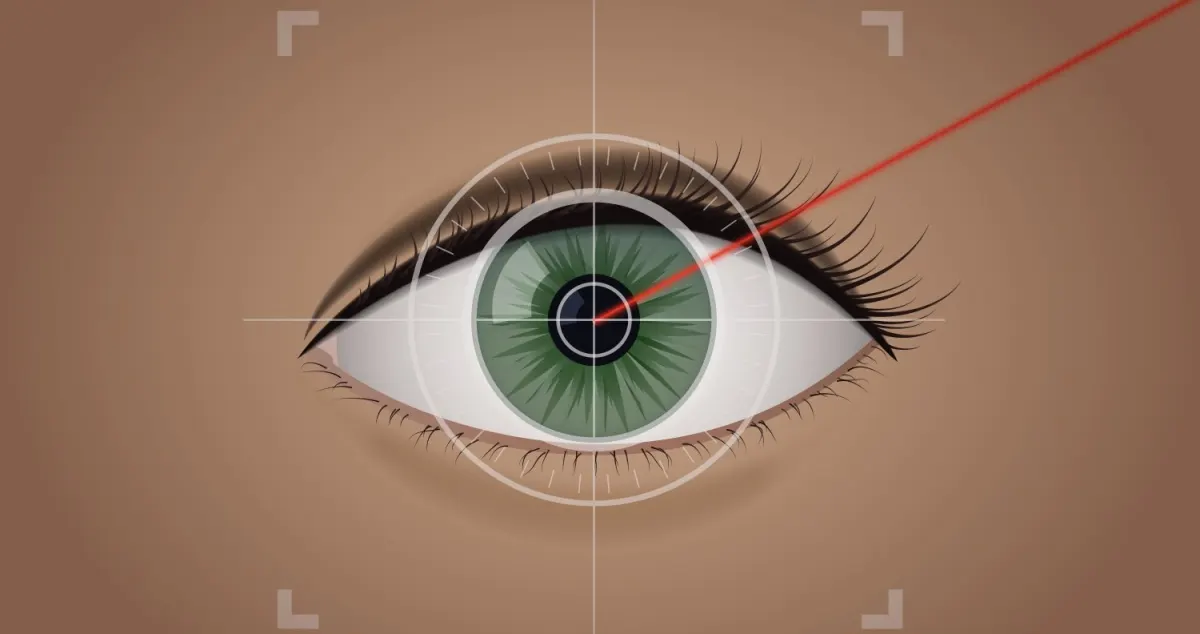
What Is Excimer Laser (Vision Correction) Treatment, Its Symptoms and Treatment Methods?
New treatment methods for vision problems are continuously being developed to improve patients' quality of life. Excimer laser (vision correction) treatment is also one of the current technologies that is effective in treating vision problems. With excimer laser treatment, you can achieve successful vision without needing glasses or contact lenses. Each person's suitability for treatment is determined by an examination performed by a specialist ophthalmologist, and the treatment process is planned accordingly.
What Is Excimer Laser Treatment?
Excimer laser treatment is an effective laser technology used to correct eye disorders. It is particularly effective in correcting refractive eye defects such as myopia (difficulty seeing distant objects clearly), hyperopia (difficulty seeing near objects clearly) and astigmatism. Excimer laser treatment gives the best results in patients within a certain range of refractive power and corneal thickness. For this reason, each individual's condition should be carefully evaluated, and the decision on treatment should be made in line with the recommendation of a specialist ophthalmologist.
Who Is Excimer Laser Treatment Applied To?
Excimer Laser Treatment can be applied to correct the following eye disorders:
Myopia (Nearsightedness): A condition in which distant objects cannot be seen clearly because the focal point of the eye forms before the retina.
Hyperopia (Farsightedness): A condition in which near objects cannot be seen clearly because the focal point of the eye forms after the retina.
Astigmatism: A condition in which the image is not focused sharply because the cornea or lens has an irregular shape.
How Is Excimer Laser Treatment Performed?
Classic excimer laser treatment is carried out in two stages: flap creation and laser ablation. In the first stage, a thin tissue layer (flap) is created on the cornea using a microkeratome or femtosecond laser, or the upper layer of the cornea (epithelium) is removed from the surface. In the second stage, the lower layers of the cornea are reshaped with an excimer laser and the correction is performed. Thanks to this reshaping, light rays are properly focused in the eye.
What Are the Eligibility Requirements for Excimer Laser?
Suitable candidates for Excimer Laser Treatment must meet the following requirements:
Stable refractive power: Excimer Laser Treatment is effective when the refractive power has been stable for a certain period. In other words, the refractive power must not have changed significantly within the last 1 year.
Minimum age limit: Treatment is generally applied to individuals who have reached the age of 18, the age at which refractive power stabilizes. However, in some conditions such as hyperopia, waiting until age 21 may be preferred.
General health status: Suitable candidates for treatment are people in good general health, because treatment may be risky in people with a chronic health problem or an immune system disorder.
Eye health: Treatment is not recommended for people with an eye infection, corneal injury or other serious eye diseases. Conditions such as active infection of the eyes, keratoconus and corneal scarring may present an obstacle to treatment.
Corneal thickness: Because the lower layers of the cornea are reshaped during Excimer Laser Treatment, corneal thickness must be at an appropriate level. Corneal thickness is measured by an ophthalmologist and suitability for treatment is determined.
Pregnancy and breastfeeding: Excimer laser treatment is not recommended for women who are pregnant or breastfeeding. Treatment results may be inconsistent due to hormonal changes and temporary changes in refractive power.
Although these eligibility criteria are generally sought for excimer laser treatment, they may vary according to the patient's condition, so the evaluation must be made by a specialist physician. The ophthalmologist will provide the most accurate information and create a personalized treatment plan.
Frequently Asked Questions About Excimer Laser Treatment
Because excimer laser treatment is a procedure requiring expertise, many questions may arise in patients' minds about the process. The frequently asked questions about excimer laser treatment are as follows: Excimer laser treatment can be applied to people with the following refractive powers:
Myopia (Nearsightedness): Suitable for people with a myopic refractive power between -1.00 and -12.00. In other words, people who cannot see distant objects clearly and have negative (-) values can benefit from this treatment.
Hyperopia (Farsightedness): Suitable for people with a hyperopic refractive power between +1.00 and +6.00. Treatment can be applied to people who cannot see near objects clearly and have positive (+) values.
Astigmatism: Suitable for people with an astigmatic refractive power between -0.50 and -6.00. Astigmatism is often seen together with myopia or hyperopia and results from an irregular shape of the cornea or lens.
Dry eye after excimer laser treatment is one of the most frequently encountered conditions. Because the excimer laser reshapes the lower layer of the cornea, it may affect the sensitivity of the eye surface and temporarily disrupt tear production. Dry eye appears immediately after treatment and continues for several days. In some cases, it may last for weeks or longer. Temporary eye drops or artificial tears help relieve dryness in the post-treatment period. Excimer laser treatment is not applied in some cases because it may pose a risk to the patient. Situations in which excimer laser treatment is not applied include: eye infection, serious eye diseases, certain past eye surgeries, unstable refractive power, certain chronic diseases and pregnancy. The following points can be listed as matters to be considered after excimer laser treatment:
Using medications regularly: It is important to use the eye drops prescribed by your ophthalmologist regularly. These drops can speed up the healing process, reduce the risk of infection and relieve dry eye.
Wearing glasses or protective eyewear: In the post-treatment period, you may need to wear sunglasses or protective eyewear for the period recommended by your doctor. Precautionary glasses protect your eyes from sunlight, dust, wind and other external factors.
Avoiding touching the eyes: Touching your eyes after treatment may increase the risk of infection. You should avoid rubbing or forcefully pressing your eyes. Also, be careful around the eyes when applying or removing makeup, and if possible, avoid makeup for a while..
Avoiding eye-straining activities: In the post-treatment period, you should avoid activities requiring excessive effort, heavy exercise or lifting weights. It is also important to stay away from computer or phone screens that may cause excessive eye strain.
Avoiding contact with water: For a period after treatment, avoid situations involving water contact such as swimming pools, sea water, hot baths or saunas. Water may increase the risk of infection and affect the healing process of the eyes.
Attending check-ups at the intervals your doctor requests: Regular check-ups after treatment help your doctor monitor the healing process and detect any problem early. Following the follow-up schedule recommended by your doctor is advised.
Excimer Laser surgery can be considered at a point when the patient's refractive power has become stable. It generally applies to people aged 18 or older whose refractive power has not changed significantly within the last year. The timing of surgery may also vary depending on factors such as the person's lifestyle and preferences, eye health status and corneal thickness. Ideally, a detailed preliminary evaluation with an ophthalmologist should be performed before excimer laser surgery. This evaluation includes elements such as eye examination, measurements and stability of refractive power.
In some cases, it should be considered that myopia and hyperopia may progress at young ages and refractive power may change. For this reason, at young ages, temporary correction methods such as glasses or contact lenses may be preferred instead of Excimer Laser surgery. Excimer Laser Treatment generally lasts from a few minutes to half an hour. The duration of the procedure may vary depending on the treatment and may differ according to the patient's specific needs, refractive power and treatment plan. A mild discomfort or feeling of stinging after excimer laser treatment is normal, but patients generally do not feel pain. Anesthetic eye drops used during the procedure and painkillers prescribed after treatment help minimize discomfort and pain.
Mild burning, stinging or irritation may occur after treatment; this is temporary and decreases spontaneously within a few hours or a few days. To minimize discomfort after the procedure, it is important to follow the instructions given by your doctor. After Excimer Laser surgery, a permanent correction is generally achieved and the refractive power does not regress. However, in some conditions such as presbyopia (age-related difficulty seeing near objects), refractive power may change again or progress. Follow-up checks after surgery are important to monitor your eye health and detect any change early. Attending check-ups at the regular intervals recommended by your doctor helps maintain post-surgery results and enables additional treatments or early intervention when necessary. Hisar Hospital provides a personalized approach during the excimer laser treatment process and in the follow-up stage afterwards, with its team of specialist physicians.