Shock wave therapy is a modern and effective method widely used today in the treatment of many diseases. This therapy is based on the principle of applying focused shock waves from outside the body and is generally preferred in the treatment of painful conditions.
What Is ESWT (Shock Wave) Therapy?
ESWT (extracorporeal shock wave therapy), also known as shock wave therapy, is a medical treatment method in which shock waves are applied from outside the body, that is, through the skin surface. This therapy is a non-invasive (non-surgical) approach used especially in the treatment of musculoskeletal system and urology problems. Dating back to the early 1990's, this method has been observed to be effective in the treatment of various conditions, particularly tendinopathies, calcifications and sexual dysfunctions. Shock wave therapy is based on the principle of treating by focusing high-energy sound waves on the targeted area. These sound waves are generated by a special device and delivered to the targeted area in the body. Treatment generally consists of a series of sessions, and each session uses shock waves of a specific intensity and frequency.
How Is ESWT Treatment Performed?
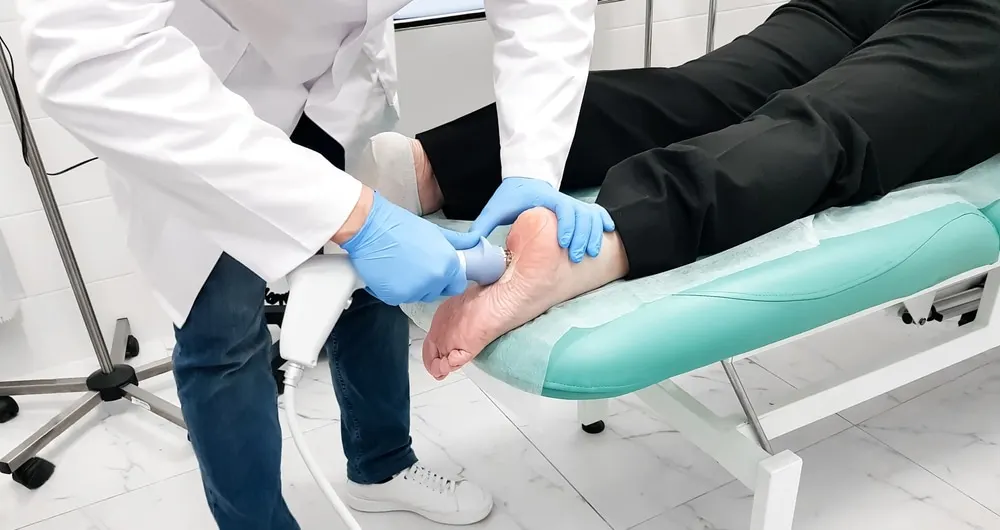
Shock wave therapy is a medical treatment method that involves a series of non-invasive procedures. The question “How is ESWT treatment performed?” is wondered about by many people. The treatment process begins with an evaluation. Healthcare professionals gather information about the patient's medical history and current condition. Then the area to be treated is determined and the patient takes an appropriate position. At this stage, gel or oil is applied to the skin surface to ensure better sound transmission. During treatment, high-energy shock waves produced by a special device are focused on the targeted area. These waves pass through the skin and other soft tissues and are delivered to the determined treatment area. The duration of each session and the total number of treatments may vary depending on the patient's condition. Mild discomfort or redness may be seen during the procedure. However, these side effects are short-lived. The healing process varies depending on the area treated.
In Which Areas Is ESWT Applied?
Shock wave therapy is a treatment method used in various medical fields. It is especially preferred in physical therapy, orthopedics and urology. The conditions for which shock wave therapy is applied are as follows:
Musculoskeletal System Problems: Commonly used in the treatment of problems related to the muscles and skeletal system. With ESWT, conditions such as tennis elbow, tendinitis, tendinopathy, heel spur, calcification, plantar fasciitis and carpal tunnel syndrome can be treated. In musculoskeletal problems, the aim is generally to reduce pain, control inflammation and heal tissues. High-energy shock waves focused on the targeted area block pain signals, reduce inflammation and stimulate tissue healing.
Sexual Dysfunctions: ESWT is preferred especially in the treatment of erectile dysfunction seen in men. It is thought that applying shock wave therapy to the penis may enhance sexual function and alleviate erection problems. Shock waves may have a vasodilating effect on the blood vessels in the penis. This may increase the blood flow needed for a healthier erection.
Urological Problems: Shock wave therapy can also be used in the management of urological problems such as kidney stones and prostatitis. Shock waves may have the capacity to fragment stones or an effect of reducing inflammation.
Trauma and Sports Injuries: Sports injuries (especially tendon injuries and ligament damage) are areas where ESWT can be applied. In trauma and sports injuries, it is generally used to relieve pain, control inflammation and accelerate tissue healing. High-energy shock waves may have effects that accelerate the healing process.
Orthopedic Problems: Orthopedic problems (especially joint osteoarthritis and some bone diseases) are among the conditions in which shock wave therapy may potentially be effective. Shock waves have the potential to promote healing at the cellular level and reduce pain.
What Are the Advantages and Benefits of ESWT Treatment?
The effect provided by ESWT begins with the delivery of high-energy shock waves to targeted areas in the body. These waves can trigger the healing process and reduce pain by causing changes at the cellular level. The advantages of shock wave therapy are as follows:
Being Non-invasive: It is a non-invasive treatment method that does not require surgical intervention. Patients can receive treatment without the risk of surgery. This is a feature preferred by many people.
Painless and Quick to Apply: The treatment process is generally painless and can be completed in a short time. Sessions last a few minutes, and patients can return to their daily activities shortly after treatment.
Promoting Natural Healing: Shock wave therapy may activate the body's natural healing processes. High-energy shock waves can stimulate tissues to increase blood circulation, contribute to cellular repair and accelerate healing.
Wide Range of Applications: ESWT can be applied across a broad spectrum, from musculoskeletal problems to sexual dysfunctions, and from urological problems to sports injuries. This offers a versatile treatment option for different health problems.
Safety and Low Side-Effect Profile: Shock wave therapy is generally accepted as a safe treatment option. Apart from post-procedure pain and mild discomfort during application, serious side effects are rare. This offers a reliable treatment alternative for many patients.
For Which Diseases Is ESWT Applied?
Shock wave therapy offers an effective approach in the treatment of a number of diseases. Diseases that can be treated with ESWT are as follows:
Tendinitis and Tendinopathies: Provides a therapeutic effect against tendon inflammations and chronic tendon problems. High-energy shock waves focused on the targeted area can reduce inflammation and improve tendon tissues.
Plantar Fasciitis and Heel Spur: Can be preferred for the treatment of plantar fasciitis and heel spur on the sole of the foot. Shock waves can promote healing by targeting painful points in the plantar fascia and heel spur area.
Musculoskeletal Pain: ESWT can be effective in managing musculoskeletal pain. High-energy shock waves can bring under control the inflammation causing pain and stimulate the repair of tissues.
Erectile Dysfunction (ED): Can be used as an option for treating erectile dysfunction in men. Shock waves can solve erection problems by increasing blood flow in the penis.
Kidney Stones: Shock wave therapy can treat kidney stones by fragmenting them. High-energy shock waves can break kidney stones into small pieces. This makes it easier for them to be naturally passed out of the body.
Prostatitis: Prostatitis, one of the urological problems, can be treated with ESWT. The anti-inflammatory effects of shock waves contribute to the healing of inflamed prostate tissues.
Sports Injuries: Shock wave therapy can be used to accelerate the healing process of sports injuries. Especially through its effects on tendon injuries and ligament damage, it can promote tissue healing.
Joint Osteoarthritis: Shock waves can increase joint mobility and reduce pain through their effect of reducing inflammation within the joint.
Does ESWT Have Side Effects?
Side effects of shock wave therapy are generally minor and temporary. Serious side effects do not occur in most patients. The most common side effects include pain, redness and swelling in the treated area during and after treatment. These side effects go away on their own within a few days. During treatment for Peyronie's disease and erectile dysfunction, most patients are generally able to tolerate the side effects, and no visibly noticeable deterioration in their lives occurs. Since no definitive conclusion has been reached in research on long-term effects, there is a lack of information. If a patient notices a side effect that is different from normal, it is important that they report it to their doctor.
What Is the Recovery Process After ESWT Treatment?
The recovery process after shock wave therapy treatment may generally vary from patient to patient. After treatment, the recovery process varies depending on the type of disease being treated and the patient's overall health condition. Mild pain and a feeling of discomfort in the treated area is a common side effect, but this is generally short-lived and decreases within a few days. Most patients can return to their normal daily activities immediately after treatment. However, it is recommended to avoid heavy physical activity during the recovery process.
The recovery process may differ depending on the disease being treated. For example, in patients who undergo ESWT for Peyronie's disease, the reduction in pain is generally noticed immediately, while there may be no significant change in plaque size or penile curvature. In patients undergoing treatment for erectile dysfunction, improvements in erection quality and sexual performance can be observed within a few weeks. In patients with chronic pelvic pain syndrome, significant improvements in pain and other symptoms have been seen, but further research is needed for long-term results.
Following follow-up appointments and the doctor's recommendations after ESWT treatment can help the recovery process be more effective and quicker. A follow-up period of usually several weeks is required in order to fully evaluate treatment results. Additional clinical studies are needed to obtain more data on long-term recovery and the durability of treatment results.
Frequently Asked Questions
Shock wave therapy is an innovative method used in the treatment of various health problems. Apart from the question “What is shock wave therapy?”, there are many other questions about this effective treatment method. The ESWT process and number of sessions vary depending on the individual's health condition, and on the type and severity of the disease. Generally, sessions are short, lasting between 5 and 10 minutes. This duration can be adjusted depending on the size and severity of the treatment area.
To maximize the effectiveness of shock wave therapy, a number of practices are recommended. The treatment duration may average between 3 and 6 sessions. However, depending on the condition, more sessions may also be required. Treatment intervals may be once or twice a week. However, this may also vary depending on the patient's response, the severity of the condition being treated and the doctor's assessment. A heel spur is a pointed bone growth that develops on the heel bone at the sole of the foot. Treatment may include methods such as rest, shoe selection, physical therapy, exercise, ice application and custom insoles. More advanced treatment options such as shock wave therapy are also available. The treatment process varies according to the individual situation and should be guided by the doctor's recommendation. A heel spur is a condition that causes severe pain in the sole of the foot. It manifests with symptoms such as sharp pain felt when taking the first steps, increasing pain after prolonged standing or walking, and discomfort felt especially under the heel. In case of suspicion of a heel spur, it is important to be examined by a healthcare professional. Imaging tests such as X-ray can be used to confirm the diagnosis. ESWT is an effective option in the treatment of heel spur. Application of shock waves can reduce pain and promote healing. At the same time, wearing comfortable shoes and resting can also help alleviate pain. The treatment process varies depending on individual factors. Therefore, consulting a specialist is important. ESWT is generally recommended by specialists in physical medicine and rehabilitation, orthopedics and urology. These healthcare professionals can evaluate and apply ESWT according to the patient's condition and treatment needs. Before application, the patient's condition is evaluated in detail by a specialist doctor and a treatment plan is created. Each situation may vary depending on the patient's specific health conditions. However, there are certain patient profiles in whom shock wave therapy cannot be applied. Situations in which ESWT cannot be performed are as follows:
During pregnancy,
In case of a bleeding disorder,
During active cancer treatment,
In cases of infection,
In those with severe heart failure or serious heart problems,
In individuals with blood clotting problems.
There are several important factors to be considered for safe application. These factors are:
Shock wave therapy should be applied by a licensed and expert healthcare professional.
Before treatment, the patient's condition should be evaluated in detail and an accurate diagnosis should be made.
Before treatment, potential contraindications should be evaluated.
The quality and suitability of the equipment used is important. The patient should be given detailed information about the treatment process and consent should be obtained for the treatment procedure.
The dose and duration of ESWT should be determined according to the condition being treated and the patient's general health status.
The institution where the application is performed should be a hospital, and full compliance with the relevant health standards must be ensured.
According to research, in 19% of patients a 60% reduction in pain was seen after 1 month. After 3 months, a pain reduction of more than 60% was detected in 70% of patients. At the end of 1 year, a reduction of more than 60% was detected in 98% of patients. Shock wave therapy performed within the scope of urological rehabilitation is generally painless and has minor side effects. Therefore, patients do not encounter a situation they cannot tolerate during or after treatment. The side effects of shock wave therapy are at a level that the patient can tolerate. The most common side effects experienced are mild pain and redness in the area during or after treatment. ESWT treatment varies depending on the type of disease and the patient, but according to research, symptom improvement is observed in 47% after 1 month, 68% after 3 months and 86% after 1 year. These data show how effective ESWT is even in a short period such as 1 month. After treatment, patients' pain levels and other symptoms need to be regularly monitored. Pain is expected to decrease as the sessions progress. At the same time, it is recommended that the patient avoid excessive activity and rest so that the treated area can heal faster. Regularly attending follow-up appointments is also important. At these appointments, whether there are any side effects or any abnormal signs can be identified. Shock wave therapy is a promising option in treating various medical conditions. However, as with every treatment option, it is important to have a detailed discussion with your doctor about the advantages and risks of ESWT by making an appointment.