If chronic sinusitis, nasal congestion and recurrent sinus infections make your daily life difficult, you may need to learn the answer to the question "what is FESS?" FESS (Functional Endoscopic Sinus Surgery) is a minimally invasive method used to treat such sinus problems. Endoscopic sinus surgery is performed entirely through the nostrils, without any skin incision.
In this article, you will find answers to questions such as what FESS surgery is, who it is performed on, how it is done and how the recovery process progresses.
What Is Endoscopic Sinus Surgery (FESS)?
Definition and Purpose of FESS Surgery
FESS, formed from the initials of Functional Endoscopic Sinus Surgery, is a minimally invasive surgical method used in the treatment of sinus diseases. The term "functional" is used because the surgery aims to restore the normal function of your sinuses. The surgeon's goal is not merely to alter an anatomical structure, but to re-establish the natural working mechanism of the sinuses.
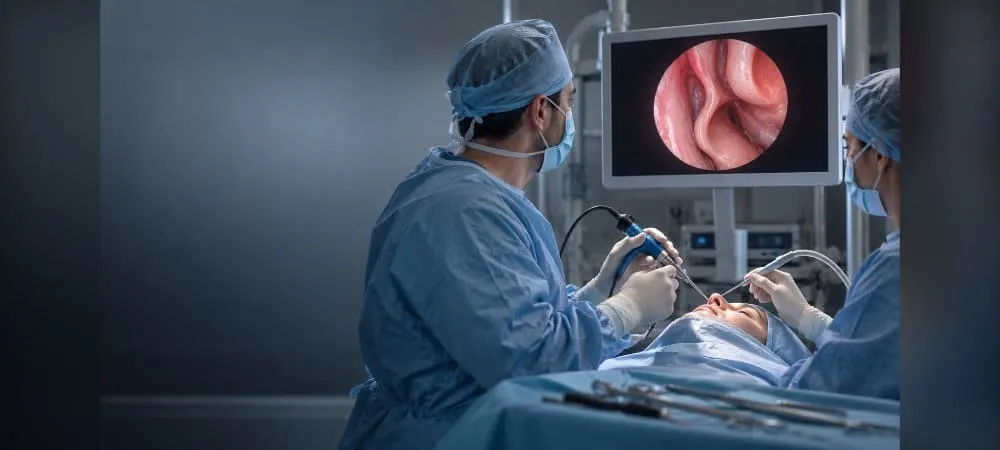
The main goal of FESS surgery is to clear problematic tissue and fluid that has accumulated in the sinuses and to restore ventilation inside the sinuses. This is achieved by eliminating the disease that causes obstruction in the drainage channels of the sinuses. The surgeon enters through your nostrils and operates on your sinuses with the help of a thin, lighted camera called an endoscope. In this technique, no incision is made that could leave visible scars inside or around the nose.
The endoscopes used during surgery are thin rods with a light source and a high-resolution camera at the tip. When the surgeon inserts these instruments through the nostril, deep regions, dark corners and narrow channels that cannot be seen with the naked eye become clearly visible on a large screen. The heart of the surgical strategy is the region called the osteomeatal complex. This is a common junction where the maxillary (cheek), frontal and anterior ethmoid sinuses all open into the nose together. The procedure performed with FESS widens this narrowed junction so that drainage can flow.
Advantages of Endoscopic Sinus Surgery
The most important advantage of endoscopic sinus surgery is that no external incision is made. Because the surgeon works only through the nose, the recovery time is shorter than with classical sinus operations. In addition, there is less bleeding and pain during surgery.
The FESS technique allows detailed visualization of the inside of the nose and sinuses using endoscopic devices. With this method, doctors diagnose diseased tissue more accurately and manage the treatment process effectively. Because endoscopes provide views from different angles, the surgeon has no blind spots. This visual control helps protect vital structures located right next to the sinuses, such as the eye socket, the skull base and major blood vessels.
Studies show that 80% to 90% of people who have undergone FESS for chronic sinusitis feel that the surgery improved their problems. In addition, the natural anatomy is preserved, recurrent infections are reduced, and the sense of smell and quality of breathing improve.
Differences Between FESS and Traditional Sinus Surgeries
Traditional sinus operations were open surgical methods that could be quite traumatic. In classical surgical approaches, the inside of the sinuses was scraped out completely, which made the recovery process more difficult. In the FESS procedure, however, the surgeon intervenes only on the diseased tissue and on the anatomical abnormality causing the obstruction.
While wider areas of tissue may be removed in traditional sinusitis surgery, in the endoscopic method only the problematic areas are treated. The basic philosophy of FESS surgery is to preserve the healthy mucosa that lines the sinuses and humidifies and cleans the air. This technique, performed while preserving healthy nasal mucosa, prevents excessive removal of sinus mucosa that may potentially be reversible.
This difference significantly reduces postoperative pain, bleeding, recovery time and the risk of complications. In particular, preserving the natural sinus anatomy increases long-term success rates. Thanks to modern imaging technologies, it has become possible to reach the inside of the sinuses much more clearly.
Who Is FESS Surgery Performed On?
FESS surgery is not recommended for every sinus problem. This surgical method is performed on patients who meet certain conditions and do not respond to conservative treatments. Before deciding on surgery, your surgeon evaluates your condition in detail.
Chronic Sinusitis and Failure to Respond to Medical Treatment
The most fundamental reason for planning FESS surgery is chronic rhinosinusitis that seriously impairs your quality of life and does not respond to medical treatment. Sinusitis is not simple nasal congestion. When left untreated, it is a debilitating disease that drains your sleep pattern, work performance and overall energy.
The surgical option generally comes up for infections that last longer than 12 weeks and do not resolve despite appropriate antibiotic and spray treatments. If you experience constant nasal congestion, postnasal drip, facial fullness, headache and loss of smell, you may be suffering from chronic sinusitis. Although medical treatment is the first choice to relieve these symptoms, endoscopic sinus surgery becomes necessary in resistant cases.
Nasal Polyposis and Recurrent Polyp Formation
Nasal polyposis is another condition in which FESS surgery is frequently performed. Polyps are swellings of the lining inside the sinuses, in the form of water-filled sacs, caused by an excessive reaction to chronic inflammation or allergy, which hang down into the nose. Although they are benign, they create a mechanical obstruction where they are located.
When polyps block your nose, airflow is cut off, your sense of smell is lost and drainage of the sinuses becomes impossible. Endoscopic sinus surgery is the most ideal method for removing polyps that do not shrink with medication or that recur constantly. However, nasal polyps tend to recur. While the recurrence rate is 20 to 30 percent in those with polyps only, in patients who have asthma and aspirin allergy together with polyps, this rate rises up to 70 percent.
Anatomical Abnormalities and Sinus Obstructions
Anatomical variations are also among the frequent reasons for this surgery. In some individuals, the sinus channels are very narrow from birth, or air pockets have formed within the middle turbinate and block the passage. These structural narrowings cause the sinuses to close with the slightest cold and the infection to become trapped.
In such patients, clearing the infection is not enough. The anatomical narrowing that predisposes to infection also needs to be widened surgically. If you have chronic sinusitis due to a deviated nasal septum, enlarged turbinates or structural narrowings, FESS surgery may be the only definitive solution.
Fungal Infections and Sinus Tumors
Although fungal infections are rare in the sinuses, they can be life-threatening if left untreated. These infections are encountered more often in patients with weakened immune systems, uncontrolled diabetes, or those taking immunosuppressive medications. In the treatment of fungal sinusitis, surgery is the main treatment approach.
Tumors developing in the sinuses are also conditions that require endoscopic sinus surgery. These tumors may be benign or malignant. They cause symptoms such as nasal congestion, bleeding, foul odor and headache. In addition, cerebrospinal fluid leaks and nasolacrimal duct obstructions of intranasal origin are also treated with FESS.
Orbital and Intracranial Complications
Orbital complications are serious conditions caused by paranasal sinus infections in 60 to 80 percent of cases. FESS is performed for urgent drainage of infections that have spread to the eye socket. These complications can lead to life-threatening outcomes such as loss of vision, intracranial infection or death.
In cases of sinusitis with brain abscess development, mortality rates are between 10 and 20 percent. In intracranial complications arising from frontal and ethmoid sinusitis, early diagnosis and surgical intervention are lifesaving. In cases presenting with swelling and redness of the eyelids, in addition to a full ENT examination, an ophthalmological examination should also be evaluated in detail.
How Is FESS Surgery Performed?
Preoperative Preparation and Imaging Methods
Every person's sinus structure is different, like a fingerprint. For this reason, the paranasal sinus CT scan taken before the operation is the surgeon's road map. By examining this map, the surgeon determines which area is blocked, the thickness of the bony structures and the location of risky areas.
Before surgery, the patient's medical history is reviewed and all necessary tests are performed. With nasal endoscopy, the intranasal structures, sinus ostia and, if present, polyps are observed directly. The necessary laboratory tests and cardiopulmonary checks are performed to assess suitability for anesthesia.
Do not take aspirin for at least 10 days before surgery. Even a small amount of aspirin can increase the amount of bleeding during and after surgery. If you smoke, stop smoking at least three weeks before your surgery.
Anesthesia Options and the Surgical Process
The operation is usually performed under general anesthesia. This way you do not feel any pain, and your remaining still provides a safe working environment for the surgeon. In some cases, local anesthesia may also be used.
Because the procedure is performed entirely through the nostrils, there is no incision scar, bruising or stitches on the face. The duration of surgery depends entirely on the patient's sinus structure and the extent of the disease. If only a single sinus area will be treated, the procedure can take 30 to 45 minutes. However, in extensive cases in which all sinuses are cleared, this time can rise to between 1.5 and 2.5 hours.
Use of the Endoscope and Surgical Instruments
In the first stage, the surgeon enters the nose with the endoscope and assesses the working area. With the camera system placed in the nose, the anatomical structure of the sinuses is visualized in detail. Endoscopes are fiberoptic light-source devices with angles of 0, 30 or 45 degrees.
The main surgical tools used during surgery include the camera system, cold light source, forceps, suction devices and the microdebrider. The surgeon works precisely using these instruments.
Widening the Sinus Openings and Tissue Clearance
Usually the first step is removal of the thin, hook-shaped bone called the uncinate process, which screens the sinus entrances. When this bone is removed, the natural opening of the maxillary sinus is revealed. The surgeon widens this opening with special instruments, allowing the inflammation or polyps inside the sinus to be cleared.
Next, the surgeon proceeds to clear the ethmoid sinuses, which are located between the eyes and consist of small honeycomb-like chambers. The walls of these small chambers are opened to turn them into a single large cavity. At the end of the surgery, modern non-adhesive packing or dissolvable materials are placed to prevent the opened channels from sticking together again.
Advanced Technologies Used During Surgery
Devices called microdebriders or shavers clean tissue by suctioning it on one side and shaving it on the other. In this way, while diseased tissue such as polyps is removed, the healthy mucosa right next to it is preserved. Energy devices such as radiofrequency or cautery are used to control bleeding.
Navigation devices show, in three dimensions, the location of the point being operated on within the sinus anatomy during sinus surgery. By enabling sinus surgery to be performed more safely and all diseased areas to be reached safely, they significantly increase the chance of success of the operation.
Recovery and Care After FESS Surgery
The success of the surgery is determined not only by the procedure performed during the operation, but also by the care process afterwards. Because FESS is a minimally invasive method, patients are usually discharged on the same day or the next morning. The recovery period is comfortable, and thanks to modern packing techniques, the painful pack removal of older methods is no longer experienced.
Symptoms Expected in the First Days
It is completely normal to experience some symptoms immediately after surgery. Mildly bloody nasal discharge may be seen in the first few days. This discharge appears as a pink-colored ooze and decreases over time. In addition, nasal congestion, a mild sense of pressure in the face and headache are also expected in the first days.
You may temporarily notice a change in your sense of taste or smell. These symptoms usually decrease within a few days. Lying with your head elevated helps reduce swelling and bleeding.
Nasal Cleaning and Nasal Irrigation
Nasal rinsing is the most critical part of the recovery process. You need to rinse the inside of your nose with isotonic saline at the frequency recommended by your physician. This procedure speeds up healing, reduces crusting and prevents the risk of infection.
Nasal irrigation, recommended at least 3-4 times a day, clears clots and healing tissue from inside the sinuses. It is important to use distilled, sterile or water boiled for at least five minutes. Using contaminated water increases the risk of infection.
Postoperative Check-ups and Follow-up Process
Regular follow-up appointments directly affect the success of the surgery. At follow-up examinations, your doctor cleans the crusts inside the nose, evaluates drainage and adjusts medication if necessary. Regular postoperative check-ups usually last 4-6 weeks, with debridement performed every week. If this procedure is neglected, adhesions may develop inside the nose.
The first check-up is usually performed on the 7th-10th day, and clots and fibrin are cleared with endoscopic debridement. This is a critical procedure. In some patients, long-term allergy treatment or continued use of cortisone sprays may be required.
Points to Be Careful About
To speed up the recovery process, you need to stay away from some activities. Avoid heavy exercise and lifting weights for the first 2 weeks. Do not start swimming right away. Blowing your nose hard and taking steamy, very hot baths can cause bleeding.
Tobacco products and alcohol slow down healing. Do not use nasal sprays or medications other than those recommended by your doctor. Air travel is not recommended for the first 2 weeks. Keep your mouth open when you sneeze.
Time to Full Recovery
Although the recovery process varies from person to person, you can usually return to your daily activities within 1-2 weeks. If you work a desk job, you can return to work after 7-10 days. However, full healing of the tissues inside the nose takes 4-6 weeks. Full effect and recovery of the sense of smell can take up to 3 months.
Frequently Asked Questions About FESS Surgery
Is FESS surgery painful?
Since general anesthesia is administered during surgery, you do not feel any pain. If local anesthesia is preferred in some cases, mild discomfort may be experienced. After surgery, there may be mild pain and a feeling of fullness that can be controlled with simple painkillers. This pain is usually minimal and shows itself as a feeling of pressure. Although the surgery was very painful in the past because of the gauze packs used, these packs are no longer used today.
How long does FESS surgery take?
The duration of surgery varies according to your condition. It is usually completed in between 1 and 3 hours. In limited problems involving one side and a single sinus, the procedure can be as short as 30-45 minutes. However, in extensive cases in which all sinus groups on both sides are filled and there is dense polyp tissue, it takes 2-3 hours. Revision surgeries take longer in patients who have had surgery before. In these cases, normal anatomical landmarks may have changed and adhesions may have formed during the first surgery.
When do you return to normal after FESS surgery?
You can return to desk jobs within 2-3 days. Most patients return to their social life within 7-10 days. Improvement in your quality of life begins after the first week. Even during the recovery process, you feel relief in your facial and sinus pain. However, full healing of the tissues inside the nose can take up to 4-6 weeks. Activities such as heavy exercise and swimming are not recommended for 2-3 weeks.
What are the risks of FESS surgery?
FESS is a safe surgical method. However, as with every surgery, there are some risks. Minor complications include mild bleeding, adhesions at the sinus openings, headache and temporary crusting inside the nose. Major complications are very rare and include severe bleeding, tear duct injury, cerebrospinal fluid leak and vision problems. Because the sinuses are in close proximity to the eye and the brain, the surgeon's experience is of great importance. With modern navigation technology and an experienced surgeon, the risk of serious complications is below 1 in 1,000.
Is FESS surgery a permanent solution?
When performed with the correct technique, the surgery provides long-lasting relief. Studies show that sinusitis does not recur after surgery in 85 percent of cases. The 5-year recurrence rate is 10-20 percent in chronic sinusitis without polyps, while in cases with polyps this rate rises up to 40-60 percent. The risk increases if allergy or asthma is present. Regular use of nasal corticosteroids after surgery, saline rinses and avoiding trigger factors reduce recurrence. FESS alone is not a permanent solution; it is part of a long-term management plan.
FESS Surgery in Summary
FESS surgery is a minimally invasive and effective solution for your chronic sinus problems. Thanks to this method, performed only through your nostrils without leaving any mark on your face, your quality of daily life improves significantly. Regular nasal rinsing and check-ups after surgery directly affect your success. Studies show that 85 percent of patients feel relief in the long term. When performed by an experienced surgeon, FESS makes breathing easier and reduces recurrent infections. Discuss with your doctor whether this treatment is suitable for you. When you follow the necessary care steps, your recovery process will be more comfortable than expected.