Balloon sinuplasty surgery is a modern treatment method that began to be used after receiving FDA approval in the USA in 2005 to cope with chronic sinusitis. Unlike traditional surgeries, this method involves no incisions and no bleeding.
What is balloon sinuplasty, how is it performed, and why is it preferred in sinusitis treatment? In this article, we will examine the advantages of the method, the situations in which it is applied, and the surgery process in detail. It offers an effective solution, especially in cases that do not respond to medication.
What is Balloon Sinuplasty?
Definition of the balloon sinuplasty method
Used in the treatment of chronic sinusitis, balloon sinuplasty allows for the dilation of blocked sinus passages with the help of a special balloon catheter. The method is defined as a minimally invasive procedure, and no bone or soft tissue is removed from inside the nose.
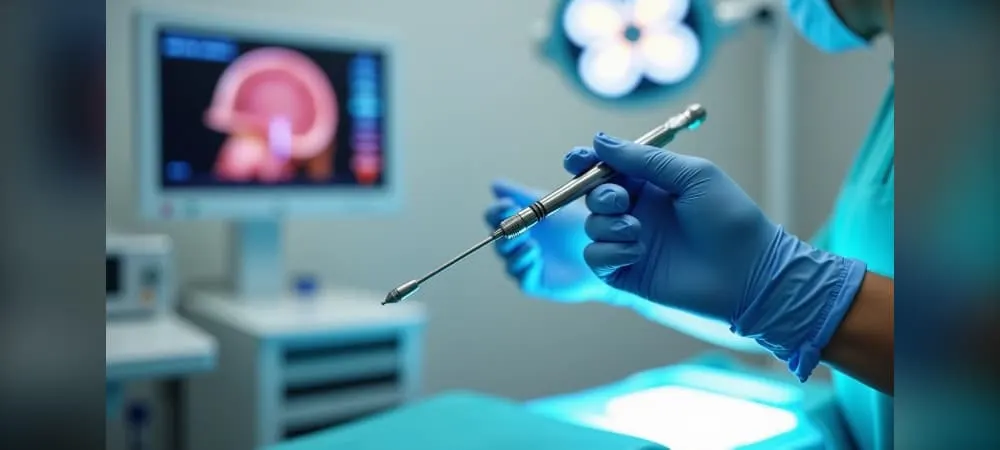
The logic of the procedure works similarly to opening blocked heart vessels with an angioplasty. With the help of a thin catheter advanced through the nostril, a balloon placed into the blocked sinus passage is gently inflated to open the narrowed channel. In this way, the natural drainage path of the sinuses becomes functional again.
Balloon sinuplasty can be used for every sinus, but it is frequently preferred as a surgical method, especially for chronic sinusitis of the frontal sinuses. The frontal sinuses are the sinuses in the forehead, and there are certain problems in the surgical treatment of sinusitis belonging to these regions. Unlike other sinuses, the opening connecting the frontal sinuses to the inside of the nose is not in the form of a hole but in the form of a channel.
Structure and function of the sinuses
There are 8 sinuses in the facial region of our head. These are positioned as four on each side. The sinuses located within the forehead bones are called frontal, those inside the cheekbones are maxillary, those between the eyes are ethmoid, and those located in the very center of the head are called sphenoid.
Each sinus has an opening called an ostium, and the sinuses open into the nose through these holes. Fluid is secreted from the nose and sinuses throughout the day. The fluid secreted from the sinuses flows from the ostium of the sinus into the nose and from the nose towards the nasopharynx.
If the ostium of the sinus is narrow and closed, the fluid secreted from the sinuses cannot flow into the nose and may accumulate inside the sinus, causing sinusitis. Therefore, the main procedure performed surgically in sinus surgeries is to open the mouth of the sinus, ensure the ventilation of the sinus, and clean the inside to make it healthy and functional again.
Differences from classic sinus surgery
While functional endoscopic sinus surgery is performed by making an incision like a normal surgery, balloon sinuplasty is performed without an incision and without bleeding. In the classic endoscopic sinus surgery method, since bone and mucosa are cut, there is oozing-type bleeding, and a tampon is required to stop this bleeding.
In contrast, in the balloon sinuplasty method, the mucosa is not cut, only stretched. Since the risk of bleeding is minimal, patients leave the operating room with their noses completely open and breathing comfortably. Furthermore, no tampon is placed in the nose after the surgery.
Balloon sinuplasty creates less tissue damage compared to classic methods. In this method, normal tissue is not cut at all. The procedure is applied by following the airways from the nostrils to the sinuses, finding the sinus mouth, and dilating it with a balloon.
In Which Situations Is Balloon Sinuplasty Performed?
Chronic sinusitis treatment
Sinusitis is divided into two groups: acute and chronic. Acute sinusitis lasts for a few weeks and can be completely cured with medication. In some cases, sinusitis becomes chronic, and in this case, it is not possible to treat it completely with medication.
In the surgical treatment of chronic sinusitis, balloon sinuplasty and classic functional endoscopic sinus surgery or a hybrid method in which these two are used together are applied. If your sinusitis symptoms last longer than 12 weeks, there may be a permanent blockage in your sinus passages. In this case, the passages need to be physically dilated.
There are certain problems, especially in the surgical treatment of sinusitis belonging to the frontal sinuses. The opening connecting the frontal sinuses to the inside of the nose is not in the form of a hole but in the form of a channel, and opening and dilating this entire channel is a very difficult procedure.
Cases that do not respond to medication
In a large portion of patients with chronic sinusitis, treatment can only be performed surgically. While there are chronic sinusitis cases that can be treated with medication, the decision for sinusitis that no longer responds to medication and requires an operation is made during the examination of the paranasal sinus tomography taken.
If antibiotics, nasal sprays, and cortisone treatments are not enough to open the sinus passages, the balloon sinuplasty method comes into play. Surgery may be considered in patients who do not respond to long-term medication or in cases of frequent recurrent infection attacks despite appropriate treatment.
Recurrent sinus infections
If you have a sinusitis attack 4 or more times a year and require the use of heavy antibiotics each time, the narrowing in the channels may be paving the way for these infections. Balloon dilation breaks this vicious cycle.
In recurrent or chronic cases, surgical methods are applied, and if underlying factors such as nasal polyps or allergies are not present, the results of the surgery are quite successful. Surgical treatment options come to the agenda in patients who do not respond to treatment despite appropriate content and duration and who have radiological findings of chronic sinusitis.
Eustachian tube dysfunction treatment
Balloon sinuplasty has also been applied for approximately the last 4-5 years in the treatment of patients who cannot equalize ear pressure. When the Eustachian tube does not work sufficiently, ear pressure cannot be equalized. This situation can manifest itself with a feeling of fullness and pressure in the ear, hearing loss, pain in the ear, strange opening and closing sounds in the ear, and even, although rarely, dizziness, nausea, and vomiting.
If results cannot be obtained with medication, this ailment can be treated with the balloon sinuplasty method. With the balloon sinuplasty method, the nostril is entered, and without any incision, it is advanced to the Eustachian tube located in the nasopharynx; the balloon is placed inside the Eustachian tube and inflated, and by dilating the mouth of the Eustachian tube, an attempt is made to equalize the ear pressure and treat the disease.
How Is Balloon Sinuplasty Performed?
Pre-operative preparation process
Correct patient selection and detailed evaluation are very important for a successful surgery. The structures inside the nose are examined in detail with an endoscopic nasal examination.
Computed tomography imaging clearly reveals the anatomical structure of the sinuses, the location, and the degree of the blockage. An allergy test is performed to understand whether chronic sinusitis is due to allergic causes. Previous upper respiratory tract infections, surgeries, or allergic diseases are examined.
The patient's nasal interior is prepared with special solutions that reduce edema and clarify the field of view.
Anesthesia options
Balloon sinuplasty surgery is performed under general anesthesia. Depending on the patient's comfort and the surgeon's ease of working, general anesthesia is usually preferred, but it can also be performed under local anesthesia in suitable cases. After the patient is asleep, local anesthesia is applied to the sinus area.
Surgery steps
The surgeon enters through the nostrils with a high-resolution, thin endoscope. The drainage channels of the sinuses to be intervened are approached with special guide cannulas, each having different angles.
Guide wires with a light at the tip are passed through these cannulas and placed into the blocked sinus channel. At this stage, it is ensured that the guide is in the right place by checking the movement of the light from the outside. Whether one is inside the sinus is evident from the fact that the light at the tip of the guide wire sent into the sinus is seen through the patient's face.
The catheter with a balloon on it is advanced over this guide and placed to coincide with the blocked channel. The balloon is inflated with controlled pressure (usually 8-12 atmospheres) for about 5-10 seconds. The balloon is inflated at several different points of the sinus ostium to make the entire ostium open along its length.
In necessary cases, the sinuses can be washed with saline or antibiotic solutions. The operation takes about 5 minutes for each sinus. If all of the patient's sinuses are to be intervened, the operation can take up to 1 hour.
Post-operative process and discharge
No tampon is placed in the nose after the surgery. Since the intervened areas are not in the direct field of view, there is usually no need for post-operative dressing.
After the patient is fully awake, they are observed in the hospital for a few hours. Patients are usually kept under observation for between 2 and 4 hours. 5-6 hours after waking up, the patient can be discharged and go home. Immediately after the effect of the anesthesia wears off (about 2-3 hours), the patient can start eating soft foods.
The patient wakes up from the surgery in an extremely comfortable manner. Since there is no tampon in the nose, patients start breathing through the nose immediately.
Advantages of Balloon Sinuplasty Surgery
Incisionless and bloodless intervention
The most prominent feature of the balloon sinuplasty method is that it is applied without damaging any tissue inside the nose. No bone or soft tissue is cut. Therefore, the risk of post-operative pain and bleeding is at a minimal level.
This method, performed without using cutting and piercing tools, is a comfortable procedure for both the patient and the doctor. Since there is no incision in the nose, there is no bleeding. This feature offers a much safer option compared to classic surgical methods, especially in patients with bleeding disorders and those who have to use blood thinners.
Since no changes are made to the external structure of the nose, the appearance is not impaired from a cosmetic perspective. Furthermore, while no significant scar forms on the patient, the possibility of bruising is low.
Fast recovery process
Since tissue damage is minimized, the recovery process after the procedure is fast. Because tissue integrity is not disrupted, the body's self-repair process is much shorter and effortless. Most patients can return to their normal lives in 24 hours.
Patients can return to their daily activities within 48 hours after the procedure. After the procedure is completed, patients are usually kept under observation for between 2 and 4 hours. Approximately 95% of patients who undergo the operation are discharged and sent home on the day the intervention is performed.
Patients can usually return to their work lives comfortably on the first or second day after the operation. A slight soreness may be felt in the nose and surrounding area, but this feeling can be eliminated with general painkillers to be used upon the doctor's recommendation.
Low risk of complications
The possibility of complications is very low, and it has been observed that 98% of the drainage channels dilated with a balloon are open after 2 years. For this reason, the method is considered effective and safe.
Operations targeting the sphenoid sinuses, which are located close to the carotid artery and the optic nerve, can be completed safely. Balloon sinuplasty minimizes risk in areas where vital structures such as the brain and important vessels are located. The risk of serious complications such as vision loss is significantly reduced with balloon sinuplasty.
Since it is a closed method that does not disrupt tissue integrity, the risk of complications is quite low compared to traditional surgeries. Complications that can be seen in classic surgeries, such as infection, bleeding, and adhesions, are rarer.
Fast return to daily life
Patients are discharged on the same day, and most patients can return to their daily activities within 3-5 hours. 4-5 hours after the application, the person can continue their daily life. Nasal trauma and a long recovery period are not experienced.
Balloon sinuplasty does not prevent the performance of other treatments. In necessary cases, it can be applied together with standard endoscopic surgery. It does not have a role that prevents other treatments that may be performed in this region in the future.
Who Is Balloon Sinuplasty Applied To and Not Applied To?
Suitable patient profile
Patients who get the best results from the balloon sinuplasty application have certain characteristics. People who have been diagnosed with chronic sinusitis and whose symptoms have lasted longer than 12 weeks are in the first place for this treatment. If complaints such as a feeling of pressure on the face, thick post-nasal drip, and loss of smell do not go away despite appropriate medication, it means that a permanent blockage has formed in the sinus passages.
Cases that do not respond to medication are ideal candidates for balloon sinuplasty. Patients who cannot find relief despite antibiotics, nasal sprays, and cortisone treatments benefit from this method. It offers effective results, especially in selected patients who have structural blockage and are not accompanied by polyps.
People who experience recurrent sinusitis attacks also fall into the appropriate patient group. Patients who have 4 or more infection attacks per year can consider this treatment. In addition, successful results are obtained in people whose drainage is impaired due to sinus ostium blockages.
Special situations for patients under 18
It is generally recommended that balloon sinuplasty operations not be performed on those under 18. After the age of 18, this operation can be performed. However, this method can only be applied to patients under 18 if they do not respond to other treatments.
Since the nasal and facial development of children continues, classic surgeries that damage bone tissue are avoided. Balloon sinuplasty is the only surgical alternative that can be safely applied because it does not disrupt bone and mucosal development in children. Therefore, it can be evaluated in pediatric sinusitis cases upon the doctor's decision.
Suitability criteria for surgery
The patient's suitability is determined as a result of physical examination and imaging tests. Sinus ostial blockage and mucosal thickening must be seen on the computed tomography scan. It is a prerequisite that the sinus passages be in a suitable structure for balloon sinuplasty.
Some situations are not suitable for this method. Balloon sinuplasty may not be sufficient on its own in chronic sinusitis patients with nasal polyps. In these patients, combining it with endoscopic sinus surgery yields more successful results. The procedure may not be suitable for patients with active sinus infection or severe sinus polyps. In patients with bleeding disorders or those using anticoagulant drugs, adjustments should be made under doctor control. If there are serious abnormalities in the nasal anatomy, tumors, or conditions such as fungal sinusitis, traditional endoscopic surgery may be preferred.
Frequently Asked Questions
Is there pain after the surgery?
Patients usually feel a mild level of pain after the procedure. Severe pain complaints are not expected, and serious discomfort is rarely seen. Existing pains respond quickly and clearly to standard painkillers. The sensitivity caused due to the interventions made inside the nose is short-term. Therefore, you will encounter a process that can be brought under control with mild painkillers.
How long is the hospital stay?
Approximately 95% of patients who undergo the operation are discharged and sent home on the day the intervention is performed. Usually, discharge occurs on the same day, and most patients are kept under observation for a few hours. The patient can go home 5-6 hours after waking up. In contrast, hospitalization may be required in classic sinus surgeries. Balloon sinuplasty saves you time in this respect and allows you to return to your daily routine quickly.
Is nasal congestion experienced after the surgery?
Swelling, slight congestion, and discharge may last for a few days. This is a normal healing process. However, in some patients, congestion may last for a few weeks due to edema or allergic reaction. If it lasts a long time, a follow-up examination should be performed, and additional medication or supportive treatments should be applied if necessary. Nasal sprays and washing with salt water recommended by your doctor will relieve this process.
Is re-surgery necessary?
Approximately 3.2% of patients need revision surgery within 12 months after the first procedure. On the other hand, 85% of patients report permanent improvement in sinusitis symptoms after two years. If the sinus passages narrow again over time or the disease recurs, the procedure can be applied again. Thanks to the minimally invasive nature of the method, it can be performed again without the need for further surgery.
Insurance coverage status
Whether the balloon sinuplasty procedure is covered by insurance depends on the policy you have. If you have private health insurance, there may be situations where you can receive reimbursement with a chronic sinusitis diagnosis and a medical necessity report. However, every insurance company applies different criteria. Contacting your insurance company and getting detailed information before planning the procedure provides you with an advantage.
In Summary, Balloon Sinuplasty Surgery
Coping with the problem of chronic sinusitis no longer requires long hospital stays and painful recovery processes. Balloon sinuplasty offers a safe alternative to classic surgeries with its bloodless and incisionless structure. If you have not received a response to medication treatments and are tired of recurrent infections, this method may be suitable for you.
Definitely have a detailed examination before the surgery and talk about your expectations clearly with your doctor. Although success rates are high, every patient's situation is different. Correct patient selection and an expert surgeon will allow you to experience the pleasure of breathing comfortably again.