Accessory breast tissue, seen in approximately 2% of women, is extra breast tissue that can develop in different parts of the body outside the normal breast tissue. Regarded as a congenital anomaly, this condition can often lead to aesthetic concerns and sometimes to physical discomfort.
Accessory breast surgery is the surgical removal of this excess breast tissue that has developed in the body. Underarm (axillary) accessory breast surgery in particular is one of the most frequently performed procedures. This operation is carried out under general anesthesia, and the excess tissue is carefully removed to give the area a smoother appearance. This operation, which requires surgical experience, must be performed without causing an unfavorable result in terms of physical appearance. In this article, you will find all the information you need about the symptoms and treatment methods of accessory breast.
What Is Accessory Breast?
Accessory breast tissue, which presents as a congenital anomaly, is a condition in which there is more breast tissue in the body than the normal breast tissue. Medically known as polymastia, this condition results from a difference occurring during embryonic development. More common in women than in men, it is seen in approximately 2% of women.
Difference between accessory breast and normal breast
Accessory breast tissue occurs when breast tissue, which normally should be located on the chest wall, also develops in other parts of the body. Unlike normal breast tissue, this extra tissue generally develops along the line called the milk line (mammary ridge) during the embryonic period in the womb and remains permanently in the body after birth. This tissue can be affected by hormonal changes like normal breast tissue and may enlarge and become more noticeable, especially during pregnancy, breastfeeding and menstrual periods.
Accessory breast tissue may sometimes appear as just a small nipple, while at other times it may develop similarly to normal breast tissue. This tissue can cause problems such as pain and swelling during menstrual periods and can even produce milk during breastfeeding.
What is underarm accessory breast?
The most common type of accessory breast is extra breast tissue that forms in the underarm. Accessory breast tissue forming in this area can often be confused with a lymph node or a lipoma (fatty lump). Such tissue in the underarm region can restrict arm movements and cause irritation due to friction with clothing.
Accessory breast tissue seen in the underarm becomes more noticeable, especially during periods of hormonal change (puberty, pregnancy, breastfeeding), and can cause complaints such as swelling and tenderness. In addition, this tissue in the underarm can cause severe pain during menstrual periods and may trigger psychological problems such as anxiety and anxiety disorder.
What does the term polymastia mean?
Polymastia is a medical term of Latin origin and refers to the presence of more than the normal number (two) of breasts. In the womb, the ridges extending from the underarm to the thigh along the sides of the embryo normally form breast tissue at the level of the 4th–5th rib, and the other cells along the line disappear. When these cells do not disappear, accessory breast tissue develops along the milk line.
In conclusion, accessory breast is a congenital condition that generally carries no health risk. However, when it causes aesthetic concerns, physical discomfort or psychological problems, it can be treated with surgical intervention. In this case, accessory breast surgery enables the complete removal of the extra breast tissue and helps the patient feel relieved both physically and psychologically.
Accessory Breast Symptoms and Diagnostic Methods
If you have noticed a swelling or an extra protrusion in your underarm, it is highly likely to be accessory breast tissue. Correct diagnosis of accessory breast tissue is of great importance for determining the appropriate treatment plan. In this section, we will examine in detail the symptoms and diagnostic methods of accessory breast.
What are the symptoms of accessory breast?
Accessory breast symptoms can vary from person to person. Some patients have no symptoms at all, while others may develop bothersome symptoms. The most common accessory breast symptoms are as follows:
- Swelling and a sensation of a mass in the underarm or along the milk line
- A nipple or areola on the extra breast tissue
- Enlargement of the swelling and tenderness during hormonal periods (puberty, menstruation, pregnancy, breastfeeding)
- Pain or a feeling of fullness, especially during menstrual periods
- Irritation and discomfort due to friction with clothing
- Milk secretion in rare cases
Complaints of pain, aching and tenderness in the accessory breast tissue become more pronounced, especially during pregnancy, breastfeeding and menstrual periods. This discomfort may be one-sided or on both sides.
Diagnosis by physical examination
Accessory breast tissue can often be confused with a lymph node or a lipoma (fatty lump). Therefore, a detailed patient history and a thorough physical examination are of great importance for correct diagnosis. During the physical examination, the doctor applies light pressure to the swollen areas to assess whether the patient experiences any pain or tenderness.
In addition, the doctor asks about the relationship between swellings in the underarm or along the milk line and hormonal changes. Since accessory breast tissue becomes more noticeable, especially during periods of hormonal change, this information is very helpful in the diagnostic process.
Imaging methods: ultrasound, MRI
After the physical examination, imaging methods are used to confirm the diagnosis of accessory breast. Ultrasonography (ultrasound) is the most commonly used and first-choice diagnostic method. Thanks to ultrasound, the doctor can distinguish accessory breast tissue from other structures such as lymph nodes or lipomas.
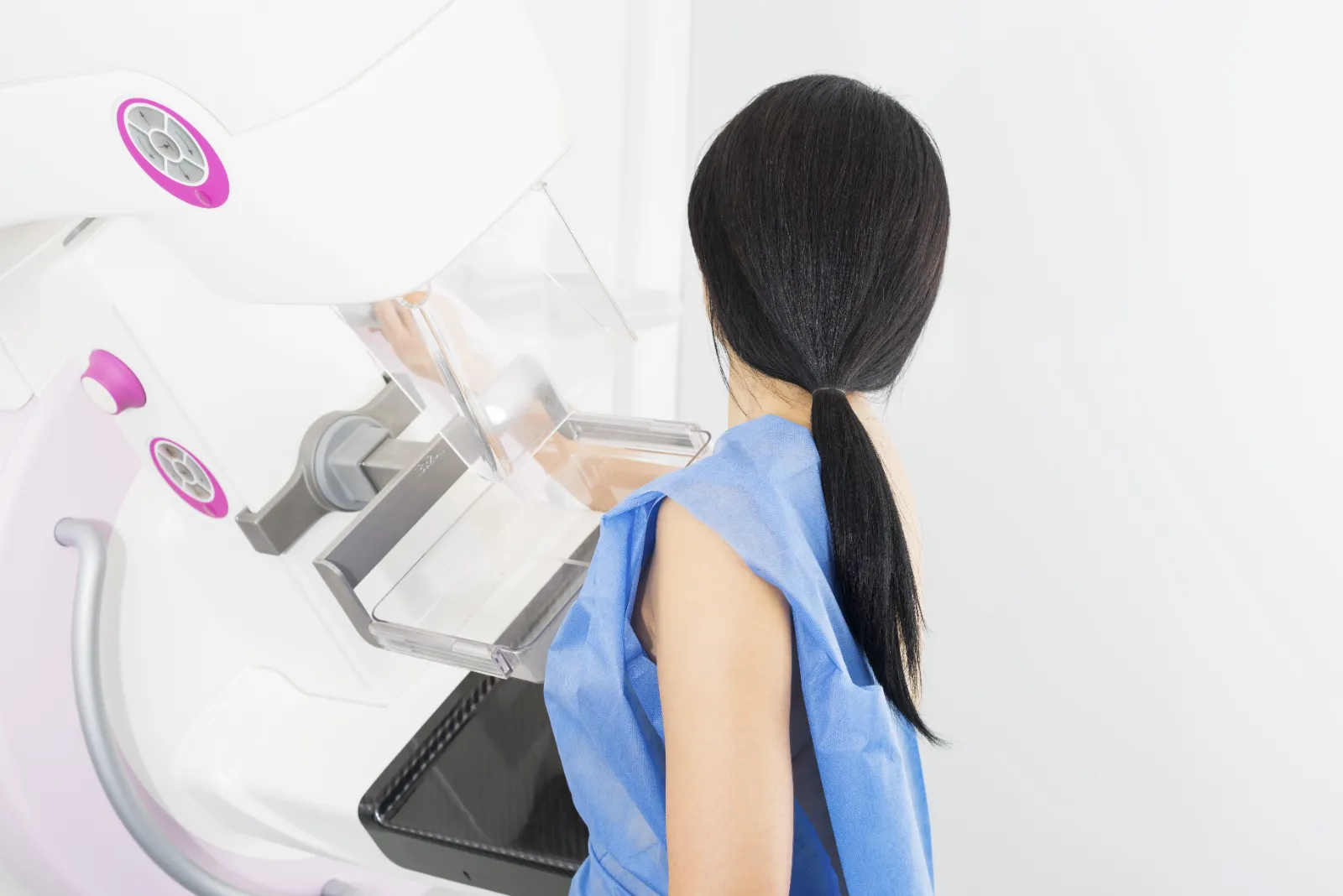
In cases where ultrasound is not sufficient, more advanced examinations such as mammography or Magnetic Resonance Imaging (MRI) may be used. Since MRI can detect approximately 70% of breast cancers when the tumor is smaller than 1 cm, it may be preferred in suspicious cases. The absence of ionizing radiation exposure during MRI is also an important advantage. However, a contrast agent is administered intravenously to obtain clearer images.
For masses that appear suspicious, a biopsy may also be performed so that the correct diagnosis can be made. In this way, accessory breast tissue can be definitively distinguished from other structures such as a fatty cyst, lymph node enlargement or lipoma.
Once accessory breast is diagnosed, a treatment plan is created according to the patient's complaints and condition. If the accessory breast tissue causes physical discomfort or aesthetic concern, this tissue can be completely removed with accessory breast surgery.
Who Is Suitable for Accessory Breast Surgery?
When you have extra breast tissue, surgical intervention may be necessary for its treatment. Accessory breast surgery stands out as the most definitive method you can turn to for removing excess breast tissue. This surgery may not be suitable for every patient. So, for whom is accessory breast surgery recommended? Here is the answer to this question.
Individuals with aesthetic concerns
Excess breast tissue in your body can create noticeable swellings, especially in the underarm area. This can restrict your clothing choices and negatively affect your social life. Due to accessory breast tissue:
- If your body image is negatively affected
- If your self-confidence is decreasing
- If you have problems in your social interactions
In this case, surgery will both improve your physical appearance and increase your self-confidence. The presence of extra breast tissue can have negative effects on a person's body image, and this can also negatively affect social life.
Those who feel physical discomfort
Accessory breast tissue is not merely an aesthetic problem. It also often causes physical discomfort. Accessory breast surgery is particularly recommended in the following situations:
You may consider surgical intervention if you experience pain or tenderness in the underarm, if you have irritation and discomfort resulting from the friction or pressure of clothing, or if your daily activities are negatively affected by this condition. Physical discomfort is one of the most common symptoms of accessory breast tissue and can be completely eliminated with surgery.
In addition, those who experience severe pain in the accessory breast tissue during menstrual periods and those who have swelling and fullness due to hormonal changes may also benefit from surgery.
Mothers experiencing problems during breastfeeding
Pregnancy and breastfeeding are periods when accessory breast tissue becomes more noticeable. During this period:
Milk secretion may occur in the accessory breast tissue, and this can increase the risk of infection. In addition, complaints of pain and swelling in the underarm area may increase. For mothers who experience severe pain during breastfeeding, surgery after childbirth can be a solution.
Cases in which a mass or cyst is detected
Accessory breast tissue can be prone to various pathologies, like normal breast tissue. If in the accessory breast tissue:
If a mass or cyst has been detected by ultrasound or other imaging methods, the risk of breast cancer may increase because accessory breast tissue can sometimes have milk ducts or mammary glands. In this case, surgical intervention is recommended for diagnostic and therapeutic purposes.
In conclusion, the ideal candidates for accessory breast surgery are: those experiencing physical discomfort, those with aesthetic concerns, those experiencing health problems, healthy individuals who can respond well to treatment, and those with realistic expectations. As with any surgical procedure, it is important to have a detailed consultation with your doctor about this surgery and to decide together whether it is suitable for you.
The Accessory Breast Surgery Process
Accessory breast surgery is a surgical procedure performed to remove excess breast tissue. Proper preparation and the selection of the appropriate surgical technique are of great importance for a successful result. This process is a comprehensive journey that starts with preoperative preparation and extends to the recovery period.
Points to consider before surgery
There are some important points you should pay attention to when preparing for accessory breast surgery:
- Detailed examination and consultation: You should have a comprehensive consultation with your surgeon to evaluate the location and size of the accessory breast tissue. In this consultation, you can obtain information about the surgical process, risks and expected results.
- Share your health status: You must inform your doctor of your past surgeries, allergies and the medications you use.
- Be careful with medication use: You need to stop aspirin and other blood-thinning medications before surgery. It should not be forgotten that these may increase the risk of bleeding.
- Take a break from smoking and alcohol: Quitting smoking and alcohol consumption at least two weeks before surgery will positively affect your recovery process.
Surgical techniques: liposuction vs. excision
Two basic surgical techniques are used in accessory breast surgery, and one of them is chosen according to the structure of the tissue:
Liposuction (fat removal): If the accessory breast tissue consists mainly of fatty tissue, the liposuction technique may be preferred. In this minimally invasive method, small incisions are made and the excess fatty tissue is removed by suction. This technique reduces the risk of scarring and speeds up the recovery process.
Surgical excision: If the accessory breast tissue contains mammary gland (glandular) tissue, surgical excision is required. In this case, the surgeon removes the excess breast tissue and, if necessary, the ducts as well. Small-incision methods are used to ensure that the aesthetic appearance is not impaired.
In operations performed in the underarm area in particular, the procedure must be carried out in a way that does not negatively affect the physical appearance. Otherwise, sagging under the breast or suture scars after the operation may cause aesthetic problems.
Choice of anesthesia and duration of the operation
Accessory breast surgery can generally be performed with two different anesthesia methods:
Local anesthesia: It can be used for the removal of accessory breast tissue in small and limited areas. In this method, the patient is awake but the area being operated on is numbed.
General anesthesia: It is preferred for more extensive or complex cases. In this method, the patient is put completely to sleep and feels no pain or discomfort during the procedure.
The duration of surgery varies depending on the characteristics of the area being treated and the technique chosen. However, in general, accessory breast operations are completed within a few hours. The recovery process after the operation varies according to the person's general health condition and the extent of the surgery. Most patients can return to their daily activities within a few days after surgery.
In conclusion, accessory breast surgery is a safe and effective procedure when performed by an expert surgical team. A properly planned surgical process provides results that are both aesthetically satisfying and functionally relieving.
Post-Operative Process and Results
You can return to your life quickly after accessory breast surgery. So, how does the post-operative process progress and what results can you expect? In this section, you will find all the details, from the recovery process to possible scars and the likelihood of recurrence.
How long does the recovery process take?
The recovery process after accessory breast surgery is quite fast, and you can usually return to your normal life within a few days. The full recovery time varies depending on the person's general health condition and the extent of the surgery. On average, full recovery is completed within 4–6 weeks.
In the first few days after surgery:
- Mild swelling and tenderness are normal
- You may feel some pain, but this will decrease over time
- Raising your arms too much may be difficult and uncomfortable
During the recovery period, it is extremely important to avoid physical activity, lifting heavy objects and overexertion. In addition, you should perform the massage movements recommended by your doctor after surgery to reduce swelling.
Will there be a scar after surgery?
Scarring after accessory breast surgery varies depending on the area where the surgery is performed and the person's healing process. In general, minimal scars that are easy to conceal form after surgery. Moreover, over time these scars tend to fade to a great extent.
In operations performed using modern equipment and minimally invasive techniques, the risk of scarring to a degree that would impair physical appearance is quite low, as aesthetic suturing is preferred. In operations performed in the underarm, a small scar may generally remain, but this scar can mostly be easily concealed with clothing.
You should protect any scar from direct sunlight and artificial ultraviolet rays for about one year. This is because the skin in the surgical area is thinner and prone to irritation.
Likelihood of accessory breast recurrence
The risk of recurrence after accessory breast surgery depends on whether all of the accessory breast tissue was completely removed during the operation. If the accessory breast tissue is completely removed, the risk of recurrence is very low.
However, in some cases accessory breast tissue may enlarge. This growth is generally influenced by hormonal changes. Therefore, care should be taken after situations such as pregnancy or hormonal therapy.
In conclusion, accessory breast surgery is a safe and effective procedure when performed under the supervision of experienced physicians. Following your doctor's recommendations and attending regular check-ups during the post-operative period will help you achieve the best results.
Frequently Asked Questions
You can find answers to frequently asked questions about accessory breast surgery in this section. This information includes important points that will help you during your treatment process.
How many hours does accessory breast surgery take? For small accessory breasts, the operation time is between 30 minutes and 1 hour. However, in large and complex cases, the operation can take 2–3 hours.
Is accessory breast surgery risky? As with every surgical procedure, there are some risks. Conditions such as bleeding, infection, wound healing problems, allergic reaction, loss of sensation in the nipple and asymmetry may occur. However, experienced surgeons minimize these risks.
How long does recovery take after surgery? While light activities can be resumed within 2–3 days, it is necessary to wait 2–4 weeks for heavy activities and sports. The full recovery process takes 6–8 weeks on average.
Is it normal for milk to come from accessory breast? Yes, as in normal breast tissue, milk can also come from accessory breast tissue. Symptoms may increase, especially during pregnancy.
Does accessory breast grow? Yes, accessory breast tissue can grow under the influence of hormonal changes. It may become more noticeable during pregnancy and breastfeeding.
Does accessory breast pose a cancer risk? Some studies have reported that the risk of cancer in accessory breast tissue is higher than in normal breast tissue. Therefore, regular check-ups are important.
Does it recur after surgery? When all the tissue is removed with the correct surgical technique, it generally does not recur. If breast tissue is left behind, the complaints may recur.
Which doctor should be consulted for accessory breast? A plastic surgery specialist should be consulted for treatment. In addition, for those who start with a complaint of breast pain, a general surgery specialist may be consulted.
Will there be a scar in the underarm after surgery? Although it varies depending on the size of the surgery, a small scar may generally remain in the underarm. With modern surgical techniques, these scars are kept to a minimum.
Can accessory breast surgery be performed at any age? It can be performed in adults and in people whose health condition is suitable. Waiting is generally recommended during childhood.
Accessory Breast Surgery in Summary
In conclusion, accessory breast surgery is an effective solution for relieving the physical and psychological discomfort caused by extra breast tissue. Such tissue, particularly in the underarm area, can negatively affect your daily life and self-confidence. However, with a correct diagnosis and an operation performed by an experienced surgeon, it is possible to get rid of this problem completely.
Managing the preoperative process correctly and having a detailed consultation with your surgeon are of great importance for achieving successful results. In addition, following your doctor's recommendations during the post-operative recovery process will both speed up your recovery and prevent possible complications.
Accessory breast surgery is a surgical procedure that is generally completed in a short time and has a fast recovery process. Moreover, thanks to modern surgical techniques, the risk of scarring after the operation is quite low.
Remember that if the presence of accessory breast tissue affects you physically and emotionally, this surgery will significantly improve your quality of life. If you have complaints in this regard, the most appropriate step is to consult a plastic surgery specialist without delay so that your condition can be evaluated.