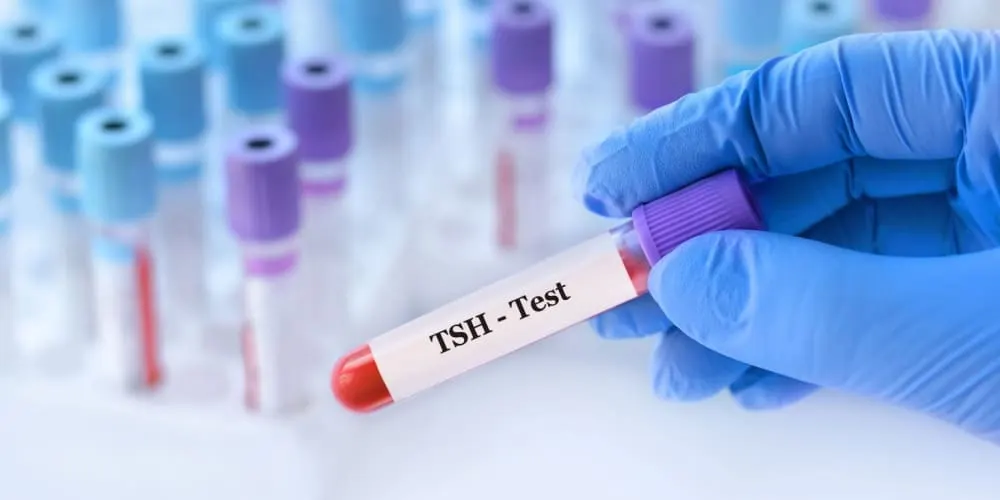
TSH (thyroid-stimulating hormone) is the hormone that stimulates the thyroid gland to release hormones. Produced by the pituitary gland, TSH stimulates the thyroid gland and plays a role in the production of thyroxine (T4) and triiodothyronine (T3) hormones. These two hormones are closely linked to the body's metabolic rate and play important roles in maintaining the body's energy balance. Changes in TSH levels can affect T4 and T3 release and may bring various symptoms with them.
Low TSH is usually caused by hyperthyroidism, known as the thyroid gland being overactive. For this reason, the symptoms of low TSH usually appear as symptoms of hyperthyroidism. Symptoms that can develop in many different systems, from the digestive system to heart health, can affect patients' lives to varying degrees.
What Is Low TSH?
Low TSH in the blood is defined as the values of thyroid-stimulating hormone produced by the pituitary gland falling below the ideal ranges. Low TSH is a more common finding in people who generally have hyperthyroidism. Because the thyroid gland secretes thyroid hormone uncontrollably, the pituitary gland limits TSH hormone production.
To plan treatment for low TSH, the underlying causes are investigated and the severity of the low level is evaluated. Studies suggest that some environmental factors may also cause changes in TSH levels. Medications used periodically, supplements taken, excessive iodine consumption, smoking and exposure to harmful agents can result in a decrease in TSH levels.
Ideal TSH levels differ in each age group. However, if the TSH value of a healthy individual is below 0.4 mU/L, this raises suspicion of hyperthyroidism. In order to avoid health problems that may adversely affect daily life, it is of great importance that this condition be investigated and treated when necessary.
What Are the Symptoms of Low TSH?
The symptoms of low TSH are the same as the symptoms that develop as a result of hyperthyroidism. Excessive production of thyroid hormones can affect different systems of the body and may lead to serious health problems in the long term. Symptoms of hyperthyroidism that may accompany low TSH can be listed as follows:
Rapid heartbeat,
Feeling anxious,
Irritability,
Muscle weakness,
Sleep problems,
Inability to gain weight or unintentional weight loss despite increased appetite,
Accelerated bowel movements,
Diarrhea,
Swelling of the eyes,
Abnormalities in vision,
Skin that is warmer and moister than usual,
Enlargement of the thyroid gland, known as goiter, and swelling in the neck area associated with the disease,
Irregularities in menstrual periods.
How Does Low TSH Occur?
The causes of low TSH include hyperthyroidism and diseases that can lead to hyperthyroidism. Hyperthyroidism, known as the thyroid glands being overactive, results in the body producing high amounts of thyroid hormone. Normally, TSH released to stimulate the production of T3 and T4 begins to be produced in smaller amounts when thyroid hormone levels are high. Hyperthyroidism, which affects both sexes, more commonly women, is one of the thyroid dysfunctions frequently encountered worldwide.
Various medical conditions may play a role in the development of hyperthyroidism. The first of these is Graves' disease. This disease, which develops when the immune system attacks the thyroid gland, results in excess hormone production in the thyroid gland. Graves' disease is a genetic disorder that can be passed from generation to generation. It is generally the underlying cause when hyperthyroidism develops.
Another condition that can lead to indirect low TSH due to hyperthyroidism is thyroid nodules. The proliferation of cells in the thyroid gland and the formation of a lump-like nodule can increase the amount of hormone released. Thyroid nodules are generally benign, and in rare cases carry a risk of cancer.
Another condition that can result in low TSH is thyroiditis. This disease, which can be described as a non-microlobular inflammation of the thyroid gland, is usually seen in adults. Thyroiditis is a temporary condition, and in 10% to 20% of patients it may result in temporary or permanent hypothyroidism.
Low TSH can also be triggered by dietary habits. Iodine is a mineral found in the structure of thyroid hormones. Consuming large amounts of iodine can increase thyroid hormone release in people suspected of having hyperthyroidism. Some medications in use can also trigger this condition.
Although rare, a decrease in TSH production may occur as a result of insufficient functioning of the pituitary gland, and this can lower the level found in the blood. Pituitary insufficiency can affect not only TSH but also other hormone levels (such as adrenal, testicular and ovarian hormones).
How Is Low TSH Tested?
TSH values in the blood can be determined by examining blood samples in a laboratory setting. The TSH values that should be present in the blood differ in each age range. Ideal TSH levels for healthy individuals can be listed as follows (1):
In newborns: 0,7- 10 uIU/ml
In infants aged 4 weeks – 2 years: 0,7- 5,9 uIU/ml
In those aged 2 years and over and in adults: 0,4 – 4 uIU/ml
In pregnant women:
First trimester (first 3 months): 0,1 – 2,5 uIU/ml
Second trimester: 0,2- 3.0 uIU/ml
Third trimester: 0,3 – 3,0 uIU/ml
Once the main problem causing low TSH has been identified, more comprehensive tests may be applied. At this point, since hyperthyroidism is suspected, tests aimed at evaluating thyroid function are performed. As part of the diagnosis of hyperthyroidism, a physical examination is carried out by a doctor. During the examination, it is checked for swelling of the thyroid gland, and for any swelling or redness of the eyes. In addition, the heart is listened to with a stethoscope to assess the heart rhythm. The doctor may also evaluate the level of moisture in the skin by examining the hands and skin texture.
If findings consistent with hyperthyroidism are encountered, imaging tests are used to investigate the causes that may underlie the disease. A radioactive iodine uptake test is used to determine how much iodine is absorbed by the thyroid glands. Use of a large amount of radioactive iodine may indicate that the thyroid gland is working intensively. In addition, different imaging techniques such as thyroid ultrasound and thyroid antibodies may also be used for support.
Treatment of Diseases That Cause Low TSH
The treatment of low TSH aims to control the functioning of the thyroid gland and ensure that the hormones produced remain within ideal ranges. In this way, various complications that may develop in the long term can be prevented. In hyperthyroidism, beta blockers and antithyroid medications are generally used. The dosage and duration of use of these medications are determined by the doctor. Generally, during the period of medication use, the doctor recommends measuring T₃, T₄ and TSH levels at regular intervals and adjusting the dosage accordingly.
In some cases, radioiodine therapy may be applied to treat hyperthyroidism. Within this treatment, the number of cells producing thyroid hormone is reduced. A chemical substance called radioactive iodine-131 is given to the patient in liquid form or as a capsule. It is very important that this treatment be administered by a physician specialized in the field.
In severe cases, where it is considered that drug treatment will be insufficient, surgical intervention may also be performed. During the planned operation, the thyroid gland is removed from the body.
Frequently Asked Questions
When low TSH due to hyperthyroidism develops during pregnancy, it can create various risks. It may cause preterm birth and a baby born with low birth weight. Hyperthyroidism can also increase blood pressure levels that develop due to pregnancy. Low blood TSH is a condition in which there is less than the required amount of TSH hormone, which regulates the functioning of the thyroid gland. It can develop as a result of hyperthyroidism, in which the thyroid glands are overactive, or as a result of insufficiency in the pituitary gland, which is responsible for TSH production. Low free T4 is a condition that develops due to hypothyroidism. Because the thyroid glands do not function adequately, too little T4 is produced. Low T4 can result in feeling exhausted, a drop in heart rate, sensitivity to changes in environmental temperature, and weight gain. TSH levels vary in each age range. However, if TSH levels are below 0.1 mU/L, this is considered a sign of hyperthyroidism or thyroiditis. If the values obtained from blood tests are above 10 mU/L, hypothyroidism is present. Both low and high values can cause health problems. Frequent consumption of foods high in iodine by individuals with hyperthyroidism or with a genetic predisposition can negatively affect thyroid function and may cause a decrease in TSH levels. Foods high in iodine include cod, seaweed, iodized salt, eggs, shellfish and offal such as liver. Excess iodine is also found in multivitamins, contrast agents and antiseptics such as Baticon. TSH levels are an important blood parameter showing that the thyroid and pituitary glands continue to work in a healthy manner. If a decrease in TSH levels is observed, this should be investigated and, where necessary, a treatment plan should be made. Otherwise, various complications may develop, particularly in cardiovascular health. If an abnormality is detected in thyroid hormone levels or a symptom suggesting low TSH is observed, support should be sought from an endocrinologist.
Start with the right assessment for What Is Low TSH? Symptoms and Treatment Methods
Share your symptoms with our specialist physicians; let us determine the right diagnosis and treatment plan together.
Warning
If your symptoms started suddenly, are progressing rapidly, or significantly restrict your daily life, consult a physician without delay.
Plan your What Is Low TSH? Symptoms and Treatment Methods journey with our specialists.
Fill in the form or book an appointment to learn about treatment options, the process and preparation.