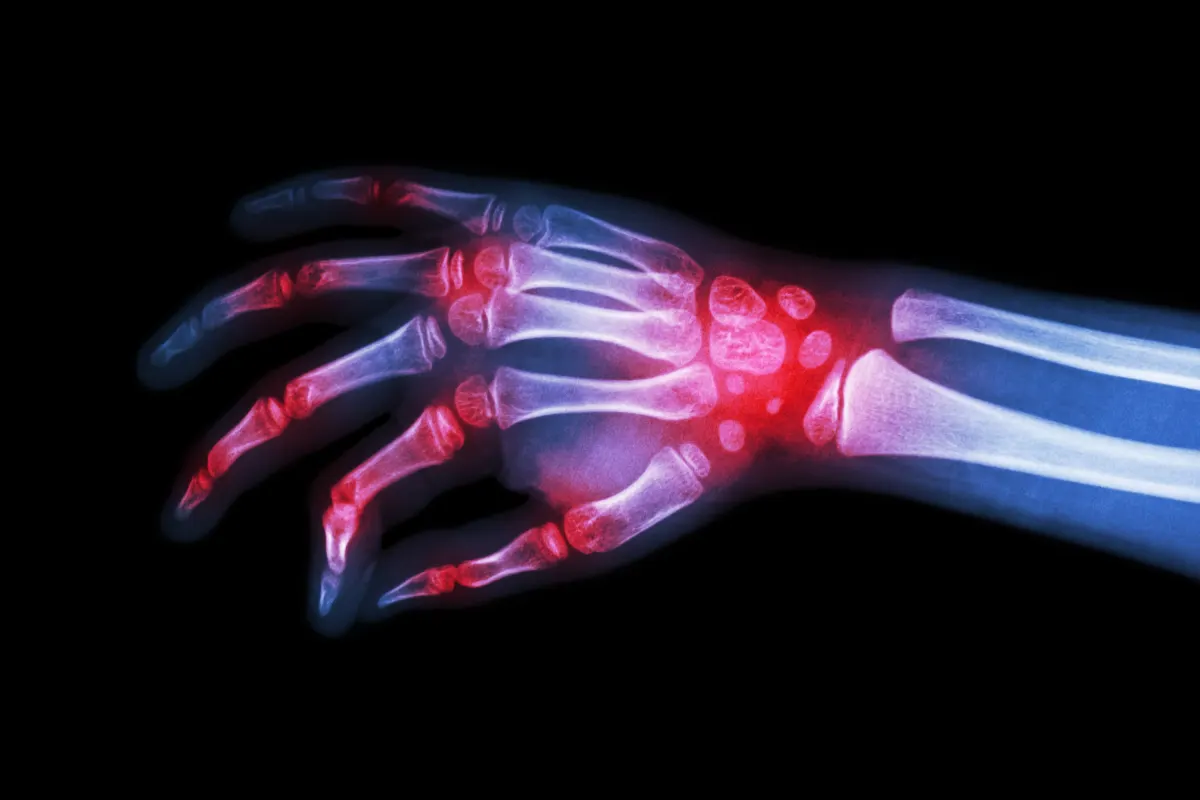
What Is Rheumatoid Arthritis (RA):
Rheumatoid arthritis is a disease of unknown cause that develops in genetically predisposed individuals under the influence of various environmental factors, and can affect many organs and structures throughout the body, primarily the joints.
History of Rheumatoid Arthritis
It is a disease that can be seen all over the world and in all races. However, in Europe and in our country, this disease began to be encountered after the 15th century. The first information about the disease can be found in the paintings of classical-period painters such as Botticelli and Da Vinci. This corresponds to the early 1500s, the years when America was discovered. Until that period, RA was not a commonly encountered disease in Europe; with the discovery of America, it has been suggested that the disease was triggered in genetically predisposed people by the introduction of tobacco to Europe or the transfer of certain infections from America to Europe. Since the disease ran a more severe course in industrialized countries, it has been claimed that industrialization may also play a role in the development of this disease.
Who Gets Rheumatoid Arthritis?
It can occur at any age after 16, but it is most common between the ages of 30 and 50. Although it is 2 to 3 times more common in women than in men, it has been reported that this ratio equalizes at advanced ages.
What Is the Prevalence of Rheumatoid Arthritis?
Prevalence varies between 0.5% and 1% in different populations. The annual probability of new cases has been reported to be approximately 3 per 10,000 people. Considering that in our country it is seen in 5 out of 1,000 adults at a similar rate, and assuming that there are currently 40 million adults, we can say that there are at least 200 thousand RA cases and that 12 thousand new cases are added to this number every year.
Do Genetic Factors Play a Role in the Development of Rheumatoid Arthritis?
A genetic effect in RA is accepted. In first-degree relatives of seropositive patients, RA is seen four times more often than expected. The risk of occurrence is 12–15% in identical twins and 2–5% in fraternal twins. It is thought that the genetic factors depend on the HLA system genes located on chromosome 6, and that several genes, rather than a single genetic defect, affect RA.
What Are the Symptoms of Rheumatoid Arthritis?
In the typical case, pain, swelling, and stiffness develop in the joints in the middle of the fingers called PIP and MCP, in the joints formed by the hand bones and fingers, in the wrists and in the elbows; there is stiffness and pain in the fingers upon waking in the morning, with difficulty using the hands. It can potentially affect all joints. However, it most often involves the joints of the hands, elbows, foot joints, ankles, knees, and temporomandibular joint (jaw joint), and less often the neck joints.
Are There Other Symptoms Besides Pain and Stiffness in the Joints?
It can involve many organs and structures outside the joints. Before joint findings appear, nonspecific findings such as fatigue and weight loss may be seen. Outside the joints, eye symptoms are the most common. Dry eye (Keratoconjunctivitis sicca) is the most common eye finding in Rheumatoid Arthritis. In addition, scleritis and episcleritis are particularly seen. Scleromalacia perforans, characterized by thinning and perforation of the white part of the eye with leakage of ocular fluid, is one of the rare but important eye complications of RA. Nodules most commonly form around the elbow and the fingers. They are painless and are generally detected in severe cases. By involving the pleura, it can lead to fluid accumulation; by involving the lung itself, it can lead to progressive shortness of breath over time. Kidney involvement is not common, but it is important that the kidneys are healthy, because for some medications used in the treatment of the disease to be usable, the kidneys and liver, and even the lungs, must be healthy.
Is There Any Concern for Pregnancy in a Woman with Rheumatoid Arthritis?
RA itself does not affect fertility; some medications used in its treatment do. A patient with Rheumatoid Arthritis can become pregnant by consulting her doctor and stopping some medications at the appropriate time. On the other hand, during pregnancy, improvement and subsiding of disease symptoms, reaching up to 75%, is seen in patients with RA. After pregnancy, the disease flares up in 80–90% of cases. Furthermore, it has been shown that early pregnancy and the use of contraceptive medications delay the onset of the disease or reduce its severity.
Do Other Hormones Have an Effect on the Development of Rheumatoid Arthritis?
In patients with RA, the function of the hypothalamic–pituitary–adrenal axis is impaired. In these patients, circadian changes in metabolism, a decrease in endogenous corticosteroid release at midnight, and disruption of the rhythm of melatonin secretion at midnight appear to be associated with the early-morning clinical complaints of the disease.
Does Smoking Have an Effect on the Development of Rheumatoid Arthritis?
Today it is estimated that one in every three cases is caused by smoking. If a person has a genetic predisposition to this disease, smoking practically invites the disease. The risk increases even further in smokers who have a family history of Rheumatoid Arthritis.
Do Dental Problems Play a Role in the Development of Rheumatoid Arthritis?
Periodontitis (PD) is one of the most common oral infections and a cause of tooth loss in adults. It is a chronic, slowly progressing infection; inflammation of the gums (the response of tissues to trauma or bacterial or viral invasion, with warmth, redness and swelling) leads to bleeding, loss of the adjacent bone, and over time, decay of the tooth. Even in developed societies, oral hygiene has been found to be poor in more than 80%. For this reason, especially people with a family history of RA should quit smoking and urgently address their dental problems.
How Is Rheumatoid Arthritis Treated?
Before drug treatment, what the patient should do:
Lose excess weight.
Exercise regularly.
Pay close attention to your diet.
Avoid stress.
If you smoke, quit immediately.
If you have gum problems, be sure to have them treated.
During this process, stay in contact with your physician about your medication dosage and what you should pay attention to.
At the slightest suspicion, consult your physician.
A wide variety of medications are used in the treatment of the disease. Since initiating and monitoring these requires specialized knowledge and experience, patients need regular examinations, blood tests, and continuous follow-up.
To Protect Yourself from Rheumatoid Arthritis
Quit Tobacco Products: Since cigarettes and other tobacco products are held responsible for the development of the disease, people, especially those with a family history of rheumatoid arthritis, should not smoke. In ankylosing spondylitis cases, smoking can also lead to a more severe disease course. Although it has been claimed that smoking is protective against osteoarthritis, there is now more evidence to the contrary. Smoking can lead not only to cancer or bronchitis but also to rheumatism.
Gum Inflammations: Since gum inflammations may also be responsible for the development of rheumatoid arthritis, dental problems should be treated as soon as possible.
Exercise: Regular exercise is essential for joint health as well as for general health. Brisk walking and sports such as swimming are very important for bone, joint, and muscle health.
Nutrition: Eating a healthy and balanced diet within the framework of general health rules is necessary. Eating fish frequently (such as catfish, mackerel, tuna, sardines, bluefish, cod, and herring) provides vitamin A and omega-3 substances, which both lower triglycerides and may suppress rheumatoid arthritis. In general, consuming enough vegetables, fruits, and grains is necessary.
If you suffer from complaints that may involve a rheumatic disease, you must consult your doctor. For detailed information and an appointment, CLICK HERE
Start with the right assessment for Frequently Asked Questions About Rheumatoid Arthritis
Share your symptoms with our specialist physicians; let us determine the right diagnosis and treatment plan together.
Warning
If your symptoms started suddenly, are progressing rapidly, or significantly restrict your daily life, consult a physician without delay.
Plan your Frequently Asked Questions About Rheumatoid Arthritis journey with our specialists.
Fill in the form or book an appointment to learn about treatment options, the process and preparation.