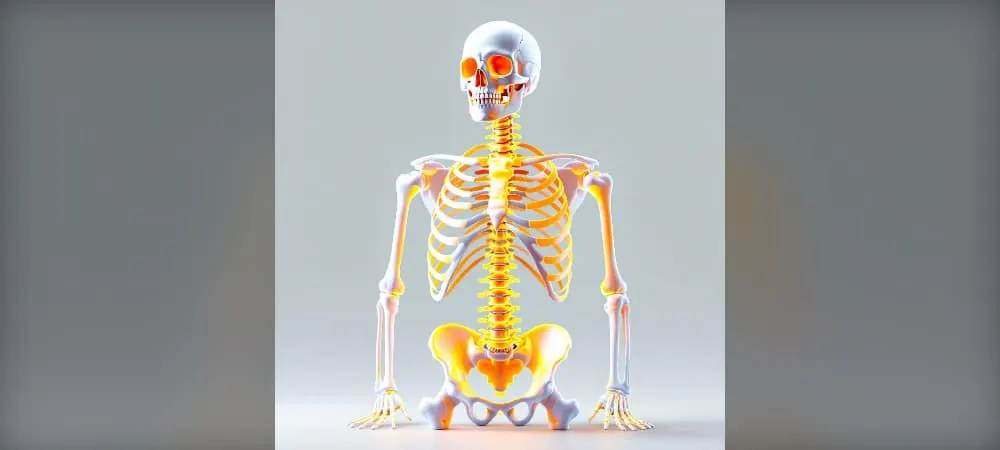
Defined as the condition where bones become fragile and weak due to tissue loss, osteoporosis is a serious disease you may encounter as you age.
Also known as bone loss, this condition is typically seen in the spine, hip, and wrist bones. It is more common in women and individuals over the age of 65. The incidence of hip fractures due to osteoporosis in women is twice as high as in men. At the same time, the frequency of bone loss increases with age.
Symptoms of osteoporosis include back pain caused by a fracture or collapsed vertebra in the spine, loss of height due to the curvature of the bones over time, hunching, and stooped posture. In this article, we will explain what osteoporosis is from the perspective of physical therapy, its symptoms, and diagnostic and treatment methods in clear and understandable language.
What Is Osteoporosis (Bone Loss)?
From the perspective of physical therapy, bone structure forms the most fundamental support system of the body. Bones do not function merely as static structures, but as dynamic tissues that constantly renew themselves.
What does deterioration of bone structure mean?
Bones are living structures composed of minerals, primarily calcium salts, connected by strong collagen fibers. In healthy bone tissue, there is a constant and balanced cycle of resorption and formation. In this cycle, old bone tissue is broken down by cells called osteoclasts, while it is replaced by new bone material produced by cells called osteoblasts.
Deterioration of bone structure means that this formation-resorption balance is disrupted. In osteoporosis, new bone formation cannot keep up with the removal of old bone from the body, and as a result, the pores in the bones widen and mineral density decreases. In fact, it is not a "melting" of the bones, but rather that they become more porous and weak.
What does osteoporosis mean and how does it develop?
The word osteoporosis literally means "porous bone." From a medical perspective, it is a skeletal system problem characterized by increased bone fragility and fracture risk resulting from low bone mass and deterioration of bone microarchitecture.
This disease usually develops as follows:
Bone formation slows down with advancing age
Hormonal changes (especially the decrease in estrogen in postmenopausal women) accelerate bone loss
Bone mineral density decreases in cases of calcium and vitamin D deficiency
With mineral loss, the pores inside the bones widen and the bone becomes spongy
This process usually progresses silently, which is why osteoporosis is also called the "silent thief." Often, the first symptom is a fracture resulting from a simple fall.
The difference in osteoporosis between women and men
Although osteoporosis affects both genders, it is more common in women. While osteoporosis is seen in 1 out of every 2 women over the age of 50, it can be seen in 1 out of every 5 men in the same age group.
The main reasons why osteoporosis is more common in women are:
Women's bone mass density is lower than men's
The sudden decrease in the hormone estrogen during menopause
Bone structure in women is thinner than in men
Muscle mass in women is less than in men
In addition, a high number of births and long periods of breastfeeding in women can also affect bone health as conditions requiring calcium supplementation. In men, a decrease in testosterone levels in later years creates a similar effect, but this process is slower and not as sudden as menopause in women.
From a physical therapy perspective, these differences play an important role in creating personalized treatment programs. Different exercise programs and treatment approaches may need to be adopted for male and female patients.
Causes of Osteoporosis
From a physical therapy perspective, various factors affecting bone health play a role in the development of osteoporosis. Understanding these factors is critical in both the prevention and treatment process.
Calcium and vitamin D deficiency
Calcium and vitamin D are the fundamental building blocks for the development and renewal of bone tissue. Vitamin D deficiency is one of the most important known risk factors for osteoporosis. Without vitamin D, calcium absorption from the intestines decreases and bone density drops. The World Health Organization considers insufficient sunlight exposure as one of the most important causes of osteoporosis.
A diet low in calcium and vitamin D can increase the risk of osteoporosis and fractures from childhood to old age. Physical therapists, in particular, help patients evaluate their dietary habits and create a diet rich in calcium and vitamin D.
Hormonal imbalances and menopause
Hormones directly affect bone structure and density. The decrease in estrogen levels after menopause in women accelerates bone loss. With the loss of estrogen during menopause, bone loss in women accelerates by 3% per year, and this situation drops to 1% per year after continuing for about 5 years.
It is common to encounter complaints of bone loss due to estrogen decrease in the postmenopausal period. In men, decreases in testosterone levels contribute to osteopenia. In physical therapy, special exercise protocols are developed to reduce the effects of hormonal imbalances.
Genetic predisposition and aging
If there is a family history of osteoporosis or hip fracture, your risk of osteoporosis and fracture increases. Genetic factors play a role in 60% to 70% of peak bone mass variations. Genetic testing should be considered if the disease appears at a young age and there is a family history.
With aging, bone formation slows down while bone loss accelerates. Losses in peak bone mass begin after the age of 30, and bones can weaken over time. Physical therapists design personalized exercise programs to slow down age-related losses.
Smoking, alcohol, and inactivity
Smoking has an accelerating effect on bone loss. Excessive alcohol consumption also has a negative effect on bone. Inactivity is the most modifiable risk factor, especially from a physical therapy perspective. Low levels of physical activity and prolonged inactivity can cause the rate of bone loss to increase.
Basic lifestyle changes recommended by physical therapists:
Quitting smoking
Reducing alcohol consumption
Doing regular bone-strengthening exercises
Adopting balanced nutritional habits
Long-term use of certain medications
Glucocorticoid medications have significant side effects on bone metabolism and cause osteoporosis with long-term use. During steroid treatment, calcium and phosphate excretion increases, which leads to hypocalcemia and secondary hyperparathyroidism.
Other medications that can cause osteoporosis include epilepsy drugs, stomach medications, blood thinners, and some cancer drugs. Clinical fractures develop in more than 10% of patients who use steroids for a long time. For this reason, physical therapists recommend supportive treatments to reduce the side effects of medication use.
In those with a high risk of osteoporosis, it is recommended to keep the steroid dose to a minimum or to prefer local application.
What Are the Symptoms of Osteoporosis?
In the field of physical therapy, osteoporosis is often called the "silent thief" because the disease does not show obvious symptoms until advanced stages. However, some signs may indicate the presence of bone loss.
Sudden bone fractures
The most obvious indicator of bone loss is the occurrence of sudden bone fractures even with minor stresses such as a light fall or coughing. A common first symptom of osteoporosis is the sudden and easy breaking of bones. These fractures occur more frequently in areas such as:
Hip bone
Wrist
Spine
Ribs
Fractures can occur even during daily activities such as getting up from the toilet or climbing stairs.
Loss of height and hunching
Collapses occurring in the spine bones during the development of osteoporosis cause loss of height. A loss of height of more than 3 cm is considered an important indicator of osteoporosis. In some sources, this value is stated as 4 cm. As one ages, the height of a postmenopausal woman can decrease by an average of 4 cm by age 65 and 9 cm by age 75.
In addition, the weakening of the spine bones leads to spinal curvature, causing kyphosis (hunching). This is a finding that physical therapists emphasize significantly.
Back, waist, and neck pain
One of the most common symptoms of osteoporosis is pain in the spine and back region. The cause of this pain is micro-fractures seen in the weakened bone. It usually manifests itself with intense pain in the back and spine region.
Back, waist, and neck pain appear as sudden and severe pain that worsens when standing or walking and eases slightly when lying down. The physical therapy approach plays an important role in the management of this pain.
Postural disorders and shortness of breath
As a result of the decrease in bone density in the spine, postural disorders or hunching occur. Especially with the loss of spine bones in the back, the neck and back can curve and pain can emerge.
Shortness of breath occurs when the discs in the spine compress enough to reduce lung capacity. Respiratory distress can develop as a result of hunching due to compression fractures in the spine bones and deterioration of the rib cage. These symptoms can be improved with special exercise programs in physical therapy.
Gum recession and nail breakage
Less known symptoms of osteoporosis include gum recession and brittle nails. Gum recession can be seen when losses occur in the jawbone.
Brittle and weak-structured nails can provide information about bone health. Low grip and mobility may be related to decreased mineral density in the bones, and low grip ability can increase the risk of falling in individuals. However, when evaluating nail brittleness, one should not ignore other factors such as staying in water for a long time, cold weather conditions, and cosmetic products.
How Is Osteoporosis Diagnosed?
To evaluate bone health, physical therapists place great importance on the early diagnosis of osteoporosis. Early diagnosis is critical to reducing the risk of fracture and increasing the effectiveness of treatment.
Bone density measurement with DEXA
The gold standard method in the diagnosis of osteoporosis is the DEXA (Dual Energy X-ray Absorptiometry) test. This test evaluates the risk of fracture by measuring the mineral density of the bones. DEXA scanning is usually applied to the hip and spine regions because these areas are more prone to fracture.
During the test, the patient lies on a special table and low-dose X-rays are used. The procedure takes about 10-20 minutes and is painless. It contains one-tenth the radiation of a chest X-ray and provides reliable results. DEXA results are reported as two different values: T-score and Z-score.
What is a T-score and how is it interpreted?
The T-score compares your bone density with that of a healthy adult aged 20-35. According to the classification determined by the World Health Organization:
If the T-score is -1 and above: Normal bone density
If the T-score is between -1 and -2.5: Osteopenia (the beginning of bone loss)
If the T-score is -2.5 and below: Osteoporosis
The Z-score provides a comparison with people of the same age, gender, and physical characteristics as you. This score is especially taken into account in young patients or in cases of suspected secondary osteoporosis.
Supportive diagnosis with blood and urine tests
Blood and urine tests are performed to detect other diseases that may cause bone loss. These tests include:
Calcium, phosphorus, and vitamin D levels
Alkaline phosphatase (ALP) level
Thyroid and parathyroid hormone tests
24-hour urinary calcium excretion
Markers indicating bone formation and resorption
These tests support the diagnosis of osteoporosis and help determine the underlying causes.
Screening recommendations for those in the risk group
Since bone density decreases after menopause in women, screening is recommended after age 65 in cases without additional risk factors. For men, osteoporosis screening should be performed after age 65-70, again in the absence of additional risk factors.
Screening at an earlier age is recommended for individuals with risk factors. These risk factors can be listed as:
Family history of osteoporosis
Early menopause
Long-term steroid use
Thyroid problems
Low body weight
Physical therapists use calculation tools such as FRAX to evaluate fracture risk and create a personalized screening plan.
Osteoporosis Treatment and Supportive Methods
The goal of osteoporosis treatment is to increase bone quality and prevent fracture formation by strengthening the bone. Physical therapists recommend a holistic approach regarding medication treatment and lifestyle changes.
Bisphosphonate and monoclonal antibody medications
The most commonly used medications in the treatment of osteoporosis are bisphosphonates. These medications slow down bone loss and increase bone density. These medications, which contain active ingredients such as alendronate, risedronate, and ibandronate, are effective by reducing bone resorption.
Monoclonal antibody medications are among the newer treatment options. Denosumab produces similar or better bone density results compared to bisphosphonates and reduces the probability of fracture. Denosumab is administered as a subcutaneous injection every six months. Romosozumab, on the other hand, helps new bone formation by binding to a protein called sclerostin and slows down existing bone loss.
Calcium and vitamin D supplements
Calcium and vitamin D supplementation is of great importance for bone health. Vitamin D increases the absorption of calcium and supports bone health. The World Health Organization considers insufficient sunlight exposure as one of the most important causes of osteoporosis.
Physical therapists recommend that patients take calcium and vitamin D regularly during the treatment process. These supplements do not provide treatment on their own, but they give effective results when used together with medication treatment. It has been determined that 800 IU of vitamin D3 and 1200 mg of calcium daily increase bone formation and reduce the incidence of hip fracture in the elderly.
Physical therapy and exercise programs
Exercise is one of the most effective and safe methods of osteoporosis treatment. Exercises recommended by physical therapists aim to:
Increase muscle strength and mass
Improve balance and coordination
Correct posture and prevent deformities
Weight-bearing exercises and resistance training can increase bone density. Especially brisk and fast walking is one of the most useful and easiest exercises to perform. It has been shown that the risk of hip fracture is reduced by 30% in women who walk for exercise.
Lifestyle arrangements that reduce the risk of falling
Elderly people with a high risk of osteoporosis are at risk of falling due to their advanced age and balance problems related to postural disorders. Almost half of falls occur at home.
Precautions that can be taken to reduce the risk of falling:
Prevention of slippery floors
Removal of small rugs or carpets not fixed to the floor
Installation of grab bars in the bathroom and toilet
Improvement of stair lighting
Regular eye examinations and regular review of medications with a doctor are also important to reduce the risk of falling.
In Summary, Osteoporosis
As a result, osteoporosis is a disease that progresses silently but has serious consequences. The decrease in bone density and increase in fragility is common, especially in postmenopausal women and elderly individuals. From a physical therapy perspective, early diagnosis and treatment of osteoporosis are of great importance to protect your bone health.
Having regular DEXA scans is the most effective method to catch osteoporosis at an early stage. In addition, a diet rich in calcium and vitamin D supports your bone health. Also, doing weight-bearing exercises helps to increase bone mineral density.
Customized exercise programs recommended by physical therapists not only increase your muscle strength but also reduce your risk of falling. Activities such as yoga, dance, and balance exercises improve your posture and increase your quality of life.
Although medication treatments play an important role in the treatment of osteoporosis, lifestyle changes and regular physical activity are indispensable for protecting your bone health. Measures such as making arrangements in your home to reduce the risk of falling and staying away from cigarettes also support your bone health.
Remember that physical therapists can guide you not only during the treatment process but also in the stage of preventing osteoporosis. Every step taken to protect your bone health allows you to live a higher quality and more independent life in your later years.
Frequently Asked Questions
We answer the questions you have about your bone health from a physical therapy perspective:
Does osteoporosis occur in men? Yes, osteoporosis is also seen in men. Osteoporosis can develop in 1 out of every 5 men over the age of 50. Although it is seen less frequently than in women, hormonal imbalances, cortisone use, and chronic diseases increase the risk of bone loss in men.
Does osteoporosis cause pain? It usually progresses silently and does not cause pain. However, when spine fractures or micro-fractures develop, it can cause pain in the back, waist, and neck region.
Can osteoporosis be treated? Yes, osteoporosis is a treatable and preventable disease. The goal of treatment is to increase bone quality and prevent fracture formation.
Is it possible to protect against osteoporosis? At any age, especially up to the 30s, adequate calcium and vitamin D intake, regular physical activity, and staying away from cigarettes and alcohol can reduce the risk of osteoporosis.
What is a T-score? Bone density measurement results are expressed with a T-score value. If the T-score is below -2.5, it is considered osteoporosis; between -1 and -2.5, it is considered osteopenia (early bone loss); and above -1, it is considered normal bone density.
Is osteoporosis fatal? It is not directly fatal, but it can increase mortality rates, especially in elderly individuals, due to the hip fractures, inactivity, and complications it causes. The risk of death within the first year after a hip fracture is between 12-40%.
Osteoporosis is a serious disease defined by the bones becoming fragile. It is usually more common in the elderly and women. Learn about its symptoms and treatment methods.
Start with the right assessment for What is Bone Loss (Osteoporosis)? What Are Its Symptoms?
Share your symptoms with our specialist physicians; let us determine the right diagnosis and treatment plan together.
Warning
If your symptoms started suddenly, are progressing rapidly, or significantly restrict your daily life, consult a physician without delay.
Plan your What is Bone Loss (Osteoporosis)? What Are Its Symptoms? journey with our specialists.
Fill in the form or book an appointment to learn about treatment options, the process and preparation.