An incisional hernia is a common condition that can develop after 1 in every 10 abdominal operations. If you have noticed a bulge at the site of your stitches after abdominal surgery, it may be an incisional hernia. Occurring in 5-15% of all abdominal operations, this condition is an important issue to watch for during postoperative recovery.
An incisional hernia is a hernia that develops at the site of a surgical incision in the abdomen. To develop this problem, you must have had at least one operation in which the abdominal wall was opened. These hernias usually appear in the first three to six months after surgery and are easier to treat when detected early. In this article, you will learn in clear and understandable language what an incisional hernia is, its symptoms, its causes and its treatment options.
What Is an Incisional Hernia?
An incisional hernia is a hernia that develops over time at the site of the surgical scar in people who have previously had abdominal surgery. It appears as abdominal organs or tissues pushing outward through the area where the stitches were placed after the operation.
What does "incisional hernia" mean?
"Incisional hernia" is the term used in the medical literature for a hernia at a surgical incision site. It describes hernias that develop at the incision sites of previous abdominal operations or very close to them. In this situation, the wound created by surgery weakens the supporting tissue of the abdominal wall, and part of the intestine or fatty tissue pushes outward through this weak area.
In incisional hernias, a bulge is usually noticed at the scar while standing, coughing or straining. These bulges may be small at first, but they can grow over time and lead to serious problems if they are not taken care of.
Are an incisional hernia and a postoperative hernia the same thing?
Yes. Incisional hernia, surgical-site hernia and postoperative hernia are different terms for the same condition. All of them describe hernias that occur at the incision site after a surgical operation. For a hernia to form, the person must have had at least one operation in which the abdominal wall was opened.
One point to keep in mind is that hernias called "port-site hernias" can also develop at the instrument entry sites after closed, that is laparoscopic, operations. This risk applies especially to the 10, 12 and 15 mm entry sites where the camera and special instruments are used.
When does it appear?
Incisional hernias usually appear within the first 3-6 months after surgery. However, they can be seen a few days after the operation, and they can also develop years later. Most studies report that incisional hernias develop within the first three years, most often in the first year after the operation.
The factors that affect when a hernia appears are as follows:
- The extent of the operation performed
- Whether there is an infection at the incision site
- Conditions that increase intra-abdominal pressure (chronic cough, constipation, heavy lifting)
- The suitability of the suture materials
- The patient's conditions that delay wound healing (such as diabetes)
Incisional hernias develop in at least 10-15% of abdominal operations. This rate may vary depending on the type of surgery and risk factors. In addition, like every hernia, they carry a risk of incarceration (trapping) or strangulation (cutting off of blood supply), so they require attention.
The weakness at the incision site may grow over time and the hernia may reach giant proportions. For this reason, it is important to see your doctor without delay once you notice it.
What Causes an Incisional Hernia?
Hernias that form at the incision site after abdominal surgery have many causes. An incisional hernia results from large incisions made in the body, tissues that are not sufficiently strong, and a healing process that is not completed. This allows intra-abdominal tissues and organs to protrude through the incision site.
Previous abdominal surgery
Incisional hernias most often occur after operations performed on the abdomen. The risk of developing one is higher especially after appendectomy, colon surgery, gallbladder surgery and cesarean section. An incisional hernia can develop after 1 in every 10 abdominal operations. Incomplete tissue strength and incomplete healing due to large surgical incisions trigger hernia formation.
Infections at the incision site adversely affect wound healing and pave the way for hernia formation. In addition, loosening of the suture material used at the incision site, or the use of unsuitable suture material, may also play a role in hernia formation.
Chronic diseases and weak connective tissue
Some of the most important risk factors in the development of an incisional hernia are as follows:
- Diabetes
- Smoking
- Suppressed immune system
- Obesity (high body mass index)
- Anemia and other chronic diseases
Obesity is one of the most important risk factors both for the development of a hernia and for poor outcomes after hernia repair. Adipose tissue adversely affects wound healing in three main ways: poor blood circulation, chronic oxygen deficiency and an impaired immune response.
Connective tissue problems in the patient, and a prolonged wound healing time due to chronic diseases, can also lead to the formation of an incisional hernia.
Physical strain such as heavy lifting and coughing
Conditions that increase intra-abdominal pressure pave the way for the formation of an incisional hernia. These include:
- Heavy lifting
- Chronic cough
- Constipation and excessive straining
- Excessive physical activity
These factors increase the pressure inside the abdomen and can strain the stitches and cause them to open over time. Avoiding such activities, especially in the early postoperative period, reduces the risk of hernia formation.
Risk of incisional hernia after cesarean section
An incisional hernia after cesarean delivery is a hernia that appears along the surgical incision line after childbirth. After repeated cesarean deliveries, the risk of hernia formation increases further. It usually occurs because of problems that arise at the incision site during the healing process.
In particular, if the mother has an infection or engages in physical activities that increase intra-abdominal pressure, the risk of hernia formation increases. Inadequate repair of the stitches after a cesarean section, or the selection of unsuitable suture material, can also lead to hernia formation.
To prevent incisional hernias, it is important to follow the postoperative care instructions and to avoid strenuous activities for the period recommended by your doctor.
What Are the Symptoms of an Incisional Hernia?
The symptoms seen in incisional hernias can appear in different ways over time. Recognizing these symptoms early is very important for preventing possible complications. If you notice a suspicious change at the incision site during your postoperative recovery, it is worth consulting your doctor.
Swelling and firmness at the surgical site
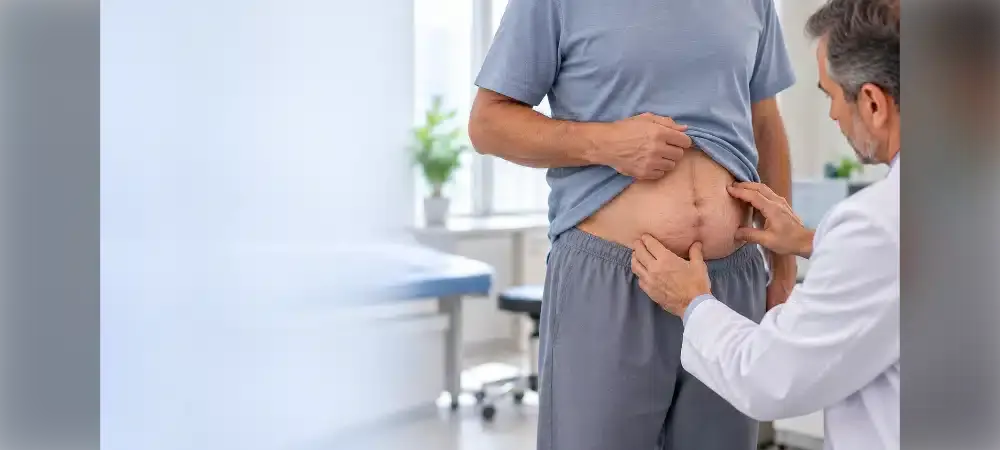
The most obvious sign of an incisional hernia is a bulge at the site of the old operation. This bulge usually appears as a soft swelling on or very close to the surgical incision. When you feel the area with your hands, you may notice an abnormal firmness at the incision site. The symptoms may lessen when the patient is resting, but depending on the contents of the hernia, the bulge may not disappear completely.
Incisional hernias do not develop at a single point; they can develop in more than one area along the incision line. These bulges can be seen in any part of the incision site, and their sizes may vary.
Swelling that becomes more noticeable when standing or coughing
One of the typical features of an incisional hernia is that the bulge becomes more prominent when intra-abdominal pressure rises. The bulge at the incision site becomes more visible especially during activities such as standing, coughing, sneezing, straining or lifting heavy objects. When you lie down, the bulge may shrink or disappear completely.
The hernia bulge becomes more prominent during activities that increase intra-abdominal pressure because, in these situations, the abdominal organs are pushed outward through the weakened incision area. When you lie down, the organs tend to return to their normal position under the influence of gravity.
Pain, burning and gas problems
An incisional hernia can often cause pain. Discomfort, tenderness and pain are common as a result of internal organs entering the hernia sac being squeezed and put under pressure. This pain can range from a mild ache to severe discomfort. In particular:
- A burning sensation at the incision site
- Pain that increases during physical activity
- Abdominal pain that becomes more noticeable after meals
- Gas formation and inability to pass stool
In incisional hernias, constipation can also occur as a result of the intestines adhering to the hernia site. Abdominal pain, vomiting and signs of intestinal obstruction may also be seen.
Enlargement and worsening of the hernia over time
Untreated incisional hernias usually tend to grow over time. In a short time, all of the stitches at the site of the old operation may open and large hernias may develop. This can affect your daily activities.
The following problems may occur as the hernia grows:
The hernia bulge gradually enlarges and an increase in pain complaints may be observed. The abdominal organs within the hernia may become trapped (incarceration), and the bulge does not shrink even at rest. If the blood flow to the organs within the hernia is blocked (strangulation), organ loss due to tissue death may occur, and this is a condition that requires emergency surgery.
In large hernias, the patient's center of gravity changes, and spine and knee problems may develop as a result. The patient's mobility decreases, there is a tendency to gain weight, and standing and walking may become difficult over time.
If you have symptoms of an incisional hernia, it is important to see a doctor as soon as you notice them, because it can grow rapidly and cause serious complications.
Diagnosis and Differential Diagnosis Methods
A correct diagnosis of an incisional hernia is very important for determining the appropriate treatment plan. Your doctor may use various diagnostic tools, from a simple examination to advanced imaging methods.
Diagnosis by physical examination
First, your doctor takes detailed information about the operations you have had and then performs a physical examination. During this examination, the doctor checks the bulge over the surgical incision. In most cases, an incisional hernia can be diagnosed by physical examination alone.
During the examination, your doctor may ask you to perform movements that increase your intra-abdominal pressure. Movements such as coughing, straining or exerting force make the hernia more prominent. This makes the diagnosis easier. In addition, because the hernia is more visible in the standing position, the examination is usually performed while standing.
Use of ultrasound and tomography
Physical examination may not always be sufficient. Imaging methods are used especially in obese patients or when the hernia is small. Ultrasound is the most commonly used method for diagnosing an incisional hernia. It is preferred because it is inexpensive, easily accessible and harmless.
With ultrasound, the size of the hernia and which organs are in the hernia sac can be determined. However, the effectiveness of ultrasound depends on the experience of the operator and the patient's body structure.
In cases requiring a more detailed examination, computed tomography (CT) is used. CT is considered the gold standard in the diagnosis of incisional hernia. It shows the location, size and contents of the hernia defect in detail. In addition, it can assess the presence of complications such as intestinal obstruction.
In some special cases, your doctor may request magnetic resonance imaging (MRI). MRI shows the structure of the hernia and the surrounding tissues in more detail.
Possibility of confusion with lipoma, cyst, seroma and hematoma
An important point in diagnosing incisional hernias is that they must not be confused with other conditions that show similar symptoms. Not every bulge at the surgical site is a hernia.
Conditions such as a lipoma (a fatty lump), a cyst (a sac filled with fluid), a seroma (a fluid collection that forms after surgery) or a hematoma (a collection of blood) can also cause swelling at the surgical site. These conditions can be confused with an incisional hernia.
For a correct diagnosis, the use of imaging methods and evaluation by a specialist physician are of great importance. In particular, determining the contents and characteristics of the bulge is critical for establishing the correct treatment plan.
Incisional Hernia Treatment and Surgical Options
Surgical repair is the only effective option for the permanent treatment of an incisional hernia. This condition does not heal on its own, and treatment methods other than surgery are not effective. The treatment approach is planned according to the size of the hernia, the patient's general condition and the severity of the complaints. There are two main surgical methods.
Open surgical method
Open surgery is the classic method used in the treatment of incisional hernias. In this technique, an incision is made to reach the hernia area, the hernia sac is pushed back in, and the weakness in the abdominal wall is repaired. The abdominal wall is usually reinforced using a synthetic material called a mesh. This mesh is placed beneath the muscle layer, which reduces the risk of the hernia recurring.
Open surgery is preferred especially for large or complex hernias. The advantages of this method are:
- It gives effective results in large hernias
- The repair is performed under direct vision
However, the recovery process may be longer and the surgical scar is more noticeable.
Laparoscopic (closed) method
In recent years, laparoscopy has begun to play an important role in the repair of incisional hernias. In this minimally invasive method, three small holes are made in the abdominal wall. The hernia area is reached with the help of a camera (laparoscope), and the mesh is placed from the inside.
The laparoscopic technique is a safe and effective method for incisional hernia repair. Because less tissue dissection is performed than in open surgery, postoperative pain is lower. Other advantages of the closed method:
- Faster recovery
- Smaller scars
- More than one hernia can be repaired in the same session
In laparoscopic surgery, special meshes called composite or dual meshes are used because these meshes are placed inside the abdomen and come into contact with the intestines.
Duration of surgery and recovery process
Incisional hernia surgery can take between 1 and 3 hours, depending on the surgical method chosen, the size of the hernia and the patient's general condition. After open surgery, patients are discharged after 2-3 days, while with the laparoscopic method most patients are discharged the next day.
The recovery period is on average around 1-2 weeks. Patients who have had laparoscopic surgery can usually return to their normal lives within 7-10 days. Points to pay attention to in the postoperative period:
- Not lifting heavy objects during the first week
- Avoiding constipation
- Keeping the wound clean and dry
- Regularly using the corset recommended by your doctor
What happens if I do not have surgery?
An incisional hernia does not heal on its own, and when it is not treated it grows over time. The hernia bulge gradually increases and pain complaints intensify. Untreated hernias can cause serious complications:
The organs within the hernia may become trapped (incarceration), and this does not resolve even at rest. If the blood flow to the organs within the hernia is blocked (strangulation), tissue death may occur and emergency surgical intervention is required. Life-threatening complications such as intestinal obstruction, infection and inflammation of the peritoneum (peritonitis) may develop.
For these reasons, once an incisional hernia is diagnosed, treatment with surgery is recommended. Delays in surgery may lead to growth of the hernia and an increased risk of strangulation.
Incisional Hernia in Summary
In conclusion, an incisional hernia is a common problem that can occur after operations performed on the abdomen. This condition, which can be seen in approximately 10-15% of abdominal operations, usually appears in the first 3-6 months after surgery.
The leading symptom of a hernia is a bulge at the surgical site. This bulge becomes more prominent especially when standing, coughing or lifting heavy objects. In addition, pain, a burning sensation and digestive problems are also common complaints.
Risk factors include diabetes, smoking, obesity and infection at the surgical site. In addition, conditions that increase intra-abdominal pressure, such as heavy lifting and chronic cough, can also trigger hernia formation.
The diagnosis of an incisional hernia is usually made by physical examination. However, sometimes imaging methods such as ultrasound or tomography may also be required. A correct diagnosis is important because a hernia can be confused with conditions such as a lipoma, cyst or hematoma.
Surgery is the only effective treatment. These operations, which can be performed using open surgery or the laparoscopic method, are planned according to the size of the hernia and the patient's condition. The laparoscopic method has been preferred in recent years because it provides less pain and faster recovery.
An incisional hernia does not heal on its own and grows over time. When it is not treated, the organs within the hernia may become trapped or their blood circulation may be impaired. For this reason, when you notice a bulge at the surgical site, it is important to see your doctor without delay.
During postoperative recovery, avoiding heavy lifting, keeping the wound clean and following your doctor's recommendations can reduce the risk of hernia formation. In case of any suspicion, be sure to consult a healthcare facility.
Frequently Asked Questions
Questions about incisional hernias raise concerns for many patients. We would like to inform you by answering these questions.
What happens if I do not have incisional hernia surgery? Untreated hernias grow over time and can lead to serious problems. The intestines can become trapped and hernia strangulation can occur. As a result, serious problems that can go as far as intestinal necrosis (death of the bowel tissue) may develop.
How long does incisional hernia surgery take? The average duration is one hour for both open and closed surgery. Surgery performed with the laparoscopic method may take approximately 30 minutes, although this varies according to the size of the hernia.
Does an incisional hernia cause gas? Yes. In addition to abdominal pain and bloating, gas formation and inability to pass stool may occur.
Does an incisional hernia go away on its own? No, an incisional hernia cannot go away or heal on its own. It must be treated with surgery.
Does an incisional hernia grow? Untreated incisional hernias can grow over time. If not treated appropriately, they can recur and reach large sizes.
Does an incisional hernia recur? There is a risk of recurrence in incisional hernias of the abdomen. This rate varies between 20% and 45%.
Fill Out the Form for Detailed Information and Contact!
Start with the right assessment for What Is an Incisional Hernia? What Are the Symptoms?
Share your symptoms with our specialist physicians; let us determine the right diagnosis and treatment plan together.
Warning
If your symptoms started suddenly, are progressing rapidly, or significantly restrict your daily life, consult a physician without delay.
Plan your What Is an Incisional Hernia? What Are the Symptoms? journey with our specialists.
Fill in the form or book an appointment to learn about treatment options, the process and preparation.