Attention deficit hyperactivity disorder (ADHD) is a chronic behavioural disorder that affects a large number of children worldwide and generally continues into adulthood. Hyperactivity is usually diagnosed at a young age. Although many parents describe any active child as hyperactive, contrary to popular belief, ADHD is a more serious condition. This is because the disorder is chronic, and these individuals need to be monitored throughout their lives. For this reason, it is important that the course of hyperactivity is followed regularly by specialist physicians. If hyperactivity in children is treated appropriately, it is possible for the symptoms to decrease. Otherwise, the symptoms persist and problems may arise in the child's social adjustment in the future.
What Is Hyperactivity in Children?
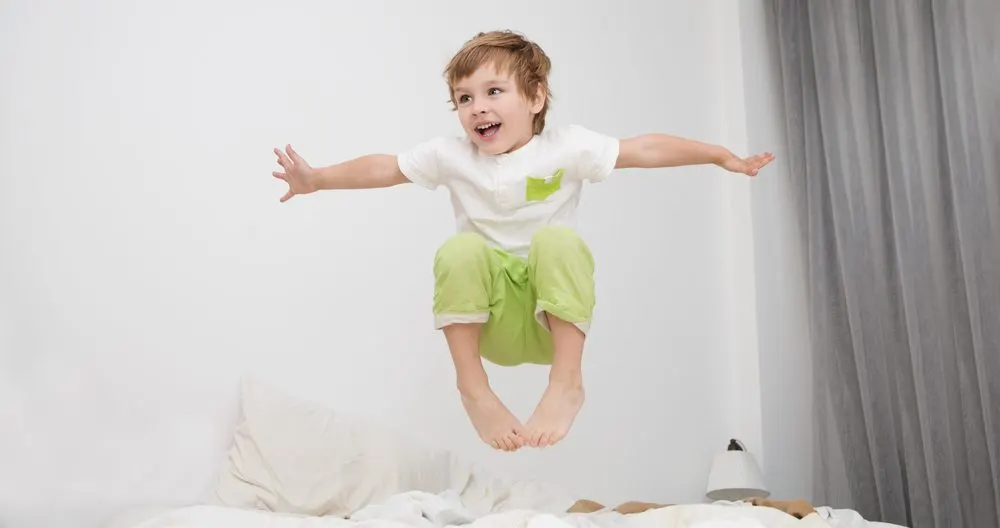
Hyperactivity in children is a medical behavioural disorder that deserves attention and can directly affect a child's future. The brain activity of a child with hyperactivity shows differences compared with a normal child. It is also a known fact that in the brains of hyperactive children, the regions that control behaviour develop differently. When observed from the outside, hyperactive children may appear more restless than others. In particular, they have difficulty concentrating on one subject and tend to act according to their impulses.
Hyperactivity in children can be identified in early infancy and often becomes more pronounced during school age. Most diagnoses are made in children under the age of 12. However, if the family does not take the situation seriously or disregards it, this age may extend into later periods. In rare cases, a diagnosis of hyperactivity may even be made in adulthood. Although the exact cause of hyperactivity is not known, it is considered that it may be related to family structure. In addition, births before the 37th week of pregnancy, low birth weight, and smoking or alcohol use during pregnancy may increase the risk of hyperactivity.
What Are the Symptoms of Hyperactivity in Children?
Hyperactivity in children can manifest with many symptoms. Some parents take this condition seriously and consult a physician who is an expert in the field. This is the most appropriate approach and is necessary for the child's healthy growth and treatment. Hyperactivity in children may appear with symptoms such as excessive restlessness, inability to control behaviour, talking more than necessary, and constantly moving the hands and feet, whether voluntarily or involuntarily. Symptoms are categorised in two different ways: inattention and impulsivity. The symptoms of hyperactivity in children can be listed as follows:
Being unable to devote oneself to games and behaviours that require attention,
Making mistakes very often, being unable to complete an assigned task and leaving it unfinished, being unable to listen to the other person while in communication,
Resisting doing the homework assigned at school and carrying out the course content,
Losing personal belongings frequently, forgetting tasks assigned to them later on,
Being more active than necessary, being unable to remain still for long in a given area,
Running around objects, talking excessively and being full of seemingly inexhaustible energy,
Trying to answer a question without waiting for it to be completed,
Acting without thinking about the consequences of a behaviour,
If present, physically attacking a sibling, not obeying the directives of mother and father, carrying out potentially dangerous behaviours without thinking.
What Are the Treatment Methods?
Hyperactivity in children is a behavioural disorder that can be treated through cooperation between the family, the school and a specialist physician. The child's living environment is taken into account when planning treatment. Planning must be carried out in line with the family's means. It is very important that the child is not emotionally hurt during treatment, because an emotional trauma that may occur at these ages negatively affects the individual's future. For these reasons, treatment must be carried out under the guidance of a physician who is an expert in the field. It is also important that the child is informed about the treatment process, because the child is one of the key contributors to the success of the treatment.
Throughout treatment, medication and behavioural methods are applied together. However, medication may not be necessary for every child. Families' reservations about medication use are among the situations encountered. The most important point to remember here is that treatment progresses as a whole. Behavioural therapy, social skills training and psychotherapy continue alongside drug treatment. If medication is avoided in a case where it is needed, treatment may be prolonged or may fail. Since the process is carried out by an expert team, all effects of the medications are evaluated in the most accurate way. For this reason, families need to contribute to the implementation of treatment in cooperation with the physician and their child. In the later stages of treatment, hyperactivity-related behaviours decrease and the child can lead a happier life.
Frequently Asked Questions
Hyperactivity in children is a behavioural disorder that can be misinterpreted by families. For this reason, families have many questions in mind about it. A few of these can be listed as follows: Hyperactivity in children begins to appear as the child gains physical independence and starts to speak. Before this period, because the child's movement and speech are limited, it is difficult to understand the symptoms. In particular, it becomes easier to diagnose hyperactivity in a child who has reached primary school age, because symptoms appear very clearly during this period. Hyperactivity can also be seen in infancy. To recognise it, the infant's crying episodes are taken into account. A hyperactive baby cries more than expected and is more active than other babies. When they wake up, they are harder to calm down. Instead of sleeping deeply, they sleep for shorter periods. Although their muscles have not yet developed sufficiently, they tend to crawl in the early months. Even so, it is more difficult to diagnose hyperactivity in infancy than at other ages. Children, by their nature, move more than adults. For more active families, these active states of children may be considered normal. However, parents who live a more sedentary life tend to infer hyperactivity when a child is a little active. However, this does not mean the child is hyperactive. For this reason, consulting a physician who is an expert in the field is the most correct step before calling every active child hyperactive. Hyperactivity in children can manifest with many symptoms, such as excessive movement, focus problems, attention disorders, etc. These children may carry out many actions without thinking about the consequences. Such actions may lead to physical injuries. However, it is not correct to say that hyperactivity in children is directly harmful to the body. Hyperactivity in children can be brought under control with appropriate treatment methods. However, during the treatment process, the family, child, school and expert team must work in cooperation. In particular, it is very important that the child's situation is explained to them in a way appropriate for their age. Such a child also supports the treatment together with their family and doctor. Thus, hyperactivity can be treated in a controlled manner. Hyperactivity arises from the combination of psychological, biological, genetic, social factors, etc. and is chronic. However, success rates in today's treatments are quite high. Successful results can be achieved by treating hyperactivity in children. In addition, situations such as the child accepting their condition, participating in treatment, maturing, benefiting from their experiences, and gradually becoming aware of themselves and able to discipline themselves cause the effect of hyperactivity to diminish. Positive progress of the process together with the medications prescribed by the specialist physician can prevent hyperactivity from becoming permanent. Thus, the child can enjoy a healthier adulthood. A diagnosis of hyperactivity in a child is made by specialist physicians who are experienced in the field. This is because some families may assume that every active child is hyperactive. However, if the symptoms of hyperactivity in children are very severe and this condition negatively affects the child's life, it is necessary to be examined without losing time. When applying to a hospital, the physician will most often refer the child to a specialist, such as a developmental-behavioural paediatrician, psychologist, psychiatrist or paediatric neurologist. In this way, treatment can be carried out with support from the appropriate physicians. There are many definitions of hyperactivity. Some sources define hyperactivity as a psychological disease in which children cannot control their behaviour. In addition, the definitions of neurodevelopmental disorder or behavioural disorder are also widely used for hyperactivity. Regardless of its definition, ADHD is a health problem that must be treated if it affects the child's life. Otherwise, the child's excessive actions may lead to serious problems such as self-harm and harm to those around them. Hyperactivity in children has become correctable with today's treatment methods. Successful results can be achieved by using medication and therapy methods together. Treatment aims to ease the symptoms so that the child can adapt more easily to daily life. Although some families want only therapy, medication and therapy together give the most successful results. Treatment is usually arranged by a specialist such as a paediatrician or psychiatrist. Throughout treatment, it is important that the family supports the child and that the child's teacher cooperates at school. This is because hyperactive children may not be tolerated by their peers. Support from the family and teacher is necessary to prevent this. Thus, treatment can be carried out appropriately and hyperactivity can be corrected. Every parent wants their child to grow and develop in the healthiest way possible. However, due to genetic, familial, environmental, biological, etc. reasons, undesirable situations may arise. Hyperactivity in children is among these situations. It is important for families to take hyperactivity seriously, make an appointment with a specialist physician, and have their children examined without delay. In this way, the child can regain health and lead a happier life.
Start with the right assessment for What Is Hyperactivity in Children? What Are the Treatment Methods?
Share your symptoms with our specialist physicians; let us determine the right diagnosis and treatment plan together.
Warning
If your symptoms started suddenly, are progressing rapidly, or significantly restrict your daily life, consult a physician without delay.
Plan your What Is Hyperactivity in Children? What Are the Treatment Methods? journey with our specialists.
Fill in the form or book an appointment to learn about treatment options, the process and preparation.