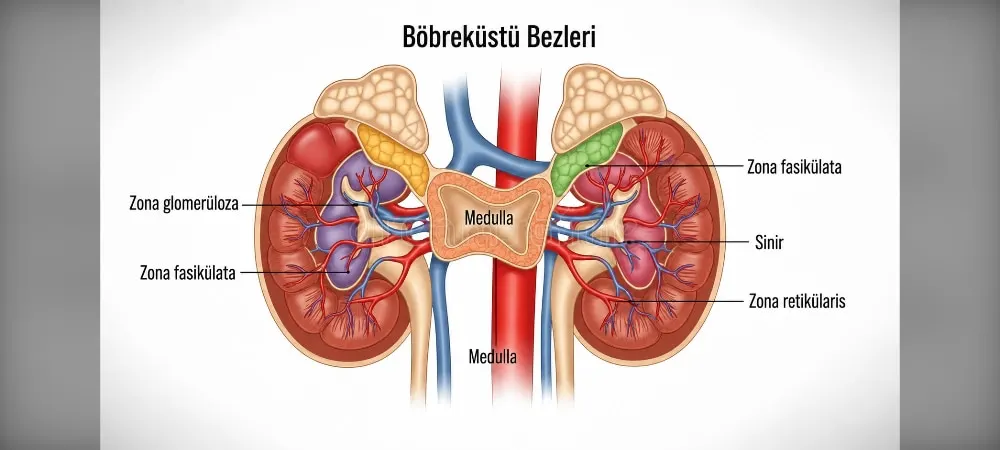
Adrenal gland hormones are vital for your body to function properly. These small glands, located just above your kidneys, produce essential hormones for life such as cortisol, aldosterone, epinephrine, and norepinephrine. In fact, these glands perform critical tasks such as regulating your body's stress response, water-salt balance, metabolism, and blood pressure.
Problems that occur in the adrenal glands can lead to imbalances in hormone production, causing serious health issues. For example, producing too much cortisol in the body is called Cushing's Syndrome, while Addison's disease occurs when the adrenal glands cannot produce enough cortisol and aldosterone. Symptoms of these diseases include fatigue, loss of appetite and weight, low blood pressure, fainting, and psychological disorders.
Adrenal Glands and the Functions of Hormones
The adrenal glands, which are among the smallest but hardest-working organs in our body, are located at the top of each kidney. These triangle-shaped glands produce hormones that regulate many vital functions, from metabolism to stress response.
What are the adrenal cortex and medulla?
The adrenal gland consists of two main parts: the outer layer, the cortex, and the inner layer, the medulla. These two layers ensure the body's chemical balance by producing different hormones.
The adrenal cortex secretes vital hormones such as cortisol, aldosterone, and androgens that regulate metabolism and fluid-electrolyte balance. This section is responsible for the body's long-term metabolic balance.
The adrenal medulla produces adrenaline and noradrenaline hormones that respond quickly in stress situations. This section controls the "fight or flight" mechanism that allows the body to react quickly in moments of danger.
Cortisol, aldosterone, and androgen hormones
Cortisol is an important hormone produced in the cortex section of the adrenal glands, also known as the "stress hormone." Secreted most in the morning hours, cortisol prepares the body for the day and its level drops in the evening to regulate the sleep cycle.
The main functions of the cortisol hormone are as follows:
Helps the body cope with stress
Regulates blood sugar and blood pressure
Reduces inflammation and supports the immune system
Controls carbohydrate, fat, and protein metabolism
The aldosterone hormone ensures the maintenance of blood pressure by regulating the water and salt balance in the kidneys. Thanks to this hormone, the body's electrolyte balance is maintained, sodium is retained, and potassium is excreted.
Androgens play a role in the production of sex hormones. Imbalance of these hormones can lead to problems such as masculine hair growth and voice deepening, especially in women.
Adrenaline and noradrenaline hormones
Adrenaline (epinephrine) is a hormone produced by the adrenal medulla that activates the body in moments of danger. It increases heart rate, accelerates blood flow, and strengthens respiration.
Noradrenaline (norepinephrine) is both a hormone and a neurotransmitter. When danger is perceived by the brain, noradrenaline release is triggered, and the body prepares to confront this danger.
The main functions of noradrenaline:
Increases alertness and attention
Maintains blood pressure during stress
Affects the sleep-wake cycle, mood, and memory
Ensures pupil dilation in moments of danger
Relationship between adrenal glands and stress
The adrenal glands play a central role in the body's response to stress. In stress situations, the brain stimulates the adrenal glands to increase the release of cortisol and adrenaline.
Short-term stress triggers this hormonal response necessary for survival. However, long-term stress can cause the adrenal glands to work constantly and eventually become fatigued.
In people under constant stress, a condition known as "adrenal fatigue" may occur. In this case, the adrenal glands become unable to produce sufficient amounts of hormones, and symptoms such as fatigue, low blood pressure, and sleep problems are observed.
Regular sleep, a balanced diet, and stress management are of great importance for the healthy functioning of the adrenal glands. Not sleeping 7-8 hours every night automatically puts the body under stress, which has a negative impact on the adrenal glands.
What Are Adrenal Gland Diseases?
Diseases that occur in the adrenal glands arise as a result of excessive or insufficient production of hormones. The disruption of this balance can cause serious health problems in the body. Here are the most common adrenal gland diseases and their characteristics:
Addison's disease (Adrenal insufficiency)
Addison's disease is a rare condition where the adrenal glands cannot produce enough cortisol and aldosterone hormones. It usually occurs as a result of the immune system attacking the adrenal glands. Additionally, tuberculosis and other microbial diseases are among the triggering factors. It is seen in one in every 100,000 people, and the female-to-male ratio is equal.
Symptoms include extreme fatigue, weakness, loss of appetite, weight loss, skin darkening, low blood pressure, fainting, and a craving for salt. If left untreated, a life-threatening adrenal crisis can develop even in mild stress situations. The primary treatment is the replacement of missing hormones.
Cushing's syndrome (Cortisol excess)
Cushing's syndrome is a condition where there is excessive cortisol hormone in the body. This condition can develop as a result of the pituitary gland producing too much ACTH, the formation of benign tumors in the adrenal glands, or long-term use of corticosteroid medications.
Symptoms include rounding of the face, fat accumulation in the abdominal area, pink-purple stretch marks on the skin, muscle weakness, high blood pressure, and high blood sugar. Treatment can be in the form of surgery, medication, or radiotherapy, depending on the underlying cause.
Adrenal hyperplasia (Congenital disorder)
Congenital Adrenal Hyperplasia (CAH) is a genetic disease in which the adrenal glands cannot produce enough cortisol and aldosterone hormones, resulting in increased production of androgens (male hormones). It is seen in one in every 10,000-15,000 live births.
The most common cause of CAH is 21-hydroxylase enzyme deficiency. Symptoms include masculine genital appearance in female infants, salt loss, vomiting, and dehydration in severe cases. Treatment involves cortisol and aldosterone replacement therapy.
Pheochromocytoma (Tumor-related)
Pheochromocytoma is a rare tumor that develops in the medulla region of the adrenal gland and causes excessive secretion of adrenaline and noradrenaline. In 10% of patients, the tumor is cancerous.
Symptoms include suddenly rising blood pressure, palpitations, headache, excessive sweating, and tremors. It is usually diagnosed between the ages of 20-50, and surgical methods are used in treatment.
Conn's syndrome (Aldosterone excess)
Conn's syndrome is a condition where the adrenal glands produce excessive aldosterone hormone. Excess aldosterone causes sodium retention and potassium loss in the body, raising blood pressure.
It is one of the most common causes of secondary hypertension. Symptoms include high blood pressure, low potassium, muscle weakness, cramps, and frequent urination. Treatment is usually done with surgery or medications that block the effect of aldosterone.
Adrenal adenoma and cancers
Adrenal gland cancers are rare tumors. They can be benign (adenoma) or malignant. Tumors can produce hormones or be non-functional.
Symptoms vary depending on the hormone they produce. Tumors that produce cortisol show symptoms of Cushing's syndrome, while those that produce aldosterone show symptoms of Conn's syndrome. Treatment is usually surgical, but chemotherapy and radiotherapy can also be applied depending on the spread of the cancer.
Symptoms of Adrenal Gland Diseases
Adrenal gland disorders usually lead to various symptoms due to changes in hormone levels. Depending on the type of disease, these symptoms vary and affect many systems of the body.
Fatigue and weakness
The most common complaint of adrenal gland patients is constant fatigue and loss of energy. Extreme fatigue, weakness, and muscle weakness are seen, especially in Addison's disease. These symptoms are caused by the insufficient production of hormones that regulate the body's vital functions. Patients often struggle to complete even normal daily activities. Muscle weakness is particularly evident in cortisol deficiency, and muscle mass reduction may be seen in long-term illnesses.
Blood pressure imbalances
Adrenal gland hormones play an important role in blood pressure control. Resistant and uncontrolled hypertension develops with high aldosterone. In patients with Conn's syndrome, high blood pressure may not be controlled with three or more medications. On the other hand, low blood pressure and a feeling of fainting are seen in Addison's disease because sodium cannot be retained. In pheochromocytoma, palpitations and high blood pressure crises occur in attacks.
Weight changes
In Cushing's syndrome, fat accumulation occurs especially in the abdominal area, rounding of the face, and fat deposits on the nape of the neck, known as a "buffalo hump." In contrast, thinning is seen in the arms and legs. In Addison's disease, weight loss and loss of appetite are typical symptoms even without any diet. Weakness and weight loss can also be seen in pheochromocytoma.
Skin changes and hair growth
In Cushing's syndrome, skin thinning, easy bruising, and pink-purple stretch marks occur. In Addison's disease, darkening of the skin is seen on the face, neck, and gums. Also, due to hormonal imbalances, male-type hair growth (hirsutism) in women or, conversely, a decrease in hair in the armpit and groin area can be observed. Hirsutism, seen in 10 out of every 100 women, is mostly associated with polycystic ovary syndrome, but it can also occur in adrenal gland diseases.
Psychological symptoms
Depression, anxiety disorder, and irritability are common in adrenal gland diseases. Changes in cortisol levels directly affect mood. While loss of emotional control can be experienced in Cushing's syndrome, depressive symptoms and difficulty coping with stress are seen in Addison's disease.
Symptoms of adrenal gland failure
When the adrenal gland does not work enough, potassium rises and metabolic acidosis occurs. Loss of appetite, abdominal pain, nausea, vomiting, and rapid weight loss are seen. In stressful situations, an adrenal crisis can develop, and life-threatening symptoms such as high fever, severe vomiting, diarrhea, and confusion can occur.
Diagnostic Methods and Tests
The correct diagnosis of adrenal gland diseases begins with the evaluation of the patient's complaints and is finalized using various laboratory tests and imaging methods. A comprehensive evaluation process is followed by specialist doctors for an accurate diagnosis.
Blood and urine tests
The first step in detecting hormone imbalances is blood and urine tests. With these tests, the levels of hormones such as cortisol, aldosterone, ACTH, and adrenaline are measured. Cortisol levels are generally considered normal between 6-23 mcg/dL in the morning hours. Normal values for aldosterone are between 4-30 ng/dL. DHEA varies between 8-50 ng/mL depending on age.
The 24-hour urine collection test is used specifically to determine the daily production rate of hormones. The patient collects all their urine for 24 hours and sends it to the laboratory. Thanks to this test, it can be determined how fast adrenal gland hormones are produced.
ACTH stimulation test
The ACTH stimulation test is an important diagnostic tool used especially in suspected Addison's disease. In this test, synthetic ACTH (cosyntropin) is injected, and the body's ability to produce cortisol is evaluated. Blood samples are taken before and after the test (usually at 30-60 minute intervals).
In a normal response, a sufficient increase in cortisol levels (to at least 18-20 mcg/dL) is seen after ACTH injection. An insufficient response is an indicator of adrenal insufficiency. This test should be performed in the morning hours, and some medications (especially steroids) should be discontinued beforehand.
Imaging methods (CT, MRI)
Computed tomography (CT) and magnetic resonance imaging (MRI) are used to detect structural changes in the adrenal glands. These methods reveal adrenal tumors, enlargement, or other structural abnormalities.
CT creates three-dimensional images of the body using x-rays and is quite effective in stone detection. MRI provides more detailed results in imaging soft tissues and shows the adrenal glands in detail.
Functional tests
The dexamethasone suppression test is used specifically in the diagnosis of Cushing's syndrome. In this test, dexamethasone, a drug that acts like cortisol, is given. While cortisol production decreases in normal individuals, cortisol levels remain high in those with an adrenal gland tumor.
Renin-aldosterone ratio measurement is used in the diagnosis of Conn's syndrome. Additionally, in suspected pheochromocytoma, measurement of metanephrines (adrenaline metabolites) is performed.
How is adrenal gland enlargement detected?
Adrenal gland enlargement is usually detected incidentally during imaging studies performed for other reasons. The size, shape, and internal structure of the gland are evaluated with CT, MRI, and ultrasonography.
Blood and urine tests are performed to determine whether the enlargement is functional. In some cases, advanced imaging techniques such as scintigraphy or biopsy may be required to confirm the cause of the enlargement.
Treatment Options and Lifestyle Recommendations
After diagnosis, the treatment of adrenal gland diseases is planned individually according to the type and severity of the disease. The correct treatment method improves the quality of life by restoring hormonal balance.
Medication and hormone replacement
In cases of adrenal insufficiency such as Addison's disease, hormone replacement therapy is applied to replace the missing cortisol and aldosterone hormones. Patients should use medications such as hydrocortisone and fludrocortisone regularly. In Cushing's syndrome, medications that reduce cortisol production are preferred. Hormone therapy is planned in accordance with the body's natural rhythm, and doses are adjusted according to the patient's condition.
Surgical intervention
Surgical treatment may be required for adrenal gland tumors or uncontrollable hormone excesses. In this procedure, called adrenalectomy, all or part of the adrenal gland is removed. Today, laparoscopic (closed) methods are preferred. Laparoscopic adrenalectomy provides less pain, smaller scars, and faster recovery compared to open surgery. Patients are usually discharged within 1-2 days and can return to their normal lives within 4-5 days.
Radiotherapy and chemotherapy
In cases of adrenal gland cancer, radiotherapy and chemotherapy can be applied in addition to surgical intervention. Radiotherapy is preferred especially if the cancer has spread to the bones and brain. Chemotherapy is used to kill cancer cells or stop them from multiplying. In advanced-stage cancers, these treatments are applied to extend life expectancy and improve quality of life.
Nutrition and stress management
Lifestyle changes are important to support adrenal gland health. These include:
Regular sleep and exercise
Reducing the consumption of processed foods, refined sugar, and caffeine
Vegetables rich in potassium, sodium, and magnesium
Stress management techniques (meditation, deep breathing)
In adrenal gland patients, especially in cases of adrenal fatigue, intermittent fasting and low-carbohydrate diets may not be suitable. In this patient group, eating more frequently (every 4-5 hours) helps maintain blood sugar balance.
Why do adrenal gland hormones rise?
Many factors play a role in the rise of adrenal gland hormones. Chronic stress is one of the most important triggers. In addition, disruption of sleep patterns, excessive salt consumption, and poor dietary habits can also cause hormonal imbalances. Some medications, especially those containing cortisone, can affect adrenal gland functions with long-term use. Genetic factors and other hormonal diseases can also contribute to the rise of adrenal gland hormones.
In Summary, Adrenal Gland Diseases
Adrenal gland diseases can significantly affect the body's hormone balance and reduce the quality of life. Disorders in the production of vital hormones such as cortisol, aldosterone, and adrenaline can cause complaints in a wide range, from fatigue to blood pressure problems, from weight changes to psychological symptoms. Addison's disease and Cushing's syndrome are the most well-known of these disorders.
Early diagnosis of these diseases is very important. An accurate diagnosis can be made through blood and urine tests, ACTH stimulation test, and imaging methods. Thus, appropriate treatment can be started in time. After diagnosis, treatment options include hormone replacement therapy, surgical intervention, or radiotherapy and chemotherapy when necessary.
However, lifestyle changes are just as important to protect adrenal gland health. Regular sleep, a balanced diet, and effective stress management are the fundamental elements that will help you maintain your hormone balance. It is also possible to detect potential problems early with regular health check-ups.
As a result, knowing and being aware of the symptoms of adrenal gland diseases is vital for your health. When you experience suspicious symptoms, you should definitely consult an endocrinology specialist. With the right diagnosis and appropriate treatment, these diseases can be brought under control and a high-quality life can be maintained.
Frequently Asked Questions
Can one live without adrenal glands?
It is difficult to live without adrenal glands. However, it is possible with the use of some medications. People without glands experience low energy, difficulty in stress management, and electrolyte imbalances.
Can adrenal gland diseases be treated?
Yes, many of them can be treated. For example, adrenal gland insufficiency can be controlled with medication. However, in some cases, treatment may need to be lifelong.
What is Cushing's syndrome?
It is a diseased state where the body produces too much cortisol. Patients typically experience a round face, red cheeks, a fat hump on the nape of the neck, and weight gain in the torso.
Is pheochromocytoma life-threatening?
If left untreated, it can be life-threatening with serious blood pressure problems. This rare disease, seen in about eight out of every million people, causes excessive secretion of adrenaline and noradrenaline.
Which department should be consulted for the adrenal gland?
The endocrinology department is the specialty that evaluates hormone imbalances and dysfunctions related to the adrenal gland.
Can stress lead to adrenal gland diseases?
Excessive stress can affect the function of the adrenal glands, but it does not directly create a disease.
Comprehensive information about adrenal gland diseases, symptoms, and treatment methods. Diagnosis and treatment of Addison's disease, Cushing's syndrome, and other adrenal diseases.
Start with the right assessment for What Are Adrenal Gland Diseases? What Are the Symptoms? How Are They Diagnosed and Treated?
Share your symptoms with our specialist physicians; let us determine the right diagnosis and treatment plan together.
Warning
If your symptoms started suddenly, are progressing rapidly, or significantly restrict your daily life, consult a physician without delay.
Plan your What Are Adrenal Gland Diseases? What Are the Symptoms? How Are They Diagnosed and Treated? journey with our specialists.
Fill in the form or book an appointment to learn about treatment options, the process and preparation.