

Fixed and Removable Prostheses
What Is a Fixed Prosthesis? A fixed prosthesis is the procedure of replacing teeth that are missing or have suffered extensive loss of tooth structure, using materials similar in colour and texture to the natural teeth…
About the Department
The scope, approach and highlighted services of the department.
What Is a Fixed Prosthesis?
A fixed prosthesis is the procedure of replacing teeth that are missing or have suffered extensive loss of tooth structure, using materials similar in colour and texture to the natural teeth.
What Is the Treatment Option for Missing Several Teeth?
For the loss of one or several teeth, there are implant and bridge treatment alternatives.
- Bridge: Applied to close the gaps left by one or several missing teeth, using support from the adjacent abutment teeth, in order to restore the aesthetics, speech and function that have been lost. The materials and bridge type are selected according to the case.
- Implant-supported Crowns and Bridges: Fixed (cemented) prostheses applied in cases of one, several or all missing teeth, after the root-form titanium screws placed into the jawbone by surgeons have integrated with the bone (approximately 2–6 months).
What Are the Stages of Making Fixed Prostheses?
Completing a fixed prosthesis requires a treatment of at least 4 sessions.
- Preparation and Impression: The tooth or teeth to be restored are reduced by the amount of restoration to be applied, and an accurate impression of the entire mouth is taken for the laboratory model and procedures. The shade is determined through the joint decision of the patient and the dentist.
- Framework Try-in: The zirconia or metal framework prepared on the model is tried in the mouth.
- Porcelain Try-in: This is the stage before the restoration is completed. The relationship of the porcelain prepared in the laboratory with the adjacent teeth, opposing teeth and surrounding tissues is checked. Harmony in aesthetics and colour is checked. The patient’s final approval is obtained. It is sent to the laboratory for glazing.
- Glazing and Cementation: The restoration, glazed in the laboratory, is tried in the mouth once more. If there is no problem, after the patient’s approval the restoration is fixed onto the tooth, and after the cements have hardened, excess material is cleaned away.
- Patient Information: All oral hygiene and care directly affects the lifespan of the restoration. If there are specific methods required for restorations (bridges), the patient is informed. An appointment is made for routine check-ups.
What Is a Removable Prosthesis?
A removable prosthesis is an appliance that the patient can insert and remove, and that replaces missing teeth. There are various types, including complete dentures, partial dentures, immediate dentures and overdentures.
- Complete Dentures: Prostheses made of acrylic that are supported by the remaining bone tissue of the upper and lower jaws, also commonly referred to as ‘false teeth’. They are used in special cases where implants cannot be placed. Using porcelain teeth in complete dentures is generally not a sound approach; for this reason plastic teeth are used in these prostheses, although discolouration of these teeth may occur over time.
- Partial Dentures: When some natural teeth remain and others have been extracted, removable prostheses are called ‘partial dentures’. Partial dentures are made either of acrylic or as a single cast piece. These prostheses are retained by clasp wires attached to the abutment teeth. Patients who feel that the appearance of the wire is unaesthetic can also be given precision-attachment aesthetic dentures.
- Immediate Dentures: In cases where all the remaining natural teeth must be extracted and the patient does not want to be left without teeth, prostheses called ‘immediate dentures’ can be made, which are fitted immediately after the natural teeth are extracted. Once healing is complete and the tissues no longer fit these prostheses, the patient’s permanent dentures are started.
- Overdentures: Prostheses made over a few natural teeth or roots remaining in the mouth, after the dentist’s certain special preparations, are called ‘overdentures’. The natural teeth or roots on which the prosthesis rests provide retention and stability to the prosthesis.
Will I Be Able to Get Used to My Dentures?
Getting used to dentures takes some time, and this varies from person to person even with very well-made dentures. A new denture will feel foreign and bulky in the mouth. A feeling of fullness will be felt in the lips and cheeks. Since the lower denture tends to move more and may dislodge, getting used to a lower denture is harder than getting used to an upper one. In the first days, saliva output increases as the salivary glands are stimulated. This will pass with time.
Why Do Dentures Cause Sore Spots?
Because dentures rest on soft tissues and move, sore spots may develop in some areas, no matter how carefully the dentures were made. The patient should not miss their check-ups, and the denture should be adjusted. Relieving the sore spots by oneself is very wrong. Before coming to the dentist to have the sore spots corrected, the patient should have worn the dentures for at least 9 hours. This period is needed so that the problematic areas can be seen.
Will I Be Able to Eat Normally With My Dentures?
During this period, it is recommended that patients chew slowly, using whichever side feels more comfortable, without opening their lips and by taking small bites. In the first days after the dentures are fitted, soft foods should be eaten and the front teeth should definitely not be used for biting. This causes the back parts of the dentures to lift away from the tissues. The tongue, lips and cheeks have a major effect on the control of the denture. A patient who has used dentures before adapts more easily than a new patient. If a patient has been without teeth for a very long time, they may eat more comfortably without dentures than with them. However, this is not healthy. Once they have adapted to their dentures, they will be able to eat much more comfortably with them. Eating normally with complete dentures takes at least 4–6 weeks. It is essential that patients follow their dentist’s recommendations during this period and, most importantly, that they are ‘determined’ to use their dentures. They should not give up immediately and remove the denture. This applies especially to patients who have old dentures, because if they take out their new dentures and put back their old ones at the first sore spot, it may take a very long time for them to adapt to the new ones.
Will I Be Able to Speak Normally With My Dentures?
Dentures may cause some changes in the mouth, such as difficulty in pronouncing certain sounds, although to a small degree. In this case, reading aloud in front of a mirror should be practised, and words that are not pronounced correctly should be repeated in order to return to normal.
Will I Need to Wear My Dentures 24 Hours a Day?
Patients need to wear their dentures continuously during the first days so that they can adapt to them as quickly as possible. However, once adapted, dentures should not be worn at night, so that the tissues can rest; when removed, they should be kept in water to prevent them from drying out and to avoid possible dimensional changes. This is very important for the health of the tissues. Because the cheek rests against the pillow and neuromuscular control weakens during the night, dentures may come out of the mouth.
Should I Use Denture Adhesives?
Continuous use of denture adhesives is not desirable. However, there is no harm in using them for a short time when necessary. When the need arises, your dentist will explain how these adhesives should be used.
Can I Use My Dentures for a Lifetime?
Lifelong use of dentures is not possible. Although it is said that under normal conditions certain procedures should be carried out every five years, this period naturally varies from patient to patient. The reason dentures cannot be used for a lifetime is the changes in living tissues. Over the years, the fit between the dentures and the tissues deteriorates. Dentures become loose, begin to slip, and eating becomes difficult. This has nothing to do with the dentures; it is entirely the result of changes in the living tissues. In this case, the dentures need to be relined, the base material whose fit has deteriorated needs to be replaced completely, or a new denture must be made. The decision on this matter will be made by your dentist.
How Long Will It Take to Make My Dentures?
Making removable dentures normally takes five sessions, starting from the impression. However, the number of sessions may increase when necessary. After the denture is fitted, patients may need to come for a few more sessions to get used to it. In this case, the complete process of making a removable denture and the patient being able to use it generally takes 1–1.5 months. Our patients should know that making dentures and getting used to them requires a certain amount of time.
Do I Need to Go to My Dentist After Getting Used to My Dentures?
Patients using complete dentures should be checked every ‘six months’, just like people with natural teeth. Depending on various factors, the tissues beneath the denture may change. Over time, the denture loses its fit with the tissues, and by the time the patient notices this, damage may have been caused to the tissues. Various lesions may develop in the mouth, whether related to the denture or not. For this reason, patients using complete dentures should be carefully examined by a dentist at least twice a year.
Is There an Alternative to Classic Removable Dentures?
The most modern alternative to classic removable dentures is implant-supported dentures. This applies especially to lower complete dentures. With the implant procedure, both the retention and the stability of the dentures increase. These dentures, which are higher in cost, can only be applied if all local and systemic conditions are suitable. After examining you, your prosthodontist will provide the necessary information.
A fixed prosthesis is the procedure of replacing teeth that are missing or have suffered extensive loss of tooth structure, using materials similar in colour and texture to the natural teeth.
Author
Web and Medical Editorial BoardReviewed by a specialist
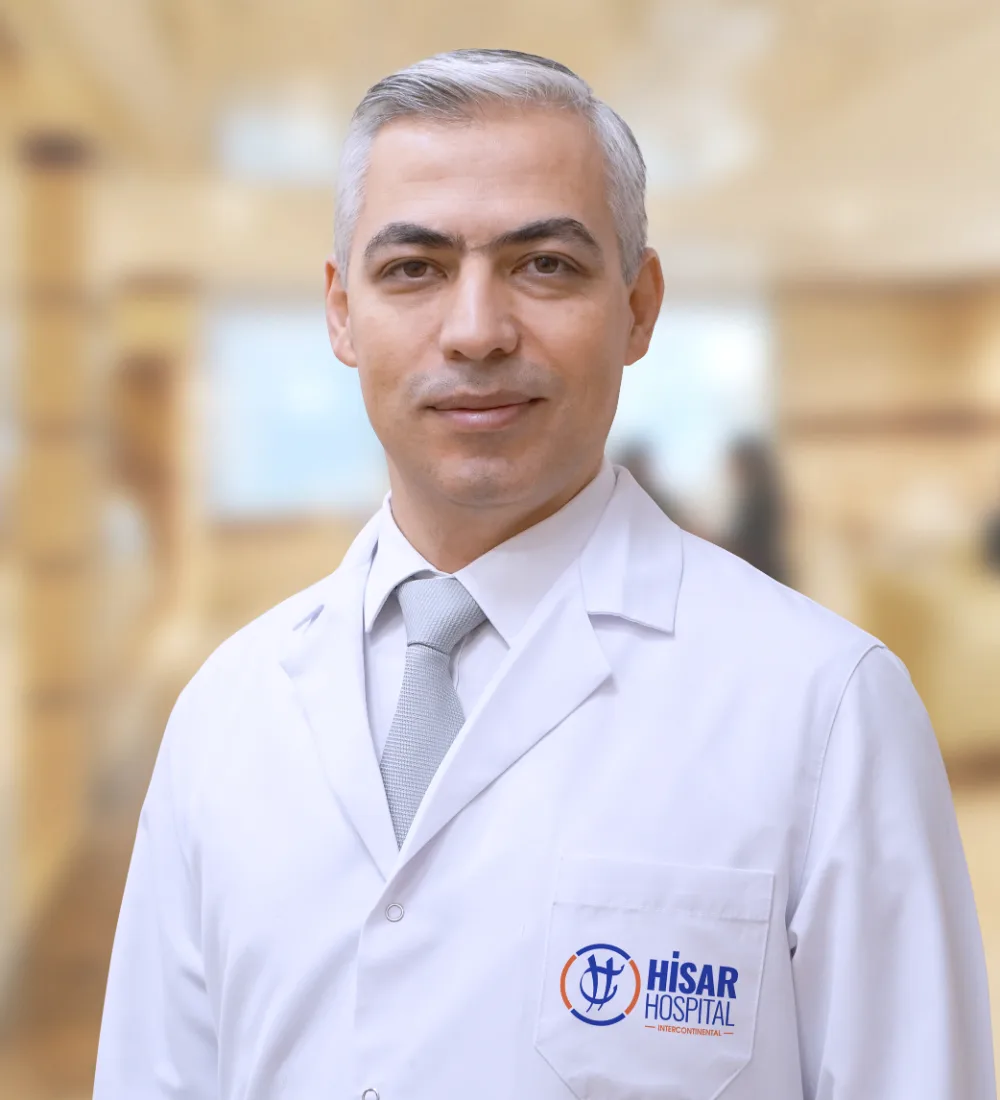 Assoc. Prof. Dr. S. Hilmi AksoyInterventional RadiologyReview date: 02 November 2026
Contact
Fixed and Removable Prostheses Department — Get in Touch
Fill out the form with your questions; our team will call you back as soon as possible.
The Hisar Hospital Web and Medical Editorial Board contributed to the development of this content. All content on this website is provided for general informational purposes only. Please consult a physician for the evaluation, diagnosis and treatment of your condition.
Last Updated: