

Vascular Diseases
What Are Vascular Diseases? Venous Diseases (Veins): What Is Varicose Vein Disease? Two main venous systems responsible for carrying blood upward from our legs…
About the Department
The scope, approach and highlighted services of the department.
What Are Vascular Diseases?
Venous Diseases (Veins): What Is Varicose Vein Disease?
There are two main venous systems responsible for carrying deoxygenated blood upward from our legs. These systems, called the superficial and deep venous systems, are connected to each other by links called ‘perforators’. While arteries have a strong heart pump effect that drives blood flow forward, unfortunately veins have no such pressure support. Venous blood reaches the right side of the heart against gravity thanks to the movements of the muscles and the valves within the veins, together with the suction effect of the heart. When the structure of the vessels is disrupted by various factors, the vessels stretch and widen, and varices form. Varices are irreversible abnormal dilations of the veins. These vessels appear as blue, twisted swellings under the skin of the feet and legs, and complaints increase with standing and prolonged sitting. Varicose veins can be seen in 15‐20% of the male population and 30‐35% of the female population at various stages of life. As varices progress, pain and pressure complaints develop in the feet. Untreated advanced varices can lead to ulcers on the ankles.
Who Gets Varicose Veins?
- Genetics: The frequency of varicose veins is high in people with a family history of varicose veins.
- Pregnancy: Hormonal changes, excessive fluid retention and pressure from the baby during pregnancy can cause varicose veins. They may return to normal after pregnancy or sometimes become permanent. Repeated pregnancies can lead to permanent varicose vein disease.
- Standing for long periods and working while standing,
- Excess weight,
- Birth control pills,
- Smoking,
- Age: Varicose veins can occur at any age, but as age increases, the rate of varicose veins also rises.
- In women, varicose veins may appear during menstruation or may cause complaints only during these periods.
What Symptoms Do Patients with Varicose Veins Experience?
- They cause cosmetic discomfort.
- Pain and burning: Pain increases when standing or sitting for long periods.
- Edema: Depending on the stage of the disease, edema may initially be temporary and later become permanent.
- Infection: Superficial thrombophlebitis may develop. Pain, redness and tenderness increase.
- The risk of clot formation in dilated veins increases; these clots may cause pulmonary embolism.
What Are the Treatment Options for Varicose Veins?
Eliminating the risk factors that cause the disease, quitting smoking, losing weight, and taking measures to avoid prolonged standing and sitting are essential. In the early stages of the disease, preventive measures and compression stockings alone are sufficient. Medications that reduce edema and increase vascular tone may be used.
- Sclerotherapy: With this method, small, limited varicose veins are treated. A thin catheter is inserted into the vein and a chemical substance is injected. This substance must not leak outside the vein. Tissue necrosis may develop.
- Varicose Vein Surgery (Stripping): This is the surgical removal of the entire varicose vein. It can be performed under spinal or general anesthesia in an operating room. Apart from a small incision in the groin and at the ankle, no incisions are made, and the entire vein is removed from end to end. In addition, if there are local varices outside the main vein course, it may be necessary to treat them with incisions smaller than 1 cm. Patients may stay in the hospital for one night or be discharged on the same day. Return to work and normal daily life is possible after approximately 1 week. Wearing compression stockings for 3 months after surgery is recommended.
- Endovascular Ablation: This is varicose vein treatment performed through a catheter. A thin catheter inserted from the ankle is advanced into the varicose vein. Heat and laser energy are delivered, and the varicose vein is burned and sealed from end to end. This is a new method, and its long-term results are not yet definitively known.
- Removal of Local Varices Through Small Incisions (Pake Excision): This technique is applied when the main vein is normal and there are superficial local varices.
- Ulcers in the Feet Caused by Venous Insufficiency (Chronic Venous Insufficiency): The cause of these ulcers is usually problems in the deep veins. In these veins, due to a previously experienced clot or insufficiency of the deep venous valves, venous blood flow is directed from the deep veins toward the surface. The resulting increase in venous pressure can therefore lead to ulcers on the ankle. These ulcers may open and close repeatedly, or once opened, may never heal. Although some patients respond to long-term treatment with ointments and special dressings, the ulcers recur in a large group of patients. In this case, the connecting veins between the deep and superficial veins are eliminated through 1 cm incisions (with endoscopic assistance). After this operation, ulcers heal in 75‐80% of cases, and the likelihood of recurrence is low.
There are two main venous systems responsible for carrying deoxygenated blood upward from our legs. These systems, called the superficial and deep venous systems, are connected to each other by links called ‘perforators’. While arteries have a strong heart pump effect that drives blood flow forward, unfortunately veins have no such pressure support. Venous blood reaches the right side of the heart against gravity thanks to the movements of the muscles and the valves within the veins, together with the suction effect of the heart. When the structure of the vessels is disrupted by various factors, the vessels stretch and widen, and varices form. Varices are irreversible abnormal dilations of the veins. These vessels appear as blue, twisted swellings under the skin of the feet and legs, and complaints increase with standing and prolonged sitting. Varicose veins can be seen in 15‐20% of the male population and 30‐35% of the female population at various stages of life. As varices progress, pain and pressure complaints develop in the feet. Untreated advanced varices can lead to ulcers on the ankles.
Author
Web and Medical Editorial BoardReviewed by a specialist
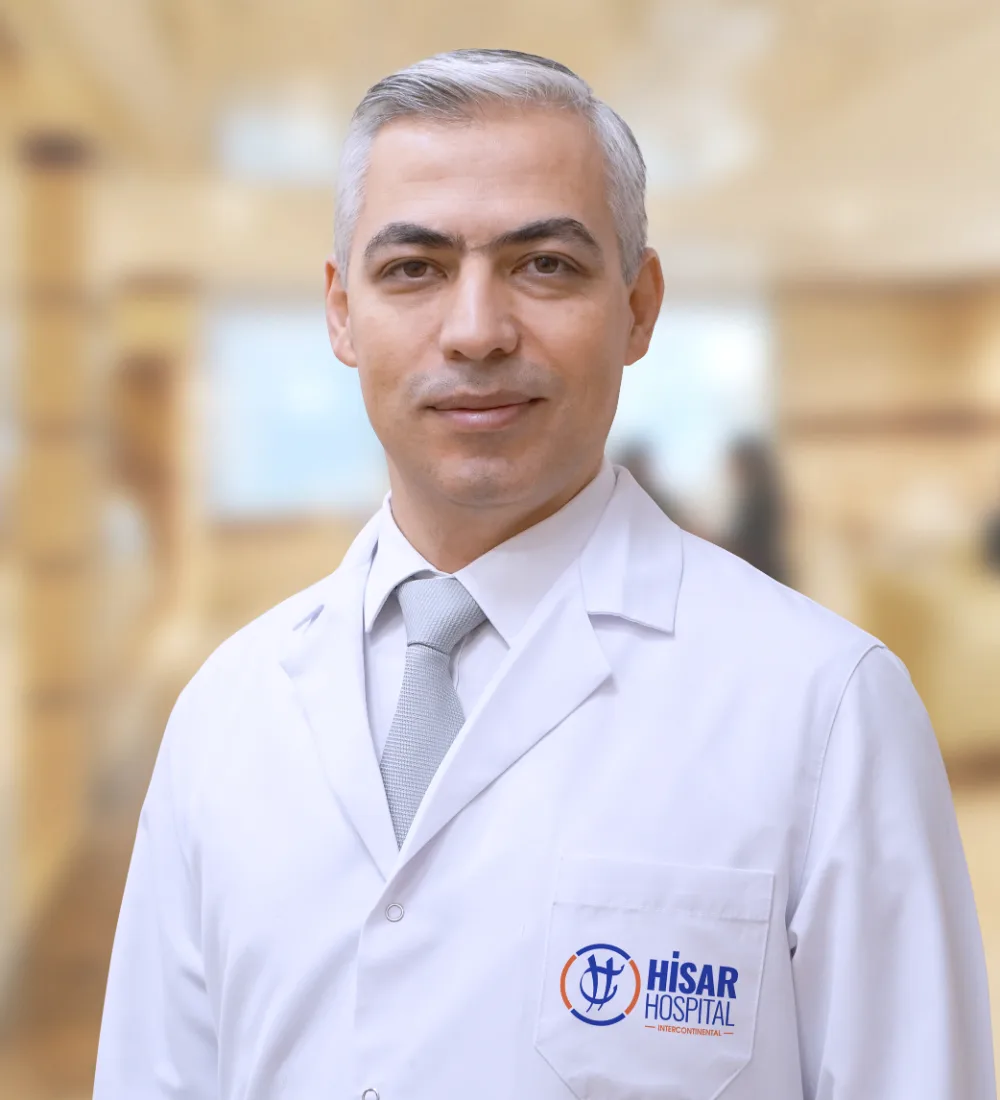 Assoc. Prof. Dr. S. Hilmi AksoyInterventional RadiologyReview date: 02 November 2026
Contact
Vascular Diseases Department — Get in Touch
Fill out the form with your questions; our team will call you back as soon as possible.
The Hisar Hospital Web and Medical Editorial Board contributed to the development of this content. All content on this website is provided for general informational purposes only. Please consult a physician for the evaluation, diagnosis and treatment of your condition.
Last Updated: