

Nose Aesthetics (Rhinoplasty, Nasoplasty)
Nose aesthetics is at the top of the list of cosmetic surgeries performed in Turkey. Along with the increase in cosmetic surgeries, there is also a serious rise in nose aesthetic surgeries…
About the Department
The scope, approach and highlighted services of the department.
Nose aesthetics is at the top of the list of cosmetic surgeries performed in Turkey. Along with the increase in cosmetic surgeries, there is also a serious rise in nose aesthetic surgeries. Although they are performed very frequently, rhinoplasty surgeries are among the most difficult cosmetic operations.
The main goals are to achieve lasting, good and aesthetic results, to resolve an existing breathing problem, or to prevent a breathing problem from developing later
In our daily lives, when we come face to face with people, the area that draws the most attention is the nose, located in the very center of the face. The nose is a very important organ aesthetically, and it is extremely important both aesthetically and for health, as it performs the functions of breathing, smelling, humidifying and warming the inhaled air, filtering foreign particles from the inhaled air, and giving our voice its unique character. Following nasal trauma sustained later in life, or genetically, deformities of the nose's shape, curvature or narrowing may occur. Shape deformities can affect normal functions such as breathing and sleeping, and they can also create situations or feelings such as feeling that someone is examining your nose while speaking with you, feeling that your nose is ugly and not in harmony with your face, and the need to frequently examine your nose in the mirror throughout the day. These situations and thoughts can cause serious loss of time, lack of concentration and unhappiness in daily life. As perceptions of normality and beauty change and develop, the demand for rhinoplasty surgery is increasing. The nasal tissue consists, externally, of the skin, the nasal bones where it joins the forehead area, and the cartilages that give shape to the tip; and, internally, of the 'septum', a cartilage-bone structure that provides support to the nose, as well as the mucosal lining. Various disorders may occur due to problems in these structures, and the surgical plan is made according to the structure where the deformity is located.
- If there is a shape deformity of the external part of the nose, the 'rhinoplasty' surgery, performed purely for aesthetic purposes,
- If there is a problem with the septum on the inside, the more functional 'septoplasty' surgery, aimed at correcting breathing problems,
- If the nasal wings stick together during breathing and cause a breathing problem, 'nasal valve' surgery,
- If there is enlargement of the concha tissues inside the nose, commonly referred to as 'flesh', causing breathing difficulty, 'nasal concha surgery',
- If there is a hole through the septum from one side to the other, 'septal perforation repair' is performed.
When internal nasal problems and external appearance problems are evaluated together, these surgeries are performed in the same session
Since the structures of the nose are interconnected, a deformity in one affects the others as well. Like dominoes that fall by leaning against one another, many deformities are observed at the same time. Performing surgery while considering only a single structure may generally cause another deformity to come to the fore, or perhaps even worsen. For this reason, the inside and outside of the nose should be evaluated as a whole, and surgical treatment should be carried out as a whole in the same session. For example, a curvature on the outside of the nose is accompanied by a curvature in the septum cartilage inside. This curvature also frequently causes concha enlargement in the nostrils. In such a patient, 'septorhinoplasty and concha surgery' should be performed in the same session. In fact, correcting the external curvature alone is not possible without correcting the septum inside the nose.
Nose surgeries are performed 'open' or 'closed'.
- In open nose surgeries, an incision is made in the skin of the structure called the 'columella', which divides the nostrils into two from the outside, to reach the tissues inside the nose, and septoplasty or rhinoplasty surgery is performed. Since a suture will be placed in the columella area after surgery, there is a risk of scarring.
- In closed nose surgeries, the surgeon enters through the nostrils, makes incisions in the mucosa at certain points to reach the structures inside the nose, and performs the surgery. Since there is no incision or suture on the outside of the nose, there is no risk of scarring. For this reason, it is preferred more by patients.
The technique chosen for surgery varies according to the deformity in the patient, the patient's preference and the surgeon's experience
Although nose surgeries can be performed under local anesthesia, general anesthesia is generally preferred for patient comfort. Depending on the condition of the deformity, the surgery may last between 30 minutes and 2 hours. Although patients generally do not need to stay in the hospital after surgery, physicians and patients prefer the patient to remain under observation in the hospital for 1 night. The first problem patients experience after surgery is the inability to breathe through the nose due to the packs placed inside it, which can have various features. This leads to the need to breathe through the mouth and the development of a dry throat. Packs are important materials for reducing bleeding inside the nose and for providing support to the cartilage and bone structures. These packs remain in the nose for 1 to 7 days after surgery and are then removed. One of the dressings patients are most apprehensive about during postoperative follow-up is the removal of the packs. With the use of high-quality, lubricated packs, patients find that this process is not as bad as they feared. In patients who state that their breathing problems improved after the packs were removed, nasal congestion may be observed again within 1-2 days. Because the pressure-applying pack inside the nose has been removed, swelling and puffiness may develop in the tissues traumatized by the surgery, which may cause breathing difficulty. This swelling can take up to 4 weeks to subside.
After Surgery
Nausea, vomiting and pain are common conditions. A certain amount of discharge from inside the nose is also normal and is nothing to worry about. Infection and a condition called septal hematoma are complications that are seen so rarely they can almost be considered nonexistent. Depending on the amount of skin, cartilage and bone tissue corrected during surgery and the extent of the procedure performed, swelling and bruising may occur around the eyes and nose after surgery. Most bruising and swelling subside within 7-10 days. Patients can return to work within 1 week. However, swelling over the nose takes longer to resolve. It is worthwhile to discuss these details thoroughly with the surgeon who will perform the operation before surgery.
Especially in rhinoplasty surgeries, a cast is placed over the reshaped nose so that it holds a certain shape. This plaster, fixed to the face with tapes, is removed on the 7th day after surgery, and the dressing is applied with thin tapes. Patients are taught finger massage to reduce swelling and allow the tissues to settle. Ideally, the resolution of all swelling and the settling of the nose's shape takes a period of 6 months. After rhinoplasty surgeries, it is necessary to protect the nose area from all kinds of blows for at least 6 months. Just as excess is harmful and ugly in everything, in rhinoplasty surgeries it is necessary to avoid unnatural requests and procedures. Rhinoplasty surgeries that result in an excessively upturned tip or a small nose that does not match the facial structure are now undesirable outcomes. Instead, rhinoplasty surgeries that suit the patient's facial bone and skin structure, do not reveal that they are cosmetic surgery, do not give a standardized look as if produced by a single hand, and give a more natural appearance are recommended.
Will my nose droop after surgery?
This is one of the most frequently asked questions before cosmetic nose surgery. In rhinoplasty surgeries, excess cartilage and other tissues should not be removed and discarded. In particular, the septal cartilage inside, which provides nasal support, should be preserved, and where necessary, cartilage grafts should be used to support the tip of the nose. In this way, sagging of the nose tip is not seen, and a stronger nasal structure is created.
If you have had an unsuccessful nose surgery before
In patients who have no supporting cartilage structure left inside the nose, or whose nasal cartilages have been severely fragmented after serious trauma, it may be necessary to reconstruct the nasal dorsum, septum or other areas during rhinoplasty surgery using ear cartilage or rib cartilage. This decision is made before surgery, together with the patient, after evaluating the patient. Complications that may be seen over the long term after nose surgeries include septal perforation, intranasal adhesions, breathing difficulties, shape deformities, and the need for further surgery. Even with the best surgeons, a surgical touch-up may be needed after rhinoplasty surgeries, which are among the most frequently performed cosmetic surgeries in Turkey. Before surgery, detailed information should be given about the patient's wishes, what can be done surgically, and the surgical method that is appropriate for the patient's face. The patient's expectations should be carefully assessed to determine whether they are realistic. In this way, patient-surgeon communication improves, and the assessment of expectations from surgery and postoperative satisfaction is made better.
Nose aesthetics is at the top of the list of cosmetic surgeries performed in Turkey. Along with the increase in cosmetic surgeries, there is also a serious rise in nose aesthetic surgeries. Although they are performed very frequently, rhinoplasty surgeries are among the most difficult cosmetic operations.
Author
Web and Medical Editorial BoardReviewed by a specialist
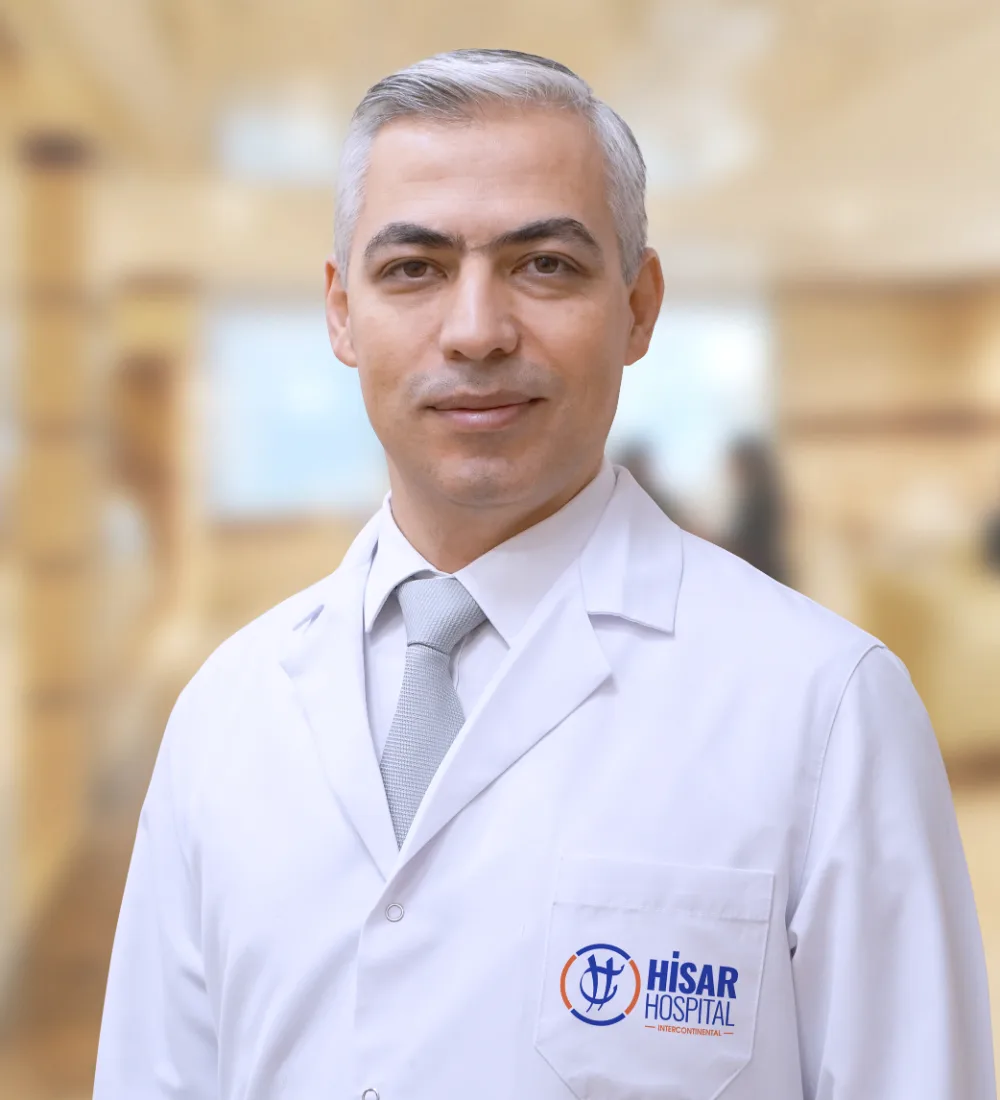 Assoc. Prof. Dr. S. Hilmi AksoyInterventional RadiologyReview date: 02 November 2026
Contact
Nose Aesthetics (Rhinoplasty, Nasoplasty) Department — Get in Touch
Fill out the form with your questions; our team will call you back as soon as possible.
The Hisar Hospital Web and Medical Editorial Board contributed to the development of this content. All content on this website is provided for general informational purposes only. Please consult a physician for the evaluation, diagnosis and treatment of your condition.
Last Updated: