

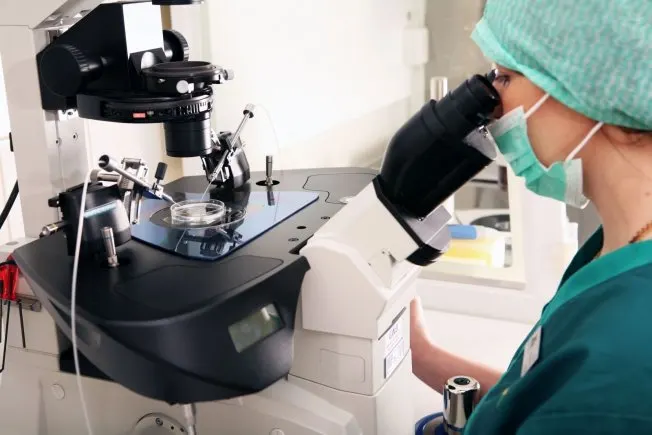
We spoke with infertility and IVF specialists about the ERA Method, one of the new techniques that increases the chances of success for families who want to have a baby through IVF…
What is the ERA Method?
The ERA Method, one of the new methods for increasing success in IVF treatment, is named after the initials of the words Endometrial Receptivity Assay. In this method, a small piece of the inner lining of the uterus is taken and subjected to genetic testing for more than 200 different genes, which determines the right time when the inner lining of the uterus is ready to receive an embryo. In this way, by transferring a good-quality embryo into the uterus at the right time, the chance of pregnancy is increased.
How is it applied?
We take a very small sample from the inner lining of our patient's uterus. We do not need to give general anesthesia to take this small sample. With local anesthesia and a mild sedative, we can easily obtain this small piece and send it for genetic analysis. The genetic analysis tells us whether the inner lining of the uterus is suitable to receive the embryo at that moment. And if it is truly suitable that day, we can schedule the transfer for the patient. For this procedure, we freeze and store the embryos. When a suitable date is determined, one month later, on that same day, we thaw the embryos and try to place them into the mother's uterus. Of course, the results that bring a smile to faces are important to us. Since it is a method accepted worldwide, we also apply the ERA Method in our clinic. The ERA Method is a new method that we can recommend to patients who have tried repeatedly and have not been able to become pregnant.
For which patients is it a suitable method?
In IVF treatment, transfers are performed on specific days so that the embryo can implant in the uterus, and the transfer date is approximately 5 days after the day of egg retrieval. If a patient has previously undergone IVF 3 times, and a total of 4 or more good-quality, healthy embryos have been transferred during these three attempts, and she still has not become pregnant, this is an important problem for us. We are able to create embryos and place them in the uterus, but they simply do not implant. In that case, we think there is a problem originating not from the embryo but from the uterus. At this point, the ERA Method comes into play. The main purpose of the method is to measure on which day the uterus can accept the embryo. With this method, we have seen that we can achieve pregnancy in some of our patients who have undergone IVF repeatedly without being able to conceive.