What Is TAVI Surgery? What Is the TAVI Method?
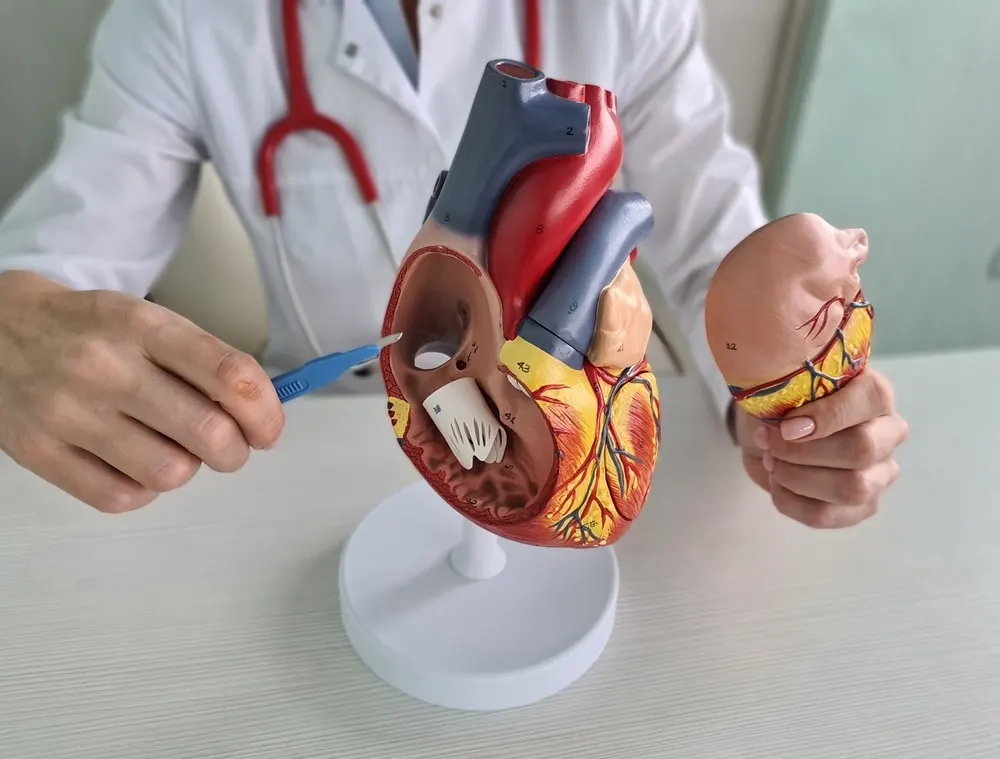
The largest vessel that carries oxygen-rich blood to the human body is the aorta. Blood coming from the heart reaches this artery by passing through the aortic valve. If there is a condition that prevents the aortic valve from opening adequately, blood cannot pass from the heart into the vessel in sufficient amounts. In this case, the heart has to work harder and the body cannot receive enough blood. As a result, various symptoms develop in the patient. Aortic valve stenosis, which poses a life-threatening risk, requires replacement of this valve to be corrected. One of the procedures that can be performed surgically or minimally invasively is the TAVI method. With the TAVI method, the patient's aortic valve is replaced through a minimal incision.
What Is the TAVI Method?
The TAVI method is called transcatheter aortic valve replacement. The aortic valve is the valve located between the left ventricle (the lower left chamber of the heart) and the main artery, the aorta, which regulates blood flow. The TAVI method is also a minimally invasive procedure applied to replace the patient's aortic valve in case of a problem with the valve. Aortic stenosis is a condition that adversely affects the vital functions of the person. Narrowing of the aortic valve reduces blood flow to the body and causes various symptoms in the patient. These symptoms are:
Shortness of breath when not physically active
Chest pain
Fainting
Extreme fatigue
Dizziness
TAVI restores blood flow and relieves the symptoms that occur when the valve is problematic. It is a preferred method especially in people who may develop complications if heart valve replacement is performed surgically. However, this method cannot be used in every patient. If a person has an aortic valve problem, various examinations are performed to determine suitability for TAVI.
The function of the aortic valve is to control the flow of blood from the heart to the body. If the valve hardens, it causes aortic stenosis and not enough blood can be pumped to the body. To correct this, the heart begins to work harder and heart failure develops. For this reason, the aortic valve needs to be replaced. With TAVI, the aortic valve that is not performing its function is replaced with an aortic valve made from animal tissue. This valve can be placed in the patient's aorta minimally invasively through a small incision.
Transcatheter aortic valve replacement has some benefits for the patient compared with other methods. These are:
Improvement of heart function
Disappearance of symptoms
Less pain than other methods
Minimal scarring
Rapid recovery
Short hospital stay
Improved quality of life
Who Is the TAVI Method Applied To?
When the aorta, the artery that carries oxygen-rich blood to the body, does not work properly, it causes various problems. Aortic valve stenosis, one of these problems, occurs when the valve thickens. Because the valve cannot open fully due to this thickening, insufficient blood flow occurs. This condition can be treated with transcatheter aortic valve implantation. The conditions in which the TAVI method is applied are:
Severe aortic stenosis
Aortic valve not functioning properly
People for whom open surgical heart valve replacement is risky
TAVI is a treatment method preferred especially for people who cannot undergo open heart surgery. Conditions in which open valve surgery is risky are:
Old age
History of previous heart surgery
COPD
Liver and kidney disease
Diabetes
History of stroke
Weakness of the heart
The patient's suitability for the TAVI procedure must definitely be evaluated. Although this method was developed especially for people who cannot undergo open surgery, it can be used for every suitable person with a narrowed aortic valve. However, the doctor performs some tests on the person beforehand.
Blood tests: To determine the person's suitability for this procedure, a blood test must first be performed. Results such as red blood cell count and kidney and liver values are important in this test.
X-ray: Taking an X-ray of the person's chest is important for seeing the size of the heart. It also shows whether there is fluid accumulation in the lungs.
Electrocardiogram: ECG is used to evaluate the electrical activity of the person's heart. This test is performed by placing electrodes on the chest, arms and legs.
Transesophageal Echocardiogram: By placing an ultrasound probe into the esophagus, the chambers and valves of the heart are examined in detail. It also shows how blood flows through the heart.
Angiogram: If there is a blockage in the heart, an image of the blood vessels is taken to detect it.
Bypass Surgeries
In some people, the TAVI method is not appropriate. If the tests show this result, bypass treatment, another minimally invasive method, may be considered. In particular, people over 65 years old with a narrowed aortic valve and no blockage in their coronary arteries are suitable for bypass.
Valve Surgeries
In open valve surgery, the person's chest is opened and the aortic valve is replaced. During this process, the person is connected to a machine to keep blood flowing in place of the heart. However, open surgery is not suitable for every patient. It also involves more complications compared with minimally invasive methods.
How Is the TAVI Method Performed?
If it has been decided to apply the TAVI method, the person first needs to be prepared for this procedure. Complete information about the medications the person uses and the diseases they have must definitely be given to the doctor. Then it is decided by which route TAVI will be applied. These routes are:
The heart can be reached through the femoral artery, an artery in the groin or thigh.
When the femoral artery is narrow or damaged, the chest blood vessels are used.
The heart can be reached through the aorta via the large vessel called the vena cava, located in the abdomen. This procedure is preferred in people whose other vessels are narrower.
The heart can be reached through the vessel located under the collarbone. This option is suitable for people who have previously had heart surgery.
Rarely, a catheter is placed through the vessel route from the thigh to the heart.
On the day of the procedure, a sedative or a medication that prevents blood clotting may be given to the person through a vein opened in the hand or arm. After general or local anesthesia is given to the person, the procedure begins. During this procedure, which generally lasts around 1-2 hours, a catheter, which is a hollow tube, is used. The area of the body where the vessel to be used for catheter entry is located is cleaned. An incision is made in the cleaned area, and the catheter is placed into the vessel through this incision.
The catheter is advanced through the vessel until it reaches the aortic valve. At the same time, several other catheters are placed through a few other incisions to obtain images and ensure the procedures proceed correctly. A valve that can expand on its own is sent with the catheter that reaches the aorta. When this valve, that is, the new aortic valve, is placed in position, the functioning of the valve is examined with various measurements. If there is no problem, the catheters are removed from the person and the small incisions are sutured.
If unexpected complications develop after the procedure, the person should contact a healthcare facility as soon as possible. These complications are:
Bleeding from catheter wounds
Development of shortness of breath
Development of chest and head pain
Infection
Sudden weight gain
Swelling of the ankles
Dizziness and lightheadedness
When Does the Patient Return to Normal Life After the TAVI Method?
The person needs to stay in the hospital for a few days after TAVI. At the end of this period, discharge takes place if deemed appropriate. However, full return to normal life can take 2-3 months. To speed up this process, it is important to follow the doctor's recommendations and use the prescribed medications. The areas where the catheters were inserted generally heal within 1-2 weeks. Bruising during the healing of the incision wounds where the catheter was placed is a normal condition. During this period, the wound site should not come into contact with hot water, and chemical cleaners should not be applied. Also, showering should be avoided for the recommended period. Pain medications may be prescribed to relieve pain that may occur during this period. Blood thinners are also among the medications that may be prescribed to eliminate the risk of blood clot formation on the heart valve.
After TAVI, the person generally becomes able to stand up within about 24 hours. However, a hospital stay of a few days may be needed for close monitoring. During this period, the functioning of the valve can be evaluated using techniques such as chest X-ray, ECG and echocardiogram. At discharge, the doctor may prescribe medication to the person and give lifestyle recommendations. These recommendations are:
Driving is not recommended for a while.
Heavy physical activity should be avoided for about 2 weeks.
Smoking should be avoided.
A healthier eating plan should be adopted by reducing salt.
A healthy weight should be maintained.
Regular physical activity should be done.
This method, applied especially to people in whom open aortic valve surgery cannot be performed, is suitable for most patients diagnosed with aortic valve stenosis. However, this suitability must definitely be confirmed with the tests performed. If the person is suitable for this procedure, TAVI can be performed through a minimal incision. At the same time, it is very important for the person to pay attention to their lifestyle after treatment. Time is also needed for the body to adapt to the foreign aortic valve and for the incisions to heal. If the doctor's recommendations are followed, recovery occurs in a short time. However, as with every operation, there is a risk of various complications with the TAVI method. When these complications are noticed, contact with a healthcare facility should be made as soon as possible.