What Is Robotic Lung Cancer Surgery, How Is It Performed, and Who Is It Suitable For?
Surgery is the most effective treatment method in appropriate patients for lung cancer treatment. In recent years, a significant portion of these surgeries can be performed using robotic surgery, which means without opening the chest cage, through small incisions of a few centimeters. This method means less pain, a shorter hospital stay, and a faster recovery for patients.
In this article, we explain in plain language what robotic lung surgery is, how it is performed, its advantages, and which patients can undergo this procedure.
Robotic lung surgery is a minimally invasive (video-assisted) surgical method. The chest cage is not opened, and the ribs are not separated. Instead, a few small incisions of approximately 1–1.5 centimeters are made in the chest wall, and the surgery is performed via thin robotic arms inserted through these incisions.
It is important to emphasize an essential point here: the surgery is performed by the surgeon, not the robot. The robotic system is an advanced tool that transmits the surgeon's hand movements to the surgical site with extreme precision. Every movement and every stage of the surgery is under the control of the surgeon.
How does the robotic system work?
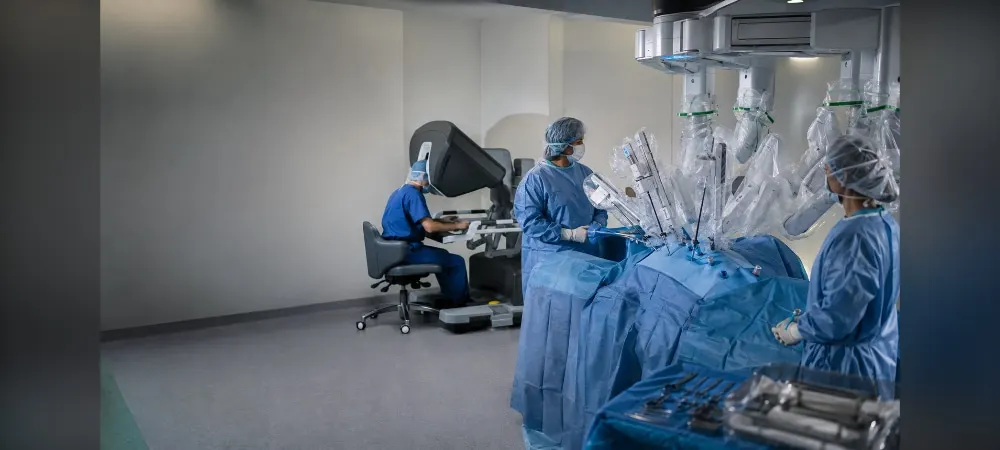
The system consists of three parts: the console where the surgeon sits, the robotic arm unit standing next to the patient, and the imaging system. The surgeon sits at the console right next to the operating table and directs the arms from here. One of the robotic arms carries the camera, while the others perform tissue grasping, cutting, and dissection. At the head of the operating table, a second surgeon assists the primary surgeon.
The main advantages this system provides to the surgeon are:
• Three-dimensional and magnified view: The surgical area is viewed, magnified dozens of times through a dual-camera system that provides a true sense of depth. This allows blood vessels, nerves, and lymph nodes to be distinguished very clearly.
• Instruments moving like a human wrist: The tips of the robotic arms can rotate at much wider angles than the human wrist. This provides the opportunity to work comfortably in the narrow and hard-to-reach areas of the thoracic cavity.
• Tremor filter: Natural and very minor hand tremors present in everyone are completely filtered out by the system. It is possible to work with millimeter precision around critical structures such as vessels and nerves.
• Ergonomics: The surgeon performs the operation sitting down rather than standing. This contributes to maintaining concentration and hand precision during long and complex surgeries.
What is the difference from open surgery?
In traditional open lung surgery, an incision exceeding 20 centimeters is made on the chest wall, and the ribs must be spread apart to reach the lung. In the robotic method, only a few small incisions are used, and the ribs are not stretched. This is the main reason why postoperative pain is significantly lower, because a significant portion of the pain stems from pressure on the nerves between the ribs.
The difference between the robotic method and video-assisted thoracoscopic surgery (VATS), which is another minimally invasive technique, is that it offers the surgeon a three-dimensional image, a wider range of motion, and tremor-free precision. Both methods are successfully applied today; the choice of which method to prefer is decided based on the characteristics of the patient and the tumor.
How Is Robotic Lung Surgery Performed?
Preoperative preparation
Before the surgery, your heart and lung capacity are evaluated in detail. For this, a PET-CT, a brain MRI if deemed necessary, and pulmonary function tests are performed. The entry points for the robotic arms are planned individually for each patient depending on the location of the tumor. The decision for surgery is made in an oncology council where specialists from different branches evaluate the case together.
Things you should pay attention to while preparing for surgery:
• Inform your doctor about all the medications you use. Blood-thinning medications may need to be stopped approximately 5–7 days before the surgery; make sure to do this with your doctor's approval.
• Quit smoking. Smoking both increases anesthesia risks and delays wound healing. It is recommended to completely quit smoking and alcohol at least one week before the surgery.
• Stop eating and drinking 6–8 hours before the surgery; your stomach must be completely empty.
• Taking a shower with the recommended antiseptic soap the night before the surgery helps reduce the risk of infection.
What happens during the surgery?
The surgery is performed under general anesthesia; you will not feel anything throughout the procedure. After the appropriate positioning is given, small incisions of 1–1.5 centimeters are made on the chest wall, and thin channels called "ports" are placed through these incisions. The camera and surgical instruments are connected to the robotic arms through these channels.
The surgeon performs the procedure by directing the robotic arms with hand and finger movements made from the console. The diseased lung section (mostly a lobe) and surrounding lymph nodes are removed with minimal damage to healthy tissue. The removed tissues are taken out by slightly enlarging one of the incisions.
When the procedure is completed, the robotic arms are withdrawn, a drain (a thin tube) is placed in the thoracic cavity to allow air and fluid to drain, and the incisions are closed. This drain is usually removed within a few days.
Although the duration of the surgery varies depending on the patient's anatomy, and the location and size of the tumor, it generally takes between 1.5–3 hours.
The first days after surgery
After waking up, your pain is controlled with regular painkillers. Getting up and walking early is encouraged; this helps the lungs expand faster and prevents unwanted conditions such as blood clots. Regularly performing the breathing exercises taught to you speeds up recovery. Most patients are discharged within 2–4 days after surgery.
Advantages of Robotic Surgery
The benefits provided by the robotic method manifest themselves both during the surgery and in the postoperative recovery period.
Less pain
Since the ribs are not spread and pressure is not applied to the nerves, postoperative pain is significantly less compared to open surgery. Pain is usually felt at the incision sites and is easily controlled with painkillers. Having less pain also means you can get up and move around earlier.
Less bleeding and lower risk of complications
Thanks to the precise dissection of tissues, blood loss during surgery is low. Small incisions reduce the risk of wound infection. The three-dimensional and magnified view also lowers the possibility of causing unintended damage to healthy tissues.
Short hospital stay and rapid recovery
Patients are usually discharged within 2–4 days; this duration is significantly shorter compared to open surgery. Return to daily life is also accelerated thanks to minimal tissue damage. Most patients return to their normal activities, work, and social life within a few weeks. The exact duration varies depending on the scope of the procedure performed and the person's general condition.
Oncological adequacy
The goal of robotic surgery is not just a smaller incision. In appropriate patients, the tumor and surrounding lymph nodes can be removed just as completely with this method as in open surgery. In other words, the effectiveness of cancer treatment is not compromised; what is gained is achieving the same oncological outcome with a much more comfortable process for the patient.
Cosmetic outcome
Instead of a large surgical scar on the chest wall, only a few small scars remain.
Who Can It Be Applied To?
Robotic surgery can be applied to the majority of patients planned for minimally invasive lung surgery. However, it may not be the ideal option for every patient. The decision is made on a patient-specific basis by an experienced thoracic surgery team and oncology council, evaluating imaging and test results together.
Stage of the disease
Patients with early-stage (Stage 1 and Stage 2) lung cancer are the most suitable group for robotic surgery. In these stages, the tumor is in a limited area and is easier to remove completely.
Robotic surgery can also be considered in selected Stage 3 patients. In these patients, chemotherapy or immunotherapy is usually administered first, and then surgery is planned after re-evaluation. For Stage 4 patients, surgery is not a suitable option except in very special circumstances.
Tumor size and location
Small tumors located in the outer regions of the lung are the most suitable for robotic surgery. In such small tumors, sometimes only the relevant lung segment is removed instead of the entire lobe, preserving more healthy lung tissue.
Surgery becomes technically difficult in cases where the tumor is very close to the main bronchi or large vessels or has progressed to surrounding structures. Although the maneuverability of the robotic system helps overcome some of these difficulties, open surgery may be a more accurate choice for safety in some patients. In addition, a surgery started as minimally invasive can be converted to an open method for safety reasons when necessary; this is not a complication, but a planned decision prioritizing patient safety.
Your general health condition
Patients who have no obstacles to receiving general anesthesia and are in a condition to handle the surgical process can be candidates for this method. For patients with excess weight, the minimally invasive method can offer some advantages over open surgery. On the other hand, different treatment approaches may be more appropriate for patients with advanced heart or lung failure. Therefore, each patient is evaluated in detail on an individual basis.
Frequently Asked Questions
Does the robot perform the surgery?
No. The entire surgery is under the control of the surgeon. The robotic system does not make any movements on its own; it merely transmits the surgeon's hand movements to the surgical area with great precision.
How long does the surgery take?
It is generally completed between 1.5–3 hours. The duration varies depending on the location and size of the tumor and the scope of the procedure to be performed. Since setting up the robotic system takes extra time, the total duration may be slightly longer compared to open surgery; however, this situation does not negatively affect the recovery process.
Will I have pain after surgery?
Some pain is expected, but it is much less compared to open surgery. Pain is usually felt at the incision sites and is easily controlled with painkillers in the first days. In most patients, it decreases significantly within a few weeks.
How many days will I stay in the hospital?
Most patients are discharged within 2–4 days. Since the chest cage is not opened, this duration is significantly shorter compared to open surgery. The exact duration varies depending on the scope of the surgery and your recovery speed.
Can it be applied to every lung cancer patient?
No. It is a very suitable method, especially in early-stage patients. In very large tumors or those located close to major vessels and bronchi, the surgeon may prefer open surgery, keeping safety at the forefront. The appropriate method is decided by evaluating the characteristics of the patient and the tumor.
Is chemotherapy required after surgery?
This is determined based on the pathology results of the tissue and lymph nodes removed during surgery. The oncology council, which includes medical oncology and radiation oncology specialists, decides whether additional treatment is needed. The fact that the surgical method used is robotic does not directly change the need for additional treatment.
Is robotic surgery safe?
Robotic surgery is a widely applied method worldwide and supported by scientific studies. When applied with appropriate patient selection and an experienced team, it yields reliable results. However, as with any surgical intervention, there are risks such as bleeding, infection, or air leakage. Your doctor will explain the risks and benefits specific to you in detail before the surgery.
In summary
Robotic surgery allows lung cancer surgery to be performed without opening the chest cage, through small incisions in appropriate patients. While offering less pain, a shorter hospital stay, and a faster recovery, it does not compromise the goal of complete tumor removal.
If you have been diagnosed with lung cancer, discuss in detail with your thoracic surgeon which surgical method is most appropriate for you. When applied in the right patient, at the right time, and with an experienced team, surgery is the most effective step in lung cancer treatment.