ETS Surgery
Excessive Sweating Surgery (Endoscopic Thoracic Sympathectomy)
Although excessive sweating (hyperhidrosis) may seem medically harmless, it is a condition that can seriously affect daily life, social relationships, and professional life. For excessive sweating in the hands, underarms, and facial area, there is a surgical method that can offer a permanent solution when other treatments do not provide an adequate response: ETS surgery.
In this article, we honestly explain what ETS surgery is, who it is suitable for, how it is performed, and—just as importantly—its potential side effects. Our goal is to provide you with everything you need to know before making a decision.
ETS, which stands for Endoscopic Thoracic Sympathectomy, is a surgery in which the nerve transmission that leads to excessive sweating is stopped using a closed (minimally invasive) method. It is also commonly known as "hand sweating surgery."
Our body has an involuntary nerve network: the sympathetic nervous system. It controls functions such as heart rate, blood pressure, and sweating. The sympathetic nerve chain runs along the chest cavity on both sides of the spine. In people with excessive sweating, these nerves send more signals than normal. In ETS surgery, the nerve level carrying the sweating signal to the hands or underarms is targeted, and this transmission is interrupted.
How is the surgery performed?
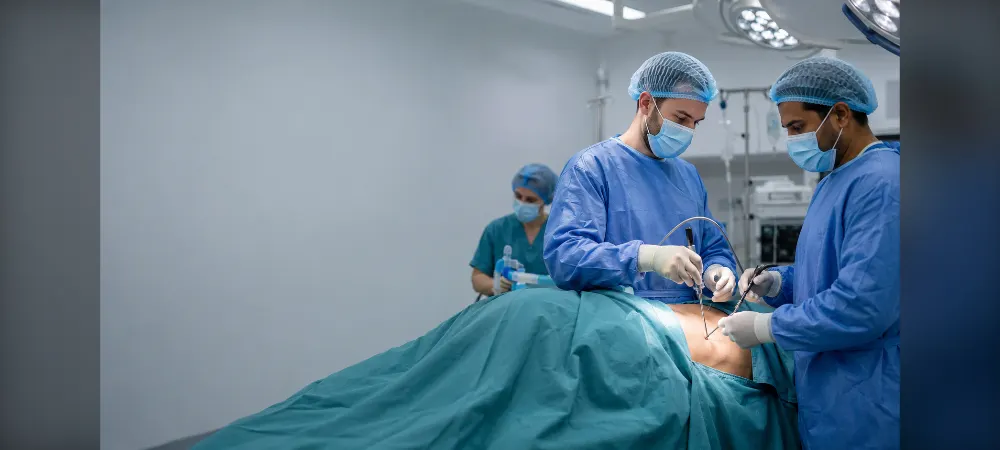
The procedure is performed under general anesthesia and using a completely closed method. A single incision of approximately 1 centimeter or two 0.5 cm incisions are made in the underarm, and a thin instrument with a camera at the tip is inserted into the chest cavity. The sympathetic nerve chain is clearly displayed on the screen, and the transmission is interrupted at the targeted level. Both sides are treated in the same session.
Three techniques can be used to stop the transmission: cutting the nerve, cauterizing it, or compressing it by attaching a titanium clip. Today, the clipping technique is the most preferred method.
The surgery itself usually takes 10–15 minutes; the total time, including anesthesia preparation and the recovery period, is between 30–60 minutes. The effect begins immediately: the vast majority of patients notice that their hands are dry when they wake up from surgery.
In which areas is it effective?
The success of ETS varies significantly depending on the area of sweating:
• Hand sweating (palmar hyperhidrosis): This is the condition where ETS is most effective and shows the highest success rate. In the vast majority of patients, sweating in the hands is permanently eliminated.
• Facial sweating and blushing: A high rate of success is achieved. However, this group is the one that needs to be evaluated most carefully in terms of side effects; therefore, patient selection is particularly important.
• Underarm sweating: A significant reduction is achieved, but the results are not as complete as in hand sweating. This is because there are two different types of sweat glands in the underarm, and they are stimulated from multiple sources.
• Foot sweating: ETS is not a suitable method for foot sweating because the sympathetic nerves that go to the feet are located in the lumbar region, not in the chest. Although partial reduction in foot sweating is seen in some patients after ETS, this is not an expected result.
ETS can also be applied in some cases such as facial blushing and Raynaud's phenomenon, which is characterized by coldness, whitening, or blueness in the fingertips.
Who is it for?
ETS is not a surgery performed on everyone who has excessive sweating. To be a suitable candidate, it is expected that the sweating significantly affects your daily life and that you have not received sufficient benefit from non-surgical treatments.
How does excessive sweating affect daily life?
Excessive hand sweating usually begins during or before adolescence, and a significant portion of patients have a similar history in their family. Situations such as avoiding handshakes, paper getting wet while writing, difficulty using phone and computer screens, and students' exam papers being damaged seriously lower the quality of life.
Facial sweating and blushing can lead to significant anxiety in social settings; the person may avoid public speaking, making eye contact, or entering crowded environments. Over time, this can lead to social avoidance behavior and loss of self-confidence. It is important to know that this is not a character trait, but the result of a treatable medical condition.
Non-surgical treatments should be tried first
ETS is not a first-line treatment. Before considering surgery, the following methods should be tried:
• Products containing aluminum chloride: Applied to dry skin before going to bed at night. It can be effective in mild to moderate sweating.
• Iontophoresis: Temporary suppression of sweat glands with a low-intensity electric current passed through water. It requires regular sessions.
• Botox injection: Temporarily blocks the nerve endings that stimulate sweat glands. Its effect lasts on average 6–12 months and needs to be repeated. It gives good results, especially in underarm sweating.
• Oral medications: Some medications that reduce sweating can be used in suitable patients.
If these treatments are not sufficient or if their constant repetition is not feasible for you, the surgical option comes to the agenda.
Who is it not for?
ETS is not suitable for those with serious heart or lung disease, those who have developed adhesions or thickening in the lung lining, those who have previously had chest surgery in the same area, and those with untreated thyroid disease. Since the surgery affects the sympathetic nervous system, individuals with a low resting heart rate also require further evaluation. Additionally, it must have been previously investigated that the sweating is not due to another underlying disease.
The Most Important Topic You Need to Know: Compensatory Sweating
This is the most critical issue you need to understand when deciding on ETS surgery. We recommend that you read this section carefully.
Compensatory (reflex) sweating is the increase in sweating in other parts of the body while the operated area dries out. It is most commonly seen on the back, chest, abdomen, waist, and legs. The reason for this is that the body shifts sweating to other areas to maintain its heat balance.
Compensatory sweating is not a rare side effect; it is an expected result. Although the incidence is reported in a wide range in published studies, it is accepted that it occurs to some degree in more than half of the patients; in some series, this rate is much higher. In most patients, it is mild and found tolerable alongside the comfort provided by dry hands. However, in a small group of patients, it can be severe enough to negatively affect the quality of life, and some patients may regret the surgery for this reason.
To reduce the risk, the procedure is currently performed at the lowest nerve level required. In particular, not including the upper levels (T2) in the procedure significantly reduces the risk of compensatory sweating. Your surgeon will plan which level to target based on your complaints.
When compensatory sweating develops, cotton clothing and topical products may be sufficient in mild cases. In more pronounced cases, oral medications that reduce sweating can be used and provide significant relief in many patients.
Can the surgery really be reversed?
The most discussed feature of the clipping method is that the clips can be removed if necessary. This is technically possible; however, we must be very clear here:
Removing the clips does not guarantee that the surgery will be reversed. The nerve may have suffered permanent damage during the time the clip was applied. After the clip is removed, compensatory sweating regresses in some patients, while there is no change in others. Furthermore, the procedure requires a second surgery, and the result tends to be better the earlier the clip is removed. For this reason, you should consider ETS not as a reversible procedure, but as a permanent decision.
Other Potential Side Effects and Risks
ETS is considered a safe surgery, and serious complications are rare. However, here are the possible situations you should know about:
• Excessive dryness in the hands: In some patients, the hands become drier than expected and may crack. It is controlled with regular use of moisturizer and adequate fluid intake.
• Slight decrease in heart rate: Since the sympathetic system is affected, there may be a slight decrease in resting heart rate. It is not noticed by most people; therefore, your heart rate is evaluated before the surgery.
• Air leak in the lung (pneumothorax): It is seen in a small number of patients and mostly resolves spontaneously; rarely, a chest tube may be needed for a few days.
• Horner's syndrome: A rare condition characterized by drooping of the eyelid and constriction of the pupil. It is usually temporary, but rarely it can be permanent. Today, this risk has been significantly reduced by performing the procedure at lower levels.
• Taste-triggered sweating: In some patients, sweating may be seen in the face and neck area, especially while eating spicy foods.
• General surgical risks: As with any surgery, there are risks of bleeding, infection, blood accumulation in the chest cavity, and risks related to anesthesia. These are rare in this surgery.
Post-Surgery Process
After the surgery, a control chest X-ray is taken to confirm that your lungs have fully expanded. Most patients are discharged on the same day; in some cases, you may need to stay in the hospital for one night or have a short-term chest tube inserted.
Pain is usually mild and easily controlled with painkillers. In the first few days, you may feel a stinging sensation in the chest area, mild pain radiating to the shoulder and back, or discomfort when taking a deep breath. These complaints significantly decrease in most patients within a few days; for some people, it may take a few weeks for them to pass completely.
It is recommended that you avoid heavy exertion for the first 24 hours. Most patients return to their daily lives within a few days and usually to their professional lives within a week. In the first few days, you may experience temporary heat and sweating sensation changes as your body's heat regulation adjusts to its new balance.
What is the long-term result?
In ETS performed for hand sweating, the result is permanent. Dryness in the hands begins immediately after surgery and continues for many years; the probability of sweating recurring is very low. In long-term follow-up studies, it is reported that the majority of patients are still satisfied years after the surgery.
The main factor determining satisfaction is the severity of compensatory sweating rather than the technical success of the surgery. Therefore, correct patient selection and having discussed expectations realistically before the surgery are the most decisive factors of the result.
Frequently Asked Questions
How long does the surgery take?
The procedure itself is usually completed in 10–15 minutes. Including anesthesia preparation and the recovery process, the total time is around 30–60 minutes. Both sides are done in the same session.
When does the effect start?
The effect starts immediately. Most patients notice that their hands are dry when they wake up from surgery. There is no need to wait.
Is the surgery painful?
Since general anesthesia is applied during the surgery, you will not feel anything. Afterward, there may be mild pain, stinging, or discomfort radiating to the shoulder in the chest area; these are easily controlled with painkillers and usually decrease within a few days.
Is the surgery permanent?
Yes. The result in hand sweating is permanent, and the probability of sweating returning is low. Likewise, you should consider that if compensatory sweating develops, it may also be permanent. Although the clipping method is theoretically reversible, it cannot be guaranteed that this reversal will be successful.
When can I return to work?
Most patients are discharged on the same day and start their daily activities within a few days. Returning to professional life is usually possible within 3–7 days; this period varies depending on the physical load of your job.
Will my foot sweating also go away?
ETS is not a method applied for foot sweating because the nerves that go to the feet are in the lumbar region. Although partial reduction in foot sweating has been reported in some patients after surgery, this is not an expected result; the surgery should not be decided for this purpose.
Are there patients who regret the surgery?
Yes, there are, albeit a small number, and the main reason for this is almost always severe compensatory sweating. The reason we clearly state this possibility is to ensure that you make your decision with complete information. Surgery is not recommended for people with mild sweating or those who have never tried non-surgical treatments; this surgery is suitable for patients whose quality of life has been significantly impaired and who have not benefited from other methods.
ETS surgery is an extremely effective and permanent solution, especially for excessive hand sweating. It is performed using a closed method, takes a short time, has little pain, and most patients return home on the same day. It provides a dramatic improvement in the quality of life in suitable patients.
However, it is a permanent decision, and its most common side effect, compensatory sweating, occurs to some degree in a significant portion of patients. For this reason, non-surgical treatments should have been tried before the surgery, and expectations should have been discussed in detail with your surgeon.
If excessive sweating is seriously affecting your quality of life, you can consult a Thoracic Surgery specialist to evaluate the options suitable for you.