

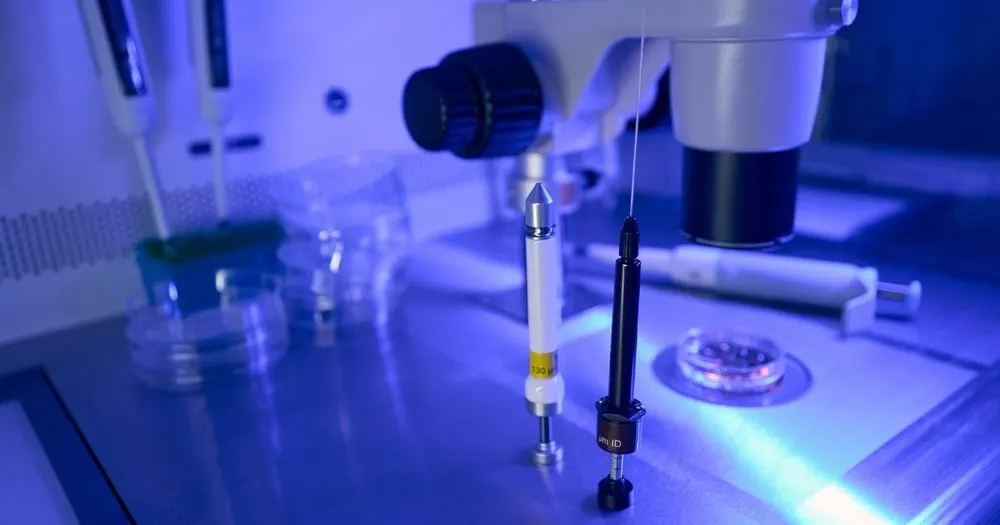
For couples who have not achieved pregnancy despite trying regularly for 1 year, the sperm microchip method may be a solution thanks to technologies developing in medicine. In IVF treatment, the sperm microchip method is a method recommended for patients who want to conceive but have not become pregnant for an extended period, or whose sperm quality or count is insufficient. With the rising rates of infertility in society, this treatment method allows fertilization to be performed by selecting high-quality sperm in the laboratory for couples who have wanted a child for years. In specialized IVF treatment centers, prospective mothers and fathers are monitored by the physician during procedures carried out under the guidance of experienced physicians and in adequate laboratory conditions. Through a one-on-one physician-patient relationship and special examinations, sufficient time is devoted to each couple so that they can feel confident in the process. The aim is to prepare sperm that are not of sufficient quality under natural conditions, that may carry genetic defects, that have limited motility, or that are small in number, so that they are ready for fertilization through selection in the laboratory. The inability to have children due to infertility is minimized with the sperm microchip method in IVF treatment.
How Is the Sperm Microchip Method Applied?
To better understand the sperm microchip in IVF (in vitro fertilization), it may help patients to know how fertilization normally takes place under natural conditions, in the mother's body. In a normal fertilization, at the moment of full penetration, the ejaculate (semen) released from the male body enters the female body through the vaginal opening. Millions of sperm in the semen enter the vagina and move rapidly toward the uterus. After sperm and egg fertilize, the embryo attaches to the uterus within a few days. However, fertilization does not occur in the uterus. Sperm also pass through the uterus and advance toward the fallopian tubes. The cells entering from the vagina decrease in number as they progress toward the fallopian tubes. Along this path, those with the greatest motility, that is, those of high quality, can continue as far as the tubes. At the final stage, in the fallopian tube, the highest-quality sperm is selected in the natural environment and gains the ability to fertilize the egg, preventing the chances of other cells. In the sperm microchip method of IVF treatment, too, fertilization in the female body is used as the model for selecting the highest-quality sperm.
The main purpose of the sperm microchip is not to achieve artificial fertilization. The aim of this procedure is to take a semen sample from male patients with poor sperm quality, select high-quality sperm in a culture medium, and separate those most suitable for fertilization. The process in which sperm migrate under normal conditions in the female body through the fallopian tubes toward the waiting egg cell, and the healthiest one gains the ability to fertilize, is carried out under laboratory conditions. In this sense, it can be said that with the sperm microchip technique, the sperm cells most likely to be successful and flawless for fertilization advance through natural selection. The aim of this system is to select the best-quality sperm cells with a more natural system resembling the moment of fertilization, instead of methods such as centrifugation. In this way, the number of cells iatrogenically damaged in the centrifugation method is minimized.
Before starting the procedure, a semen sample is first collected. To provide the sample, the patient must abstain for 48 hours. The semen is kept in a sample container at 37°C for 30-60 minutes for liquefaction. Liquefaction is a term frequently used in IVF treatment. It is the stage required for semen, which is thick when released from the male body, to be kept until it becomes more fluid. If liquefaction is not completed within 30 minutes, the semen may be kept for a while longer. The liquefied sample is taken and the patient's name is written on the chip. In the laboratory, labeling of samples is very important to avoid confusion. A quantity of semen is drawn into a syringe and slowly placed into the inlet hole of the chip. A special solution is then introduced through the inlet hole of the chip with a different sterile syringe. The prepared preparation is again kept at 37°C in a culture medium. The preparation is taken from an incubator that provides a sterile environment at 37°C. The prepared sperm samples are examined under a microscope for quality control. The high-quality sperm obtained through the successfully performed sperm microchip method can be used for insemination (the process of placing sperm into the female body).
As the name suggests, microchips contain micro channels. Sperm that successfully pass through the channels and collect at the outlet hole of the chip are ready for fertilization. Cells that accumulate in the channels and have limited motility are not placed into the female body.
Who Is Microchip IVF Treatment Applied To?
Abnormalities in the female and male body may cause infertility. According to population studies, infertility may be due to the prospective mother in 40% of cases and to the prospective father in 40% of cases. The remaining possibilities are due to causes that cannot be identified. The frequency of infertility in the population is 10-15%. For many couples, this unexpected situation can be corrected with various IVF treatments and the necessary treatments applied beforehand. If there are anatomical deformities in the reproductive system of the mother or father, surgical treatment may be considered before IVF.
In infertility treatment, treatment methods diversify with technological possibilities developing for both prospective mothers and prospective fathers. In particular, the microchip treatment frequently applied in clinics in recent times includes a system that selects high-quality sperm cells from the semen of men. For this reason, IVF treatment with the microchip is generally suitable for prospective fathers with poor sperm quality or insufficient sperm count. The microchip method cannot be applied to patients who produce no sperm at all (azoospermia). However, it is a treatment that can be applied to patients with a low sperm count. Before this treatment, the patient must undergo a detailed physical examination, evaluation of test results, and treatment planning according to their medical history. A spermiogram test, which measures sperm quality and count, is performed to determine the patient's sperm motility and the number of sperm in the ejaculate. The expected effect of the microchip is estimated according to this test result, and the procedure is planned accordingly.
What Are Its Advantages Compared to Other Methods?
In IVF treatment, the probability of pregnancy with the sperm microchip is considered higher compared to other methods. With the microchip, the margin of error is minimized under laboratory conditions and damage to cells is prevented as much as possible. Among other methods applied today, the swim-up technique, one of the most commonly performed, is also based on separating motile sperm. After a quantity of content from the semen sample is kept in a tube and liquefies, the motile cells settle to the bottom. During centrifugation of the obtained cells (the method of rotating tubes at high speed around their own axis so that heavy substances settle down), the likelihood of damage to high-quality cells also increases. Unintended damage caused during procedures performed with correct protocols in the laboratory environment is called an iatrogenic outcome. It is one of the most fundamental causes of repeated attempts and failure to achieve the desired result in IVF. With the sperm microchip method, the probability of cell damage is minimized.
For couples, the most essential requirements for examination, evaluation of the spermiogram test, IVF counseling, surgical treatment planning when necessary, and IVF treatment under laboratory conditions are support from an experienced physician in a specialized clinic. The presence of successful physicians trained in IVF at private clinics also positively affects the outcome of this treatment.
Is It Possible to Become Pregnant With the Sperm Microchip Method?
The number and quality of sperm obtained with the microchip method promise better results compared to other methods. In this way, it is possible to obtain sperm of high quality both morphologically and genetically and to increase the chance of pregnancy. With sperm obtained by microchip, the chance of selecting sperm cells with flawless DNA and the probability of forming a healthy embryo increase proportionally. Because sperm that are ready for fertilization with healthy DNA also increase the probability of zygote formation. In other words, the probability of becoming pregnant with the sperm microchip method in IVF treatment is much higher compared to other methods.
Frequently Asked Questions
Married men who are sexually mature, do not produce sufficient-quality sperm according to sperm tests, and want to have children are suitable candidates for the microchip method. Apart from legal regulations for IVF treatment in our country, the microchip method can be applied without restriction. Among the most important factors affecting sperm quality before and after applying the sperm microchip method in IVF treatment is nutrition. Food or medications taken with nutrition directly affect sperm quality. For the highest-quality semen sample for the microchip, attention should be paid to nutrition, and the medications taken should be entirely under the supervision of the physician performing the IVF treatment. Medications and vitamins may affect the process negatively or positively. However, these should be decided by a specialist physician, and the intake of medications and vitamins should continue in line with their recommendations. IVF treatment is a process in which prospective mothers and fathers are directly involved and which is carried out through joint decision-making with the physician. It is recommended that couples accept this process and get through it with confidence by choosing the right physician. In IVF treatment, the sperm microchip is among the methods that increase success in fertilization. If you are curious about this method, which has recently been applied easily and has a high impact on the chance of pregnancy, you can make an appointment right away to ask your questions and get examined.