If you are struggling due to chronic respiratory diseases, respiratory rehabilitation is a comprehensive treatment program designed to reduce this difficulty and make your daily life easier. Pulmonary rehabilitation increases your physical capacity and raises your quality of life by combining different methods such as exercise training, breathing techniques, and nutritional support. In this article, you will find answers to questions such as what respiratory rehabilitation is, how pulmonary rehabilitation is performed, and who undergoes pulmonary rehabilitation.
What is Pulmonary Rehabilitation?
Definition of Respiratory Rehabilitation
Respiratory rehabilitation is a treatment approach designed to improve the physical and psychological conditions of individuals with chronic respiratory diseases. The European Respiratory Society and the American Thoracic Society define this program as an evidence-based, multidisciplinary method for patients who are symptomatic and have restricted daily activities.
Planned specifically for each patient, this program complements standard medical treatment and increases patient compliance with the treatment. The program team includes specialists such as physicians, physiotherapists, respiratory therapists, nurses, psychologists, dietitians, and occupational therapists. This versatile approach addresses the emotional and social dimensions of the disease as well as its physical effects.
In other words, respiratory rehabilitation does not solely focus on improving lung function. Raising the patient's overall quality of life, increasing participation in daily activities, and developing coping skills with the disease are the main goals of the program.
Key Components of Pulmonary Rehabilitation
Pulmonary rehabilitation programs consist of multiple components and are organized specifically for each patient. The program duration typically ranges between 6-12 weeks and is applied 3-5 days a week.
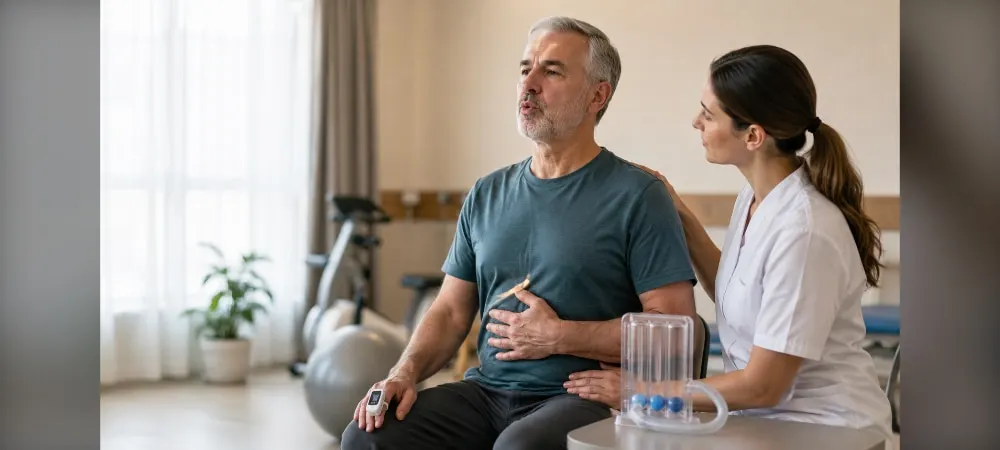
Exercise training is the most important element of the program. Activities such as walking, stationary cycling, and stair climbing strengthen leg muscles, while weights and elastic bands contribute to the development of arm muscles. Portable devices can be used for training respiratory muscles.
Patient and family education includes basic information about the disease. Proper use of medications, management of oxygen therapy, airway clearance techniques, and smoking cessation support are within the scope of this education. Topics such as preventing disease exacerbations and recognizing early symptoms are also covered.
Nutritional counseling evaluates the patient's body composition and provides proper nutritional recommendations. Maintaining energy balance and proper weight management gain importance at this stage.
Psychosocial support includes strategies to cope with anxiety and depression. Management of psychological issues, which can be seen especially in people with severe respiratory diseases, plays a critical role in increasing quality of life.
Breathing techniques are taught to reduce the sensation of shortness of breath. Controlled breathing methods, energy conservation techniques, and daily life modifications increase the patient's endurance.
Importance of Pulmonary Rehabilitation
Scientific studies strongly support the effectiveness of pulmonary rehabilitation. There is a high level of evidence regarding increased exercise tolerance, control of shortness of breath, and improvement in quality of life.
The benefits of the program are not limited to physical recovery alone. Reductions in hospital stay duration, decreases in healthcare expenses, and psychosocial gains are achieved. Additionally, the frequency of hospital admissions decreases and acute exacerbations are prevented.
Despite this, the number of patients benefiting from this treatment remains low due to a lack of information about pulmonary rehabilitation and difficulties in accessing programs. Especially in COPD patients, this program should be considered for all individuals whose symptoms persist despite optimal medical treatment and whose activities are restricted.
Goals of Pulmonary Rehabilitation
Respiratory rehabilitation programs are prepared in line with specific targets and customized according to each patient's condition. Reducing symptoms, optimizing functional status, and increasing participation in daily life are among the primary goals. Reducing healthcare-related expenses by reversing or stabilizing the systemic effects of the disease is also an important aim.
Improving Respiratory Functions
Improving respiratory functions is one of the primary goals of the program. By enabling patients to breathe more comfortably, shortness of breath symptoms are brought under control. Special exercises are applied to strengthen respiratory muscles, and by increasing the strength of these muscles, efficient functioning of the lungs is supported.
During the process of increasing lung capacity, regular exercises, deep breathing techniques, and aerobic activities are used. Thanks to increased oxygen uptake, endurance increases and shortness of breath decreases. Increases in forced expiratory volume and functional expiratory flow values are observed.
Additionally, it aims to clear airway obstructions and increase the elasticity of lung tissue. Patients' energy efficiency increases and impaired nutritional status is corrected. Correction of arterial blood gases is also among the program's contributions to respiratory functions.
Increasing Physical Capacity
An increase in exercise capacity is one of the most prominent results of pulmonary rehabilitation. Significant improvements are recorded in the 6-minute walk test distance. Increases in oxygen saturation values at the end of walking are also achieved.
Muscle strength and endurance increase, allowing patients to walk longer distances. Joints move better, relaxation is achieved, and patients feel stronger and more energetic. Heart function improves, and fatigue and shortness of breath decrease.
With upper extremity endurance and strengthening training, an increase is seen in arm activities. In selected patients, respiratory muscle exercises yield beneficial results, especially when applied together with general exercises. Improvement of peripheral muscle dysfunction and a decrease in dynamic hyperinflation during exercise are achieved.
Raising Quality of Life
Improvement in quality of life is one of the most important gains of pulmonary rehabilitation. An increase in health-related quality of life has been demonstrated with high levels of evidence. Decreases have been detected in the dyspnea score mMRC, CAT, and SGRQ tests.
A significant decrease is observed in COPD-related anxiety and depression. Improving the disease-related psychological state increases the general well-being of patients. The ability to perform daily activities more comfortably and participation in social life increase.
Furthermore, inpatient and outpatient programs provide improvements in quality of life and symptoms at the level achieved by pharmacological treatments, or even greater. The gains continue even after the rehabilitation programs.
Reducing Hospitalizations
A reduction in hospital admissions and hospital stay duration is achieved. Reducing disease exacerbations and the frequency of hospitalizations is an important goal of the program. Rapid recovery after exacerbations is ensured.
In a long-term follow-up study, 64 COPD patients were followed for 4 years, and the cumulative number of days spent in the hospital in the last year before pulmonary rehabilitation dropped from 529 (12 days per patient) to an average of 145, 270, 278, and 207 days in the following years (5 days per patient per year).
In patients who received early pulmonary rehabilitation after a COPD attack, a decrease in hospital admissions and mortality rates was achieved. Therefore, a reduction in health-related expenses and a drop in the number of days spent in the hospital are observed.
Who Undergoes Pulmonary Rehabilitation?
Pulmonary rehabilitation benefits a wide patient group. Individuals experiencing shortness of breath, feeling restricted in their daily activities, and having chronic respiratory disease with decreased exercise capacity can benefit from this program. Respiratory rehabilitation is also recommended for patients who frequently apply to the hospital or receive oxygen therapy.
COPD Patients
COPD is the most common indication for pulmonary rehabilitation. Characterized by shortness of breath, fatigue, and decreased exercise tolerance, this disease is a serious health problem with a high mortality rate. Pulmonary rehabilitation reduces shortness of breath, increases exercise capacity, and improves quality of life in COPD patients.
The effectiveness of the program has been proven in COPD patients at all stages. Everyone from patients with mild symptoms to advanced-stage patients can benefit. An outpatient rehabilitation program is especially recommended for patients with an MRC dyspnea score of 3-5 and functional limitation. Although there is a low level of evidence, it can also be applied in patients with an MRC score of 2.
This non-pharmacological approach, which helps improve lung function by strengthening respiratory muscles, corrects the physical and psychological conditions of patients. Rehabilitation applied within the first month after a COPD exacerbation reduces hospital admissions and accelerates early recovery.
Asthma and Other Respiratory Diseases
Pulmonary rehabilitation is also beneficial for asthma patients. These programs improve symptom control and increase exercise capacity. In asthma cases where asthma and COPD coexist or fixed airway obstruction has developed, it is appropriate to refer them to a rehabilitation program like COPD patients.
An increase in exercise tolerance, health status, and quality of life is observed in bronchiectasis, cystic fibrosis, and interstitial lung diseases. Significant benefits are also provided in diseases such as pulmonary fibrosis, pulmonary hypertension, and sarcoidosis. Similarly, individuals experiencing respiratory failure after tuberculosis and people with chest wall diseases benefit from the program.
Rehabilitation application in the pre- and post-lung transplant period provides improvement in exercise tolerance and a lower rate of perioperative complications. Additionally, it is recommended for patients who have lung involvement after COVID-19 infection and continue to have complaints of shortness of breath, fatigue, and restriction in daily living activities.
Patients Post-Lung Surgery
Rehabilitation is critically important for individuals who have undergone surgical intervention due to lung cancer and whose respiratory functions have decreased after thoracic surgery. Surgical procedures such as lobectomy, pneumonectomy, segmentectomy, and wedge resection directly affect the functional capacity of the lung.
Complications such as atelectasis, pneumonia, secretion accumulation, low oxygen levels, chest pain, and respiratory muscle fatigue can develop in the postoperative period. Physiotherapy and rehabilitation play a critical role in reducing these complications, preserving respiratory functions, and regaining functional capacity.
Current guidelines define physiotherapy as a treatment component that must be maintained uninterruptedly from before surgery until after discharge. It has been stated that in patients mobilized within the first 24 hours after surgery, the rate of postoperative pneumonia decreases by more than 50% and the length of hospital stay is shortened.
Neuromuscular Diseases
Individuals with neuromuscular diseases have problems starting with impaired airway clearance and progressing toward respiratory failure, first at night and then during the day. People experiencing respiratory failure due to muscle diseases such as ALS, MS, and myasthenia gravis benefit from the rehabilitation program.
Airway clearance techniques and the use of ventilatory supports prolong life expectancy in these patients. Therefore, respiratory physiotherapy has the potential to improve quality of life and reduce the frequency of hospitalization. The program is organized according to the individual needs of each patient and requires regular follow-up.
How is Pulmonary Rehabilitation Applied?
Respiratory rehabilitation, conducted by a multidisciplinary team, is applied under the coordination of specialists such as a chest diseases specialist, physiotherapist, nurse, dietitian, and psychologist. The program coordinator and medical director guide the team, understand patient needs, and perform appropriate interventions.
Initial Evaluation
A comprehensive evaluation is performed in the first stage. Medical history, smoking habits, current symptoms, and medications used are recorded in detail. Cardiac status is checked with a physical examination, chest X-ray, ECG, and echocardiography.
Respiratory function tests and arterial blood gas analysis determine lung capacity. Exercise tolerance is measured, nutritional status is evaluated, and quality of life questionnaires are applied. Tests such as the Hospital Anxiety Depression Scale are used for anxiety and depression screening. Additionally, daily living activities, occupational performance, and motivation level are examined.
Exercise Program
Exercise training is organized one-on-one or in groups. Aerobic exercises such as walking and cycling increase endurance. Resistance training strengthening arm and leg muscles makes daily activities easier. Lower extremity exercises are definitely included in every program.
Patients should do aerobic exercises at least 3 times a week. Sessions last 20-45 minutes and begin at an intensity level of 60-70% of maximum capacity. Pre- and post-exercise blood glucose monitoring is necessary for diabetic patients. If severe shortness of breath, chest pain, or dizziness develops, exercise is paused.
Breathing Techniques Training
Pursed-lip breathing provides more efficient oxygen uptake and prolongs the expiration period. Diaphragmatic breathing supports the effective work of respiratory muscles and reduces airway resistance. Rapid relieving breathing techniques are taught during acute respiratory crises.
Additionally, energy conservation techniques and positioning training to reduce shortness of breath are provided. Relaxation techniques and methods of using energy during daily activities are explained.
Nutritional Counseling
Excessive weight increases shortness of breath, while low weight causes muscle loss. Therefore, a personalized nutrition program is applied. Water intake of at least 2 liters per day is recommended, and salt and alcohol intake are limited.
Eating at frequent intervals with small portions is advised. Chewing food thoroughly alleviates diaphragmatic pressure. Consuming adequate protein and correct nutrients reduces the incidence of exacerbations.
Psychosocial Support
Strategies to cope with anxiety and depression are taught. Stress reduction techniques and panic control are included in the program. Progressive muscle relaxation techniques are applied. The patient's family and social support, and daily living activities are evaluated.
Program Duration and Follow-up
The program is applied for a period of at least 8 weeks (total 24 sessions). It is recommended that at least 2 sessions per week be directly supervised. Even if rehabilitation is continued after eight weeks, gains plateau at 12 weeks.
Thanks to tele-pulmonary rehabilitation programs, eligible patients can participate from their homes. Directly supervised and remotely monitored application models at home are available.
Frequently Asked Questions About Pulmonary Rehabilitation
Patients ask many questions about respiratory rehabilitation. The duration of the program, the type of exercise, and whether it can be applied at home are among the topics of curiosity. In this section, you will find answers to the most frequently asked questions about pulmonary rehabilitation.
How Long Does Pulmonary Rehabilitation Last?
The program duration varies according to each patient's condition. A treatment plan lasting 6-12 weeks is generally applied. In some patients, this duration may range between 1-3 months.
How many sessions will be done per week is also personalized. Most patients attend sessions 2-3 days a week. In some programs, exercising 3-5 days a week is recommended. Each session can last 2-4 hours.
Eight-week programs generally include a total of 24 sessions. During this period, at least 2 sessions per week must be done under expert supervision. For example, while some patients exercise at the center 2 days a week, they continue at home on other days.
Gains continue even after the program ends. Nevertheless, it is important to continue exercising regularly. Benefits are long-term in patients who maintain healthy living habits.
How Are Exercises Performed?
Different types of exercises are included in the program. Aerobic exercises increase heart and lung endurance. Walking and cycling fall into this category. Breathing exercises make breathing easier and develop lung capacity.
Strengthening exercises increase muscle strength. Special movements are done for the arms, legs, and shoulder region. Resistance training makes daily chores easier.
Exercises are organized according to the patient's capacity. It starts at a level of 60-70% of your maximum power. Intensity increases gradually over time. A program is recommended by the physician and guided by the physiotherapist.
Heart rhythm and oxygen levels are monitored during sessions. If you feel shortness of breath, chest pain, or dizziness, you must stop immediately. Experts prepare the most appropriate exercise plan for you.
Can It Be Applied at Home?
Yes, pulmonary rehabilitation can be done at home. The program is applied in a hospital, rehabilitation center, or at home. The most appropriate environment is chosen according to the patient's condition.
Different application models are available. There are center-based programs for patients receiving inpatient treatment in the hospital. Patients followed on an outpatient basis can participate in directly supervised or remotely monitored programs at home.
Thanks to tele-rehabilitation, eligible patients continue the program from their homes. In this method, experts monitor your exercises via video call. Therefore, you do not have to go to the center every day.
There are certain criteria for home application. Factors such as disease severity, age, additional health problems, and distance to the center are evaluated. The physician recommends the most appropriate option for you.
Are There Any Side Effects?
Pulmonary rehabilitation is a safe treatment method. Since the program is prepared personally, risks are minimized. Exercises performed under expert supervision are generally well tolerated.
Additionally, all vital signs are monitored during exercise. Heart rhythm, blood pressure, and oxygen levels are continuously checked. If any problem develops, intervention is made immediately.
Some patients may initially feel mild muscle soreness. This is a natural part of your body getting used to exercise. Pain usually passes within a few days.
The benefits of the program far outweigh the potential risks. A decrease in shortness of breath, an increase in physical capacity, and an improvement in quality of life are observed. Similarly, hospital admissions and stays decrease.
Pulmonary Rehabilitation in Summary
Pulmonary rehabilitation is a powerful treatment option for people living with chronic respiratory diseases. In short, it reduces your shortness of breath, increases your physical capacity, and makes your daily activities easier. The program is prepared specifically for you and guided by an expert team.
Therefore, if you are struggling due to COPD, asthma, or another respiratory problem, you should discuss pulmonary rehabilitation with your physician. Center or home application options are available. With exercise, correct breathing techniques, and nutritional support, your quality of life rises significantly. Gains are not physical only. Similarly, your mental health and social life also improve.