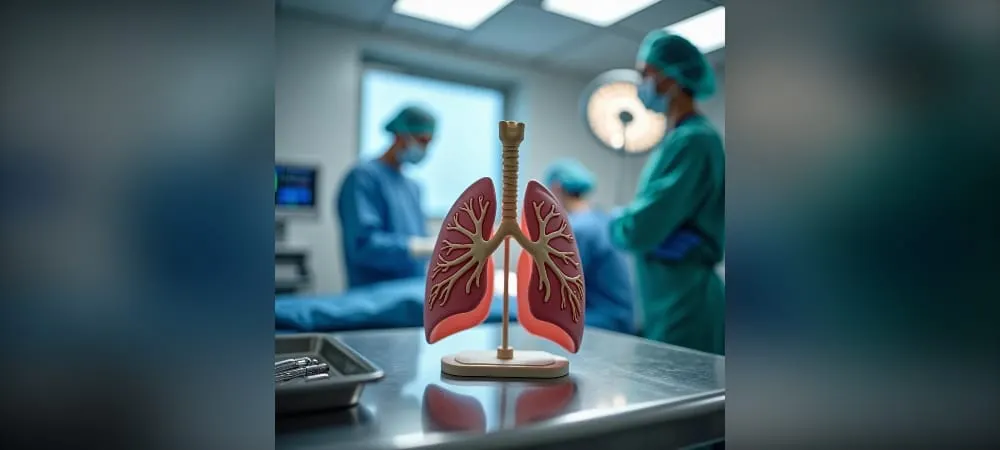
A pneumonectomy is a major surgery in which the entire lung is removed, unlike a lobectomy. While only one lobe of the lung is removed in a lobectomy, the entire lung is removed from the body in a pneumonectomy. This surgery is generally used in the treatment of lung cancer, but it can also be performed for bronchiectasis, tuberculosis, and other lung diseases. Life expectancy after a pneumonectomy is between 30-50% in early-stage lung cancer. In this article, you can find answers to questions such as what a pneumonectomy is, in which cases it is performed, and how the process progresses after a pneumonectomy surgery.
What Is a Pneumonectomy and How Is It Performed?
Definition of Pneumonectomy
A pneumonectomy is the surgical removal of an entire lung. This surgery is performed when lung cancer is centrally located or in cases of severe tissue damage where removing a single lobe is insufficient. Generally, the entire right or left lung is removed from the body.
This procedure requires the patient's respiratory and cardiac functions to be sufficient. Otherwise, the surgery cannot be performed. The empty chest cavity after a pneumonectomy first fills with air, and eventually, this air is replaced by fluid.
Differences from Lobectomy
The main difference between a lobectomy and a pneumonectomy is the amount of tissue removed. While a lobectomy involves removing only the diseased lobe, a pneumonectomy involves removing the entire lung. There are three lobes in the right lung and two in the left lung.
A lobectomy preserves respiratory functions better. However, if the tumor's spread is very close to the entry point of the lung or if all cancerous tissue cannot be cleared via lobectomy, a pneumonectomy becomes inevitable. If the tumor is located in the main airway or the major vessels leading to the heart, this procedure may be necessary to save the patient's life.
According to echocardiography studies, while a lobectomy does not lead to significant changes in both left and right heart functions and pressures, a pneumonectomy causes an increase in pulmonary artery pressure and right ventricular dilation.
Surgical Process
A pneumonectomy surgery usually lasts between 3 to 5 hours, depending on the complexity of the case and the surgical technique applied. Safely closing the main vessels of the lung and the bronchus is the most critical stage of the operation.
Different techniques can be applied during the surgery:
Standard Pneumonectomy: Removal of the entire lung along with the pleura and affected lymph nodes
Sleeve Pneumonectomy: Involves removing a portion of the bronchus along with the lung; preferred in cases where the tumor is close to the bronchus
VATS Pneumonectomy: A minimally invasive approach using small incisions and a camera, providing shorter recovery times
The surgery is generally performed using an open surgical method. An incision is made in the chest on the side where the lung will be removed. The surgeon carefully separates the muscles and tissues to reach the lung, then detaches the lung from blood vessels and airways to remove it. After the procedure, a chest tube may be placed to drain fluid or air accumulated in the chest cavity. The hospital stay ranges from five to ten days, and the first 24 hours are usually spent in intensive care.
In Which Cases Is a Pneumonectomy Performed?
Lung Cancer
Lung cancer is the most common reason for performing a pneumonectomy. This surgery is considered especially in patients diagnosed with non-small cell lung cancer. If the cancer is limited to a single lung and has not spread to other parts of the body, the surgery can be performed.
The location of the tumor is decisive in the decision for surgery. If the cancer is located close to the center of the lung, on the main airway, or on the major vessels leading to the heart, a lobectomy will not be sufficient. In this case, the entire right or left lung must be removed.
A pneumonectomy may be the next step for patients who have undergone chemotherapy or radiotherapy but have not shown improvement. Similarly, this method is preferred in cases where a smaller surgery cannot clear all cancerous tissue.
Bronchiectasis and Tuberculosis
Bronchiectasis is the permanent dilation and inflammation of the bronchi. Surgical intervention is required in patients whose symptoms persist despite medical treatment. According to research, the inadequacy of medical treatment constitutes the indication for surgery in 94.8% of patients.
Recurrent infections, copious purulent sputum production, and treatment-resistant pneumonia are among the reasons for surgery. Additionally, emergency intervention may be required in life-threatening cases of massive hemoptysis. The fact that the disease is unilateral and localized increases the chance of surgical success.
A pneumonectomy due to tuberculosis is rare. It is usually needed due to a destroyed lung secondary to tuberculosis. A destroyed lung can lead to life-threatening complications such as massive hemoptysis, secondary fungal infections, and sepsis. Therefore, surgical intervention is necessary to prevent complications and improve quality of life.
It is known that the drugs administered to tuberculosis patients have little or no penetration into the destroyed lung tissue. Surgery is performed on patients experiencing chronic cough, fever, recurrent infections, and respiratory distress.
Other Lung Diseases
Large lung abscesses that do not respond to antibiotics may require a pneumonectomy. An abscess is a localized collection of pus within the lung tissue, and if it is resistant to drug treatment, surgical intervention is inevitable.
In advanced chronic obstructive pulmonary disease, surgery may be considered if one of the lungs is significantly more affected than the other. In this case, removing the damaged lung can improve respiration.
In some patients with congenital lung abnormalities, surgery can be performed to improve quality of life. Finally, in cases of severe lung injuries resulting from accidents, a pneumonectomy may be necessary if the lung is damaged beyond repair.
Pre-Pneumonectomy Preparation Process
After the decision for surgery is made, a comprehensive preparation process is undergone for a successful outcome. This process prepares the patient for surgery both physically and mentally. Your doctor will guide you at every stage and explain in detail what you need to pay attention to.
Medical Evaluation and Tests
The first step before a pneumonectomy is a complete evaluation of your health status. This process, which begins with a physical examination, includes blood tests. Hemogram, biochemistry, and liver and kidney functions are checked. The goal is to detect anemia, infection, or heart problems.
Your lung functions are measured with a spirometry test. This test provides an idea of how you can continue your life with a single lung. The diffusion capacity test evaluates the oxygen exchange of the lung tissue. Blood gas analysis reveals signs of respiratory failure.
Imaging methods show the extent of the disease. A chest X-ray and CT scan are performed routinely. An ECG and echocardiography are taken for heart evaluation. These tests determine whether the heart can handle the load during surgery.
The evaluation process takes about 1-2 weeks. At this stage, a detailed discussion is held between the patient and the physician. The benefits, risks, and alternative options of the surgery are discussed in plain language. The decision is shaped not only by medical data but also by your expectations and life priorities.
Medication Adjustments
It is essential to inform your doctor about all the medications you use. Vitamins and herbal supplements are also included in this list. You must definitely mention your existing diseases, especially diabetes and hypertension.
Some medications need to be discontinued before surgery. Blood thinners can increase the risk of bleeding. Medications such as aspirin, coumadin, and plavix are usually stopped 5-7 days before surgery. Dosage adjustments may be made for those using steroids.
Bronchodilator medications are used safely during surgery. There is no need to stop these medications for those with chronic lung disease. If you have allergies or medications that cause side effects, share these.
Lifestyle Changes
Quitting smoking is a critical part of the preparation process. You should quit at least 4-6 weeks before surgery. Smoking weakens lung tissue and delays healing. Experts state that quitting smoking reduces post-operative problems by up to 50%.
Alcohol similarly increases the risk of bleeding. Therefore, stop alcohol consumption at least one week before surgery. Nicotine replacement therapies or support groups can be helpful.
Your nutrition should be healthy and balanced. Protein sources support healing. Prefer chicken, fish, eggs, and dairy products. Colorful fruits and vegetables containing antioxidants protect the body. Consuming plenty of water increases your resistance.
It is recommended to learn exercises by working with a respiratory physiotherapist. These exercises increase your lung capacity after surgery. Light physical activities improve your general condition. Finally, psychological preparation is also important. You can discuss your concerns with your doctor or a psychologist.
Post-Operative Recovery and Care
After the surgery is completed, the recovery process begins. This period is as vital as the surgery itself. While the first days are spent under close monitoring in the hospital, a process that continues at your home awaits you afterwards.
Hospital Stay Process
The average hospital stay after a pneumonectomy surgery is determined to be 7 days. This period is longer than that of a lobectomy. Intensive care is needed in 18.8% of patients, and the average stay in intensive care is one day.
During the first 24 hours, the healthcare team constantly monitors your vital signs. Your pulse, blood pressure, oxygen saturation, and respiratory rate are tracked instantaneously. A chest tube may be inserted to drain fluid and air from the chest cavity. This tube drains an average of 250-300 ml of serohemorrhagic fluid per day.
Fluid management is done carefully. Since the risk of pulmonary edema is high after a pneumonectomy, fluid balance is kept conservative. From the third day onwards, daily fluid intake is limited to 1500 ml. This precaution reduces lung complications.
Pain Management and Wound Care
Pain control is one of the cornerstones of recovery. Before the surgery begins, the anesthesiologist may apply thoracic epidural anesthesia. A multi-faceted pain management approach is adopted after the surgery. Thanks to modern painkiller protocols, discomfort is brought under control.
You need to keep the surgical area clean and dry. Follow your doctor's instructions regarding dressing changes. If you see signs of infection such as redness, swelling, discharge, or foul odor at the wound site, notify your doctor immediately.
It is recommended to avoid showering for the first 5-7 days. The wound area should not come into direct contact with water. After the stitches are removed and the surgeon gives approval, short-term warm water showers can be started.
Respiratory Exercises
It is essential to perform deep breathing exercises to expand the remaining part of the lung. These exercises reduce the risk of lung collapse and infection. Your healthcare team will show you specific exercises.
Support the surgical area with a pillow or your hand while coughing. This technique reduces pain and provides a more effective cough. The use of an incentive spirometer allows you to visually measure your breathing depth.
Inactivity is the greatest enemy. You will be helped to stand up and walk the day after the surgery, or sometimes even on the evening of the same day. Moving early accelerates blood circulation, reduces the risk of clots, and ensures the lung opens to its full capacity. You should not hold your breath while walking; you should breathe rhythmically and in a controlled manner.
Regular Check-ups
Most patients are discharged within a week, provided there are no complications. The recovery process continues for several more weeks after discharge. You must attend all scheduled follow-up appointments to monitor your recovery.
Wound healing, respiratory functions, and your general health status are evaluated during check-ups. Possible complications are diagnosed early. Your doctor will provide information on when you can return to your normal activities.
Life After Pneumonectomy
Adaptation to Living with One Lung
It takes an average of 6 months to 1 year for the body to get used to one lung. During this process, the remaining lung expands towards the area of the removed lung and increases its capacity. Over time, this lung begins to meet the body's oxygen needs by filling the space of the other lung.
Difficulty in breathing may be experienced in the first weeks, but this situation is not caused by lung performance but by psychological factors such as fear and anxiety. Receiving psychological support accelerates the adaptation process. Relaxation methods such as meditation are also beneficial.
During adaptation, symptoms such as changes in heart rate, increase in arterial pressure, and edema may be seen. Therefore, going to regular doctor check-ups is of critical importance.
Daily Activities and Exercise
After a pneumonectomy surgery, patients' lung functions, exercise capacity, and physical activity levels decrease. According to research, 78.6% of patients lead a sedentary life according to daily step count, and 100% according to MET value.
Muscle strength in the upper and lower extremities weakens, and the endurance of respiratory muscles decreases. The perception of fatigue increases, and the feeling of shortness of breath rises. Therefore, it is recommended to participate in cardiopulmonary rehabilitation programs in the early period.
You can do light-paced exercises such as walking and swimming. However, you should move without pushing yourself too hard and being aware of your own limits. Avoid heavy lifting and strenuous activities. Spending time in areas with fresh air and plenty of oxygen is beneficial.
Nutrition and Quality of Life
Quality of life is negatively affected after a pneumonectomy. Healthy nutrition supports the body's recovery during this process. There may be difficulty in breathing while eating in the first weeks, so prefer foods that are easy to chew and swallow.
Eat small bites, frequently and at short intervals, instead of large bites. Foods rich in vitamins C and E provide rapid recovery. Fruits and vegetables containing antioxidants provide protection against infections. Consume 4-5 portions of fresh fruits and vegetables per day.
To meet protein needs, consume foods such as lean meat, chicken, fish, and eggs by cooking them in the oven or on the grill. Drink at least 6 glasses of water during the day. Since salt retains water in the body, reduce its consumption. Quit smoking and alcohol use completely.
Differences Between Right Pneumonectomy vs Left Pneumonectomy
The right lung consists of three lobes, and the left lung consists of two lobes. Therefore, a right pneumonectomy affects the body's respiratory capacity more. The complete removal of the right side creates a greater volume loss.
On the left side, close proximity to the heart increases surgical sensitivity. Since the morbidity rate is high in patients who have undergone a right pneumonectomy, these patients should be monitored more carefully. In both cases, a pneumonectomy has high morbidity and mortality rates.
Frequently Asked Questions About Pneumonectomy
How long will I stay in the hospital after surgery?
The length of hospital stay varies according to your condition. Most patients stay in the hospital for 7-10 days. In some sources, this period is stated as 3-7 days. The first 24 hours are usually spent in intensive care.
Is it possible to live with one lung?
Yes, it is definitely possible. Your body adapts to one lung over time. However, you may experience difficulty in some physical activities. You may feel shortness of breath, especially during heavy exercise.
How long do post-operative pains last?
Pain is more severe in the first few days. It can be brought under control with painkillers. The intensity decreases over time, and most patients return to normal activities within a few weeks.
What is the life expectancy after a pneumonectomy?
Life expectancy depends on the reason for the surgery, your age, and your general health status. The 5-year life expectancy in early-stage lung cancer is between 30-50%.
Can I drive after surgery?
You should avoid driving for at least 4-6 weeks. This period is necessary for your body to heal. Additionally, painkiller medications can affect your ability to drive safely.
Which doctor should I consult?
Pneumonectomy surgery is performed by thoracic surgery specialists. If you need this surgery, be sure to consult a thoracic surgery specialist.
When can I return to work?
The time to return to work depends on the type of your job. Most patients can return to light work within 4-6 weeks. Those working in physically demanding jobs may need a few months.
Can I travel after surgery?
Avoid long-distance travel for at least 6-8 weeks. Confirm whether it is safe by discussing your travel plans with your doctor.
Will I need oxygen therapy?
Some patients may need supplemental oxygen. This situation may be the case, especially if there are pre-existing lung conditions. Your doctor will evaluate your oxygen level.
How long does fatigue last?
Fatigue can last for several weeks or even several months. It is important to rest and gradually increase your activity level.
Are there any dietary restrictions after surgery?
There are no strict dietary restrictions. However, avoid heavy and fatty foods. Focus on nutritious foods to support healing.
What happens if cancer has spread to both lungs?
If the cancer has spread to both lung tissues, this method cannot be applied. This situation carries a vital risk, and different treatment methods are evaluated.
In Summary, Pneumonectomy
Although a pneumonectomy is a major surgery, it is definitely possible to live with one lung. Your body adapts over time, and the remaining lung increases its function. Evaluate all options with your doctor before making a decision for surgery. In summary, for a successful recovery process, pay attention to pre-operative preparation, follow post-operative instructions completely, and do not skip your regular check-ups.
If you smoke, be sure to quit. Healthy nutrition and light exercises accelerate your recovery. Do not hesitate to share your concerns with your doctor. With the right guidance and your determined attitude, you can successfully adapt to your new life.