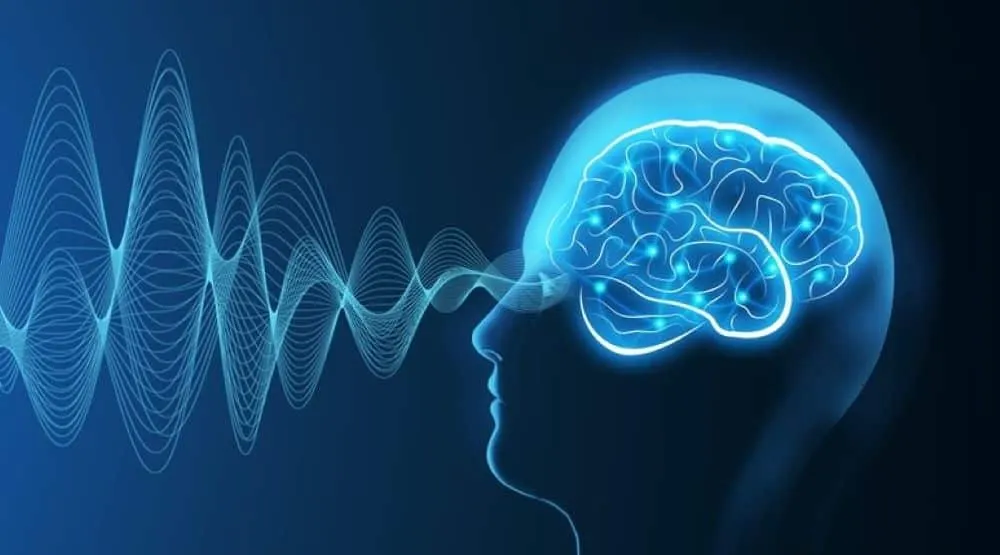
Electroencephalogram (EEG) refers to recording the electrical activities related to the functions of the brain. Depending on the activity of the brain, differences may occur in the EEG signal, and changes may also be seen in EEG tests between healthy people and people with certain nervous system diseases. These changes can be used for diagnosing disease. EEG signals measured in healthy people are generally seen at a constant rate. In diseases, however, this level may be seen at different rates. The imaginary (spectral) change within EEG is evaluated in different frequency bands. These bands are separated as delta, theta, alpha, beta and gamma. It can be seen that the dominant frequencies change in different bands depending on the person's activity. Spectral analysis is used to examine the characteristics of signals in the frequency domain. In other words, the distribution of power in the EEG signal by frequency is determined through spectral analysis. Power spectral density methods estimated directly from the signal itself are defined as nonparametric methods. Methods that use the process of sinusoidal modeling are called parametric approaches.
What Is an EEG Test?
The structure of the human brain, which can generate low electrical currents, is known to be complex. EEG is a type of test used to record the electrical activity produced in the brain. Known as neurological EEG, this test is a useful and safe test used in determining neurological problems. The EEG device, which records electrical waves produced through the nerve cells in the brain, confirms whether there are functional disorders occurring in the brain and has the ability to locate these disorders. Electrodes made of silver or gold are attached to the scalp with gel, and the resulting test can help obtain information about a number of different neurological diseases.
How Is an EEG Test Performed?
The EEG test is performed by attaching highly conductive wires (electrodes) to the scalp with a gel (paste) known as pasta. In a normal EEG test, the duration is approximately twenty minutes on average. In some cases, this duration may be extended depending on the diagnosis being made. Since the EEG test is also performed during sleep, EEG recordings may be prolonged in diagnoses made during sleep, and for this reason the patient may be allowed to fall asleep. In certain disease conditions, patients' EEG tests may also continue for more than one day. EEG tests lasting more than one day may also include video recording. This application is called video-EEG and can be used in diseases such as epilepsy. In continuous EEG recordings, certain procedures are carried out and recorded in order to better capture seizures and measure the brain's electrical responses. These procedures are listed as opening and closing the eyes during the EEG recording, deep breathing, and giving light stimuli to the eyes during recording. The technician carrying out the procedures performs the application by giving the patient specific commands.
EEG test types consist of the following:
Routine EEG: During this EEG test, the patient may be asked to breathe in different ways, or the technician may ask the patient to look at a flashing light.
Video EEG: Video recording can be made during the test. Video EEG enables visualization of seizures or the result of brain activity. It is also known as EEG telemetry.
Sleep EEG: This test type is recorded during sleep. When routine EEG does not provide sufficient results, the specialist physician may request a sleep EEG. In patients presenting with sleep disorder complaints, the sleep EEG test is a test type given priority.
Ambulatory EEG: This EEG test is a test type lasting more than one day (1-3 days). It can be performed ambulatory or at home with an EEG monitoring unit. Measurements are made in the form of a daily routine.
Prolonged EEG: This EEG test is a test type used so that seizures can be identified together with their causes and managed.
What Results Does an EEG Test Show?
When the patient presents with memory complaints, an EEG test is preferred for an appropriate diagnosis. Another important disease for which an EEG test is applied is epilepsy. When investigation is performed for the diagnosis of epilepsy seen in patients who have had seizures, the cause of the seizures occurring in this disease and what triggers them can be identified by EEG testing. At the same time, it may also be applied for the purpose of finding the cause of symptoms such as clouding of consciousness, fainting, memory loss and seizures. The following diseases can be diagnosed with EEG, in which thin wires (electrodes) are attached to record the electrical signals produced by the brain:
Jakob disease (mad cow disease)
Stroke (paralysis)
Alzheimer's disease (dementia)
Brain inflammation (herpes encephalitis)
Brain tumors
Brain damage caused by head trauma
Epilepsy
Brain dysfunction (encephalopathy)
Sleep disorders (sleep apnea and narcolepsy)
EEG test results are known as printouts on which brain wave patterns are recorded on paper and which include a doctor's interpretation. Based on these test data, the specialist physician can decide on the diagnosis and appropriate treatment. In fact, depending on the test results, the opinions of more than one specialist physician (consultation) may come together, and the diagnosis and treatment are finalized.
How Is EEG Performed in Adults and Children?
In adults, EEG recording can be performed while sitting, lying down or sleeping. During the EEG test, medications being used may be continued unless the doctor specifies otherwise. Of course, the doctor should be informed about medication use before the EEG test. As in adults, in children too the wires (electrodes) are placed on clean scalp, and generally, as in adults, the electrodes are fixed by applying a substance known as gel or paste. This is an important matter for correct diagnosis. Therefore, the electrodes must be in the correct position and the recording must be performed effectively. There is an EEG test department in our hospitals for having information about the EEG test and for correct treatment. You can arrange a consultation with a specialist doctor to undergo EEG treatment.
There is no major difference between EEG tests performed in children and those performed in adults. Parents who apply to a specialist physician mainly due to suspicion of epilepsy (sara) are informed about the EEG test. As in adults, children are also informed that the scalp must be clean before the test is performed. The EEG test performed in children is done while the child is sleeping. For this reason, it is stated that the child should sleep less before the test. Whether the child is fasting or not is not important. The child having recently eaten does not affect the accuracy of the test. In an EEG test performed during sleep, there is a time period of approximately 1-2 hours. There are systems such as bands and caps to help small children adapt to the test. In some children, these systems may not provide sufficient support. The reason is that active children may pull all the electrodes out of place at once, and as a result a reliable recording may not be obtained. For this reason, attaching the electrodes one by one is mostly essential for a quality recording.
Frequently Asked Questions
Although we have conveyed basic and necessary information about the EEG test, you can find below the questions frequently asked by users. The EEG device test, which records electrical activities generated through the nerve cells in the brain, detects functional disorders occurring in the brain and their location. EEG, which reveals functional disorders present in the human brain, is a reliable method capable of producing accurate results that serves to determine whether neurological problems exist and where they are located. The EEG film, a test that measures electrical activities in the brain, is performed with the help of small wires (electrodes) attached to the scalp. Cells in the brain respond to the test by giving electrical stimuli, and the EEG film is recorded. EEG is a test performed on the scalp. Unlike EKG, it can be performed both during sleep and while awake. A long-term test can be performed from different points. EKG, on the other hand, is a test that results in a graphical recording of the electrical activity occurring during the contraction of the heart.
Before the EEG: Since the wires will be attached to the scalp during the EEG test, the scalp must be clean. The absence of oil buildup and dirt layers that would block and adversely affect skin conductivity is essential. Care should be taken not to apply any cream or gel on the day of the test.
The patient should inform the doctor of the medications they use before the procedure.
If the patient has a disease such as Covid or AIDS, they should mention it before the procedure.
Before the EEG test, the neurophysiologist needs to obtain information on whether the patient has had previous tests before planning, and if there are test results, to review them.
The patient should not consume alcohol, sleeping pills, etc. before the EEG test.
The EEG test may vary depending on the type of test. There are EEG tests that last a short time as well as those that last several days. For example, before an EEG test to be recorded during sleep, the doctor may ask the patient to sleep less. In an EEG test carried out during sleep, the patient is enabled to fall asleep easily. The EEG procedure generally lasts between 30 and 60 minutes. EEG results may come out the same day, or there are results that come out the following day. The EEG device, which records electrical waves produced by nerve cells in the brain, is a test device that determines whether there are functional disorders in the brain and where they are located. The EEG test is an application method that does not cause pain and is not harmful. There is no situation of burning. EEG tests can be applied to patients of every age group. There is no radiation effect from the EEG device, and the test does not harm the patient. In sleep EEG testing, one of the EEG test methods, apart from being the same as the other tests, an EEG recording is also included. The electrical activity of the brain is recorded. Afterwards, sleep and wakefulness, the stages of sleep, and functional disorders of the brain that may occur during sleep are recorded. Finally, the result is examined by the specialist physician and a course of action is followed accordingly. If the specialist physician will perform a sleep EEG test, they ask the patient to sleep less before the test. This is necessary for the EEG test to be efficient. When the test starts, the test is completed after an average of 30 to 60 minutes have passed. Routine EEG, unlike sleep EEG, is a method performed while the patient is awake. The procedure is carried out within an average period of 20-30 minutes. It is a type of test performed by placing a certain number of small electrodes on the scalp with a gel, and it ends with recording of its electrical activity. The EEG method can determine abnormal conditions and damage that may occur in the brain, as well as their degree. It is a test especially useful for early diagnosis of diseases such as Parkinson's, epilepsy and Alzheimer's. Normally, the EEG test can be performed on patients who are pregnant. However, in many medical applications, one should act with sensitivity in pregnancy. Medical tests performed during pregnancy may carry potential risk. In addition, the possibility that, on the contrary, positive and beneficial results may also emerge should be taken into account. Since the pregnancy process varies from person to person, different outcomes may be encountered in each patient. Therefore, before the EEG test is performed, a consultation must be arranged in advance with the specialist doctor following the pregnancy of the patient who will undergo the EEG test.
For more detailed information and support on this subject, you can arrange a consultation with a specialist doctor.