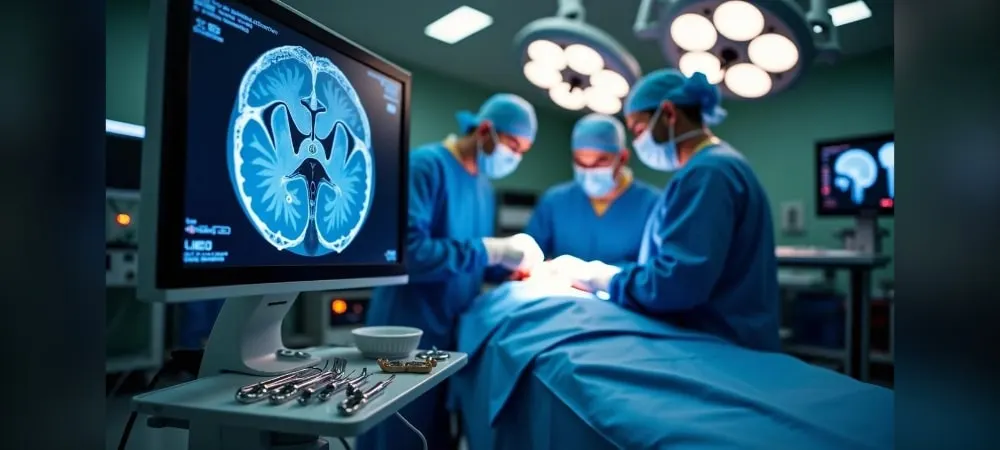
A brain aneurysm is a serious condition known as the ballooning of a blood vessel in the brain, and it is generally seen more frequently in individuals between the ages of 40 and 60.
Also referred to as a bubble in the brain, this problem can appear in different types depending on its location, shape, and size. Brain aneurysm surgery can be performed using two different methods: open or closed (endovascular). In open surgical treatment, the blood vessel inside the brain is protected using metal clips, whereas in closed treatment, intervention is performed directly inside the blood vessel without opening the skull.
In this article, you will understand what a brain aneurysm is, the conditions that require surgery, and the surgical process. You will also gain information about the recovery period and find answers to frequently asked questions.
What is a brain aneurysm and how does it form?
A brain aneurysm, known as the weakening and ballooning of a blood vessel in the brain, can lead to life-threatening consequences if left untreated. So, what exactly is this condition and why does it occur?
What does a bubble in the brain (aneurysm) mean?
A brain aneurysm is a ballooning or bulging that occurs as a result of the weakening of an artery wall in the brain. Unlike the normal structure of the vessel, this ballooning expands outward and forms a sort of pouch. These bubbles, which are usually seen at the points where vessels branch out, are much thinner compared to normal vessel walls.
An aneurysm is medically defined as an abnormal swelling occurring on the wall of a blood vessel. An aneurysm is diagnosed when expansion or ballooning is observed in more than at least 50% of the vessel. Seen in approximately 3.2% of the population, this condition is more common in women than in men.
The vast majority of aneurysms can exist for a long time without being noticed. However, their most dangerous aspect is the risk of rupture due to their weak wall structure. When the bubble ruptures, bleeding occurs into the space between the brain and the thin tissue covering the brain. This condition is called a "subarachnoid hemorrhage" and requires emergency intervention.
Main causes of aneurysm formation
Although the exact cause of brain aneurysm formation is not fully known, various factors lay the groundwork for this condition. The loss of strength and elasticity in the vessel walls is the most fundamental cause. The pressure created during the heart's process of pumping blood leads to ballooning at the weak point of the vessel wall.
The most common risk factors are:
High blood pressure: Constant application of high pressure to vessel walls
Smoking: Weakening the vascular structure and facilitating the formation and rupture of aneurysms
Excessive alcohol consumption: Increasing the risk by raising blood pressure
Substance use: Particularly illicit drugs damaging the vascular structure
Additionally, in some cases, aneurysms can develop after head trauma or infections. In some cases, congenital disorders in the vascular structure play a role.
Who is at risk?
Although a brain aneurysm can occur at any age, it is generally more common in adults between the ages of 30 and 60. Women are at a higher risk than men. The frequency of occurrence increases particularly in individuals over the age of 40.
Genetic factors also play an important role. The probability of occurrence is higher in individuals who have a first-degree relative with a brain aneurysm. If there is a history of aneurysms in two or more close relatives, screening is recommended.
Furthermore, the risk may also increase in individuals with certain health conditions. Patients with connective tissue disorders such as Ehlers-Danlos syndrome, polycystic kidney disease, and arteriovenous malformation (AVM) are at greater risk. These diseases increase the likelihood of an aneurysm by weakening vessel walls or increasing blood pressure.
Lifestyle factors can also affect risk. Stress, sudden anger, and activities that excessively strain the body can increase the risk of rupture of an existing aneurysm. Therefore, it is of great importance that individuals in the risk group do not neglect regular health check-ups.
When is brain aneurysm surgery necessary?
Surgery may not be necessary for all of these dangerous bubbles forming in the brain vessels. So, when is surgical intervention essential? In which situations does a brain aneurysm require emergency treatment? Let us look at the answers to these questions together.
Risk of aneurysm rupture
The greatest danger of brain aneurysms is that they can rupture and lead to brain hemorrhage. Not every aneurysm necessarily ruptures, but when they do, the results can be fatal. It is estimated that approximately 1 million 600 thousand people in Turkey have an aneurysm in their brain and the majority of them are unaware of it. Every year, the bubble in the brain of approximately 7 thousand people ruptures, and as a result, half of these patients lose their lives instantly.
The risk of aneurysm rupture depends on the following factors:
Size: Aneurysms over 25 mm have a 70% probability of bleeding within two years
Shape: Irregularly shaped aneurysms are more risky
Location: Aneurysms formed in arteries in the back parts of the brain are more dangerous
Age: The risk is higher in individuals over 70 years of age
The decision for surgical intervention is made by evaluating the location of the aneurysm, the patient's age, general health status, and family history. The annual aneurysm bleeding risk calculated for the entire population is 1:10,000, which is roughly around 1-3% in individuals with an aneurysm.
Evaluation with symptoms
Brain aneurysms generally do not cause symptoms until they rupture and cause bleeding. However, in some cases, large aneurysms or those pressing on nerve tissues may give some warning signs.
Unruptured aneurysms can cause the following symptoms:
Eye pain or discomfort around the eye
Drooping of the eyelid
Double or blurred vision
Numbness on one side of the face
In patients at risk of rupture, factors such as uncontrollable high blood pressure, excessive stress, sudden anger, or performing tasks that heavily strain the body can increase the danger. Therefore, it is important for individuals experiencing such symptoms to consult a neurology or neurosurgery specialist without wasting time.
If there are symptoms such as a severe headache starting suddenly "like a bomb exploding," nausea, vomiting, neck stiffness, and extreme sensitivity to light, this situation may indicate an aneurysm hemorrhage and requires emergency medical intervention.
Diagnosis with imaging methods
Several different imaging methods are used in the diagnosis of brain aneurysms. The primary methods used for diagnosis are:
Magnetic Resonance (MR) imaging and MR angiography are generally the initial screening tests applied. This procedure takes about 15-20 minutes without any drug injection administered to the patient.
Computed tomography (CT) and CT angiography are preferred, especially for providing quick results in emergency situations. In case of suspected subarachnoid hemorrhage, a CT scan is performed first to investigate the presence of blood in the brain.
Catheter angiography (DSA) is accepted as the "gold standard" for the diagnosis and treatment planning of brain aneurysms. In this method, the brain is reached from the groin vessel with the aid of a thin catheter, and contrast material is administered into the vessel to obtain detailed images of the blood vessels.
Imaging results are evaluated together with aneurysm size, location, shape, and patient factors. If the aneurysm is small in size and carries low risk, regular follow-up may be preferred instead of surgical intervention. However, if the size, location, or patient history of the aneurysm is considered risky, brain aneurysm surgery becomes inevitable.
How is brain aneurysm surgery performed?
When a brain aneurysm is diagnosed, there are two primary surgical methods among treatment options. The same method is not applied to every patient; the type of surgery is determined specifically based on aneurysm characteristics and patient factors. Now let us examine these surgical methods more closely.
Open surgery (clipping) method
The open surgery method is a classic treatment option used for both ruptured and unruptured aneurysms. This procedure is performed under general anesthesia. The surgeon reaches the brain vessels by creating a small opening in the skull bone.
During the procedure, the following steps are followed:
A piece of sufficient diameter is removed from the skull to reach the aneurysm
The meninges surrounding the brain are cut to reach the brain tissue
The aneurysm and surrounding vessels are accessed with the help of a microscope
A small titanium clip is placed on the neck of the aneurysm to prevent blood flow from entering the sac
The clip is attached to the neck where the aneurysm sac exits the vessel, preventing blood flow from entering the aneurysm. Thus, the entry of blood into the aneurysm is stopped, but normal blood flow in the main vessel continues.
Closed method (endovascular coil application)
The closed method is a form of treatment applied from inside the vessel without opening the skull. Also called endovascular coil embolization, this procedure is performed under general anesthesia, and all stages are monitored with an angiography device.
The procedure proceeds as follows:
An entry catheter of approximately 2 mm in diameter is placed into the artery in the groin
The brain vessels and aneurysm are reached via this catheter
A very thin microcatheter (0.5 mm in diameter) is directed into the aneurysm
Soft helical wires made of platinum called "coils" fill the interior of the aneurysm
The coils form a tangle inside the aneurysm, blocking blood flow and ensuring coagulation. Thus, the aneurysm, which receives no blood inflow, no longer carries the risk of rupture. When the procedure is completed, the microcatheter is withdrawn.
Which method is preferred when?
The choice of treatment method depends on many factors. First, the shape, neck, size, and localization of the aneurysm are taken into consideration. Additionally, the patient's age, general health status, and family history also play a role in the evaluation.
Today, closed aneurysm treatment (endovascular method) has become the first choice in brain aneurysm treatment. It is preferred because it is less traumatic, especially in elderly patients and those in critical general condition. Patients treated with this method can return to their normal lives within 2-3 days.
On the other hand, open surgery is generally more effective in cases with complex vascular structures or wide-necked aneurysms. Furthermore, open surgery may be preferred in cases where the aneurysm is difficult to reach from inside the vessel.
Preoperative preparation process
Preparation for brain aneurysm surgery is of critical importance for surgical success. First, the aneurysm is evaluated with detailed radiological tests (MR, CT, angiography) and surgical planning is made.
During the preparation process, the following recommendations are made to patients:
Not panicking: An aneurysm is a treatable disease and is a low-risk procedure in expert hands
Quitting smoking: Smoking increases the risk of side effects of anesthesia on the lungs
Control of blood pressure: It is important for hypertension patients to use their medications regularly
Restricting alcohol intake: Alcohol makes blood pressure control difficult and increases anesthesia risk
In patients planned to have a stent used, blood-thinning medications may be started a few days before the procedure. The fasting period begins 8 hours before the surgery, and blood-thinning medications are stopped under doctor supervision.
After both open and closed surgeries, the patient is kept under observation for a certain period. While patients who undergo open surgery generally stay in the hospital for 5-6 days, those treated with the closed method can be discharged in a shorter time.
Postoperative recovery process
The successful completion of brain aneurysm surgery is only part of the process. Afterwards, a recovery period awaits the patient. This process varies depending on the type of surgery and the patient's condition. Now let us examine the postoperative recovery process in all its aspects.
Length of hospital stay
The first stage of the recovery process is spent in the hospital, and the length of hospital stay varies according to the applied surgical method. Patients treated with the closed (endovascular) method can be discharged within 2-3 days after the procedure. Since recovery is faster in these patients, they can return to their daily lives in a short time.
On the other hand, patients who undergo open surgery (clipping) generally stay in the hospital for 5-7 days. This period is necessary for doctors to evaluate the success of the surgery and monitor the patient regularly.
In patients whose aneurysms have ruptured and bled, the length of hospital stay is much longer. These patients may stay in the hospital for up to 4-5 weeks due to complications that the brain hemorrhage may cause. This period may vary depending on the severity of the bleeding and the patient's condition.
Things to consider during the recovery process
During the recovery process after brain aneurysm surgery, patients must comply with certain rules. First of all, you should drink plenty of water after being discharged. This helps your body heal.
Important points you should pay attention to during the recovery process:
Use the medications prescribed by your doctor regularly
Avoid sudden movements that will strain your body
Stay away from driving in the first weeks
Avoid heavy lifting and strenuous activities for at least three months
If a stent was used in endovascular treatment, use blood-thinning medications in line with doctor recommendations
In patients treated with the closed method, you need to lie in a supine position for the first 6 hours. In the subsequent process, you should act according to your doctor's recommendations.
In patients who undergo open surgery, a wait of about 10 days is generally required for suture removal. The period of return to work is usually around 2-3 weeks, but this period varies according to the patient's condition.
Possible complications and follow-up
Some temporary complaints may be observed after brain aneurysm surgery. Among these, headache, fatigue, lethargy, pain at the surgical site, and jaw pain can be counted. These complaints are generally temporary and can be controlled with painkillers.
In some patients, visual disturbances, balance issues, speech problems, or short-term memory problems may also be seen after surgery. In such cases, you must consult your doctor.
When it comes to ruptured aneurysms, the rehabilitation process is of great importance. Applications such as physical therapy, speech therapy, and occupational training can be effective in regaining lost functions.
Follow-up angiographies are extremely important. For patients treated with the endovascular method, the first control is performed 6-12 months later, and the second control is performed 2 years later. In patients who undergo open surgery, the first control is generally performed one week after the surgery, and the second control is performed within 1-2 years.
Remember that the recovery process after brain aneurysm surgery is different for every patient. Recovery varies depending on the type of aneurysm, localization, whether bleeding occurred, treatment type, and the patient's general condition. Therefore, you must listen carefully and apply your doctor's special recommendations for you.
8 Frequently asked questions about brain aneurysm
You may have many questions in mind about a brain aneurysm. The answers to these questions will help you understand the treatment process and make correct decisions. Here are the 8 most frequently asked questions and their answers regarding brain aneurysm.
Is a brain aneurysm genetic?
Yes, genetic factors play an important role in brain aneurysms. The risk of aneurysm is quite high in some congenital diseases. The risk increases particularly in those carrying hereditary connective tissue disorders such as Ehlers-Danlos syndrome and polycystic kidney disease. Furthermore, the probability of having an aneurysm is four times higher in individuals whose first-degree relative has had a brain aneurysm. It is recommended that individuals with a history of aneurysm in multiple family members undergo regular screening.
Does it recur after surgery?
The risk of recurrence varies depending on the treatment method. The success rate is quite high in aneurysms treated with the clipping method, and recurrence is seen in less than 3% of fully closed aneurysms. On the other hand, the risk of recurrence is around 15-20% in those treated with the endovascular method (coiling). Therefore, patients treated with the closed method need to have regular control angiographies. Additionally, the risk of recurrence is higher in patients who continue smoking, whose blood pressure cannot be brought under control, and who use alcohol.
How long does the surgery take?
Closed brain aneurysm surgery (endovascular treatment) is generally completed within 1-3 hours. Open brain aneurysm surgery (clipping method) takes longer and can last an average of 3-6 hours. The duration of the surgery may vary depending on the aneurysm location, size, and the patient's condition.
Is headache normal after surgery?
Yes, experiencing a headache after surgery is quite common. Postoperative fatigue, pain, confusion, and dizziness may be observed. These complaints are generally temporary and can be controlled with painkiller medications. However, in case of worsening complaints or the appearance of new symptoms, you must consult your doctor.
What is the period of return to work after surgery?
The period of return to work varies according to the applied surgical method and the patient's recovery status. Patients treated with the closed method can generally return to normal activities after 1 week. For patients who undergo open surgery, this period is longer, and it is stated that they may not be able to continue working for about 2-3 weeks. Individuals working in jobs requiring physical strength may need to rest for a longer period.
What is the risk of surgery?
Like every surgical intervention, brain aneurysm surgery also carries some risks. Among the most important risks, infection, bleeding, brain edema, and loss of neurological function can be counted. Risk rates vary according to the patient's age, general health, and preoperative condition. Thanks to modern microscopic surgical techniques and advanced imaging methods, the risk of complications has decreased.
How is quality of life affected after surgery?
About half of the patients surviving after a ruptured aneurysm may experience long-term neuropsychological effects, and a decrease in their quality of life may be observed. However, many patients can return to their normal lives with appropriate treatment and rehabilitation. Returning to former life with a good psycho-cognitive and neurological picture is generally possible about a month after surgery.
Is it possible to live without surgery?
Regular follow-up may be an option for small aneurysms with low risk of rupture. The annual bleeding risk of brain aneurysms is around 1-2%. However, the probability of bleeding within two years can rise to 70% in aneurysms over 25 mm. Aneurysm bleeding can be fatal at rates reaching up to 50%. Therefore, the decision for surgery must be evaluated by the physician based on the size, shape, location of the aneurysm, the patient's age, and general health status.
Brain Aneurysm Surgery in Summary
A brain aneurysm is a serious health problem that occurs as a result of the weakening and ballooning of a blood vessel in the brain. Surgical interventions applied for the treatment of an aneurysm can be life-saving and are currently quite advanced. Particularly in terms of treatment methods, open surgery and closed endovascular procedures have high success rates. However, it should not be forgotten that the appropriate treatment method for every patient varies, and this decision must be made meticulously by expert physicians.
The postoperative recovery process varies depending on the patient's general health status, the applied treatment method, and the characteristics of the aneurysm. Patients treated with the closed method generally recover faster, while patients undergoing open surgery are kept under observation for a slightly longer period. Therefore, strictly complying with your doctor's recommendations and not neglecting regular controls is of great importance.
When you experience brain aneurysm symptoms or think you are in the risk group, you should consult a neurology or neurosurgery specialist without wasting time. Early diagnosis and intervention significantly increase treatment success. Furthermore, lifestyle changes such as staying away from smoking and alcohol and keeping blood pressure under control can reduce both aneurysm formation and the risk of rupture of existing aneurysms.
In conclusion, brain aneurysm surgeries are life-saving procedures that can be successfully applied with today's medical technology. Regular health check-ups and avoiding risk factors are the most effective methods. Remember that thanks to medical developments, receiving a brain aneurysm diagnosis is no longer as frightening as it used to be, and many patients can return to their normal lives with appropriate treatment.
What is brain aneurysm surgery, how is it performed, and what is the recovery process like? You can find all the details and answers to frequently asked questions in this article.