

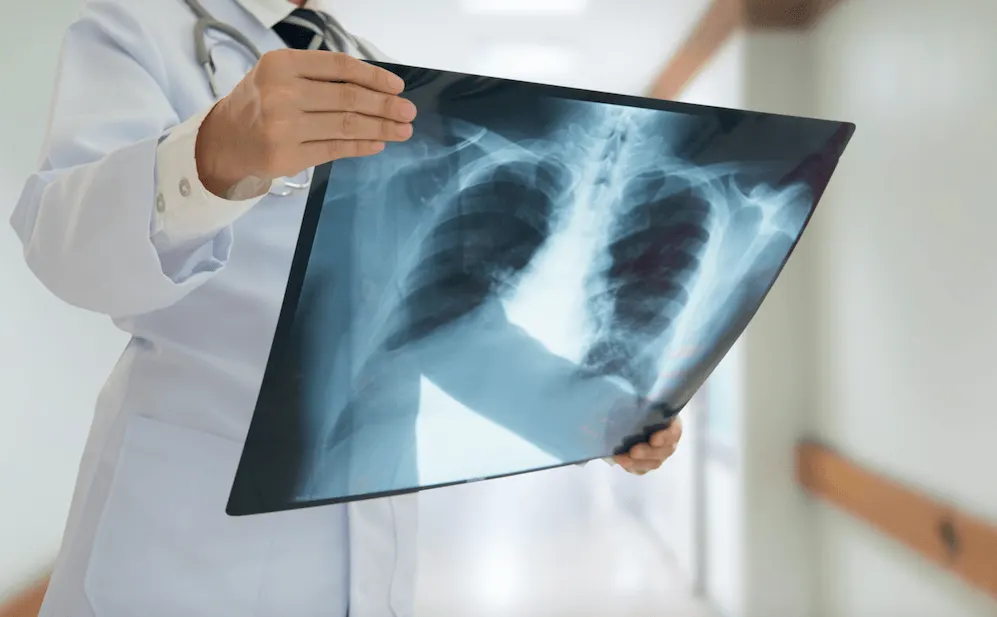
It is the impairment of the anatomical and functional integrity of the structures that make up the chest wall, caused directly or indirectly by an external force. It accounts for 25-30% of trauma-related deaths. Patients are usually male, aged 25-50. The most frequent causes are falls from height, traffic accidents, gunshot wounds, stab and incision wounds, and crush injuries (the chest being compressed under pressure). The most common type of thoracic trauma we encounter is blunt trauma, which results from falls, crushing and traffic accidents. Patients complain of pain on the affected side, shortness of breath and subcutaneous emphysema, along with severe local pain (if there is a rib fracture). Rib fractures are present in 35-40% of blunt traumas and are located between the 4th and 9th ribs. If there is a fracture of the 1st rib, a serious associated injury is present. Sternal fracture is seen in 4% of trauma patients, and flail chest in 5-15%.
Thoracotomy is required in 5-15% of patients with thoracic trauma. In gunshot wounds, the trajectory of the bullet, the barrel length and the firing distance determine the degree of damage. It should not be forgotten that patients involved in traffic accidents may have injuries to multiple systems, and that if hemodynamics are deteriorating in combined thoracic and abdominal trauma, priority is given to laparotomy. In stab and incision wounds, internal organ damage should be examined carefully.
Start with the right assessment for Thoracic Trauma
Share your symptoms with our specialist physicians; let us determine the right diagnosis and treatment plan together.
Warning
If your symptoms started suddenly, are progressing rapidly, or significantly restrict your daily life, consult a physician without delay.
Plan your Thoracic Trauma journey with our specialists.
Fill in the form or book an appointment to learn about treatment options, the process and preparation.