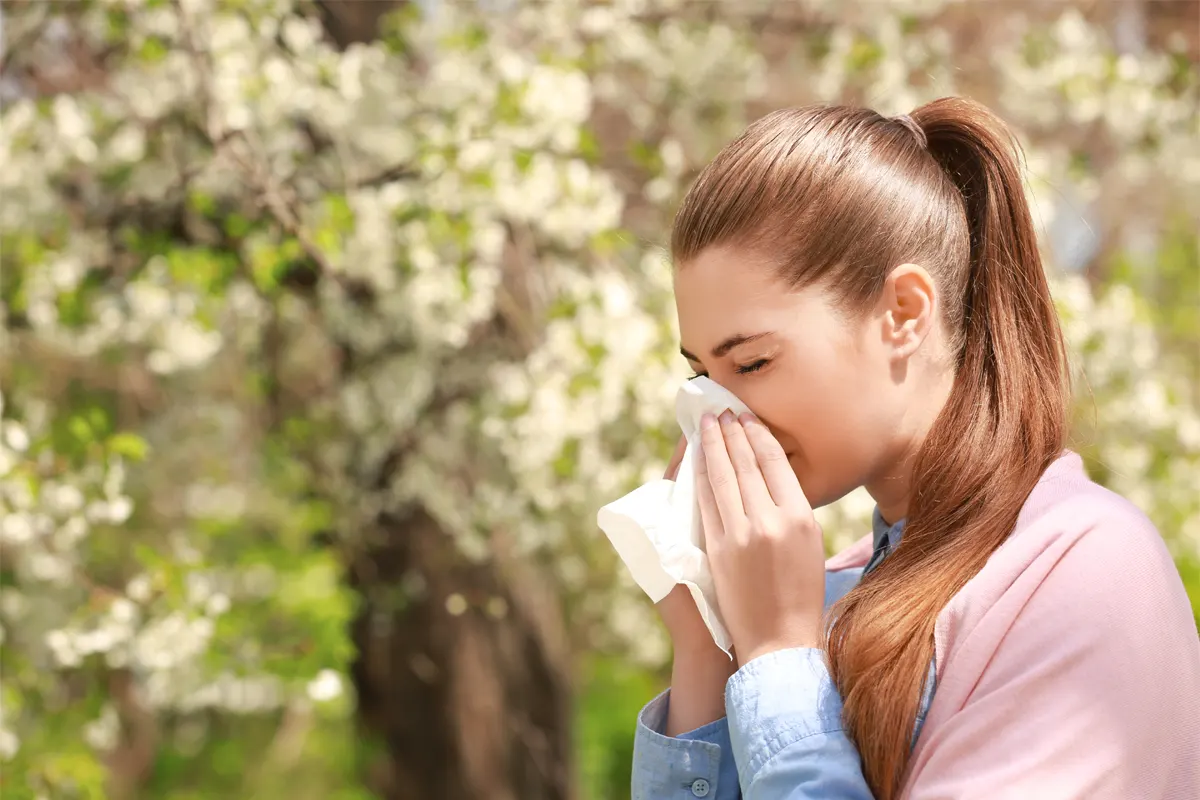
What is spring allergy?
Spring allergy is a general diagnosis for a group of allergic symptoms that appear mainly in the nose, but also in the eyes, face and skin, as a result of the rising amount and variety of pollen in the air during the spring months.
What causes spring allergy?
Spring allergy develops when the immune system perceives pollen as harmful and produces antibodies against it. Pollen or other allergens are thus recorded in the immune system's memory as harmful. Once the antibody has been produced, every time the body encounters the same pollen or pollen group, a substance called “histamine” is released automatically and allergic symptoms appear. The more allergens a sensitive person is exposed to, the stronger the body's reaction, that is, the more histamine is released, and the more severe and longer-lasting the symptoms of spring allergy become.
What are the types of spring allergy?
During the spring season, the atmosphere and the air we breathe contain many types of pollen. Different types of spring allergy are seen depending on the area and organ affected. The main ones are hay fever (allergic rhinitis), allergic asthma, allergic dermatitis (skin allergies), allergic conjunctivitis and food allergies.
Although spring allergy symptoms occur mainly in spring and autumn, allergic rhinitis can also be seen all year round because of some allergens that release pollen throughout the year and non-pollen allergens such as house dust mites and pet dander. For this reason, it is generally divided into two groups.
1. Seasonal allergic rhinitis (SAR): Sneezing, nasal congestion, an itchy nose and a runny nose occur especially during the pollen season. This type of allergy is caused by outdoor allergens such as grass, tree and flower pollen and moulds.
2. Perennial allergic rhinitis (PAR): Allergic symptoms continue throughout the year. House dust mites, cockroaches and pet hair, as well as some fungal spores counted in the pollen group, are considered the triggers.
What are the symptoms of spring allergy?
Spring allergy shows its symptoms mostly in the nose. Allergic symptoms in the nose are generally called “hay fever” or “allergic rhinitis”. The main complaints of people with hay fever are a clear runny nose, nasal congestion, frequent and repeated sneezing, postnasal drip, coughing, sometimes sinusitis-like headaches, watery and red eyes and, in some sensitive people, widespread skin itching.
Allergy affects approximately 10–25% of the population. Because allergy also causes a heavy runny nose and nasal congestion, it becomes hard to breathe comfortably through the nose at night, which lowers sleep quality. Nasal congestion also causes dark circles under the eyes. People with allergies develop conditions such as sinusitis, middle ear infections and asthma more often than others.
How is an allergy test done? Which allergies can be detected?
An allergy test is recommended for all patients with symptoms of spring allergy. A skin prick test makes it easy to find out whether these people have an allergy and what they are allergic to. In patients who cannot have a skin prick test, allergy can easily be diagnosed with a “specific IgE allergy test” performed on a blood sample.
Skin prick tests are performed to confirm clinical findings caused by inhaled allergens (pollen, mites, moulds, pet allergens, etc.), foods, medicines and bee venom. They are accepted as the main diagnostic method for identifying the allergens that cause IgE-mediated allergic reactions. Skin tests are evaluated 15 minutes after they are performed. A positive reaction produces swelling larger than 3 mm. Positive skin test results show sensitivity to the allergen.
What precautions can be taken against spring allergy?
Pollen is present in the air in different amounts at different times of the day. Pollen levels are lower in rainy weather and higher in windy and sunny weather. Pollen levels are also quite high in the morning. For these reasons, people with allergies should not stay outdoors for long on windy and sunny days, should protect their eyes with glasses during this time and, if possible, cover their mouth and nose when outside. When pollen-sensitive people come home, they should take off their clothes in another room and, since a lot of pollen collects in the hair, preferably wash their hair and, if possible, take a shower to minimise the pollen on their whole body. Washing the mouth, nose and face with water as soon as possible after coming indoors is especially recommended. Even though pollen is mostly found outdoors, it can also be present inside the home, so pollen precautions should also be taken indoors. Laundry and towels should be dried indoors, not outside.
Is there a treatment for spring allergy?
As with all allergies, the best treatment and protection for pollen allergy is to avoid the allergen, but this is not always possible or sufficient. When avoiding the allergen is not enough, medication is needed depending on the severity and duration of the symptoms. Because each patient reacts differently to allergens and allergen levels can change from day to day, different treatments are used for each patient. For a patient with a heavy runny nose and congestion, medicines called antihistamines, which block the release of histamine, are more suitable. If severe allergy symptoms continue despite all these treatments, some cortisone-based medicines can also be used. Ideally, patients should be examined by an allergy and immunology specialist or an ear, nose and throat specialist and use medication in the way and for the period they recommend.
Despite pollen precautions and allergy medicines, some patients develop severe nasal congestion, and the nasal turbinates become so enlarged that breathing through the nose becomes impossible. In this case, an operation to reduce the turbinates (the tissue inside the nose) can be considered. Turbinate reduction can also be performed with radiofrequency treatment.
Another treatment method for allergy is “vaccine therapy”, that is, “immunotherapy”. Vaccine therapy is both curative and protective. It lasts an average of 3–5 years. It is mainly used for patients with allergic rhinitis, allergic asthma and bee venom allergy. Vaccine therapy can be given to people whose complaints are caused by an allergen shown by skin and blood tests, who have not benefited enough from allergen avoidance and medication, who do not want to use medication for a long time, or who experience many side effects from medicines. It is not recommended for patients who do not comply with treatment, children under 5, patients with severe asthma, or people with cancer, immune system diseases, psychological disorders, serious hypertension or heart disease.
Is there an alternative herbal treatment?
The first approach and rule in allergic disease is to stay completely away from the factors that cause it, called allergens. Medication is recommended for people who still have symptoms despite these precautions. Although there are no herbal methods that cure spring allergy, some supportive herbal products can be used, especially to relieve allergic cough and reduce nasal complaints in patients with allergic rhinitis. These include quince tea, echinacea tea, orange tea, rosehip tea, milk with honey, grape molasses, linden, ginger, sage and some herbal throat lozenges. In addition to eating citrus fruits, fruit and vegetables, regular meals and sleep also help regulate the body's immune system.
What should pregnant women with spring allergy do?
Spring allergies, which affect daily life negatively, are among the most common problems during pregnancy. Pregnant women need to take various precautions to protect themselves from dust and pollen during this period. The most important factor in the appearance of symptoms is long exposure of an allergy-prone expectant mother to the allergen. Flower dust and airborne pollen, especially in spring, can increase allergy attacks. Pollen spreads through the atmosphere and reaches the mouth, nose, eyes and lungs. Because pollen spreads more in windy weather, expectant mothers' complaints also increase.
Pollen levels are lower in rainy weather and higher in windy and sunny weather, and quite high in the morning. For these reasons, pregnant women with pollen allergy should not stay outdoors for long on windy and sunny days or in the morning, should protect their eyes with glasses and, if possible, cover their mouth and nose when outside. When they come home, they should take off their clothes and, since a lot of pollen collects in the hair, preferably wash their hair and, if possible, take a shower to minimise the pollen on their whole body. Washing the mouth, nose and face with water as soon as possible after coming indoors is especially recommended. It is natural for some pollen to be present indoors, so using anti-allergic air purifiers at home or in closed spaces is recommended. Laundry and towels should be dried indoors, not outside. Regularly cleaning the filters of car and home air conditioners will also reduce pregnant women's complaints.
Start with the right assessment for Spring Allergies and Their Treatment
Share your symptoms with our specialist physicians; let us determine the right diagnosis and treatment plan together.
Warning
If your symptoms started suddenly, are progressing rapidly, or significantly restrict your daily life, consult a physician without delay.
Plan your Spring Allergies and Their Treatment journey with our specialists.
Fill in the form or book an appointment to learn about treatment options, the process and preparation.