

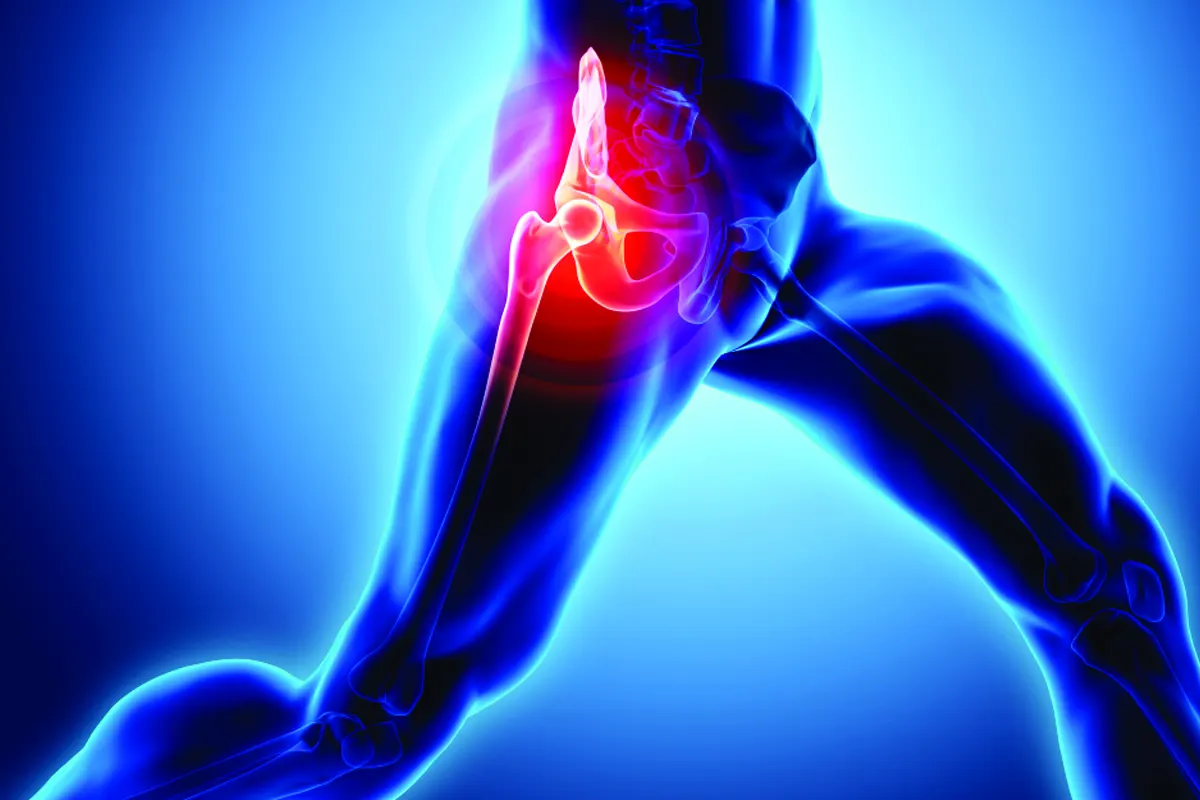
Acetabular fractures are among the challenging fractures for orthopedic surgeons. The complex three-dimensional structure and the intricate anatomy, rich in blood vessels and nerves, make this region difficult. Acetabular fractures in young people result from high-energy injuries such as traffic accidents and falls from height, while in the elderly and in osteoporotic patients they may occur as a result of lower-energy injuries.
Serious injuries occur when the acetabulum, an important part of the hip joint, the body's largest joint, and which acts as a roof, is fractured. An acetabular fracture may occur on its own or may be accompanied by multiple fractures or other injuries. Acetabular fractures are problematic both in terms of diagnosis and surgical technique, and patients are generally polytraumatized. For this reason, during treatment, both the patient's general condition must be stable enough to permit such a major intervention, and the surgical team, the materials to be used and the operative planning must be complete.
Surgical treatment of pelvic and acetabular fractures is not a routine procedure for general orthopedic surgeons. Therefore, surgical treatment of these fractures requires a long learning curve, a comprehensive training program, interest, skill and a high level of experience.
Acetabular fractures with displacement of only less than 2 mm, or types with no displacement at all, can be treated with bed rest without surgical treatment. However, in the great majority of acetabular fractures, displacement is over 2 mm and there is pelvic instability. For this reason, most of these fractures will need to be treated surgically.
If the case is not selected correctly, or if good pre-operative planning and implementation cannot be achieved, clinical results will be far from satisfactory. The basic principle of treatment is anatomical reduction (complete correction) and secure fixation. If not treated appropriately, it often results in arthrosis (degenerative arthritis) of the hip. Since the aim is anatomical fixation, the foundation of success is first understanding the fracture correctly and performing a gentle surgical intervention suited to it.
Where is the acetabulum?
It is the socket with which the head of the thigh bone (femur) articulates with the hip bone. This joint plays a primary role during daily activities such as walking, running, and sitting and standing up, and it transmits the loads it receives from above to below. This region is entirely covered with articular cartilage; as with other intra-articular fractures, complete reduction and secure fixation are essential in its treatment.
What are the characteristics of acetabular fractures?
Acetabular fractures most often result from high-energy trauma (traffic accidents, falls from height). These fractures may occur on their own or may be accompanied by multiple traumas. They are rare fractures, and therefore it takes a long time for even orthopedic surgeons to gain surgical experience.
What are the principles in the treatment of acetabular fractures?
Surgical treatment of acetabular fractures is an intervention that requires experience, special interest, skill and good surgical technique. If the case is not selected correctly, or if good pre-operative planning and implementation cannot be achieved, clinical results will be far from satisfactory. The basic principle of treatment is anatomical reduction (complete correction) and secure fixation. If not treated appropriately, it often results in arthrosis (degenerative arthritis) of the hip. Since the aim is anatomical fixation, the foundation of success is first understanding the fracture correctly and performing a gentle surgical intervention suited to it.
An acetabular fracture has occurred in someone close to me. Is urgent surgery necessary?
Because of possible additional pathology and risks, acetabular fractures often do not need to be operated on under emergency conditions. However, in rare cases, particularly in fractures of the anterior column with severe displacement, or in vascular or nerve injuries, urgent surgical intervention may be required to stop bleeding or to repair a nerve injury, even if not for the acetabular fracture itself. The presence of intra-articular tissue that prevents the desired joint congruence from being achieved by closed methods in fracture-dislocations is also an indication for early, though not emergency, surgical treatment.
I had surgery for an acetabular fracture. How long will it take me to recover?
Whether the patient was treated non-operatively (without surgery) or surgically, the time to start standing up varies according to the fracture type. For this reason, you must follow your doctor's recommendations absolutely. In cases treated surgically, where bone quality is good and secure fixation has been achieved, the patient may stand with support within a few days. In patients who are hospitalized due to additional problems, rehabilitation should be started first. The essential thing is to follow the recommendations of your surgeon meticulously. In general, however, patients with acetabular fractures can return to normal life within a period of 4 to 6 months.
How long does a pelvic-acetabular fracture surgery take?
In our view, the most appropriate answer to this question is "as long as it takes". Although an average duration is given to patients for informational purposes, this is in fact not very accurate. Because a surgical operation may always be open to surprises that cannot be foreseen. During our operations, we aim to achieve the best result and we never race against time.
Can things go wrong during or after surgery?
Unfortunately, as with any surgical intervention, the answer to this question is "yes, they can". In a patient with an acetabular fracture, some problems may develop arising from the nature of the injury. The most important problems that may occur are vascular obstructions, deep vein thrombosis, arthritis of the femoral head or socket, abnormal bone formation, or problems related to wound healing. Although it is not possible to list every one of them, different problems may also be seen besides these. These adverse conditions are seen more frequently particularly in people with chronic diseases that are not under control. However, various precautions are taken before surgery, during surgery and after surgery to prevent these and similar adverse conditions from occurring. Thanks to the precautions taken, the likelihood of adverse conditions can be greatly reduced, but they cannot be completely eliminated.
Will the metals placed during surgery be removed with a new operation?
The fixation materials placed during your surgery are cobalt-chromium or titanium alloys. These are materials compatible with the body, and in essence a possible reaction of the body to these materials is extremely rare. For this reason, we in particular do not remove the materials we place in this region unless there is a medical necessity.
Start with the right assessment for Pelvic and Acetabular Fractures
Share your symptoms with our specialist physicians; let us determine the right diagnosis and treatment plan together.
Warning
If your symptoms started suddenly, are progressing rapidly, or significantly restrict your daily life, consult a physician without delay.
Plan your Pelvic and Acetabular Fractures journey with our specialists.
Fill in the form or book an appointment to learn about treatment options, the process and preparation.




