

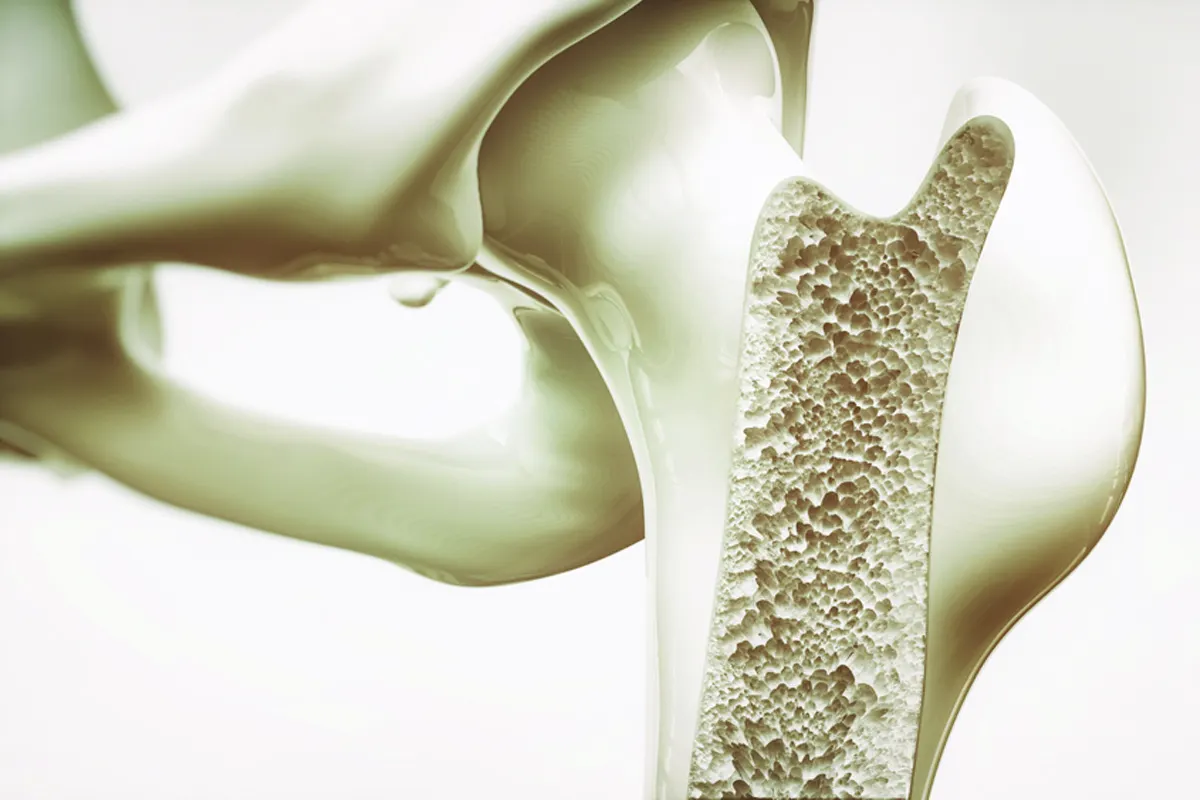
What is osteoporosis?
Osteoporosis is a bone disease characterized by a reduction in bone mass and the resulting increase in fragility of bone tissue. Osteoporosis is a chronic and progressive skeletal disease that increases the risk of fractures in the vertebrae, hip and other sites in both sexes. Bone formation and breakdown is a dynamic process that continuously renews itself. Thanks to this delicate balance in bone remodeling, skeletal mass is maintained. In osteoporosis, this balance is disrupted in favor of breakdown, resulting in loss of both mineral and matrix in the bone.
Osteoporosis is not seen only in women!
Osteoporosis has become a major health problem worldwide due to the increasingly aging population resulting from the lengthening of life expectancy. Today, it is the most common bone disease that is preventable and treatable. Worldwide, osteoporosis is present in one in three women over the age of 50. The risk of at least one vertebral fracture in women over 50 is 30%, and the risk of at least one hip fracture is approximately 20%. Osteoporosis is not a disease specific to women alone. Osteoporosis is seen in approximately 21% of women and 6% of men aged 50–84 years.
Prevention of osteoporosis is more important than treatment
Osteoporosis negatively affects people's ability to work independently and their quality of life, in addition to their health status. Therefore, prevention of osteoporosis is more important than treatment. To reach adequate bone mass, a balanced diet, calcium and vitamin D supplementation, appropriate physical activity, regular exercise and a normal menstrual cycle in women are necessary.
It should not be forgotten that in patients treated surgically for an osteoporotic fracture, the success of treatment depends on adequate bone quality. Medical osteoporosis treatment must be started after surgery for osteoporotic fractures.
Deformities may develop in the bone structure of postmenopausal women
In patients with osteoporosis, falls most commonly cause fractures of the hip, wrist and vertebrae. Generally, the first complaint of patients is back pain and a hunched back caused by vertebral fractures. A fractured vertebra can never return to its normal anatomy. A fractured vertebra can fracture again, and other vertebral fractures may be added to it. In women, the number of vertebral fractures increases with advancing age after menopause, leading to increased dorsal kyphosis and accompanying lumbar lordosis. Together with height loss, deformity develops in the person's physical structure. In patients, pathological fractures are seen due to low-energy trauma or falls at home.
The most important of the fractures secondary to osteoporosis are undoubtedly vertebral fractures. In recent years, vertebroplasty and kyphoplasty have been introduced as a new treatment method for these fractures. In these methods, under fluoroscopic guidance, the vertebral body is filled, mostly with polymethylmethacrylate bone cement, through percutaneously applied cannulas, in order to relieve pain, prevent further compression and accelerate the healing period. The difference of kyphoplasty from vertebroplasty is based on creating a cavity with a balloon inflated in the vertebral body, allowing cement to be applied at lower pressure. Another theoretical aim of this method is partial restoration of the height of the collapsed vertebral body. Both procedures can be performed under local anesthesia. During these procedures performed under fluoroscopy, care should be taken that the radiopaque cement does not leak outside the vertebral body, especially into the spinal canal. In these patients, a significant decrease in pain was observed with both methods at the 24th hour.
It should be remembered that;
Osteoporosis appears likely to remain the greatest social problem today and in the future.
Osteoporosis is not a disease specific to women alone.
Early diagnosis is important in order to prevent fractures or possible complications.
It should not be forgotten that in patients treated surgically for an osteoporotic fracture, the success of treatment depends on adequate bone quality. Medical osteoporosis treatment must be started after surgery for osteoporotic fractures.
Osteoporosis treatment must always be carried out under physician supervision and follow-up.
Start with the right assessment for Osteoporosis (Bone Thinning)
Share your symptoms with our specialist physicians; let us determine the right diagnosis and treatment plan together.
Warning
If your symptoms started suddenly, are progressing rapidly, or significantly restrict your daily life, consult a physician without delay.
Plan your Osteoporosis (Bone Thinning) journey with our specialists.
Fill in the form or book an appointment to learn about treatment options, the process and preparation.




