

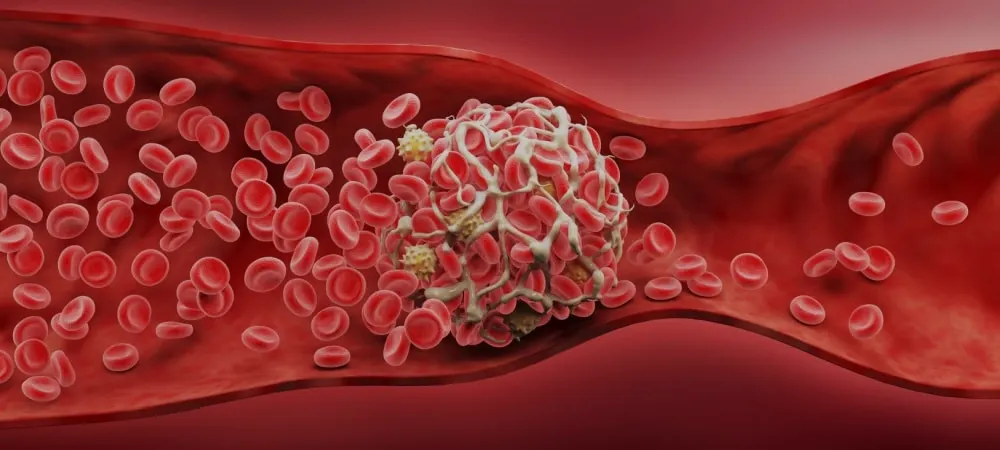
Blood Clotting (Thrombosis)
Blood clotting is the formation of a blood clot in the arteries and veins. Injury to blood vessels and certain changes in normal blood flow can play a role in the formation of thrombosis. Factors affecting blood clotting activities can increase the risk of clot formation. A clot may remain where it formed, grow, and slow down blood flow. It can also break off from where it formed, travel through the bloodstream, and cause a blockage in smaller blood vessels. A dislodged blood clot can become stuck in vital organs such as the lungs, brain, or heart and cause serious complications.
Symptoms of blood clotting can vary depending on the area where the clot forms. Some individuals are at a higher risk of developing thrombosis due to various diseases or conditions. These individuals need to learn about their risk of developing thrombosis to prevent the risk of serious complications. The development of thrombosis is a health issue that should not be ignored and can become dangerous over time. It can suddenly turn into an emergency and create a life-threatening situation. Therefore, it is necessary to identify the risk factors for thrombosis to ensure early diagnosis and treatment. Whether the blood clotting is acute or chronic, venous or arterial, and the region where it is located are important in forming the treatment plan.
What is Blood Clotting?
Thrombosis, known as blood clotting, is the condition of a clot forming in blood vessels and obstructing blood flow. Components such as platelets, plasma proteins, blood cells, inflammatory factors, and clotting factors are present in the blood in certain amounts, and this balance affects the free flow of blood. Platelets and clotting factors play a role in preventing excessive bleeding when a blood vessel is damaged. By forming a clot over the damaged area, excessive blood loss is prevented. These blood clots dissolve in the body as the wound heals. However, in some cases, a clot can form even without significant damage to the vessels and may not dissolve on its own. This creates blood clotting and can be life-threatening. Blood clotting disease is divided into two main types:
Arterial thrombosis: It is blood clotting that occurs in the arteries. Arteries carry oxygen-rich blood from the heart to body tissues. Arterial thrombosis is the most common cause of stroke and heart attack.
Venous thrombosis: It is blood clotting that occurs in the veins. Veins carry oxygen-poor blood from body tissues to the heart. Venous thrombosis is the most common cause of pulmonary embolism, which develops as a result of blood clotting in the lungs.
What Are the Symptoms of Blood Clotting?
Blood clots can show symptoms depending on their size, location, and the complications they cause. Blockages caused by blood clots can develop, especially in organs with small blood vessels such as the brain, lungs, arms, and legs. Symptoms of blood clotting in the body can differ for the regions where thrombosis develops. Symptoms of blood clotting in the brain may include:
Difficulty speaking and slurred speech,
Sudden and severe headache,
Vision problems,
Significant lack of muscle control and drooping on one side of the face,
Muscle weakness seen in a part of the body,
Unusual behavioral changes,
Confusion.
These symptoms can be caused by clots seen in the neck and brain. It can manifest itself as a transient ischemic attack or a stroke. The following may be seen in the profile of blood clotting in the heart:
Chest pain,
Dizziness and fainting,
Sweating,
Difficulty breathing,
Discomfort in the upper body.
Blood clotting in the abdomen can lead to mesenteric ischemia. Findings such as fever, abdominal bloating, nausea and vomiting, bloody diarrhea, and severe abdominal pain after eating may be seen. Blood clotting in the arms and legs can present with multiple and different findings. These include:
Skin that is paler compared to other skin areas,
Skin that is warmer or colder than normal when touched,
Decrease in arm and leg movements, weakness,
Numbness and tingling parallel to pain,
Wounds, sores, and blistering may occur.
When blood clotting in the arms, legs, hands, and feet affects the veins, it gives the skin a darker or redder appearance compared to other skin areas. Additionally, blood clotting seen in the lungs as a pulmonary embolism can manifest itself with pain while breathing, difficulty breathing while active or at rest, and sharp pain in and around the chest.
What Causes Blood Clotting?
Blood clotting mainly occurs due to damage to the endothelial (inner) layer of vessel walls, an increased tendency of the blood to clot, and blood stasis (slowing of blood flow). These three elements are known as the “Virchow's triad.” These primary causes can stem from various risk factors. Risk factors that contribute to the formation of thrombosis are generally as follows:
Trauma,
Catheter placement in a vessel,
Inflammatory factors,
Family history of clotting,
Aging,
Atherosclerosis,
Blood clotting disorders,
Atrial fibrillation,
Heart failure,
Heart valve disease,
Diabetes,
Chemotherapy,
Cancer,
Autoimmune diseases,
Hypertension,
Obesity,
High cholesterol,
History of heart attack,
Pregnancy,
Use of cigarettes and tobacco products,
Prolonged bed rest.
Additionally, various surgical procedures, birth control pills, and medical treatments such as menopause hormone replacement can also be risky factors in the formation of thrombosis. Blood clotting during pregnancy can be caused by arterial and venous blood stasis. After childbirth, blood clotting can be less risky with early diagnosis and treatment.
How is Blood Clotting Diagnosed?
Diagnosis of blood clotting may involve the application of a number of tests. Finding the source of thrombosis formation, determining the body region where it is located, and detecting its size is an important step in successful treatment. Learning about existing symptoms and performing a physical examination helps in making a clinical diagnosis. Tissue changes, swelling and bruising, and temperature changes in the affected areas are examined as part of the physical examination. Pulse in the arms and legs can be measured. Heart, lung, and digestive system sounds can be listened to with the help of a stethoscope. The patient's medical history, injury status, family history, and medications used are evaluated. Blood and imaging tests that help with diagnosis include:
Blood components: Allows for the measurement of platelets, blood clotting factors, and other chemical compounds.
Clot formation markers: A blood clotting test is used to detect chemicals released while a clot is present in the blood.
Heart damage markers: Troponin leaks into the blood as a result of damage caused by reasons such as heart attack. The troponin test can generally be examined in heart attack cases caused by thrombosis.
Ultrasound: The flow of blood in the arteries and veins can be detected using sound waves.
Venography: With the help of a small amount of dye given through a vein, the flow of blood through the vessels can be monitored, and clot formation can be imaged with the help of an X-ray.
Angiography: The structure of blood vessels can be imaged using contrast dye.
MRI and computed tomography (CT): The size, location, and type of the blood clot can be determined.
How is Blood Clotting Treated?
Blood clotting treatment consists of medications and surgical methods. The complications caused by thrombosis, its location, and its size can be effective in determining the treatment plan. The underlying cause of thrombosis is identified, and medical treatments aimed at eliminating this condition can be applied. In addition, symptoms must be brought under control and life-threatening danger must be prevented. Treatments applied within the scope of blood clotting treatment are as follows:
Drug therapy: Anticoagulant and antiplatelet drugs help prevent the blood from clotting easily. Medications are blood thinners that play a role in preventing the growth of an existing clot.
Thrombolytic therapy: These are drugs used to dissolve existing blood clots. It can play an important role in dissolving clots stuck in critical organs, especially. It can be applied as part of emergency medical intervention for complications such as stroke and heart attack.
Surgery: The process of removing a blood clot from the body by surgical methods is called thrombectomy. Open or minimally invasive surgery can be applied in thrombectomy surgery.
Additional treatment methods may also be recommended depending on the patient's other health problems and the severity of the thrombosis.
Frequently Asked Questions
Blood clotting is more common in people over 60, those with coronary artery disease, diabetes, cancer, atrial fibrillation, and clotting disorders. Also, the risk of blood clotting may be high in those who use tobacco products and during pregnancy. Since blood clotting can cause blockages in both veins and arteries, various complications can occur. The region where the thrombosis forms can determine the complications and its severity. Blood clotting that is not diagnosed and treated early can quickly turn into an emergency medical situation and can be life-threatening. Results such as stroke, sudden shortness of breath, heart attack, loss of function in organs, loss of limbs, and death can occur. Thrombosis can form in any artery and vein and can travel to another part of the body. It often appears as blood clotting in the lungs, brain, heart, neck, abdomen, arms, legs, and fingers. Other organ thromboses, such as blood clotting in the testicles, can also occur. Symptoms of blood clotting are generally findings that can be observed during a physical examination. Findings such as paleness or redness in certain parts of the skin, a feeling of coldness, muscle weakness, fever, wounds and blistering, speech problems, vision problems, and shortness of breath can be examined. Having a family history of clotting, blood tests, imaging tests, and medical history are important in understanding blood clotting. Symptoms of blood clotting in infants can present with symptoms similar to those in adults. If a blood clot goes to the lung, blood flow there may be impaired and pose a life-threatening danger. A condition called pulmonary embolism occurs and can show disturbing symptoms. It can manifest itself as sharp pain in the shoulders, neck, jaw, back, and arms, shortness of breath while active or at rest, and pain while breathing. If left untreated, loss of organ function, sudden shortness of breath, and other serious complications can occur. Blood clotting tests are in the form of troponin test, complete blood count, clot formation markers test, angiography, venography, ultrasound, computed tomography (CT), and MRI. More than one test may be used for the definitive diagnosis of thrombosis. In a healthy individual, a blood clot is formed in situations such as vessel injury, and the clot dissolves on its own in the body when the wound heals. However, some factors that lead to thrombosis reduce the possibility of the clot passing on its own in the body. Therefore, it emerges as a clotting disorder. Blood clotting can be prevented with a number of approaches. Prescribing blood thinners, exercising, adequate and balanced nutrition, quitting cigarettes and tobacco products, losing excess weight and maintaining an ideal weight, and using blood pressure and cholesterol-lowering medications when needed can help prevent the formation of blood clots. Blood clotting can be a temporary condition with fast and accurate treatment. However, when the condition causing blood clotting is chronic or congenital disorders, there is a lifelong risk of thrombosis. To prevent thrombosis complications, the underlying health problem must be managed. For blood clotting, you can consult specialist doctors in the Hematology department. Depending on the region where the thrombosis is located, Cardiovascular Surgery and Gastroenterology specialists also play a role in diagnosis and treatment.
If you have suspicions or symptoms related to blood clotting, it is important to consult your specialist doctor without delay. At Hisar Hospital, our experienced specialists in the fields of hematology, cardiovascular surgery, and gastroenterology offer you the most appropriate approach in diagnosis and treatment processes. Do not neglect early diagnosis to avoid risking your health and make an appointment.
Start with the right assessment for What is Blood Clotting (Thrombosis)? Symptoms, Causes, and Treatment Methods
Share your symptoms with our specialist physicians; let us determine the right diagnosis and treatment plan together.
Warning
If your symptoms started suddenly, are progressing rapidly, or significantly restrict your daily life, consult a physician without delay.
Plan your What is Blood Clotting (Thrombosis)? Symptoms, Causes, and Treatment Methods journey with our specialists.
Fill in the form or book an appointment to learn about treatment options, the process and preparation.