

Hair Transplant Center
For hair loss and thinning, a personalized evaluation and treatment plan is created. By analysing hair structure, hair follicles and individual needs, the hair transplant process is planned and followed up with the aim of achieving a natural, balanced appearance.
About the Department
The scope, approach and highlighted services of the department.
Hisar Hospital Intercontinental Hair Transplant Unit
Personalized Planning, Harmony with Natural Hair Directions
In hair transplantation, a natural appearance depends not only on the number of grafts transplanted; it is also related to the design of the hairline, the direction of the hair follicles, their exit angle, their distribution and how well they blend with the existing hair.
At the Hisar Hospital Intercontinental Hair Transplant Unit, the hair transplant process is planned individually by evaluating the person's hair loss pattern, facial and forehead structure, the characteristics of their existing hair and the capacity of the donor area.
In our unit, the licensed Archimedes Natural Alignment Technique is used to plan the direction, angle and distribution of the hair follicles.
The aim of this approach is not only to fill areas of hair loss with grafts, but to evaluate the natural distribution characteristics of the hair as a whole, from the frontal hairline to the mid-scalp and the crown.
What Is the Archimedes Natural Alignment Technique?
The Archimedes Natural Alignment Technique is an alignment approach based on planning the hair follicles so that they are consistent with the person's natural hair directions, exit angles and existing hair distribution.
In natural hair, not all strands grow in the same direction and at the same angle. The exit directions and angles of the hair vary in different areas of the head. In the crown (vertex) area in particular, hair may show a spiral distribution around a centre unique to each person.
In the Archimedes Natural Alignment Technique, taking these anatomical features into account,
the design of the frontal hairline,
the exit directions of the hair follicles,
the implantation angles,
the transitions between the frontal, mid-scalp and crown areas,
the natural spiral structure of the crown,
the direction and distribution of existing hair,
the capacity of the donor area
are evaluated together.
In this way, hair transplantation is approached not merely as a procedure in which grafts are placed in certain areas, but as a holistic treatment in which the natural direction, angle and distribution characteristics of the hair are planned individually.
Is the Archimedes Technique Different from FUE or DHI?
The Archimedes Natural Alignment Technique and FUE and DHI do not refer to the same concepts.
FUE and DHI describe hair transplant methods used to harvest hair follicles and/or place them in the target areas.
The Archimedes Natural Alignment Technique, on the other hand, focuses on planning the direction, angle and distribution with which the grafts will be placed.
For this reason, in suitable patients the Archimedes approach can be applied as part of the planning, together with the hair transplant method to be used.
The choice of method is made by evaluating the person's hair structure, the characteristics of the hair loss, the area to be treated and the donor capacity.
Personalized Hairline Design
One of the key stages of a natural-looking hair transplant is planning the frontal hairline to suit the individual.
Each person's facial structure, forehead width, existing hairline and hair structure are different. That is why it is important to create a personalized design instead of applying a standard hairline to everyone.
When planning the hairline,
age,
facial proportions,
forehead structure,
the condition of existing hair,
the natural exit directions of the hair,
the distribution and possible progression of hair loss,
donor area capacity
are evaluated together.
The aim is to create a hairline that is in harmony with the person's facial features and existing hair structure and that also takes long-term planning into account.
Archimedes Spiral Planning in the Crown Area
The crown is one of the areas where direction and angle planning is particularly important in hair transplantation.
In this area, hair usually does not grow in a single direction. It may spread in different directions around a centre that varies according to the person's natural hair structure, forming a spiral pattern.
In the Archimedes Natural Alignment Technique, the alignment plan for this area is created by evaluating the person's existing crown whorl and hair directions.
The aim is to plan a direction and distribution in the crown that blends with the person's existing hair structure, rather than a one-directional alignment.
The frontal hairline, mid-scalp and crown are evaluated not as separate areas but as parts of a single, complementary hair distribution.
How Is the Hair Transplant Process Planned at Hisar Hospital Intercontinental?
1. Evaluation of the Hair and Scalp
The type and distribution of hair loss, the characteristics of the hair strands, the directions of existing hair and the condition of the scalp are evaluated.
Whether there is an underlying medical cause of hair loss that needs to be investigated is also considered during the evaluation.
2. Donor Area Analysis
The donor area from which the hair follicles are planned to be harvested is evaluated.
Since the characteristics of the donor area and the number of grafts that can be harvested may vary from person to person, the transplant plan is created according to the available capacity.
3. Designing a Personalized Hairline
The frontal hairline is planned taking into account facial and forehead structure, age, the existing hairline, the distribution of hair loss and donor capacity.
4. Creating the Archimedes Natural Alignment Plan
The natural exit directions and angles of the hair are evaluated, and a direction and distribution map of the areas to be transplanted is created.
The transitions from the frontal hairline to the mid-scalp and crown, as well as the natural crown whorl if present, are included in the planning.
5. Graft Harvesting
Follicular units are harvested from the donor area according to the chosen hair transplant method.
The number of grafts that can be harvested is determined according to the person's donor capacity and the transplant plan.
6. Graft Placement
The grafts are placed in the target areas according to the personalized plan.
At this stage, not only the number and density of the grafts but also their direction, angle, distribution and transition with existing hair are taken into account.
7. Post-Procedure Follow-Up
After the hair transplant, the healing of the donor and transplant areas is monitored. The first wash and subsequent care are planned in line with the recommendations of the healthcare team.
FUE and DHI in Hair Transplantation
FUE Hair Transplant
FUE (Follicular Unit Extraction) is a hair transplant method based on harvesting hair follicles one by one from the donor area as follicular units.
The harvested grafts are transplanted to the areas of hair loss according to the transplant plan.
DHI Hair Transplant
In the DHI (Direct Hair Implantation) approach, the harvested hair follicles are placed in the target areas using special implantation instruments.
When choosing between FUE and DHI, no single method is considered suitable for everyone. The method is determined according to the person's hair structure, existing hair, the area to be treated, graft requirement and donor capacity.
The Archimedes Natural Alignment Technique, regardless of the hair transplant method used, focuses on the personalized planning of the direction, angle and distribution of the hair.
Who May Be Suitable for Hair Transplantation?
People
with male pattern hair loss,
with a receding frontal hairline,
with hair loss in the crown area,
with localized hair loss in suitable cases,
who have had a hair transplant before and need re-evaluation
may be evaluated for hair transplantation.
However, not everyone with hair loss may be suitable for a hair transplant.
Suitability for hair transplantation is determined by evaluating the cause and course of hair loss, the person's age, general health, the characteristics of the scalp and, in particular, the adequacy of the donor area.
What Should Be Considered Before a Hair Transplant?
Before a hair transplant, the person's general health, existing illnesses and the medications they use are evaluated.
The use of medications that may affect bleeding risk, chronic diseases, previous surgeries, allergies or health problems that may affect the scalp should be reported to the healthcare team.
Where necessary, a specialist medical evaluation and tests may be planned before the procedure.
Stopping medications or changing their doses should not be done on the person's own initiative, but in line with the evaluation of the relevant consulting specialist physician or the medical aesthetics specialist physician.
The Process After Hair Transplantation
In the first days after a hair transplant, redness, tenderness and scabbing may be seen in the transplant and donor areas.
The first wash and subsequent hair care should be carried out in line with the recommendations of the healthcare team.
Temporary shedding of some hair strands from the transplanted follicles may occur in the first weeks. New hair growth takes place over time.
Since the speed at which hair emerges and grows varies from person to person, sufficient time must pass before the final appearance of the hair transplant can be assessed.
Why the Hisar Hospital Intercontinental Hair Transplant Unit?
Hair transplantation is not merely aesthetic planning; it is a medical procedure that must be evaluated together with the person's medical condition, the characteristics of the hair loss and the donor area capacity.
At the Hisar Hospital Intercontinental Hair Transplant Unit, the entire process, from the initial evaluation to personalized hair transplant planning and from the procedure to post-procedure check-ups, is carried out in a hospital setting.
In our unit,
personalized hair and donor area evaluation,
hairline planning according to facial features,
direction, angle and distribution planning with the licensed Archimedes Natural Alignment Technique,
evaluation of FUE or DHI methods in suitable patients,
pre-procedure blood tests and medical evaluation
specialist physician evaluation based on test results
post-procedure follow-up and care
are addressed as a whole.
The aim is not to transplant the highest possible number of grafts, but to plan the available donor capacity by considering the person's current and possible future needs and to create a transplant design in harmony with the natural structure of the hair.
Frequently Asked Questions
What is the Archimedes Natural Alignment Technique?
The Archimedes Natural Alignment Technique is an alignment approach that focuses on planning the hair follicles by taking into account the person's existing hair directions, exit angles, facial features and, in particular, the natural spiral structure in the crown area.
Is the Archimedes Technique applied instead of FUE or DHI?
No. The Archimedes Natural Alignment Technique is not a graft harvesting method defined as an alternative to FUE or DHI. While FUE and DHI refer to the methods of performing a hair transplant, the Archimedes approach focuses on planning the direction, angle and distribution of the grafts.
How does the Archimedes Technique differ from classic hair transplantation?
In the Archimedes approach, not only the number of grafts to be transplanted or the area to be treated is considered; the natural directions of the hair, exit angles, the frontal hairline, the transitions between areas and, in particular, the natural spiral structure in the crown area are evaluated together.
Why are direction and angle important in hair transplantation?
The exit directions and angles of natural hair vary in different areas of the head. Taking these characteristics into account in the transplant plan is important for visual harmony between the transplanted hair and the existing hair.
Can hair be transplanted to the crown area?
In people with adequate donor capacity, hair transplantation to the crown area can be planned. Due to the natural spiral structure of the hair in the crown, direction and distribution planning is evaluated separately.
How many grafts can be transplanted in one session?
There is no fixed number of grafts that applies to everyone. The number of grafts that can be transplanted may vary according to the person's donor area capacity, hair characteristics, the extent of hair loss and the long-term plan.
Which is more suitable, FUE or DHI?
It is not correct to say that one method is more suitable for every patient. The choice is made according to the distribution of hair loss, the condition of existing hair, donor capacity, graft requirement and the personalized transplant plan.
Can a hair transplant look natural?
Many factors affect the appearance of a hair transplant. Chief among them are the design of the frontal hairline, the direction and angle of the grafts, the distribution of density and the transition with existing hair. In the Archimedes Natural Alignment Technique, planning is carried out by evaluating these elements together.
When does hair start to grow after a hair transplant?
The hair growth process varies from person to person. After the procedure, temporary shedding of hair strands from the transplanted follicles may occur. New hair growth takes place over the following months, and the final appearance takes longer to develop.
Is an examination necessary before a hair transplant?
Yes. Evaluating the type of hair loss, donor area capacity, the characteristics of existing hair, the condition of the scalp and the person's general health is important for creating a personalized hair transplant plan.
Can people who have had a hair transplant before have another one?
A second hair transplant may be considered for some people. For this, the condition of existing hair, the characteristics of the previous transplant, the progression of hair loss and, in particular, the remaining donor capacity must be evaluated together.
Hisar Hospital Intercontinental Hair Transplant Unit
In hair transplantation, each person's hair structure, hair loss and donor capacity are different.
At the Hisar Hospital Intercontinental Hair Transplant Unit, a personalized hair transplant plan is created with the licensed Archimedes Natural Alignment Technique by evaluating the direction, angle and distribution characteristics of the hair from the hairline to the crown.
To determine the hair transplant method and personalized planning that are right for you, you can make an evaluation appointment with our Hair Transplant Unit.
Personalized Planning, Harmony with Natural Hair Directions
Author
Web and Medical Editorial BoardReviewed by a specialist
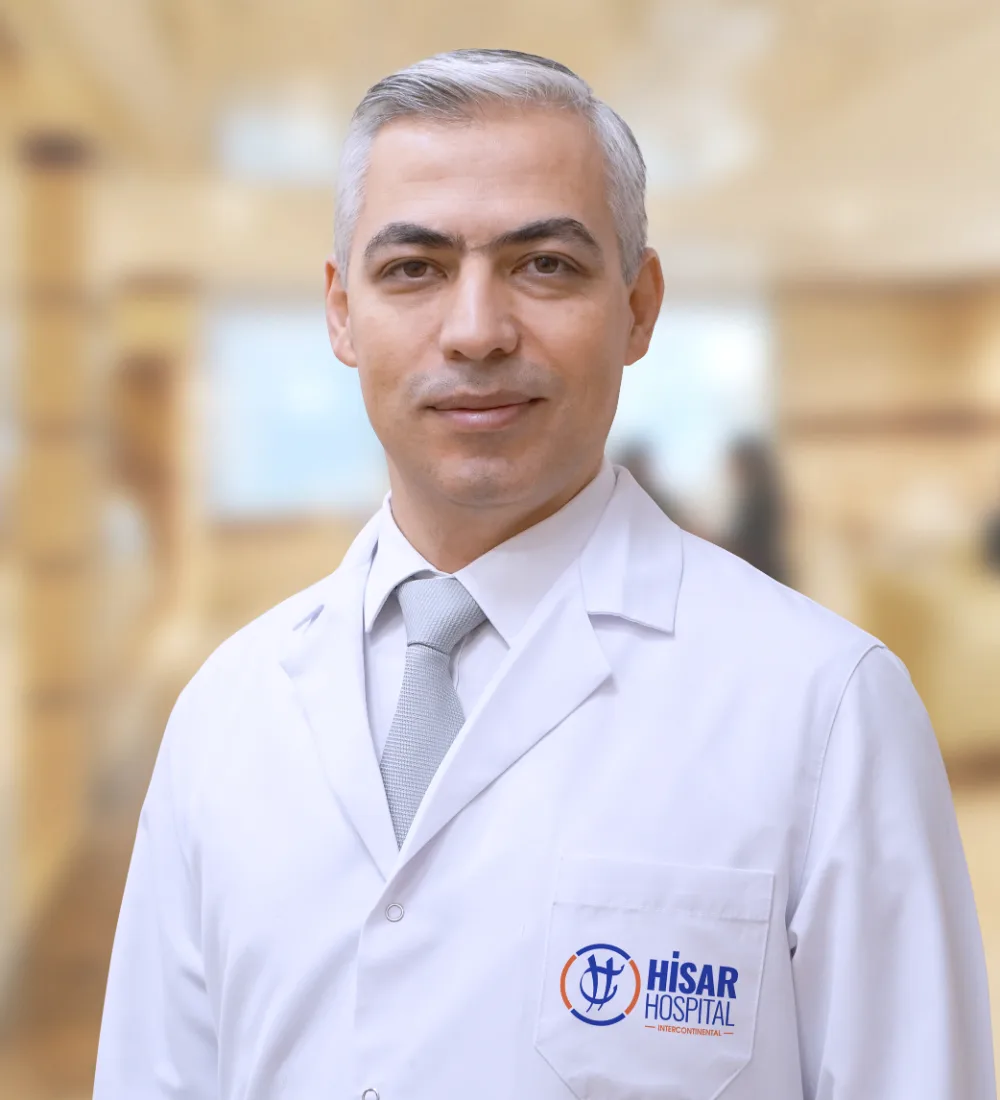 Assoc. Prof. Dr. S. Hilmi AksoyInterventional RadiologyReview date: 02 November 2026
Contact
Hair Transplant Center Department — Get in Touch
Fill out the form with your questions; our team will call you back as soon as possible.
The Hisar Hospital Web and Medical Editorial Board contributed to the development of this content. All content on this website is provided for general informational purposes only. Please consult a physician for the evaluation, diagnosis and treatment of your condition.
Last Updated: